
Reviewed · FUSHIMI INARI TOURS
Kyoto: Kiyomizu-dera, Fushimi Inari & Gion Geisha District
The most memorable part of this Kyoto tour is its clear route through three very different sides of the city: the orange torii gates of Fushimi Inari, the hilltop setting of Kiyomizu-dera, and the wooden lanes of Gion. Guide Roberto keeps the history connected to the places you are actually seeing, rather than turning the walk into a string of dates.
I like the private format, which lets Roberto adapt the pace and explain things in English or Spanish. I also like the practical extras: he uses images on an iPad, takes photos and videos, and offers advice about getting around Kyoto. The main drawback is the pace. Four hours includes two train rides and a fair amount of uphill walking, so this is not a gentle sightseeing outing.
Key points at a glance
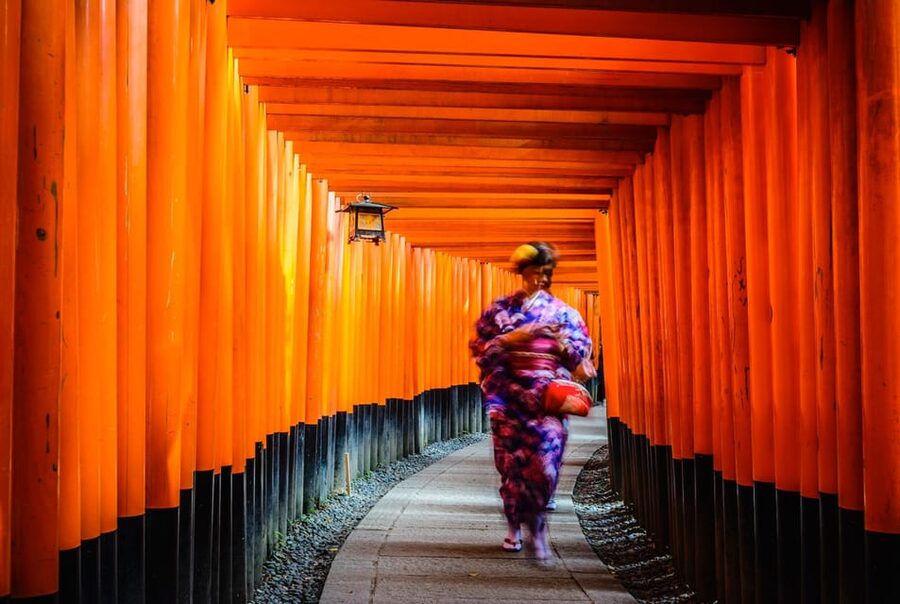
- Fushimi Inari’s torii trail: Walk beneath a section of the famous 1,000 vermilion gates while learning about Shinto and the shrine’s ancient origins.
- Kiyomizu-dera’s power spots: Visit places linked with love, longevity, and academic success, with a 500-yen entrance fee paid separately.
- A private guide named Roberto: Kyoto City Certified Tourist Guide Roberto leads in English or Spanish and can adjust explanations for your group.
- Old Kyoto streets: Walk Sannenzaka and Ninenzaka, where wooden buildings and traditional merchant shops frame the route.
- Gion without guesswork: Learn what geisha and maiko do, and understand the role of ochaya and machiya houses.
- Simple station-to-district route: Meet at Kyoto Station and finish in Gion, using public transport between the major sights.
From Kyoto Station to Fushimi Inari’s orange gates
You meet Roberto in front of the 7-Eleven at the central entrance of JR Kyoto Station, on the Kyoto Tower side. He carries an iPad and a red card marked RBRT, so the meeting point is easy to identify in a station that can otherwise feel like a small city.
The first train ride takes about 10 minutes. That short transfer gets the tour moving quickly and saves you the trouble of working out the route on your own. Your transport costs are not included, so keep cash or another way to pay for local trains and buses.
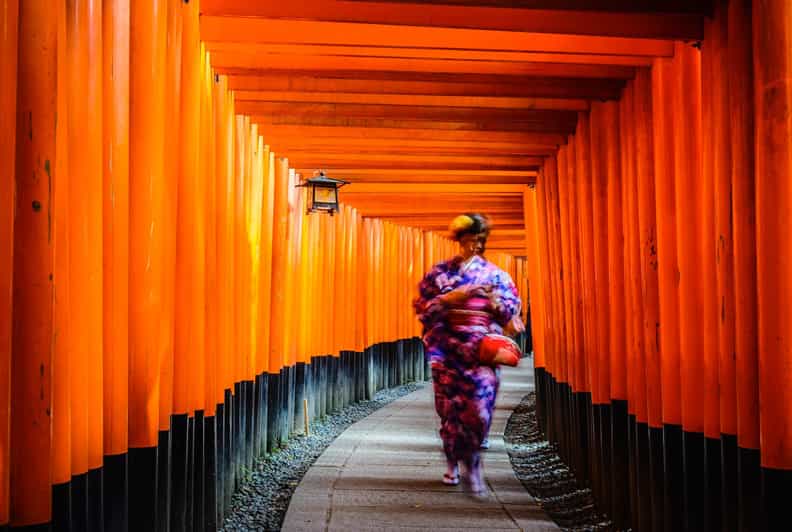
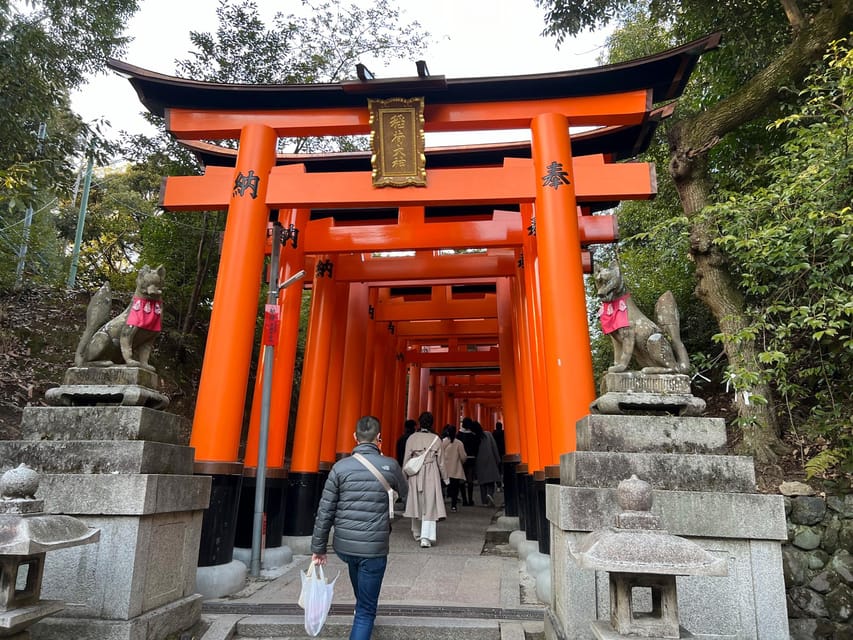
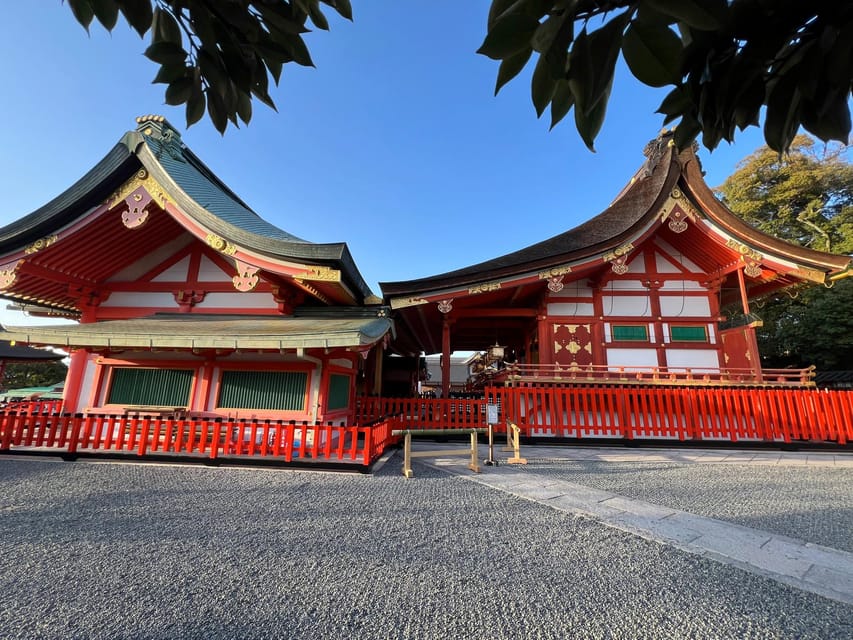
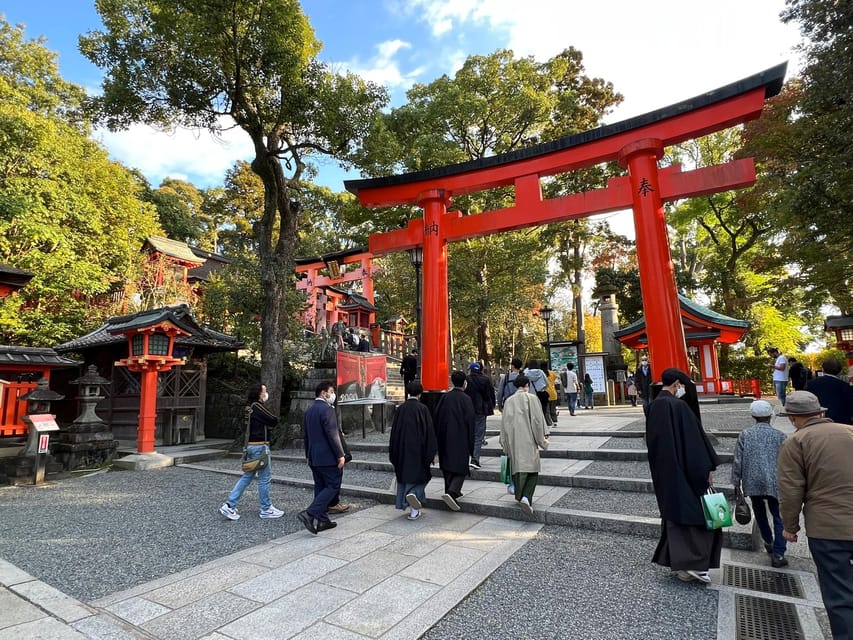
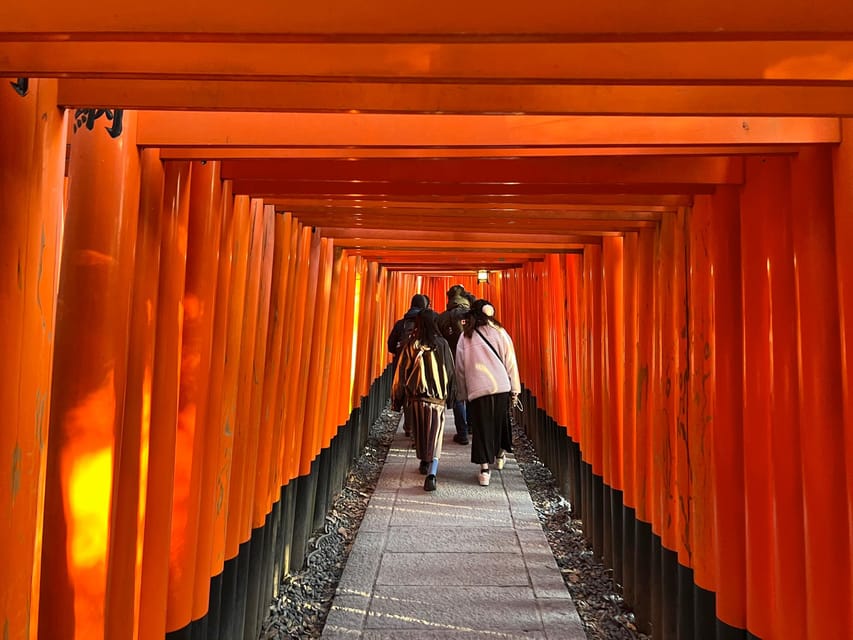
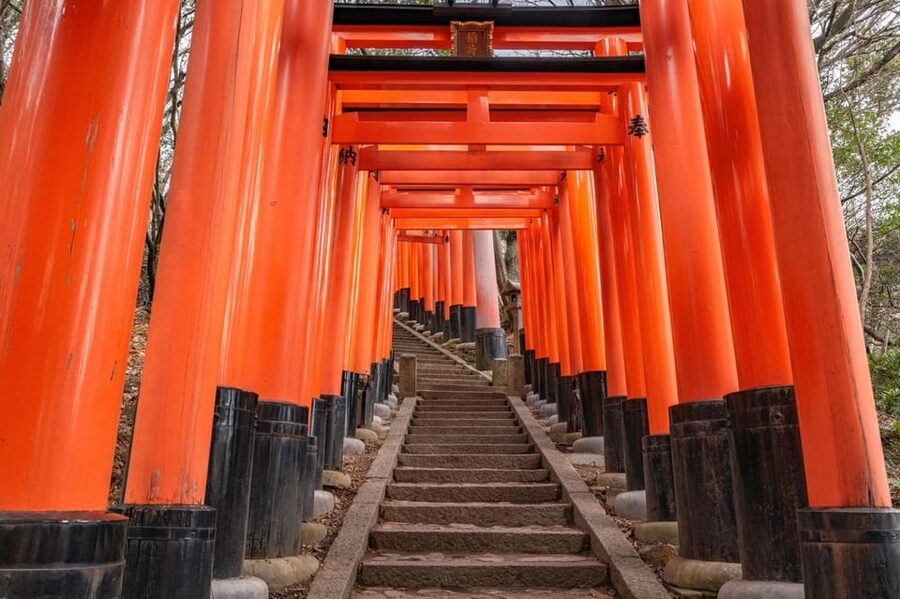
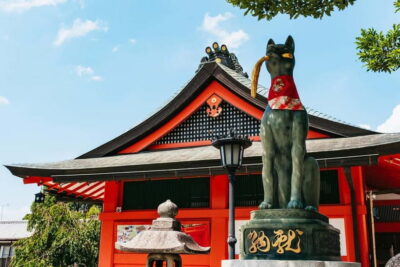
Fushimi Inari Taisha is the first major stop, with about 75 minutes for the guided visit. The shrine is dedicated to Inari, a Shinto deity associated with rice, agriculture, and prosperity. The site is best known for its long rows of vermilion torii gates, donated over many years by individuals and businesses.
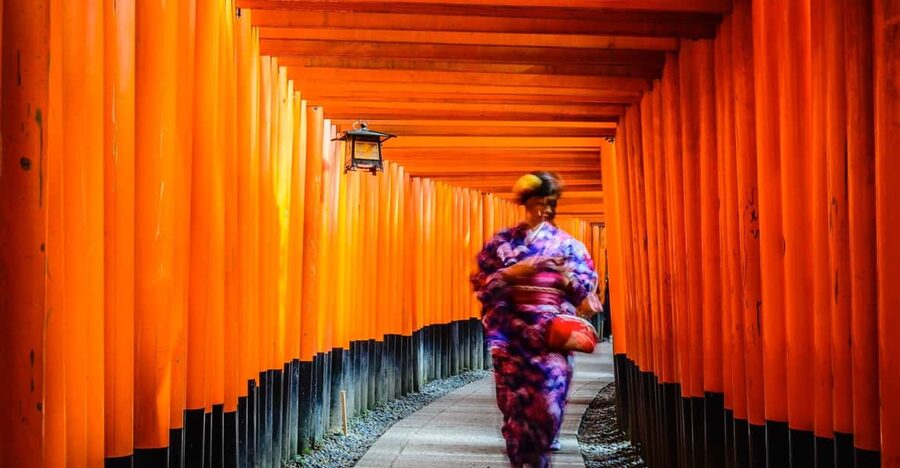
You will walk through part of the celebrated trail of 1,000 torii gates. The gates create a strong visual effect, but Roberto’s explanations give the walk more meaning. He can explain how Shinto shrines differ from Buddhist temples and point out the customs connected with entering a shrine, praying, and showing respect.
Do not expect to complete every path on Mount Inari in 75 minutes. The route is a guided introduction, not a full mountain hike. That is useful if you want to see the iconic gates and understand the shrine without giving half a day to the climb. If your main goal is to walk far up the mountain, you will need more time than this tour allows.
The torii path is also not a quiet photo set. It is a working religious site and a popular destination. A guide helps you focus on the details around you instead of spending the entire visit trying to find the next picture.
More ways to walk Fushimi Inari:
- Kyoto: Fushimi Inari, Kinkakuji, Bamboo Grove 1 Day Bus Tour
★ 4.8 · 4,316 reviews - Fushimi Inari Hidden Hiking Tour (Private Option Available)
★ 5.0 · 1,750 reviews - Kyoto/Osaka: Nara, Fushimi Inari Taisha, Arashiyama Bus Tour
★ 4.7 · 1,275 reviews
Kiyomizu-dera and the meaning behind its power spots
After Fushimi Inari, the tour uses public transport for a journey listed at about 30 minutes. You then spend roughly 80 minutes at Kiyomizu-dera, one of Kyoto’s best-known temples.
The temple is associated with the Kannon tradition of Buddhism and is famous for its elevated wooden stage and broad views over Kyoto. The supplied tour details focus especially on its power spots, where visitors pray for love, long life, and success in study. Roberto’s role is useful here because these places can look like a collection of attractive objects if you do not know what they represent.
The entrance fee to Kiyomizu-dera is not included and costs 500 yen, about US$3.10. That is a small extra, but it is worth budgeting for along with the train and bus fares. The guide does not need his own entrance fee or transport paid by you.
Kiyomizu-dera is built on a slope, and getting there means walking uphill. The approach and temple grounds can be crowded, particularly at popular times. You should wear shoes with a firm sole and bring water. The tour description specifically warns that it is not suitable for people with back problems, mobility impairments, wheelchair users, visual impairments, people over 75, or those with a low level of fitness.
That limitation matters. The tour is private, but a private group does not remove the hills, steps, or uneven walking route. If you tire easily, ask about the pace before booking or choose a less demanding Kyoto visit.
Sannenzaka and Ninenzaka, Kyoto on foot
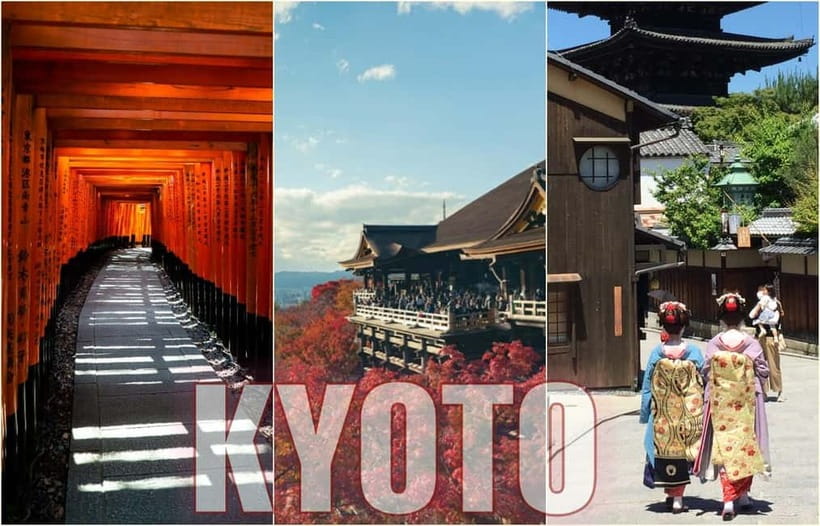
From Kiyomizu-dera, the walk continues through Sannenzaka for about 10 minutes, then Ninenzaka for another 10 minutes. These lanes are among the most atmospheric parts of the route, with traditional wooden buildings, shops, and old merchant houses.
The value of having a guide here is not simply finding the street. You can walk these lanes alone, but Roberto can explain how the area fits into Kyoto’s older townscape and help you notice details that are easy to miss when you are focused on shops and photographs.
This is also the part of the tour where the pace may feel most demanding. The streets slope downhill in sections, and the surfaces are not always as easy as a flat city sidewalk. Comfortable clothes, good shoes, and a bottle of water are sensible choices.
You may want to buy a snack or small item along the way, but food and drinks are not included. Carry cash, especially since the tour information specifically recommends it. Large bags and luggage are not allowed, and smoking is not permitted.
The short walking times listed for Sannenzaka and Ninenzaka make this a taste of the district rather than a long shopping session. That is a strength if you want to keep moving toward Gion. It is less ideal if you hope to browse every shop or stop often for food.
Gion, geisha culture, and the tour’s final walk
After the historic lanes, you walk for about 12 minutes toward Gion, followed by a roughly 15-minute guided walk through the district. The tour ends here rather than returning you to Kyoto Station.
Gion is Kyoto’s best-known geisha district, with shops, restaurants, traditional wooden machiya houses, and ochaya teahouses. An ochaya is a place where geisha and maiko provide entertainment through conversation, performance, and traditional arts. The tour is designed to explain the facts behind geisha and maiko, including the distinction between an experienced geisha and an apprentice maiko.
That explanation is valuable because popular culture often turns geisha into a costume or photo opportunity. A guide can help you view the district as a living neighborhood with working establishments, not just a stage set. You should also behave respectfully around people, homes, and businesses. The tour information does not promise a geisha or maiko sighting, so book this for cultural context and a walk through Gion, not for a guaranteed encounter.
Finishing in Gion gives you freedom for the rest of the day. From there, you can take a city bus or taxi to your hotel. It also makes sense to schedule this tour before dinner if you want to remain in the district, though the exact meal plans are up to you and are not part of the experience.
More geisha-district evenings:
- Kyoto Geisha Walking Tour: Gion District & Hidden Gems
★ 4.7 · 3,273 reviews - Kyoto: Gion Magical Night Walking Tour with Geisha Trivia
★ 4.9 · 2,393 reviews - Kyoto: Gion Geisha District Walking Tour – Stories of Geisha
★ 4.7 · 2,187 reviews - Best of Kyoto: Gion, Geisha, Pagodas & Cobblestones
★ 4.9 · 2,058 reviews
What Roberto adds to the four-hour route
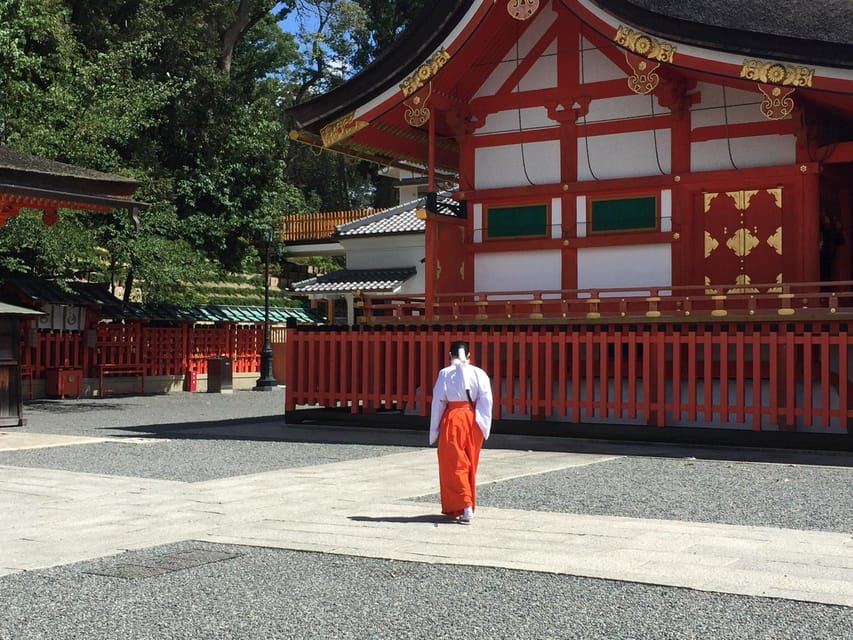
Roberto is described as a Kyoto City Certified Tourist Guide, and his work appears to focus on interpretation as much as navigation. He explains Buddhism, Shinto, Japanese culture, temple customs, and the details of each major stop.
The iPad is a useful touch. Religious sites can contain unfamiliar figures, symbols, and rituals, and a picture can make a short explanation much easier to follow. This is particularly helpful at Fushimi Inari and Kiyomizu-dera, where the visual setting can distract you from the meaning of the place.
Photography is another practical advantage. Roberto can take as many pictures of you as you wish, and direct feedback describes his photos and videos as a particularly enjoyable part of the outing. That is useful for couples and small private groups who do not want to rely on hurried self-timer shots.
The private format also allows room for questions. One direct account describes the tour being adapted for two people and packed with useful curiosities without feeling heavy. That balance matters during a four-hour visit. You get explanation, but you are still walking, looking, and taking in the city.
The tour is offered in English and Spanish. Several of the strongest responses are in Spanish, and the guide has received praise for being polite, punctual, clear, and helpful with local transport advice. Those details suggest a good fit if you want cultural explanation in Spanish or prefer a guide who can help you handle Kyoto’s trains and buses.
Is $90 a fair price?
At $90 per person, this is not the cheapest way to visit these sites. You still pay your own public transportation, the 500-yen Kiyomizu-dera admission, and any food or drinks. You also need to get yourself to the station meeting point and arrange your own return from Gion.
The price makes more sense if you value a private guide. You are paying for a focused route, explanations in your chosen language, help with transport, cultural context, and personal photographs. A private group can be especially worthwhile for a first visit, for a couple, or for a family that wants to ask questions instead of following a large crowd.
If you are comfortable reading maps, using Kyoto’s public transport, and learning about the sites from your own guidebook, you can visit Fushimi Inari, Kiyomizu-dera, and Gion for much less. The tour’s value is not in exclusive access. It is in saving planning time and making the cultural details easier to understand.
The 92 percent perfect score for transport is also relevant. Kyoto’s public transport can be efficient, but transfers and station exits can take time. Having someone lead the way reduces one common source of stress, though transport fees remain yours to pay.
Timing, fitness, and what to carry
Four hours is enough for a strong first look at this eastern Kyoto route, but it is a tight schedule. The plan includes two train journeys, a 75-minute Fushimi Inari visit, an 80-minute Kiyomizu-dera visit, several walking sections, and a final Gion tour.
Wear comfortable shoes and clothes that work for hills and temple visits. Bring water and cash. Leave luggage and large bags elsewhere, since they are not allowed on the activity.
Smoking is not allowed. The tour uses public transportation, so you should be ready to board trains and city buses during the day rather than traveling in a private vehicle.
This experience is best for people with a reasonable level of fitness who want to see famous Kyoto sights without spending time planning every transfer. It is not a good match for wheelchair users or anyone who needs a fully accessible route. The stated restrictions are unusually direct, so take them seriously.
How the tour compares with a longer Kyoto visit
This half-day route concentrates on Fushimi Inari, Kiyomizu-dera, the two old streets, and Gion. It does not include the Golden Pavilion, Nijo Castle, or Nishiki Market. Those are covered by a separate half-day option, while a full-day option combines three UNESCO World Heritage sites with Fushimi Inari.
That makes this tour a sensible choice when your priority is southeastern Kyoto and geisha culture. It is less suitable if you want a broad city overview in one outing. You can pair it with another guided visit on a different day, or use the Gion finish to continue exploring independently.
The route also works well early in a Kyoto stay because Roberto can offer advice about moving around the city. Several direct comments highlight his transport tips, which may help you plan later visits to other districts.
Should you book this Kyoto tour?
Book it if you want a private, guide-led introduction to Kyoto’s major Shinto, Buddhist, historic, and geisha-related sights. Roberto’s explanations, iPad images, photography help, and advice about local transport add real value to a route that can otherwise feel like a series of crowded stops.
Think twice if you dislike hills, want a slow shopping walk, or need accessible transport and surfaces. You will also need to add train and bus fares and the 500-yen Kiyomizu-dera fee to the $90 price.
For an active first visit, this is a well-focused four hours. You see the orange gates, temple power spots, old lanes, and Gion in one continuous outing, then finish with the rest of Kyoto still open to you.
FAQ
Where does the tour meet?
Meet in front of the 7-Eleven at the JR Kyoto Station Building, 1F, using the Kyoto Tower side exit. Roberto holds an iPad and a red card marked RBRT.
Where does the tour finish?
The tour ends in Gion District. From there, you can continue by city bus or taxi to your hotel.
How long does the experience last?
The tour lasts four hours. Starting times vary, so you need to check availability when booking.
Which languages are available?
The live guide service is available in English and Spanish.
Is this a private tour?
Yes. The activity is for a private group.
Are transportation costs included?
No. The tour uses public trains and city buses, but you pay your own transportation fees. The guide’s transport costs and entrance fees do not need to be paid by you.
Is the Kiyomizu-dera admission included?
No. Kiyomizu-dera admission costs 500 yen, approximately US$3.10, and is paid separately.
What should I bring?
Bring comfortable shoes, water, comfortable clothes, and cash. Large bags and luggage are not allowed.
Just added around Kyoto
- Kyoto: Zen Meditation at a Private Temple with a Monk★ 5.0 · 25 reviews
- Kyoto: Gion Geisha District & Sake-in-Hand Walking Tour★ 5.0 · 37 reviews
- Private Pewter Sake Cup Experience with a Kyoto Artisan★ 5.0 · 31 reviews
- Your Private Vacation Photography Session In Kyoto★ 5.0 · 110 reviews
- Private Guided Traditional Buddhist Cooking in Japan★ 5.0 · 16 reviews
- Kyoto Wagashi(Japanese sweets) Cooking Class near Fushimiinari★ 5.0 · 60 reviews
- Traditional Japanese Music show & Experience Tour in Kyoto★ 5.0 · 57 reviews
- Kyoto:Family-Friendly Kimono & Yukata Experience at WARGO★ 5.0 · 147 reviews
Fushimi Inari Tours, compared.

Fushimi Inari, Kinkakuji, Bamboo Grove 1 Day Bus Tour
Read our review →
Fushimi Inari Hidden Hiking Tour (Private Option Available)
Read our review →
Kyoto/Osaka: Nara, Fushimi Inari Taisha, Arashiyama Bus Tour
Read our review →
Osaka/Kyoto: Arashiyama, Nara & Fushimi Inari Shrine w/Lunch
Read our review →
Nijo Castle, Kiyomizu & Fushimi Inari Guided Tour
Read our review →
Nijo, Kinkaku-ji, Arashiyama, Kiyomizu & Fushimi Inari
Read our review →
Browse the lists this tour appears in