
Reviewed · TSUKIJI FISH MARKET TOURS
Tokyo: Guided Walking Tour of Tsukiji Market with Lunch
Tsukiji is best understood with your appetite switched on and your elbows slightly tucked in. This 165-minute walking tour leads you from the striking Tsukiji Hongwanji Temple into the Outer Market, where shopkeepers, cooks, and wholesalers work around you. Nine small tastings turn the walk into lunch, not just a sightseeing stroll.
I like the small group, limited to 10, and I like the cultural link between food, Buddhism, religion, and daily market life. Guides such as Tomoko, Yumiko, Sachiko, and Hide have helped make the experience friendly and well organized, including practical touches such as food boxes and cleaning wipes. The main caution is value: at $113, this is expensive if you expect a large meal or top-end sushi.
Key points to know before you book
- Nine tastings replace a traditional sit-down lunch: Expect small portions of sushi, skewers, omelette, rice, dessert, tea, dashi, and a drink.
- The walk begins at a temple, not inside the market: Tsukiji Hongwanji gives you useful cultural context before the food stops begin.
- A group of 10 keeps the route manageable: Your guide can help with queues, ordering, and moving through narrow market lanes.
- The tour focuses on the Outer Market: The area covered is fairly compact, so the value comes from guidance and explanation rather than distance walked.
- Food quality can vary: Some people find the tasting selection enjoyable, while others find the sushi and grilled items ordinary for the price.
- Wear proper walking shoes: You will spend nearly three hours on your feet in an active market setting.
Starting at Tsukiji Hongwanji Temple
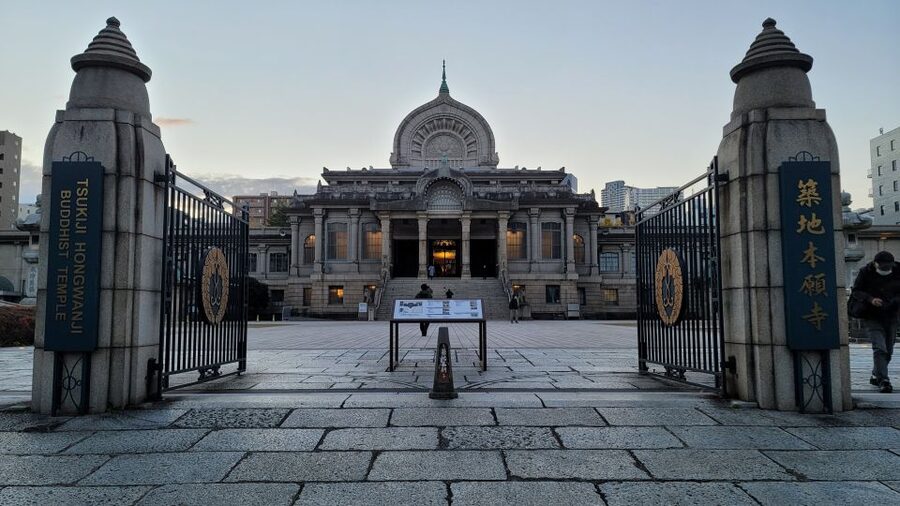
Your meeting point is directly in front of Tsukiji Hongwanji Temple. From Tsukiji Station on the Hibiya Line, take Exit A1, turn left, and walk about 50 meters to the temple entrance.
This is a smart place to start. The temple’s exterior has an unusual ancient Indian-inspired Buddhist design, so it looks quite different from the more familiar wooden temple buildings you may have seen elsewhere in Japan. The tour begins with the building viewed from outside, not with an interior visit.
I like this opening because it gives the market a wider setting. Japanese cuisine is not treated as a collection of random snacks. Your guide explains how food, local customs, and religion connect, which helps you understand why certain ingredients and preparations matter.
Do not expect a long temple tour. The main purpose is to admire the architecture and establish the cultural background before entering the market. If your main interest is temples, this stop will feel brief. If you are here for food and want context before the tastings, it works well.
More fish market mornings:
- Tokyo Tsukiji Fish Market Food and Culture Walking Tour
★ 5.0 · 3,184 reviews - Tokyo: Tsukiji Fish Market Food and Walking tour
★ 5.0 · 1,724 reviews - Tokyo: Tsukiji Fish Market Guided Walking Tour
★ 4.9 · 1,397 reviews
Entering Tsukiji Outer Market
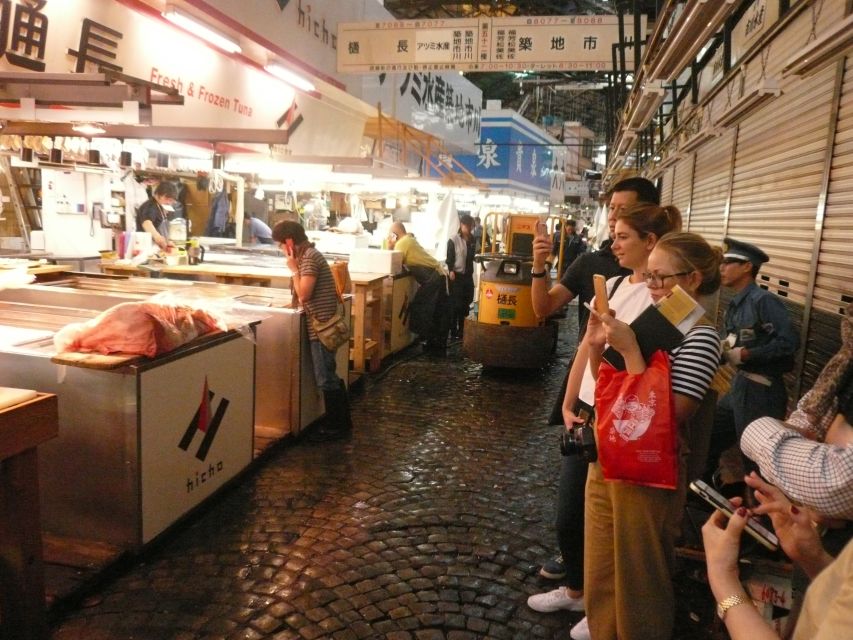
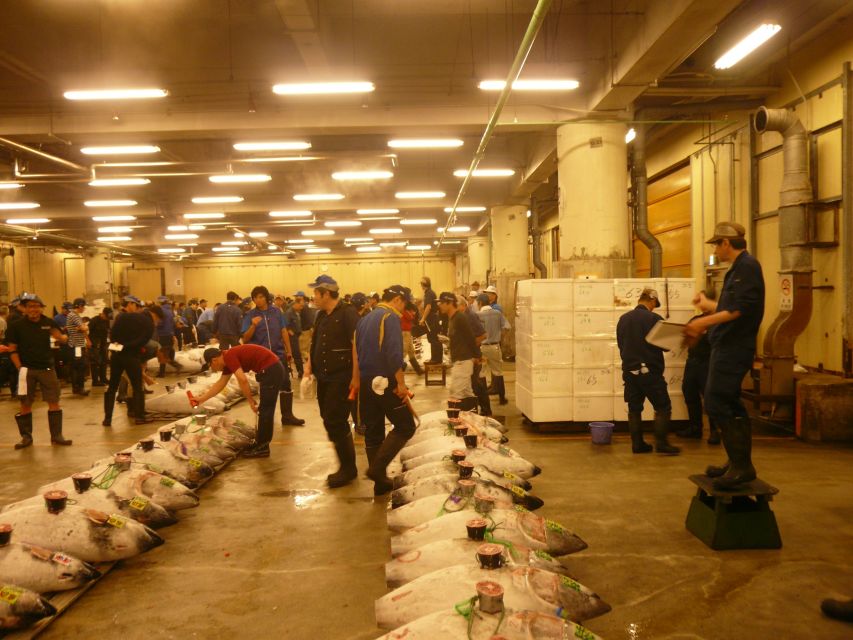
From the temple, you head into Tsukiji Outer Market, a dense collection of restaurants, food shops, stalls, and small businesses. This is the market area most visitors can explore today, and it has a very different feel from a polished food hall.
The route takes you past workers handling products and serving customers. You may see unusual ingredients, specialist tools, and displays that are hard to understand at first glance. That is where your guide earns the fee. Instead of simply pointing at food, the guide helps you read the market and understand what the businesses are doing.
I especially like having someone lead the way in a group capped at 10 people. Narrow lanes and active stalls are not ideal for a large crowd. With a smaller party, the guide can keep everyone together, explain what is happening, and help the group order food without creating a traffic jam.
The market section is not enormous, however. One person described the area covered as pretty small, and that is a fair point to keep in mind. You are not walking across a huge district for three hours. Much of the time goes into stopping, tasting, explaining, and waiting for food.
What the nine tastings actually include

The food is served in small portions as you walk. This is a tasting lunch, not a restaurant meal with a table, multiple courses, and time to linger.
The advertised selection includes:
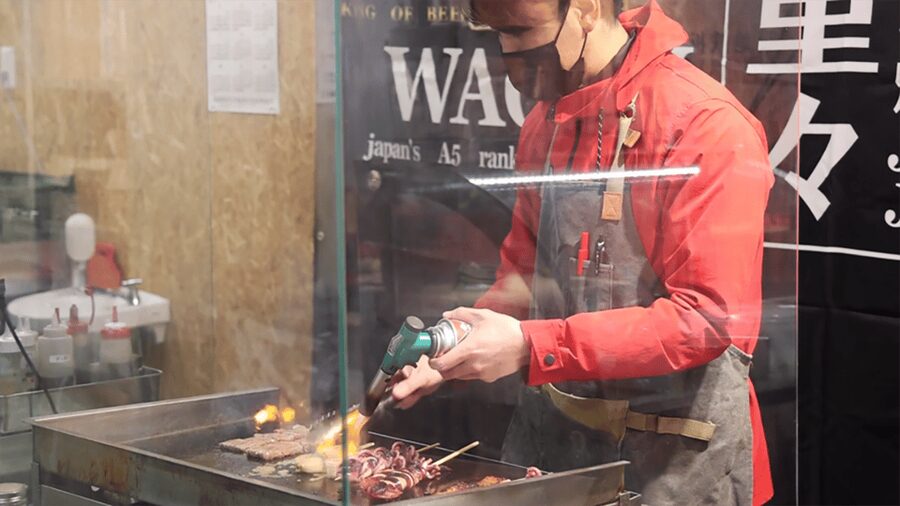
- Grilled seafood or beef skewers, possibly including wagyu beef
- Japanese-style omelette
- Tuna sushi
- Fried fish paste skewers
- Filled rice balls
- Dessert
- A drink
- Japanese tea
- Dashi soup stock
This mix gives you a useful sample of everyday Japanese flavors. You get grilled food, raw fish, egg, rice, soup stock, a sweet finish, and drinks. Dashi is especially useful for first-time visitors because it is one of the basic savory building blocks in Japanese cooking.
The tasting can also include yakitori-style skewers and wagyu beef, though the exact food served may depend on availability. The description allows for grilled seafood or beef, so do not book expecting a guaranteed premium wagyu course.
The portions are intended to be combined into a light lunch. If you arrive very hungry, you may want to set your expectations carefully. One critical experience found the tuna-mayo rice ball and tuna sushi average, along with greasy grilled fish and a strawberry dessert. That does not mean every group receives the same selection or has the same reaction, but it does show why the tour should be viewed as a guided introduction rather than a luxury food event.
The guide makes the biggest difference
The strongest part of this experience is the person leading it. Hide has guided visitors through the market and helped them decide what to try. Tomoko has been praised for a relaxed, informative, and practical approach, including queuing for food while the group explored nearby stalls.
Yumiko and Sachiko have also worked together to guide people around the market. Having an assistant can be useful in this setting because one person can manage food and timing while the other keeps an eye on the group.
These details matter more than they might on an ordinary city walk. Tsukiji is full of choices, but choice alone does not always make a good meal. You need help knowing what to stop for, how to move aside, and how to keep track of several small portions.
The tour has a 4.4 rating from 24 reviews, which suggests a generally positive experience with some clear reservations. The most consistent praise centers on friendly guides, market explanations, and smooth navigation. The lower scores focus on food quality, the limited size of the route, and a language barrier at the start for one group.
That split gives you a useful booking test. If you want a local guide to interpret Tsukiji, this is promising. If the quality of every tasting is the only reason you are paying $113, you may find the price hard to defend.
More lunch stops in Tokyo:
- Tokyo: Mt.Fuji & Lake Kawaguchiko 1-Day Bus Tour w/Optional Lunch
★ 4.5 · 839 reviews - Tokyo: Sumo Experience and Chanko Nabe Lunch
★ 4.8 · 257 reviews - Tokyo: 1 Day Bus Tour with Meiji-Jingu,Odaiba,lunch&Skytree
★ 4.6 · 156 reviews - Tokyo: Family Sumo Workshop & Live Wrestling Show with Lunch
★ 4.9 · 99 reviews
Why the cultural explanation matters
A food tour can easily become a parade of bites. This one aims to connect the food to Japanese culture and religion, beginning at the temple and continuing through the market.
That connection is valuable because Tsukiji is not just a place to grab sushi. It is a working food district shaped by specialist shops, trade, preparation, and long-standing habits. Your guide can point out how products are sold and used, then relate those choices to the broader role of food in Japanese life.
I would pay attention during the dashi tasting. Dashi can seem like a simple soup stock, but it helps you recognize a flavor that appears in many Japanese dishes. The tea sample and Japanese-style omelette add more basic tastes to the lesson, while sushi and grilled items make the experience more immediately familiar.
The temple exterior also helps prevent the tour from becoming narrowly focused on fish. You get a short look at architecture and religion before entering a place built around food commerce. That contrast is one of the tour’s more interesting features.
A practical walk through the food stops
The best way to approach the tasting is to treat each item as a sample, not a final verdict on Japanese cuisine. A tuna rice ball with mayonnaise may be less exciting than you expect, but it can still show you the kind of convenient food sold in the market.
The tuna sushi is likely to be the stop many people judge most closely. If you are imagining an elaborate sushi counter, adjust that image. This is a guided market tasting, and the food may be simple.
Grilled fish or meat brings a different texture and smell to the route. Yakitori-style skewers and wagyu beef can be appealing highlights, though the exact choice is not fixed. Fried fish paste skewers offer another common Japanese snack style, while the omelette shows how a familiar ingredient can be prepared in a distinctly Japanese way.
The dessert and drink provide a break from savory flavors. The dessert may be fruit-based or another small sweet item, so do not expect a fixed signature dessert every time. Tea and dashi are less flashy but give the tasting more range.
Food handling can be awkward in a market. A helpful guide may provide food boxes and cleaning wipes, as Tomoko did for one group. That kind of organization is easy to overlook when booking, but it makes a real difference when you are carrying several samples through narrow streets.
Timing, comfort, and accessibility
The tour lasts 165 minutes, or two hours and 45 minutes. That is long enough for the temple introduction, market walk, cultural explanations, and nine tastings without turning the outing into a full-day commitment.
You should wear comfortable shoes. Even though the market route is compact, you will spend much of the tour standing and walking. The market is an active workplace, so stay close to your guide and be ready to pause or move when needed.
The experience is listed as wheelchair accessible. Still, the market setting may involve tight spaces, crowds, and active shop fronts, so anyone who needs extra room should raise practical concerns when booking. The small group limit can help, but it does not change the nature of the market itself.
The tour is offered with a live English-speaking guide. English ability and communication style may vary by guide, and one experience included some difficulty at the beginning. I would listen carefully to the opening instructions and ask questions early if the meeting point or food plan is unclear.
The starting point is easy to reach from Tsukiji Station. That makes the tour simple to fit into a Tokyo day, especially if you want to continue around the Ginza or Tsukiji area afterward. The stated information does not provide a fixed finishing point, so plan your day with some flexibility after the tasting.
Is $113 a fair price?
At $113 per person, this is not a budget lunch. You are paying for nine samples, a live guide, market interpretation, group management, and the convenience of having someone choose and organize the route.
The price makes more sense for a first visit to Tokyo when you want help understanding Tsukiji. A guide can save you from wandering past interesting stalls without knowing what they sell. The small group also gives you more personal attention than a large coach-style excursion.
The calculation is less favorable if you mainly want food. You can find individual dishes in Tokyo for far less than $113, and the portions here are tasting portions. The food quality may also feel uneven. One person considered the cost excessive for average sushi, a tuna-mayo rice ball, greasy grilled fish, and a basic dessert.
I would compare this tour with the cost of your time, not only the cost of the food. If you have just one chance to visit Tsukiji and feel unsure about navigating it, the guide may be worth the premium. If you already know the market or enjoy choosing your own stalls, spend the money on several dishes you select yourself.
Who will get the most from this tour?
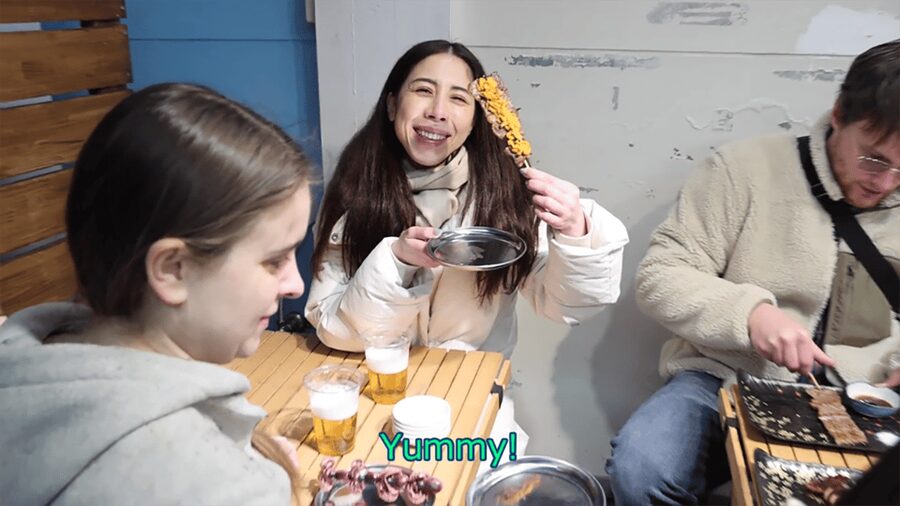
I think the tour suits first-time visitors who want a gentle introduction to Tsukiji without having to plan each stop. Families may appreciate the compact route and the help with food organization, especially when several people need to be served at once.
It also suits food-curious visitors who want more than sushi. The nine tastings cover seafood, meat, egg, rice, soup stock, tea, and dessert, so you get a wider sample of Japanese eating habits.
The tour may be less suitable for serious food collectors seeking rare fish or high-end sushi. It is also a weak fit if you want a long, detailed market walk. The route covers a fairly small area, and some of the allocated time may feel stretched if the market is quiet or the group moves quickly.
If you have dietary restrictions, check before reserving. The supplied information lists the food categories but does not provide vegetarian, vegan, allergy, or substitution details. You should not assume that the nine tastings can be changed.
Booking details that matter
The group is limited to 10 participants, and the guide language is English. The meeting point is the front of Tsukiji Hongwanji Temple, about 50 meters from Tsukiji Station Exit A1.
You can reserve now and pay later, which helps if your Tokyo schedule is still shifting. Free cancellation is available up to 24 hours before the activity for a full refund. Check the available starting times for your date because the exact schedule is not given here.
The tour provider is True Japan Tour. Comfortable shoes are the only listed item to bring, though I would also arrive ready to handle food while walking and standing.
Should you book it?
Book this tour if you want a friendly guide, a small group, and cultural explanation alongside a set of nine market tastings. The temple opening, the chance to watch market workers at close range, and practical help from guides such as Tomoko, Yumiko, Sachiko, and Hide give the experience more purpose than simply buying snacks.
Skip it if $113 feels high for a light lunch, or if you expect every bite to be excellent and the route to cover a large part of Tsukiji. The food is the uncertain part, while the guiding and market orientation are the safer reasons to book.
My call: choose it for context and confidence in the market, not for maximum food quantity. Arrive with moderate expectations, comfortable shoes, and a willingness to treat the tastings as an introduction. That is when the tour offers its best value.
FAQ
Where does the Tsukiji Market tour meet?
Meet in front of Tsukiji Hongwanji Temple. From Tsukiji Station on the Hibiya Line, take Exit A1, turn left, and walk about 50 meters to the temple entrance.
How long does the experience last?
The tour lasts 165 minutes, or two hours and 45 minutes.
What food and drinks are included?
The nine tastings include grilled seafood or beef skewers, a Japanese-style omelette, tuna sushi, fried fish paste skewers, filled rice balls, dessert, a drink, Japanese tea, and dashi soup stock.
Is this a sit-down restaurant lunch?
No. The food is served as a tasting lunch while you walk through Tsukiji Outer Market. Expect small portions rather than a traditional multi-course meal.
What language is the tour offered in?
The live tour guide speaks English.
How large is the group?
The tour is limited to 10 participants.
Is the tour wheelchair accessible?
Yes, the activity is listed as wheelchair accessible. The tour takes place in a working market, so anyone needing additional space or assistance should confirm practical details before booking.
More Shopping in Tokyo
- Tokyo: Tsukiji Fish Market Sushi Making Class with Pro Chef
★ 4.9 · 506 reviews - Tokyo Food Tour Taste Fresh Delights at Tsukiji Market
★ 5.0 · 429 reviews - Tokyo Tsukiji Fish Market Tour and Sushi Making Lesson
★ 5.0 · 390 reviews - Tsukiji Fish Market: Street Food & Culture Walking Tour
★ 4.8 · 259 reviews
More Markets in Tokyo
- Tsukiji Fish Market Guided Tour and Sushi Making with Pro Chef
★ 5.0 · 775 reviews - Tokyo: Tsukiji Fish Market Food and Culture Walking Tour
★ 4.7 · 757 reviews - Tsukiji Fish Market: Street Food & Culture Walking Tour
★ 5.0 · 669 reviews - Tsukiji Fish Market Small-Group Food Walking Tour
★ 5.0 · 621 reviews
Just added around Tokyo
- Private Arrival Transfer : Narita International Airport to Central Tokyo City★ 4.5 · 12 reviews
- Narita Airport(NRT): Private Transfer to Tokyo/Yokohama 1-9pax★ 5.0 · 47 reviews
- Private Transfer from Narita Airport to Yokohama Port and City★ 4.5 · 17 reviews
- [Narita Airport Terminals 1, 2] 40-60km Sawara Itako Historic Bike Tour★ 5.0 · 13 reviews
- 3 Day Japan Highlights Tour: Tokyo, Mt.Fuji, Nara, Kyoto, Osaka★ 5.0 · 22 reviews
- Small Town in the Big City: Tasting Tokyo’s Kichijoji★ 5.0 · 195 reviews
- Small Town in the Big City: Tasting Tokyo’s Kichijoji★ 5.0 · 16 reviews
- The 10 Tastings of Tokyo With Locals: Private Street Food Tour★ 5.0 · 48 reviews
Tsukiji Fish Market Tours, compared.
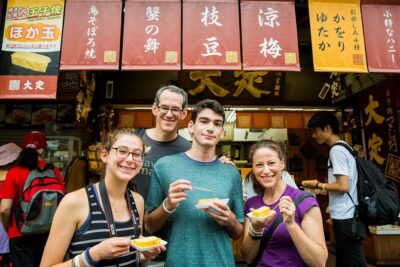
Tokyo Tsukiji Fish Market Food and Culture Walking Tour
Read our review →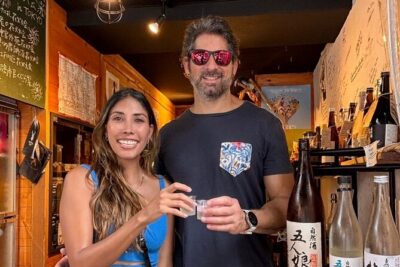
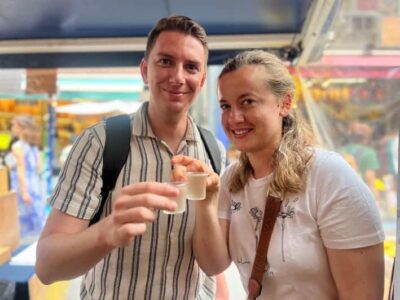
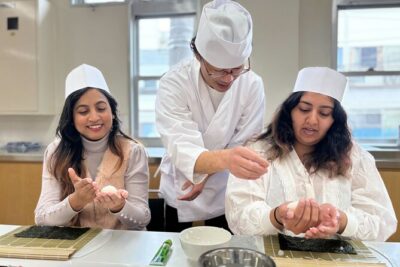
Tokyo Sushi Making Class in Tsukiji with Professional Chef
Read our review →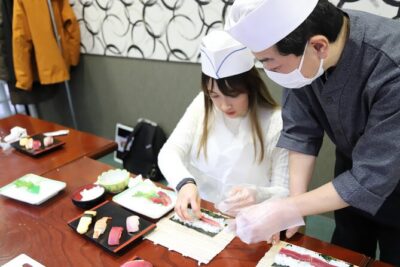
Tsukiji Fish Market Guided Tour and Sushi Making with Pro Chef
Read our review →Tsukiji Fish Market Food and Culture Walking Tour
Read our review →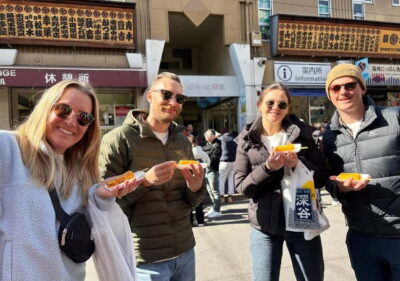
Tsukiji Fish Market: Street Food & Culture Walking Tour
Read our review →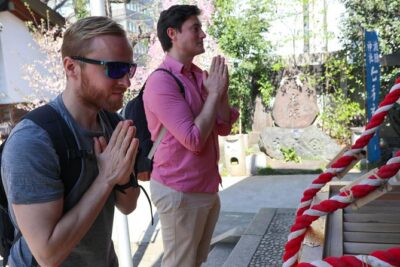
Tsukiji Fish Market Small-Group Food Walking Tour
Read our review →Browse the lists this tour appears in