
Reviewed · IMPERIAL PALACE TOURS
Tokyo: Pvt. Tour – Edo Castle & Imperial Palace East Gardens
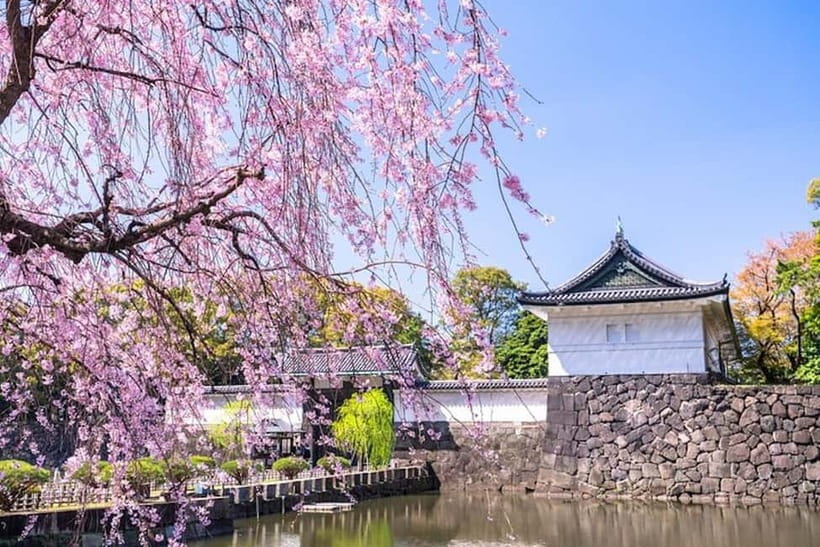
Edo Castle once occupied the heart of Tokyo, and this walk lets you trace its scale through massive stone walls, moats, and castle ruins rather than through a reconstructed building. The setting shifts quickly from busy city streets to quiet paths, clipped trees, ponds, and the seasonal color of Ninomaru Garden.
I like the private format, which gives you room to ask questions and set a comfortable pace. I also like the English guidance, especially for a site where the meaning of a gate, moat, or garden feature can be easy to miss. The main limitation is simple: you cannot enter the Imperial Palace itself, so this is an outdoor history walk, not a palace interior visit.
Key points to know before you go
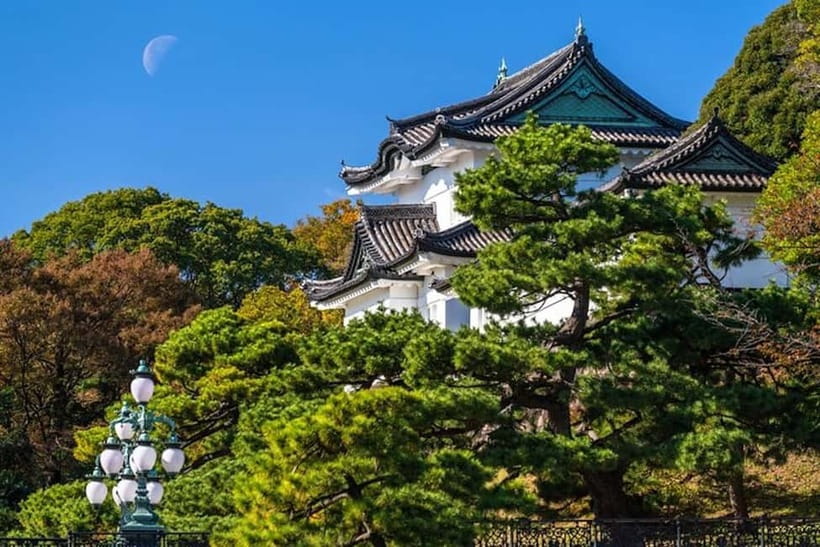
- Edo Castle’s footprint: Walk beside old moats, huge stone walls, and the site of the former keep.
- Ninomaru Garden: Expect traditional garden design and seasonal flowers, from cherry blossoms to irises and autumn leaves.
- Private English guide: Guides including Yuji, Yoshi-san, Masahito, Mari, and Naoko have led visitors at an easy, flexible pace.
- Central meeting point: Meet at Starbucks in Wadakura Fountain Park, about three minutes from Otemachi Station Exit D2.
- Two hours on foot: The timing works well as a focused introduction, though you will not see every corner of the palace grounds.
- No inner palace access: The Emperor’s residence is not part of this tour, and entry includes a baggage inspection.
Why Edo Castle is the right place to begin
Tokyo can feel new at every turn, with glass towers, packed train stations, and constantly changing neighborhoods. The Imperial Palace East Gardens offer a different way to read the city. Beneath the trees and lawns is the former center of political power in Japan, where the Tokugawa shoguns ruled during the Edo period.
You are not walking through a complete castle complex. Most wooden buildings are gone, and the palace remains off-limits on this tour. Instead, the site reveals itself in fragments: a formal gate, a guardhouse, deep moats, carefully fitted stone walls, and the broad base of the old castle keep.
That partial view is part of the appeal. A guide can help you picture what is no longer there. The stones show the strength and size of the fortifications, while the garden gives you a sense of how power and beauty were arranged side by side.
I find this more rewarding than simply taking a photograph outside the Imperial Palace. You get a basic grounding in the Edo period and in the way the castle shaped modern Tokyo, without committing half a day to a large museum or a long lecture.
More Imperial Palace visits:
- Tokyo: Imperial Palace and Shogun Historical Walking Tour
★ 5.0 · 2,251 reviews - Tokyo: Imperial Palace Japanese History Walking Tour
★ 4.9 · 987 reviews - Tokyo: Imperial Palace and Shogun Walking Tour
★ 4.9 · 935 reviews
Meeting at Wadakura Fountain Park
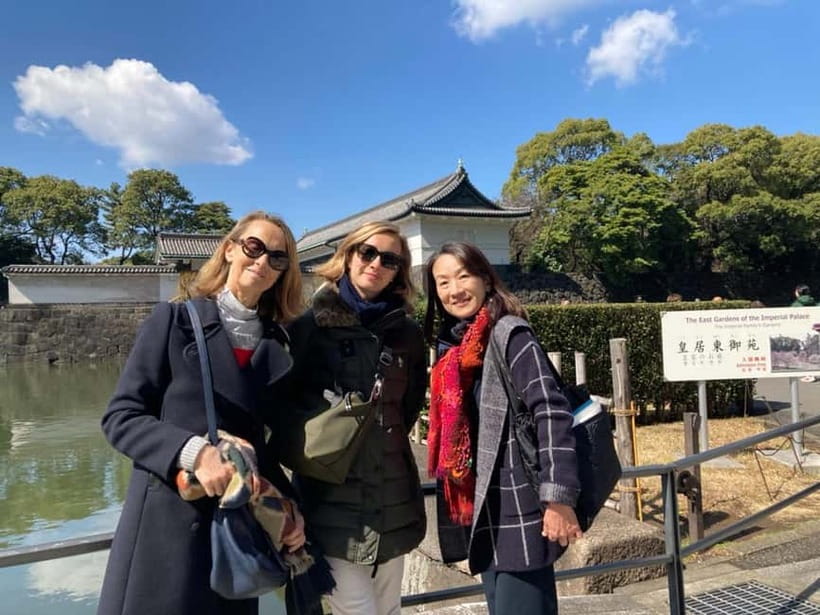
The meeting point is in front of Starbucks in Wadakura Fountain Park. Look for the guide carrying a sign with gotcha written on it. The location is practical, but Tokyo station exits can still be confusing, so give yourself a little time to find the right route.
The park is about a three-minute walk from Tokyo Metro Otemachi Station Exit D2. It is also about a ten-minute walk from the Marunouchi Central Exit at Tokyo Station. That makes the tour easy to pair with a morning around Marunouchi or an afternoon near Otemachi.
The starting point also creates a pleasant transition into the tour. You meet near a fountain and open public space, then move toward the palace grounds. It is a better beginning than gathering beside a noisy road, especially if you are traveling with family or want a calm start to the day.
Before entering, expect a baggage inspection. This matters if you have been shopping earlier in Tokyo. The operator specifically advises you to leave Japanese knives or other objects that could be used as weapons in a coin locker or similar storage location before meeting the guide.
The Main Gate and the first look at old Tokyo
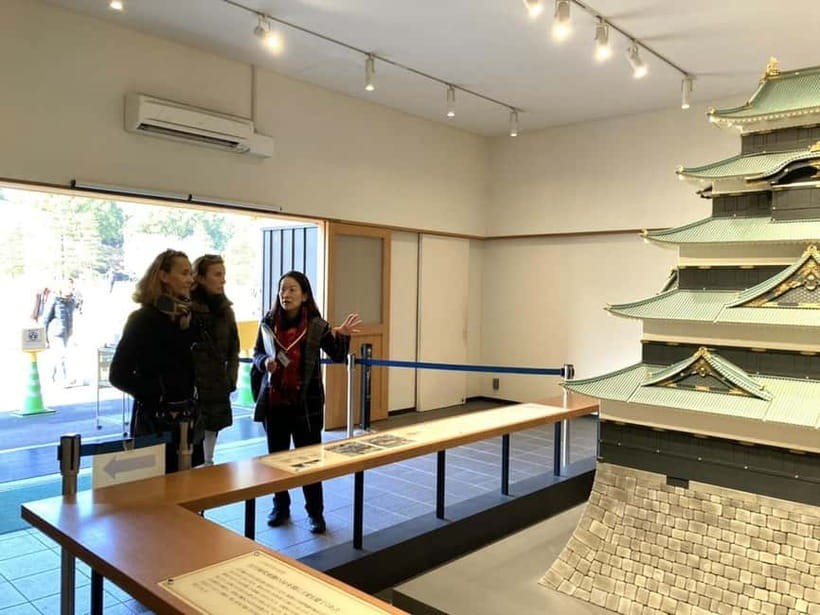
The historic Main Gate introduces the unusual character of the East Gardens. It includes a traditional guardhouse, but you will also see modern security measures nearby. That mix is a useful reminder that this is both a working imperial site and a historic place open to the public.
Your guide can explain how visitors once approached the castle and why gates were designed as controlled points rather than simple entrances. Details such as the guardhouse and the heavy construction help turn an ordinary walk into a lesson in castle planning.
This is also where the private format starts to earn its price. In a large group, you might hear only the basic facts before moving on. With a private guide, you can ask about the gate, the palace grounds, Japanese customs, or anything else that catches your eye.
The tour is conducted in English. Past guides have included Yuji, Yoshi-san, Masahito, Mari, Naoko, and Hiroshito. The strongest reports describe guides who were warm, clear, prompt, and willing to adjust the walk to the group. Yuji, in particular, was praised for helping a family keep a comfortable pace and offering directions for getting back to the station afterward.
Guide quality can vary from one departure to another, as it does with any guided activity. Still, the repeated pattern here is encouraging: visitors received clear explanations, flexible pacing, and help with questions. One guide, Masahito, even contacted another guide to check an answer rather than guessing. That is the kind of small habit I value on a history walk.
Stone walls, moats, and the old castle keep

The ruins of Edo Castle are the tour’s strongest historical stop. You will see ancient stone walls, moats, and the massive base associated with the castle keep. These remains make it easier to understand how large the fortress once was.
Do not arrive expecting a restored European-style castle with furnished rooms and towers you can climb. The experience is about scale and setting. The stones are the evidence, and the guide supplies the missing story.
The moats also help you see the castle as a defensive system. They are not just scenic water features. Along with the walls and gates, they created layers of protection around the shogun’s headquarters.
This is where I would pay close attention to the guide’s explanations. A casual solo walk can show you attractive walls and water, but it may not explain how the parts worked together or why the castle site mattered so much during the Edo period.
The open grounds make the stop approachable for many ages. Children may respond to the size of the walls and moat, while adults can focus on the politics and design. Since the tour lasts only two hours, the guide has to keep the explanation moving. That is helpful if you prefer a focused introduction, but less ideal if you want a long architectural study.
A few more Tokyo half-days to weigh up
- Mt Fuji and Hakone 1-Day Bus Tour Return by Bullet Train
★ 5.0 · 26,383 reviews - 1-Day Tokyo Bus Tour
★ 5.0 · 14,250 reviews - Tokyo: TOKYO SKYTREE® Admission ticket
★ 4.5 · 11,192 reviews - Tokyo: teamLab Planets TOKYO Digital Art Museum Entry Ticket
★ 4.6 · 9,779 reviews
Ninomaru Garden and the changing seasons
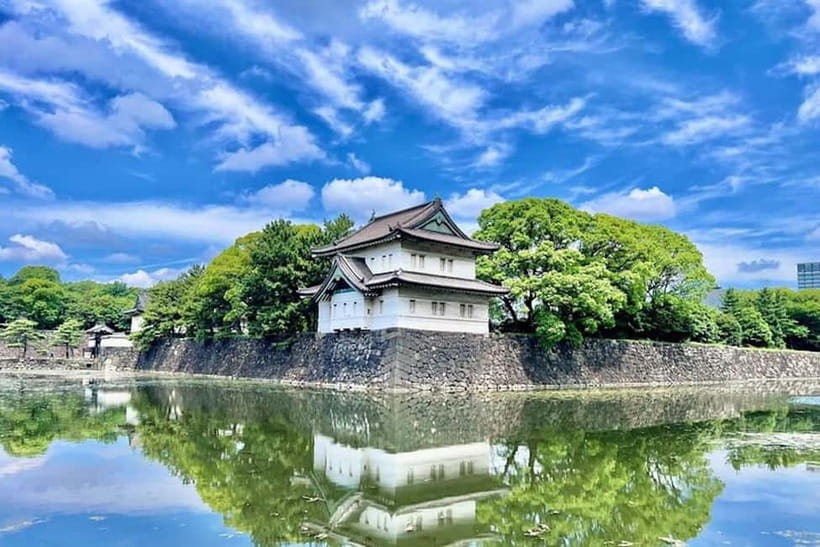
Ninomaru Garden brings a softer mood after the fortifications. This traditional Japanese garden was built on the former castle grounds and includes ponds, trees, paths, and seasonal flowers. The exact display depends on when you visit.
Spring can bring cherry blossoms, though timing is never guaranteed. An April visit in the supplied experiences found that the blossoms and flowers had not fully appeared yet. That is a useful warning: booking during cherry blossom season does not ensure peak bloom.
Summer brings irises, while autumn is known for changing leaves. Even outside the best seasonal window, the garden remains worthwhile because its design depends on balance, spacing, and careful views rather than on one single flower display.
The garden is also a good place to ask about daily Japanese culture and traditional garden ideas. Naoko, one of the guides, was praised for explaining the buildings, past and present inhabitants, a hybrid type of koi, and features of the garden. Those details give the walk more character than a simple list of dates.
I like the contrast between Ninomaru Garden and the castle ruins. One shows control through walls and moats. The other shows a more delicate form of control through paths, water, plants, and framed views. Together they help you understand why the palace grounds feel different from a normal city park.
What a private two-hour walk feels like
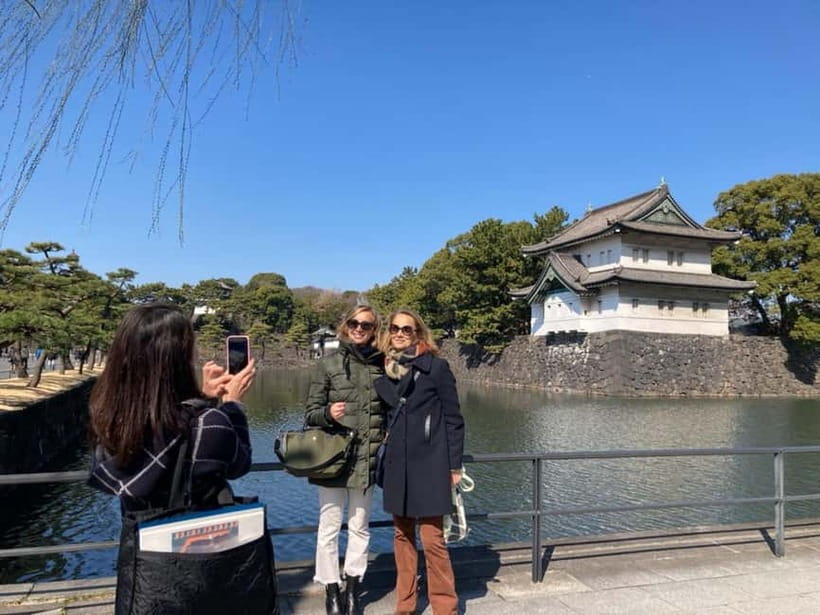
The private group format is the main reason to choose this activity instead of walking through the gardens alone. You do not have to keep up with strangers, and the guide can respond to your interests. Families can slow down, history fans can ask more questions, and first-time visitors can request help with the next train or neighborhood stop.
The pace appears to be leisurely rather than athletic. You should still expect to walk outdoors for the full two hours, so comfortable shoes are sensible. The information provided does not promise wheelchair access, stroller suitability, or a specific route length, so you should confirm those points directly if they matter to your group.
Two hours is enough for a clear introduction to the Main Gate, castle remains, moats, walls, and Ninomaru Garden. It is not enough for an exhaustive tour of every path in the East Gardens. I see that as a benefit for a first visit, especially if you have a full Tokyo schedule.
The tour also works well early in your trip. A guide can give you historical context that makes later visits to Asakusa, other castle sites, or museums easier to understand. Several guides have also helped with practical directions after the walk, which can be valuable when Tokyo station feels like a maze.
Is the $63 price good value?
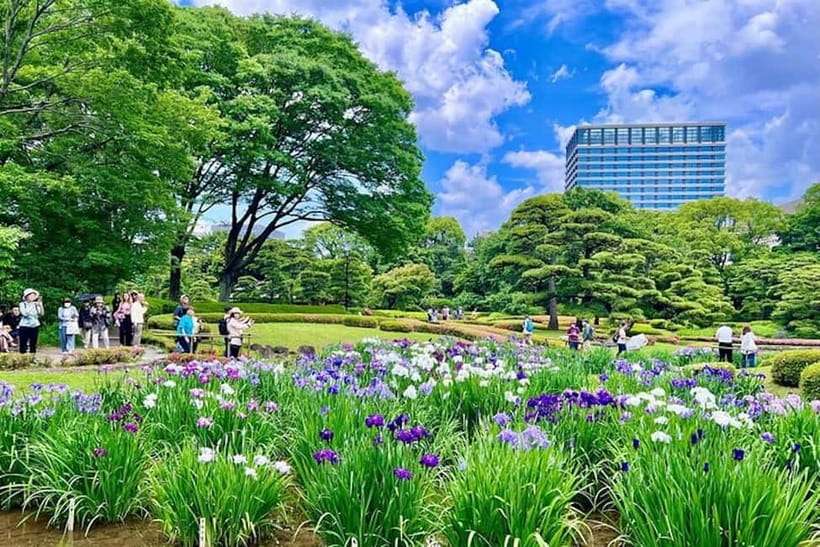
At $63 per person, this is not the cheapest way to see the East Gardens. Entry to a public garden is usually less expensive than a private guided experience. You are paying for the guide’s time, English explanations, and the ability to shape the walk around your group.
For one or two people, the cost may feel significant. For a family or small group, the private price can make more sense because everyone receives the same guide without joining a larger party. The value is strongest if you care about the story behind the stones and garden, or if you prefer not to navigate an unfamiliar site alone.
The tour also has flexible booking terms. You can reserve now and pay later, and cancellation is allowed up to 24 hours before the start for a full refund. Those policies help if your Tokyo plans are still moving around, though they do not change the basic question of whether you want a guide.
I would not pay $63 simply to take photographs of flowers. I would consider it fair for a private, English-language introduction to one of Tokyo’s most important historic sites, particularly for a first visit or a family group.
What this tour does not include
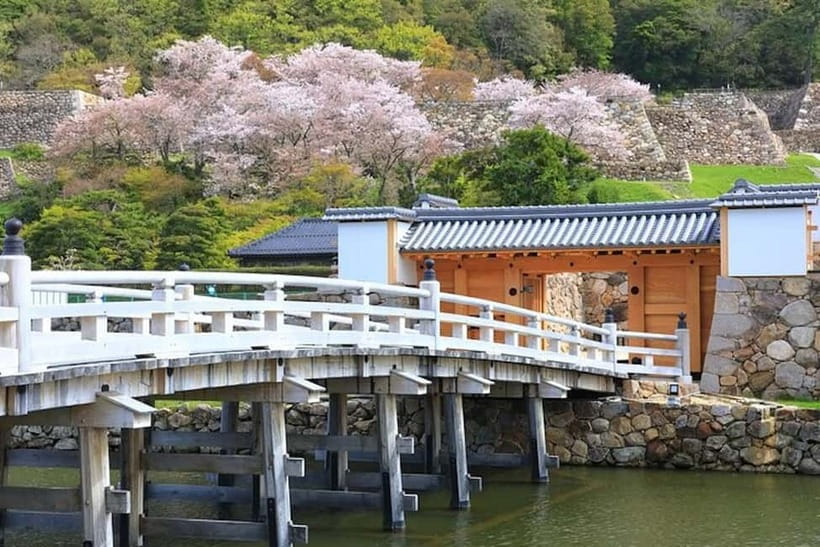
The clearest boundary is the Imperial Palace itself. You cannot enter the Inner Palace or the area where the Emperor resides. The tour takes place in the East Gardens and surrounding historic grounds.
That distinction matters because the name Imperial Palace can create the wrong expectation. You are visiting the former Edo Castle grounds and public gardens, not touring imperial rooms or seeing the residence interior.
You should also expect an outdoor walk rather than a museum-style presentation. There are no listed indoor exhibits, meals, transport, or palace admission beyond the garden visit. The included service is the English-speaking guide and walking tour of the East Gardens.
For many people, that is enough. The gardens and ruins are the point. If your priority is seeing formal palace interiors, you should choose a different activity.
Who should book this experience?
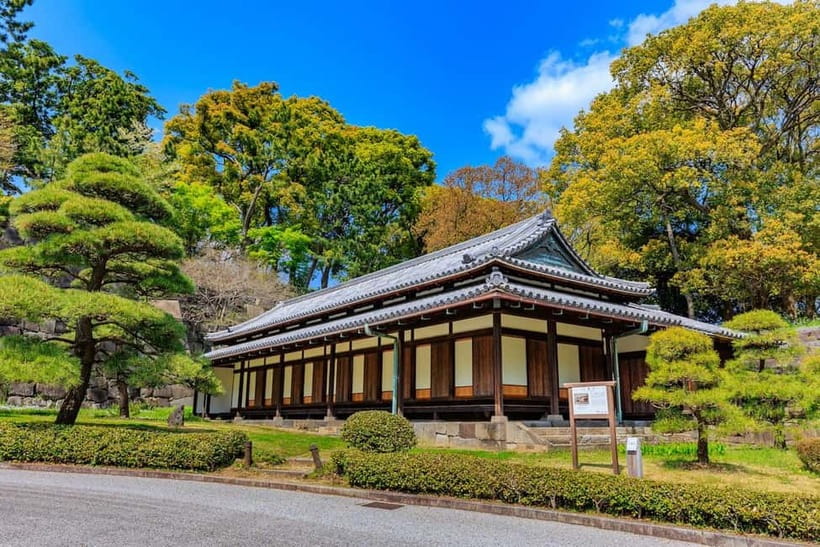
I would recommend it to first-time Tokyo visitors who want a manageable history lesson in a central location. It suits families, couples, and small private groups that prefer a relaxed pace and the chance to ask questions.
It is also a good choice if you usually walk past historic sites without understanding them. The castle remains are easy to underestimate on your own. A guide can connect the gate, moat, walls, garden, and shogun’s former seat into one clear story.
The tour may be less satisfying if you want long free time for photography, a strenuous castle exploration, or access inside the palace. Seasonal flowers are another variable. Visit with realistic expectations, and the garden should still offer a calm break from central Tokyo.
Should you book the Edo Castle and Imperial Palace East Gardens tour?
Book it if you want a private English guide and clear historical context in just two hours. The strongest reasons are the peaceful garden setting, the visible remains of Edo Castle, and the ability to move at your own pace.
I would be especially comfortable booking for a family, a first Tokyo visit, or anyone who finds Japanese castle history hard to interpret alone. Guides such as Yuji, Yoshi-san, Masahito, and Naoko have shown the qualities you want here: good English, patience, organization, and a willingness to answer practical questions.
Skip it if entering the Imperial Palace is your main goal. You will remain outside the Inner Palace, and the garden’s seasonal display may not match your hoped-for timing. For everyone else, $63 buys a focused look at the historic center beneath modern Tokyo, with enough quiet greenery to make the city feel far away for a couple of hours.
FAQ
Where does the tour meet?
Meet your English-speaking guide in front of Starbucks in Wadakura Fountain Park. Look for a guide holding a sign that says gotcha.
How far is the meeting point from public transportation?
The meeting point is about a three-minute walk from Tokyo Metro Otemachi Station Exit D2. It is about a ten-minute walk from Tokyo Station’s Marunouchi Central Exit.
How long does the tour last?
The walking tour lasts two hours. Starting times vary, so check availability when booking.
Is the tour private?
Yes. It is offered as a private group tour, so you can enjoy the walk with your own group and follow a pace that suits you.
Is the tour conducted in English?
Yes. The tour includes a live English-speaking guide.
Can you enter the Imperial Palace?
No. The tour does not enter the Inner Palace or the area where the Emperor resides. It visits the East Gardens and the historic grounds of Edo Castle.
Is there a baggage inspection?
Yes. Visitors are subject to a baggage inspection when entering the Imperial Palace grounds. If you have purchased Japanese knives or another object that could be used as a weapon, leave it in a coin locker or similar storage before the meeting.
Just added around Tokyo
- Private Arrival Transfer : Narita International Airport to Central Tokyo City★ 4.5 · 12 reviews
- Narita Airport(NRT): Private Transfer to Tokyo/Yokohama 1-9pax★ 5.0 · 47 reviews
- Private Transfer from Narita Airport to Yokohama Port and City★ 4.5 · 17 reviews
- [Narita Airport Terminals 1, 2] 40-60km Sawara Itako Historic Bike Tour★ 5.0 · 13 reviews
- 3 Day Japan Highlights Tour: Tokyo, Mt.Fuji, Nara, Kyoto, Osaka★ 5.0 · 22 reviews
- Small Town in the Big City: Tasting Tokyo’s Kichijoji★ 5.0 · 195 reviews
- Small Town in the Big City: Tasting Tokyo’s Kichijoji★ 5.0 · 16 reviews
- The 10 Tastings of Tokyo With Locals: Private Street Food Tour★ 5.0 · 48 reviews
Imperial Palace Tours, compared.
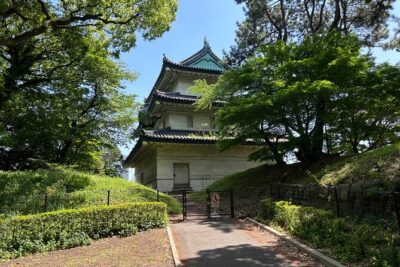
Imperial Palace and Shogun Historical Walking Tour
Read our review →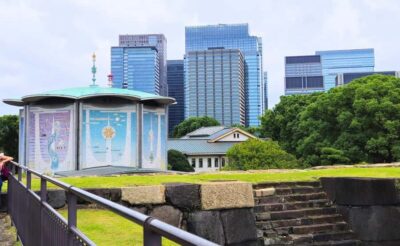

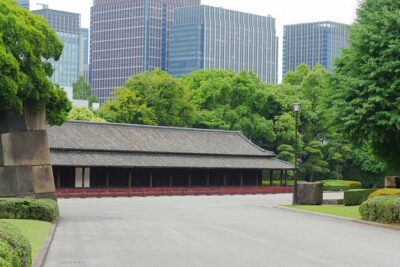
Imperial Palace East Garden and Edo Castle Walking Tour in Tokyo
Read our review →
Imperial Palace & Nijo Castle Guided Walking Tour
Read our review →
Imperial Palace, Sensō-ji Temple, & Tokyo Tower Tour
Read our review →
Tokyo Castle, Imperial Palace, Shogun & Garden Walking Tour
Read our review →Browse the lists this tour appears in