
Reviewed · KYOTO TOURS
3 Hours Kyoto Insider Sake Experience | Tasting Konteki
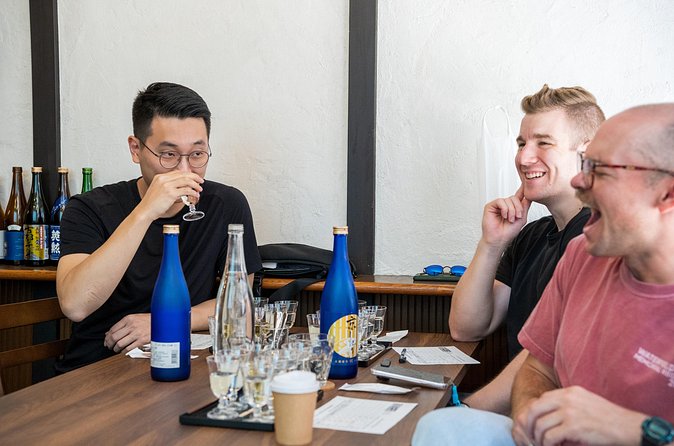
Fushimi’s sake culture becomes much easier to understand when you taste several styles side by side. This three-hour experience pairs a guided visit to the Kizakura Kappa Museum with more than 10 sakes, including bottles that have never been exported from Japan.
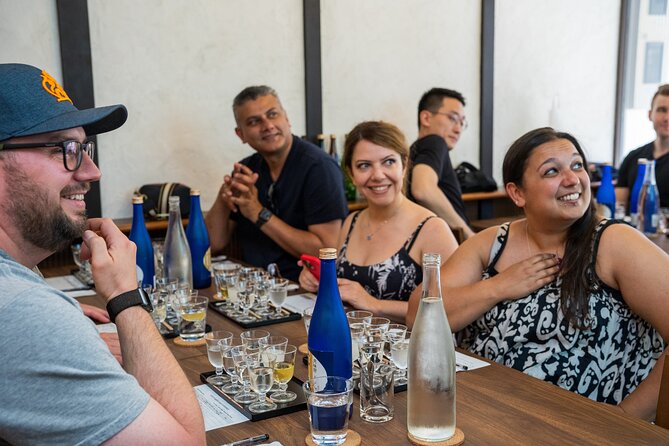
I like the private tasting room and the practical food pairing. You do not simply sip one drink and move on. You compare flavors with traditional otsumami snacks, then learn how to read Japanese sake labels and menus. The main consideration is the fixed, non-refundable booking policy, plus the fact that you must arrange your own way to Fushimi.
Key points to know before booking

- More than 10 sake styles: Taste dry, sweet, rich, and fruity examples selected by a sake sommelier.
- Brewery and museum visit: Spend about 90 minutes learning about Kizakura’s brewing traditions and sake production.
- Food pairing included: Japanese otsumami snacks help show how food changes the taste of sake.
- Small group setting: The maximum group size is 12, with tasting held in a dedicated private room.
- Useful take-home guidance: A sake cheat sheet and tasting notes help you choose bottles later.
- Plan your transport: The experience begins and ends at 271-1 Kurumamachi in Fushimi, with no hotel pickup or drop-off.
Why Fushimi is the right place to learn about sake
Fushimi is one of Kyoto’s best-known sake areas, and this experience gives you a reason to visit beyond the city center. The tour focuses on the local brewery tradition rather than treating sake as just another drink at a restaurant.
That matters because sake can seem confusing at first. Labels are often written in Japanese, styles can range from crisp and dry to sweet and fruity, and two bottles that look similar may taste very different. A guided tasting gives you a way to sort those differences out.
I like the focus on learning how to choose sake for yourself. By the end, you are not expected to remember every technical term. You are given a tasting sheet and a simple way to identify the styles you prefer. That is useful when you later face a long restaurant menu or a shop shelf filled with unfamiliar bottles.
The meeting point is at 271-1 Kurumamachi in Fushimi. The activity is near public transportation, but transport to and from the experience is not included. You should arrive by train or another public option, since Japan strictly prohibits drinking and driving.
More drinks-led nights in Kyoto:
- Kyoto Night Foodie Tour in Gion (9+ dishes + 6 Sake tastings)
★ 5.0 · 1,762 reviews - 3-Hour Kyoto Insider Sake Brewery Tour with Tastings & Pairings
★ 5.0 · 917 reviews - Arashiyama Bamboo, Temple, Monkeys, or Secret Sake Brewery
★ 4.8 · 886 reviews
The Kizakura Kappa Museum and brewery visit
The first part lasts about 90 minutes and involves a short walk to the local brewery and museum. The Kizakura Kappa Museum provides the setting for learning about sake production and the traditions passed down through generations.
This portion is more than a quick introduction before the tasting. You get context for what you are about to drink. The guide explains the production process and some of the history of sake making, giving you a better sense of why brewing methods affect the final flavor.
The museum’s kappa theme adds a bit of local character. Kappa are familiar figures in Japanese folklore, and the name gives the visit a lighter feel than a strictly technical brewery tour. The experience is designed to be educational without turning into a long lecture.
You should keep your expectations sensible. The supplied details promise a guided museum and brewery visit, along with an opportunity to see traditional brewing processes. They do not promise that every part of active production will be operating during your visit. If you are hoping to watch a full day of brewing from start to finish, this may feel limited. If you want a clear introduction before tasting, the 90-minute visit gives the drinks useful context.
After the brewery portion, you have a chance to taste several products made there. This is a strong start because you can connect the explanation to actual samples while the information is fresh.
Comfortable shoes make sense. Only a small amount of walking is involved, but you will still move between the meeting point and the brewery area.
Ten or more sakes, chosen for comparison
The tasting is the heart of the experience. A certified sake sommelier selects at least 10 types, including some bottles that have never been exported. That last detail gives the session a local advantage. You may encounter styles that are difficult or impossible to find outside Japan.
The point is not simply to count samples. The tasting is arranged to help you compare them. You learn how sake can be dry, sweet, rich, or fruity, and how those traits connect to the way each bottle is made.
For someone new to sake, this side-by-side approach is far more useful than ordering one glass at random. If you taste only one sake, you may know if you like that drink, but not what to ask for next. With 10 or more examples, you can start to notice patterns in your own taste.
You might discover that you prefer a clean, dry sake with food, or that fruity styles suit you better on their own. You might also find that a sake you would have ignored based on its label becomes a favorite once you taste it. The session is built to help you make those discoveries without needing prior expertise.
The dedicated private tasting room should also make the lesson easier to follow. With a maximum of 12 participants, the group is small enough for personal attention, though it is not a one-on-one class. The guide can explain differences and respond to questions without the room feeling like a large public tasting.
The most useful part may be the sake cheat sheet and tasting note. These tools turn a pleasant afternoon into something you can use later. You can record the styles you prefer and refer to the terms when selecting a bottle in Kyoto, at home, or from a restaurant menu.
Otsumami shows why food matters
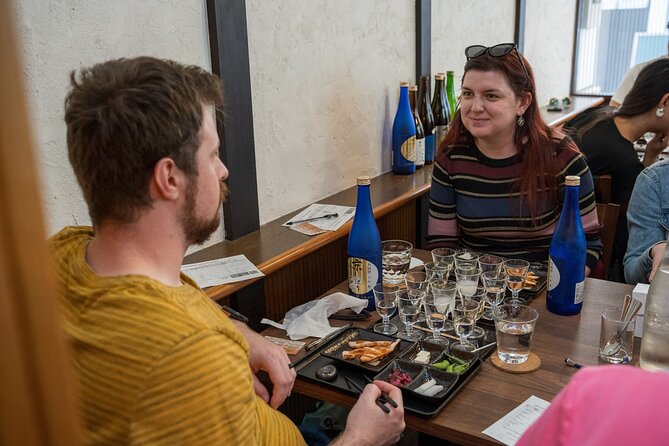
Japanese alcohol is traditionally served with small snacks called otsumami, and this experience uses them as a teaching tool. You are served several appetizers so you can compare the way different foods work with different sake styles.
That is important because sake does not taste the same with every dish. A dry style may seem sharper on its own but fit well with a savory bite. A richer or fruitier sake may work differently with another snack. The exact menu is not specified, so you should think of the pairing as a series of comparisons rather than a set restaurant meal.
You should eat lunch or brunch before arriving. The included snacks are meant for tasting and pairing, not as a replacement for a full meal. This advice is particularly useful because 10 or more samples over several hours can feel demanding on an empty stomach.
A vegetarian snack option is available, but you need to tell the guide on site. If you have strict dietary needs beyond that, the supplied information does not promise additional substitutions, so ask before booking if food is a major concern.
I like this part because it connects sake to ordinary Japanese eating habits. You are not just memorizing categories. You are learning how to think about sake at the table, which is the skill you are most likely to use during the rest of your trip.
More food tours in Kyoto:
- Kyoto: Insider Sake Brewery Tour with Sake and Food Pairing
★ 5.0 · 704 reviews - Kyoto Sake Brewery & Tasting Walking Tour
★ 5.0 · 623 reviews - Kyoto Nishiki Market Food and Culture Walking Tour
★ 5.0 · 412 reviews - Kyoto: Gion Food Tour 13 Dishes at 4 Eateries
★ 5.0 · 408 reviews
What the three hours feel like

The schedule is split evenly between the brewery and the tasting. The first 90 minutes cover the museum, local production, and samples from the brewery. The next 90 minutes are devoted to the guided tasting and food pairing.
That balance works well. A shorter brewery visit would leave you with little context, while a much longer production tour might reduce the time available for actual tasting. Three hours is long enough to learn at a comfortable pace, but short enough to fit into a full day in Kyoto.
You should bring a bottle of water. You will be sampling many sakes, and water helps you stay comfortable and clear-headed. The drinking age in Japan is 20, and participants under 20 receive non-alcoholic drinks instead.
The experience requires good weather. If poor weather causes cancellation, you are offered another date or a full refund. It can also be canceled if the minimum number of participants is not met, with a different date, another experience, or a full refund offered.
For your own planning, the regular cancellation rule is strict: the booking is non-refundable and cannot be changed for any reason. This makes travel insurance or flexible scheduling worth considering if your Kyoto plans are uncertain.
Is $92.24 a fair price?
At $92.24 per person, this is not a bargain tasting in the narrow sense. You are paying for three hours, a guided brewery and museum visit, 10 or more sake samples, otsumami, a certified sommelier, a private room, and written tasting guidance.
The value depends on how much you want to learn. If you only want one drink with a view or a quick sample at a shop, this is more than you need. If you love sake but cannot tell one style from another, the structured comparison can save you from spending money on bottles you do not enjoy later.
The non-exported bottles add another layer of value for serious sake fans. You may taste products unavailable in your home market, while also learning what to look for among more widely available bottles.
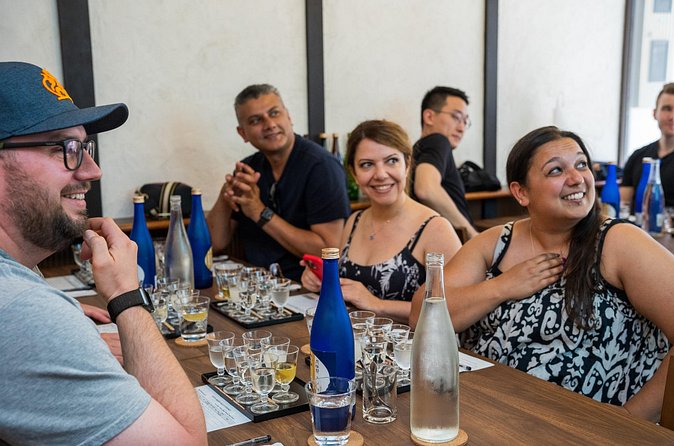
I also see value in the small group size. A maximum of 12 is not private in the strict sense, but it is much more personal than a large commercial tasting. The guide’s role is not only to pour drinks. The goal is to explain the differences and help you identify your own preferences.
The price does not include transport, hotel pickup, or drop-off. Fushimi is easy to reach by public transportation, but you need to budget for that separately and allow enough time to find the meeting point.
Who will enjoy this experience most?
This is a strong choice if you already like sake and want a better way to choose it. It also suits curious first-time drinkers who want a guided introduction instead of trying to work out Japanese labels alone.
Food-focused visitors should enjoy the otsumami pairing, especially if you want to understand how sake fits into a meal. The brewery and museum portion also gives the afternoon more substance than a tasting held in a bar.
The experience is less suitable if you do not drink alcohol and are hoping for an equivalent non-alcoholic program. Participants under 20 receive non-alcoholic drinks, but the activity itself is built around sake tasting.
It may also disappoint anyone looking for a large production facility, a full meal, or extensive sightseeing around Fushimi. The walking is limited, the food consists of traditional snacks, and the experience stays focused on sake education.
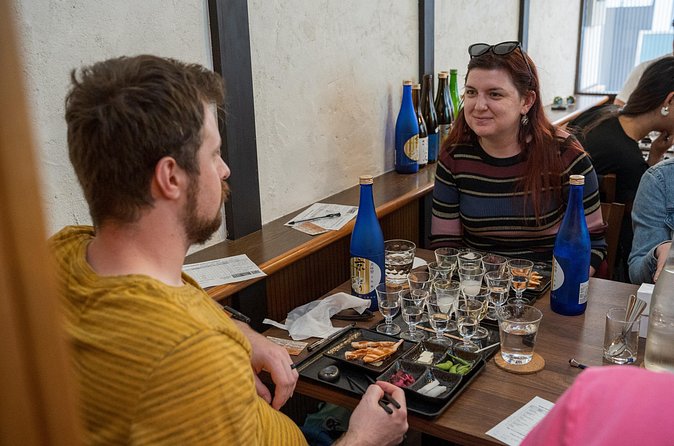
The small group format is a good middle ground. You get the social feel of a group activity, but the maximum of 12 allows room for questions and personal advice.
Practical advice for a smoother visit
Arrive having eaten lunch or brunch. The snacks are part of the lesson, not a substitute for a meal.
Bring water and wear comfortable walking shoes. The walking is limited, but those two simple steps make the afternoon easier.
Use public transportation. Drinking and driving is illegal in Japan, and the tour does not include transfers.
If you need vegetarian snacks, tell the guide on site. Also remember that the legal drinking age is 20. Younger participants receive non-alcoholic drinks.
Set aside about three hours, not counting your journey to Fushimi. Since the activity ends at the original meeting point, you can plan dinner or another Kyoto activity afterward, but avoid booking something too tight in case the walking or tasting runs a little longer.
The mobile ticket is convenient, and booking confirmation is provided at the time of purchase. Still, check the meeting point carefully because hotel pickup is not offered.
My verdict on the Fushimi sake session
I would book this if you want more than a quick taste and would like to leave Kyoto able to choose sake with some confidence. The strongest features are the organized comparison of 10 or more styles, the food pairing, and the useful tasting sheet.
The brewery and museum visit gives the drinks a local setting, while the private tasting room keeps the main lesson focused. The experience has earned a 5 out of 5 rating from 24 ratings, with full recommendation, and the praise is easy to understand: the teaching is practical, and the tasting is carefully organized.
Think twice if you dislike fixed schedules, need a full meal, or may have to cancel. The experience is non-refundable, and you must arrange your own transport. For sake fans and food-minded visitors, though, $92.24 buys a focused Kyoto afternoon with skills you can use long after the last sample.
FAQ
Where does the Kyoto sake experience begin?
It begins at 271-1 Kurumamachi, Fushimi Ward, Kyoto, 612-8365, Japan.
Where does the experience end?
The activity ends back at the meeting point.
How long does the experience last?
It lasts approximately three hours.
How many types of sake are included?
The tasting includes 10 or more types selected by a sake sommelier.
Is a brewery visit included?
Yes. A guided visit to the Kizakura Kappa Museum and local brewery is included, with time to learn about traditional sake production and taste samples made there.
Is food included?
Yes. Traditional Japanese otsumami snacks are included for food pairing.
Is a vegetarian snack option available?
Yes. A vegetarian option is available, and you should tell the guide on site.
What is the legal drinking age?
The legal drinking age in Japan is 20. Participants under 20 are served non-alcoholic drinks.
Is transportation included?
No. Hotel pickup, hotel drop-off, and transportation to and from the attractions are not included. The experience is near public transportation.
Can I cancel for a refund?
The experience is non-refundable and cannot be changed for any reason. If the operator cancels because of poor weather or because the minimum number of participants is not met, you are offered another date or experience, or a full refund.
More Sake Tasting in Kyoto
- 1.5-Hour Kyoto Insider Sake Experience with 7 Tastings & Pairings
★ 5.0 · 297 reviews - Kyoto: Insider Sake Experience with 7 Tastings and Snacks
★ 5.0 · 266 reviews - Private Tea Ceremony and Sake Tasting in Kyoto Samurai House
★ 5.0 · 163 reviews - Advanced Kyoto Insider Sake Tasting Experience
★ 5.0 · 44 reviews
More 3-Hour Experiences in Kyoto
- Kyoto: 3-Hour Fushimi Inari Shrine Hidden Hiking Tour
★ 4.9 · 270 reviews - Kyoto Imperial Palace & Nijo Castle Guided Walking Tour – 3 Hours
★ 4.5 · 106 reviews - Kyoto: Personalize, private tour (3h, 5h, 8h) [W/Car Option]
★ 4.9 · 24 reviews - Kyoto: Private Flexible 3 hours tour with a local guide
★ 5.0 · 18 reviews
Just added around Kyoto
- Kyoto: Zen Meditation at a Private Temple with a Monk★ 5.0 · 25 reviews
- Kyoto: Gion Geisha District & Sake-in-Hand Walking Tour★ 5.0 · 37 reviews
- Private Pewter Sake Cup Experience with a Kyoto Artisan★ 5.0 · 31 reviews
- Your Private Vacation Photography Session In Kyoto★ 5.0 · 110 reviews
- Private Guided Traditional Buddhist Cooking in Japan★ 5.0 · 16 reviews
- Kyoto Wagashi(Japanese sweets) Cooking Class near Fushimiinari★ 5.0 · 60 reviews
- Traditional Japanese Music show & Experience Tour in Kyoto★ 5.0 · 57 reviews
- Kyoto:Family-Friendly Kimono & Yukata Experience at WARGO★ 5.0 · 147 reviews
Kyoto Tours, compared.


Fushimi Inari, Kinkakuji, Bamboo Grove 1 Day Bus Tour
Read our review →
Tea Ceremony in a Traditional Tea House in Kiyomizu
Read our review →
Kyoto Geisha Walking Tour: Gion District & Hidden Gems
Read our review →

Gion Magical Night Walking Tour with Geisha Trivia
Read our review →

Gion Geisha District Walking Tour – Stories of Geisha
Read our review →Browse the lists this tour appears in