
Reviewed · HIROSHIMA TOURS
Hiroshima 3hr Peace Cycling Tour with Local Guide
Hiroshima’s story is not confined to the Peace Memorial Museum. This three-hour e-bike ride follows the city outward from the park, showing where the blast reached, what survived, and how Hiroshima rebuilt itself. Guides such as Shin and Moe have shared family connections to the bombing, giving the facts a human voice.
I like the way the tour reaches places you could easily miss on foot, including the Aioi Bridge, Hiroshima Red Cross Hospital, surviving railcars, and a weeping willow tree. I also like the small group of up to 10, since it gives you a better chance to ask questions and hear personal stories.
The main consideration is the pace. You will stop often, but the group rides together, and the guide may slow down for children or less confident cyclists. The route is gentle and mostly flat, but this remains a cycling tour, not a private car tour.
Key points to know before you book
- Personal family stories: Guides including Shin and Moe have connected their own families to Hiroshima’s bombing and recovery.
- A broad three-hour route: You see the Peace Park, castle, rivers, bridges, parks, hospital ruins, railway history, and surviving trees.
- Electric bikes included: The e-bikes make the flat route manageable, even in warm weather.
- Small mixed group: The maximum is 10 people, though the group may include children and cyclists of different abilities.
- Good value for active sightseeing: At $85.89 per person, the price includes the bicycle, guide, entrance fees, and bicycle accident insurance.
- Rain plan available: Poor weather may bring a refund, a different date, or a walking route focused on the central Peace sites.
Why cycling gives Hiroshima a wider story
A walking visit to Hiroshima’s Peace Memorial Park can be powerful, but it mainly keeps you near the center of the bombing story. This ride adds distance and comparison. You travel from the park through areas roughly 1 to 2.5 kilometers from the blast center, seeing how damage, survival, and rebuilding changed from place to place.
That movement matters. At one stop, you may look at a bridge that survived. Later, you see the remains of a hospital building. Then you pass modern Hiroshima, its rivers, parks, railways, and ordinary streets. The experience keeps the focus on August 6, 1945, but it also explains the city that exists now.
The ride is not meant to replace the Hiroshima Peace Memorial Museum. I would treat it as a companion. The guide helps you understand the physical city first, then you can spend more time at the museum afterward, or return later to the sites that affected you most.
More bike days around Hiroshima:
- Hiroshima in a Nutshell: Morning Bike Adventure
★ 5.0 · 524 reviews - Hiroshima 2hr Peace Cycling Tour with Local Guide
★ 5.0 · 321 reviews - Hiroshima: Peace Cycling Tour with Local Guide
★ 4.8 · 286 reviews
Starting at the Peace Park Rest House
The meeting point is the Hiroshima Peace Memorial Park Rest House. The morning departure is scheduled for 10:00, with an afternoon departure at 14:00. You meet the guide and group, receive an introduction to the route, and go over the cycling and safety arrangements before setting off.
The tour is designed for a maximum of 10 people. That is small enough for a more personal exchange, though it is still a shared ride. If your group includes young children or people who are not used to cycling, the guide may adjust the pace.
The adult electric bicycle is available for people at least 145 centimeters tall. Children from 110 to 145 centimeters can use one of the two children’s bicycles available for a booking, and child seats are available for children under 22 kilograms and under 115 centimeters. Confirm the right bicycle before you arrive.
There is no luggage storage at the Rest House. If you have large bags, coin lockers are available at the Hiroshima International Conference Center and the Hiroshima Peace Memorial Museum, about a six-minute walk away. This is worth sorting out before the meeting time, since late arrival without notice can cancel the tour without a refund.
Hiroshima Castle and Gokoku Shrine
The first major stop is Hiroshima Castle, where your guide explains the military facility that was the first place to report news of the atomic bombing. The castle gives useful pre-war context, so the tour does not treat Hiroshima as a city that began on August 6.
The scheduled stop is about 20 minutes. You have time to look around and listen, but not to make a full castle visit. The entrance fee is included, so you do not need to pay separately during the tour.
Nearby, Hiroshima Gokoku Shrine and its gate introduce another layer of survival. The guide points out the Guardian Dog statue and the shrine gate, both connected to the bombing story. These small details can be more affecting than a large monument because they show how individual objects carried the past forward.
Central Park, Aioi Bridge, and the Atomic Bomb Dome
The route continues through Hiroshima Central Park, a broad green space that gives you a short break from formal memorial sites. You ride and walk through trees and open ground, seeing how much space the rebuilt city now gives to parks.
At Aioi Bridge, the guide explains its role as the intended target of the bomb. The bridge and river remain part of the present city, so you can connect the historical account with the actual geography around you.
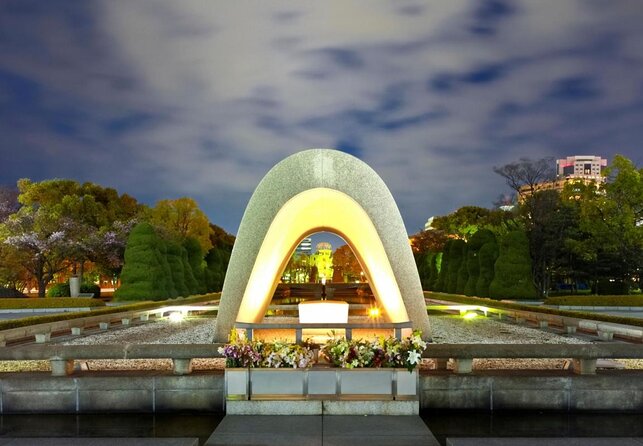
The Atomic Bomb Dome is the tour’s best-known stop. It is also one of the places where a bicycle is useful. You can approach from different parts of the park, then pause while the guide explains local memories and the building’s survival.
Expect a thoughtful stop rather than a long private visit. The route has many locations to cover, and the guide must keep the group moving. If you want a more detailed look inside the Peace Memorial Museum or time for extended reflection at the Dome, plan that separately.
A few more Hiroshima half-days to weigh up
- Peaceful Hiroshima & Miyajima UNESCO 1 Day Bus Tour
★ 5.0 · 5,309 reviews - Hiroshima: Hiroshima and Miyajima UNESCO Sites 1-Day Tour
★ 4.9 · 2,330 reviews - Hiroshima / Miyajima Full-day Private Tour with Government Licensed Guide
★ 5.0 · 1,298 reviews - Hiroshima Historical Walking Tour – Why A-Bomb was Dropped
★ 4.8 · 893 reviews
Riverside Hiroshima and the Peace Bridge
From the Dome, the route follows the Motoyasu River toward the southern part of the city. The riverside stretch changes the tone of the ride. Instead of moving from one solemn marker to another, you see water, trees, paths, and the city’s daily rhythm.
The Peace Bridge is part of this section. Your guide links the river route with Hiroshima’s post-war recovery, helping you see how the city’s waterways fit into its present form.
I find this part valuable because it prevents the tour from becoming a list of tragic sites. Hiroshima is a living city, and riding along the river makes that clear without pushing the wartime story aside.
Higashisenda Park and the trees from around the world
At Higashisenda Park, about one kilometer from the center of the blast, the focus turns to trees and international connections. Trees from countries around the world grow here, and the guide explains the stories tied to the site.
This stop gives the tour a quieter form of remembrance. You are not only looking at buildings and monuments. You are also seeing living things that survived, were replanted, or came later as symbols of peace.
The scheduled stop is about 20 minutes. Bring water, especially in summer. The cycling itself is gentle, but Hiroshima’s heat can make a three-hour outdoor activity feel longer than the mileage suggests.
The Red Cross hospital window frame
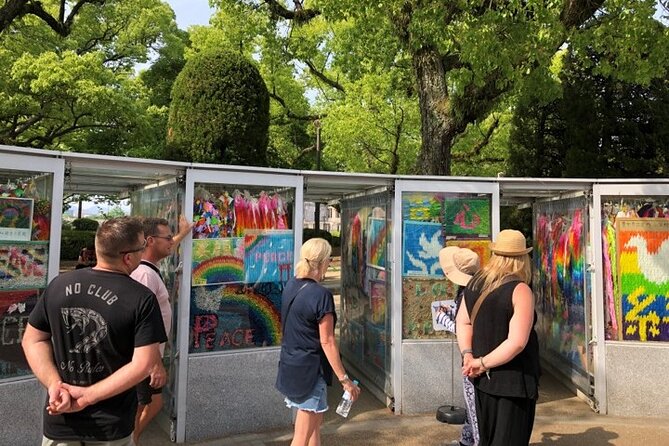
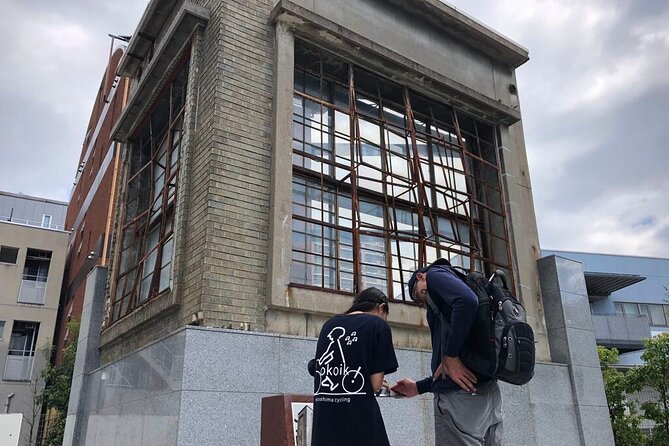
One of the most direct stops is the Atomic Bomb Window Frame Monument at Hiroshima Red Cross Hospital. The hospital stood about 1.5 kilometers from the blast center, and remnants of the building show how far the bomb’s force reached.
This is a useful counterpoint to the Atomic Bomb Dome. The Dome is the famous image, while the hospital site brings the damage closer to a working medical setting. Your guide explains what remains and why the site matters.
The timetable allows around 20 minutes here. The subject is difficult, and the guide’s role is important. Shin, in particular, has been praised for sharing family experiences alongside factual explanation, while other guides such as Moe, Kana, Toma, and Thomas bring their own local perspectives and styles. Your assigned guide may differ, but the experience is built around spoken interpretation rather than silent sightseeing.
Surviving railway cars and Miyuki Bridge
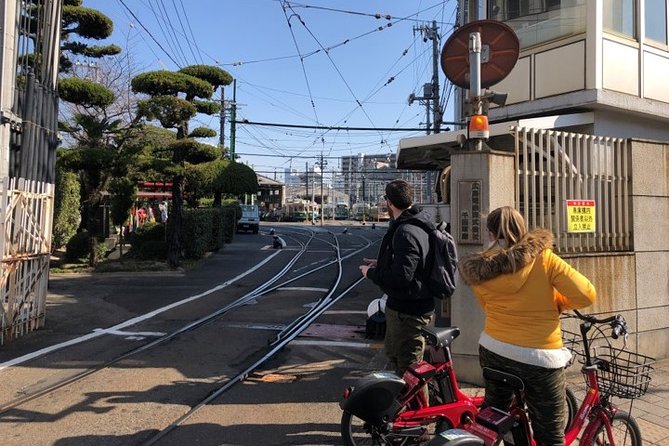
The route then reaches the Hiroshima Railway area, approximately 2 to 2.5 kilometers from the blast center. Two railway cars survived the bombing and continued operating, a striking reminder that the city’s recovery involved practical work as well as memorials.
You spend about 10 minutes here. It is a short stop, but it adds a powerful sense of distance. By now, you have moved well beyond the central park and can compare the different degrees of destruction and survival across the city.
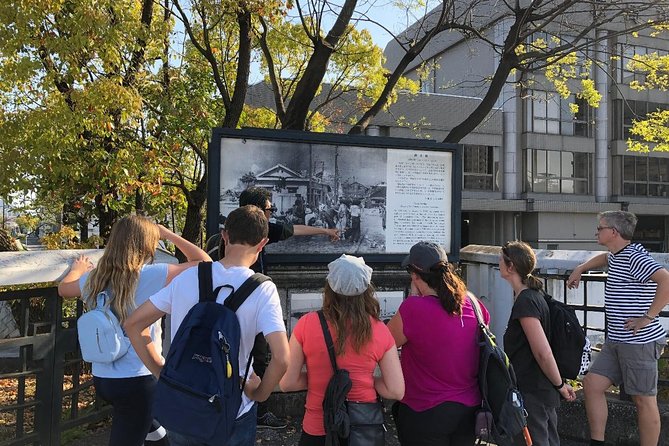
At Miyuki Bridge and the Kobayashi River, the tour reaches the area where the bomb’s effect ended. A photograph displayed here shows the contrast between the immediate aftermath and the city today.
This is one of the places where a guide adds real value. The physical setting alone cannot explain the picture or its significance. You need someone to connect the image, the river, the bridge, and the present-day streets around you.
The surviving weeping willow and Peace Boulevard
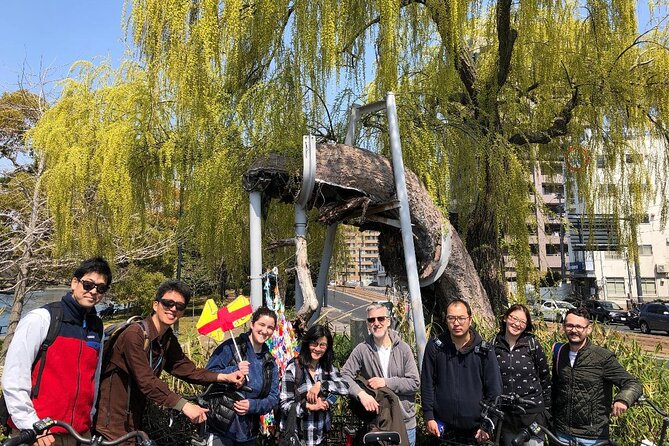
The surviving weeping willow tree is described as a highlight of the ride. It continued growing despite the belief that Hiroshima would not support natural growth for many decades. The tree represents endurance, but the guide also uses it to explain how recovery unfolded across the city.
The final ride back follows Peace Boulevard. You pass other monuments and significant trees while seeing modern Hiroshima around them. This last section brings the main theme into focus: remembrance and ordinary city life exist side by side.
The tour is scheduled to return to the Peace Park at 13:00 for the morning departure, or 17:00 for the afternoon departure. That timing leaves room for lunch, the Peace Memorial Museum, or another Hiroshima sight afterward.
What the $85.89 price includes
At $85.89 per person, this is not the cheapest way to see Hiroshima’s central sights. You are paying for more than transportation, though. The price includes the guided interpretation, bicycle, entrance fees, and bicycle accident insurance.
The value is strongest if you want one person to connect a large number of sites. On your own, you could visit the Peace Park and Atomic Bomb Dome easily, but reaching the castle, hospital, railway locations, bridges, parks, and surviving trees would take more planning.
The tour is also a good use of a short Hiroshima stay. Three hours is long enough to build a clear picture of the city but short enough to leave most of the day open. If you already know Hiroshima well, or prefer long museum visits, the shorter two-hour version may suit you better. The three-hour route adds Hiroshima Castle and more detail on the city before and after the bombing.
Electric bikes, comfort, and practical limits
The e-bikes are a major reason this tour works for a broad range of people. Several guides, including Shin, have been praised for making the ride easy and safe, and the flat route does not demand serious cycling ability. The electric assistance is especially useful in summer heat.
The bikes may feel undersized for some adults, so tall riders should check the fit before setting off. You also need to be comfortable riding in a shared group and stopping frequently.
The tour includes bicycle accident insurance, but you should still follow the guide closely. The schedule can change with conditions, and the pace may be reduced when children or less experienced cyclists are present.
Rain brings a clear alternative. If the cycling plan cannot run safely, you may choose another date, receive a refund, or take a walking route. The rainy route includes the Peace Memorial Park, Atomic Bomb Dome, hypocenter, Former Bank of Japan, Fukuromachi Elementary School, and the main street. It is shorter in geographic range and more concentrated on the bombing’s central sites.
Who should book this Hiroshima ride
I would choose this tour if you want context, personal storytelling, and a practical way to cover more ground. It suits first-time visitors, families with older children, couples, and anyone who prefers learning through movement rather than spending a full morning indoors.
It is also a strong choice for people making a day trip from Kyoto or Osaka, since the three-hour schedule leaves time around the ride. The emotional subject is handled through stories, places, and recovery, but you should still expect some difficult moments.
I would skip it if you dislike bicycles, need complete control over your schedule, or want long periods at each monument. A private guide or self-guided visit may be better for that style. Also remember that the tour ends where it begins, so you will need to arrange your own next activity and luggage storage.
FAQ
How long does the Hiroshima Peace Cycling Tour last?
The tour lasts approximately three hours. The morning schedule runs from 10:00 to 13:00, and the afternoon schedule runs from 14:00 to 17:00.
Where does the tour start and finish?
You meet at the Hiroshima Peace Memorial Park Rest House. The tour ends back at the same meeting point.
How many people can join the tour?
The shared tour has a maximum of 10 participants.
Are electric bicycles provided?
Yes. Adult electric bicycles are provided for participants who are at least 145 centimeters tall. Children’s bicycles and child seats are available under the stated height and weight limits.
Are entrance fees included?
Yes. Entrance fees listed for the tour are included in the price.
Is bicycle insurance included?
Yes. Bicycle accident insurance is included in the tour price.
What happens if it rains?
If poor weather prevents the cycling route, you may be offered another date or a full refund. A rainy-day walking route is also available, covering central Peace sites and the hypocenter area.
Can I store luggage at the meeting point?
There is no luggage storage at the Peace Park Rest House. Coin lockers are available at the Hiroshima International Conference Center and Hiroshima Peace Memorial Museum, about a six-minute walk away.
Can I cancel for a full refund?
You can cancel at least 24 hours before the local start time for a full refund. Cancellations or changes made less than 24 hours before the start are not refunded.
Should you book it?
Yes, if you want Hiroshima explained through both its landmarks and its living city. The strongest part is the combination of easy e-bikes, a small group, and guides who may connect the bombing to their own families, as Shin and Moe have done.
Book the three-hour version if you want the fuller picture, including Hiroshima Castle, the hospital remains, railway survivors, and post-war recovery. Choose the two-hour option only if your schedule is tight or you mainly want the Peace Park and nearby memorials. Either way, leave time afterward for the Peace Memorial Museum and your own quiet look around the park.
Just added around Hiroshima
- The Peace Memorial to Miyajima : Icons of Peace and Beauty★ 4.5 · 31 reviews
- Shore Excursion from Hiroshima Port : Private Tour in Hiroshima★ 5.0 · 17 reviews
- Hiroshima Saijo Sake Tasting Tour with visit to 7 Breweries★ 5.0 · 104 reviews
- Hiroshima & Miyajima All-Inclusive Tour w/Licensed guide Pancho★ 5.0 · 54 reviews
- Hiroshima Country Cycling: Explore Rural Life 1 HR from City★ 5.0 · 22 reviews
- Okunoshima Rabbit Island Cycling Tour with Local Guide★ 4.5 · 17 reviews
- Private Full Day Hiroshima Tour★ 4.5 · 29 reviews
- Hiroshima Private Tour with a Local – Highlights & Hidden Gems★ 4.5 · 24 reviews
Hiroshima Tours, compared.

Peaceful Hiroshima & Miyajima UNESCO 1 Day Bus Tour
Read our review →
Hiroshima and Miyajima UNESCO Sites 1-Day Tour
Read our review →
Hiroshima Historical Walking Tour – Why A-Bomb was Dropped
Read our review →
Hiroshima Peace (Heiwa) Walking Tour at World Heritage Sites
Read our review →
Hiroshima in a Nutshell: Morning Bike Adventure
Read our review →
Hiroshima City 4hr Private Walking Tour with Licensed Guide
Read our review →

Japanesel Archery Experience HIROSHIMA CASTLE SHARAKU
Read our review →Browse the lists this tour appears in