
Reviewed · KYOTO TOURS
Kyoto Family Kitchen Cooking Class
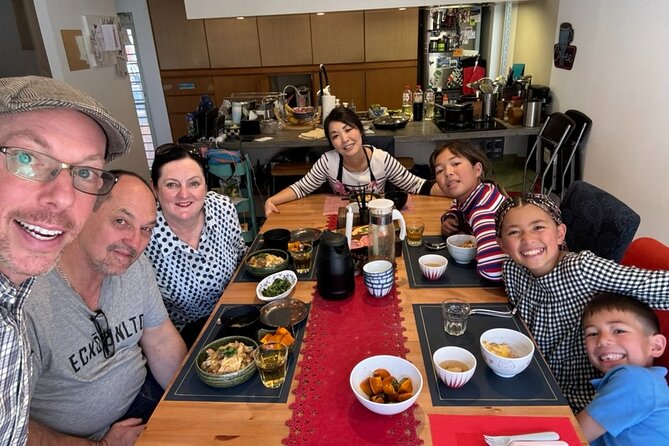
The special thing here is not mastering restaurant-style sushi. It is being welcomed into Anthony and Naomi’s Kyoto home, putting on an apron, and helping prepare the kind of meal a Japanese family might eat on an ordinary evening. Their children, cat, and dog are part of the setting, so this feels more like a family dinner with cooking than a formal lesson.
I like the chance to learn the everyday building blocks of Japanese food, especially dashi, soy sauce, mirin, and sake. I also like the private format: your group cooks and eats together rather than following a large class through a fixed demonstration. The main consideration is that the class may feel informal. If you want precise knife instruction, printed recipes, and a polished culinary school routine, this may not be the right pick.
Key points at a glance
- Cook in a real Kyoto family home: Anthony and Naomi welcome you into a suburban house outside the city center.
- Learn everyday Japanese staples: The focus is on dashi, soy sauce, mirin, sake, and simple home cooking.
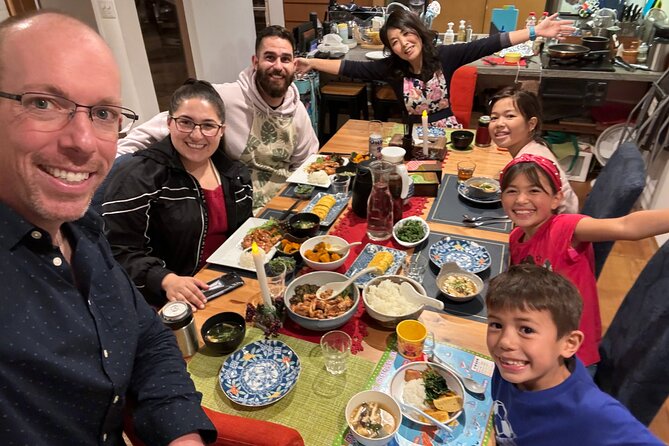
- Expect dinner, not just a lesson: After preparing the meal, you sit down together for food and conversation.
- Good for mixed-age groups: Children can take part, and the family’s kids and pets help keep the mood relaxed.
- Private and flexible: Only your group participates, with menus and meeting details finalized after booking.
- Plan ahead: The experience is commonly booked about 43 days in advance and requires at least two people.
What makes this Kyoto cooking class different
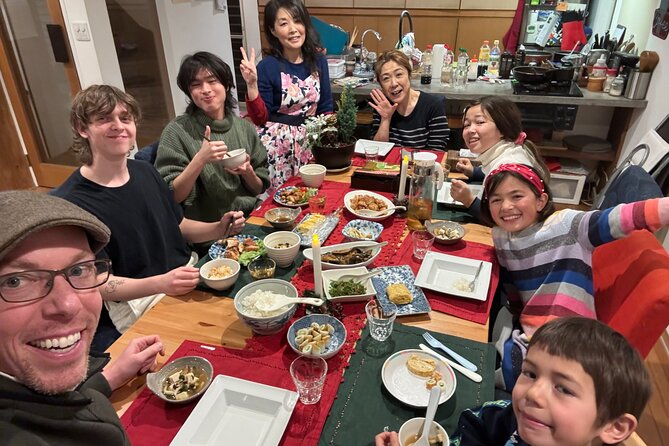
Many cooking classes teach you to reproduce a famous Japanese dish. Kyoto Family Kitchen aims at something more personal: showing you how food fits into family life.
You begin with tea and conversation. The hosts ask about your trip, then turn the talk toward food and the meal you will prepare. This opening matters. It gives you time to settle in and helps the evening feel social rather than rushed.
The setting is a suburban home on a hill in Sakyo Ward, outside Kyoto’s central sightseeing zone. That means you trade a busy tourist district for a quieter residential setting. You will not be visiting a historic temple or a market during this activity. The attraction is the household itself and the chance to spend an evening in a local family environment.
Anthony and Naomi host with their children, and the family pets may be nearby. That is a plus for families who want their children to meet local kids and have a little room to relax. It also means the atmosphere is not controlled like a professional demonstration kitchen. Expect conversation, movement, and the ordinary sounds of family life.
More cooking classes in Kyoto:
- Ramen Cooking Class at Ramen Factory in Kyoto
★ 5.0 · 1,937 reviews - Kyoto: Ramen Cooking Class at a Ramen Factory with Souvenir
★ 4.9 · 532 reviews - Kyoto: Ramen, Gyoza, and Onigiri Cooking Class
★ 5.0 · 445 reviews
Arriving at the house on the hill
The meeting point is 33-50 Kamitakano Saimyōjiyama in Sakyo Ward, Kyoto. The experience includes transportation to Kokusaikaikan subway station, which is useful because the home is outside the central sightseeing area.
After booking, you work with the host to finalize the meeting time, menu, and directions. Do not treat the address as a place to wander toward without checking the arrival instructions. A residential address can be harder to identify than a hotel or station, so save the details before leaving your accommodation.
The class runs Monday through Friday from 6:00 PM to 8:30 PM. The evening timing works well after a day of sightseeing, but it leaves little room for a late start. Kyoto’s attractions can run on their own schedules, so I would avoid booking a major evening event immediately afterward.
The activity is private, and only your group participates. That is especially helpful for families with different ages, small groups of friends, or anyone who feels awkward cooking in front of strangers. The minimum is two people.
Tea, conversation, and a look at the menu
The first stage is deliberately slow. You take a seat, have tea or coffee, and talk with the hosts about your trip. The cooking begins only after everyone has had time to arrive and get comfortable.
You then preview the food for the evening. The exact menu is arranged after booking, so you should use that conversation to discuss allergies, dietary needs, and the kind of food your group hopes to make. The hosts have accommodated a vegetarian guest in a group of six, providing plenty of food rather than treating the vegetarian option as an afterthought.
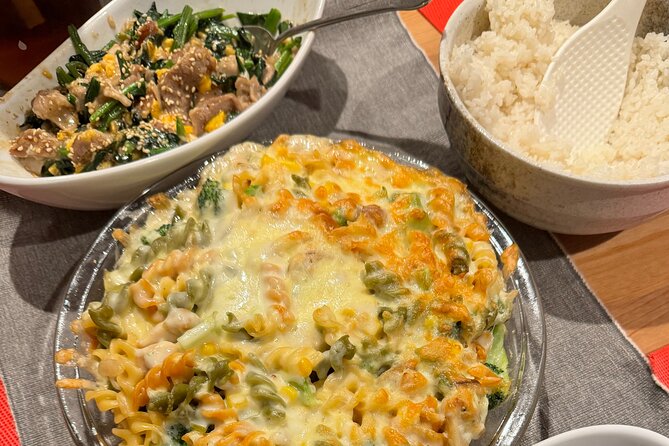
The dishes described in the experience and its individual feedback include gyoza, tamago yaki, okonomiyaki, teriyaki chicken, and sautéed vegetables. These examples suggest a practical home-cooking approach, but they should not be treated as a guaranteed menu for every booking.
This flexibility is valuable. A child may be more interested in making gyoza than learning a complex fish preparation. A vegetarian may need a menu built around vegetables and other suitable ingredients. The class works best when you discuss those needs early rather than assuming the same dishes are served every night.
Cooking around the kitchen counter
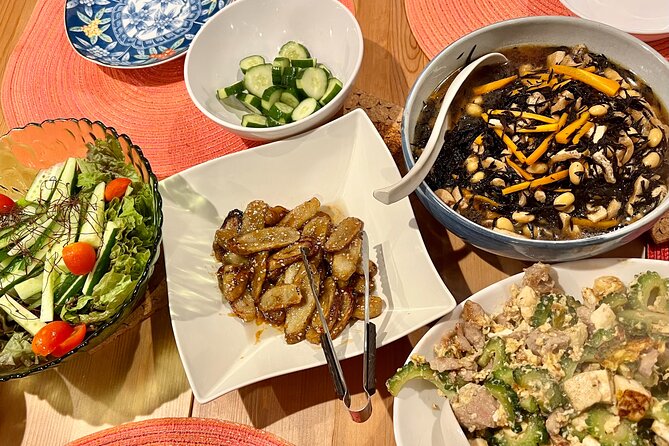
Once the menu is clear, you put on aprons and gather around the kitchen counter. The work includes slicing, dicing, mixing, and preparing the ingredients together.
The teaching centers on the staples that make many Japanese meals possible. Dashi provides a savory base. Soy sauce adds salt and depth. Mirin brings sweetness, and sake is used as part of the flavor structure. These are not exotic ingredients reserved for special occasions. They are the practical pantry items that help turn simple food into a recognizable Japanese meal.
That focus gives you something useful to take home. You are not just copying one dish. You are learning how several common seasonings function in a family kitchen. The class is therefore better suited to someone who wants a feel for Japanese home cooking than to someone chasing advanced technical skills.
Children can participate, though the precise tasks will depend on their age and comfort in a kitchen. The family-friendly approach is one of the experience’s strongest features. Your child may cook, chat, play with the hosts’ children, or spend time near the family pets. You should still expect to supervise your own children, particularly around knives, hot pans, and kitchen surfaces.
The hosts prepare some elements in advance, which is normal for a two-and-a-half-hour home meal. That keeps the evening moving and allows more time for eating and conversation. If you want every ingredient handled from start to finish by your group, ask about that when the menu is arranged.
More hands-on workshops in Kyoto:
- Kyoto: 45-Minute Tea Ceremony Lesson Experience
★ 4.3 · 2,378 reviews - Kyoto : Chopsticks Making Workshop in Gion with Engraving Option
★ 5.0 · 958 reviews - Kyoto: Samurai Sword Class by Experts in Traditional Arts
★ 4.9 · 657 reviews - Ninja 1-hour Hands-on Lesson by Japanese master in Kyoto -Entry
★ 5.0 · 489 reviews
The meal is the heart of the evening
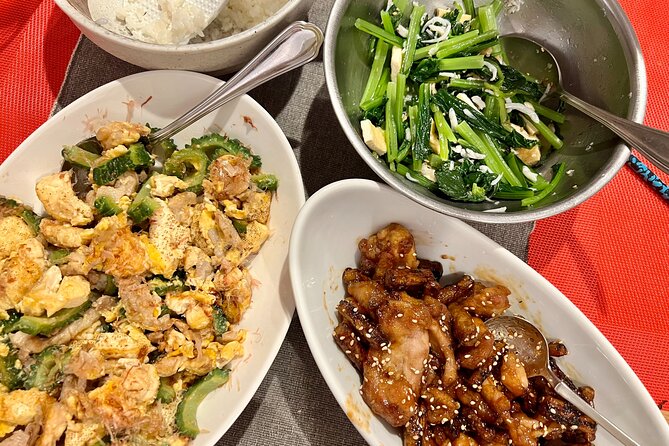
After the cooking, everyone gathers around the table. Dinner is included, along with coffee or tea, ingredients, seasonings, fees, and taxes.
The meal is where the experience becomes more than a lesson. You can ask about Japanese food, family routines, Kyoto, and daily life while eating the dishes you helped prepare. The hosts have also shared simple Japanese phrases with visitors, a small touch that can be useful during the rest of your trip.
I especially like this format for families. A formal class can leave children waiting while an instructor talks. Here, the meal and family setting give them something else to do, including meeting the hosts’ children and seeing how a household works.
The same format suits couples and small groups who value conversation. You do not need to be a serious cook. The evening is about preparing food together and sharing time at the table.
Still, keep your expectations in the right place. One person described the activity as informally cooking alongside or assisting the host family rather than taking a traditional cooking class. That is the clearest warning for potential buyers. The hosts are kind and accommodating, but the instruction may be conversational and hands-on rather than step-by-step and highly structured.
Food, dietary needs, and what to clarify

The hosts provide all ingredients and seasonings, and they have shown flexibility with vegetarian requirements. That is encouraging, but you should share dietary restrictions before the visit so the menu can be planned properly.
Do not assume that a standard Japanese dish is automatically vegetarian. Dashi may contain fish, and sauces can include ingredients that matter to people with allergies or strict diets. The experience specifically highlights dashi, soy sauce, mirin, and sake, so ask how each will be used if you need to avoid particular ingredients.
Alcoholic beverages are not included. Tea and coffee are included, and dinner is included, but you should budget separately if you want alcohol.
Because the menu is finalized after booking, this is one of the more important parts of the preparation. A clear conversation can turn the class into a comfortable meal for everyone. It also helps the hosts decide which jobs and dishes will suit your group.
Is $96.84 per person good value?
At $96.84 per person, this is not simply a meal out. You are paying for a private two-and-a-half-hour visit, an English-speaking instructor, ingredients, dinner, drinks such as tea or coffee, and transportation to Kokusaikaikan subway station.
The strongest value comes from the social setting. If you only want to eat Japanese food, Kyoto has many less expensive choices. If you want a short, private evening with a local family, hands-on preparation, and a meal made together, the price covers more than the food itself.
The private format also changes the value calculation. Your group does not share the kitchen with unrelated participants, and the host can discuss a menu suited to your needs. That can be particularly worthwhile for a family or group of friends who want an activity built around their own pace.
The price is harder to justify if your main goal is formal cooking instruction. You may leave with a better sense of Japanese pantry staples and family dishes, but not with the same technical training or structured recipe practice offered by a professional cooking school.
The overall score is 4.9 out of 5 from 60 ratings, with 97 percent recommending the experience. Those figures point to strong satisfaction, especially with the warmth of the family, the food, and the cultural exchange. They should not erase the one important limitation: the teaching style is informal.
Best for families, couples, and curious eaters
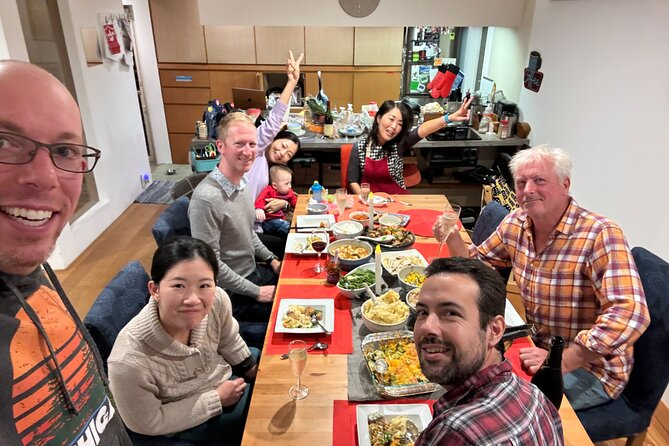
Families are the natural match. Children can join the cooking, meet the hosts’ children, and interact with the cat and dog. One multigenerational group included a 78-year-old grandmother and an 11-year-old child, and the format suited both.
Couples can also enjoy it, particularly if they want a quieter evening away from the main sightseeing routes. The meal gives you time to talk with Anthony and Naomi rather than simply watching an instructor work.
Small groups of friends are another good fit. A group of six successfully included a vegetarian member, and the private setting makes it easier to handle different tastes.
I would be more cautious about booking this for a solo visitor. The stated minimum is two people, so solo participation is not guaranteed. The experience may sometimes welcome solo visitors as part of a larger arrangement, but the provided booking conditions specify at least two guests.
You should also be comfortable entering a private home. The children and pets are not decorative extras. They are part of the evening. If you prefer a quiet, spotless, professional kitchen with no household interruptions, choose a different format.
Practical planning before you book
The class is offered Monday through Friday, 6:00 PM to 8:30 PM, during the published operating period of December 8, 2023 through June 7, 2026. Availability can be limited, and the average booking lead time is about 43 days, so I would arrange it well before your Kyoto visit.
Confirm these points after booking:
- The meeting time and directions to the residential address
- The menu for your group
- Vegetarian needs, allergies, or other food requirements
- The transport arrangement to Kokusaikaikan subway station
- Any questions about children participating in kitchen tasks
Mobile tickets are accepted, and confirmation is provided at booking. Service animals are allowed, and the meeting point is near public transportation.
Cancellation is free up to 24 hours before the start time for a full refund. Changes or cancellations made less than 24 hours before the start are not accepted or refunded, with cut-off times based on local time.
The honest verdict
Book Kyoto Family Kitchen if you want a personal evening with a Kyoto family, not a formal culinary course. Anthony and Naomi offer the chance to cook everyday Japanese food, talk over tea, meet their children, and share dinner in a real home. The strongest memories are likely to come from the conversation and family setting as much as from the dishes.
Families with children, couples, and small private groups are the best match. Vegetarian diners should contact the hosts in advance, since the menu can be prepared with dietary needs in mind. Skip it if you want exact recipes, advanced technique, or a tightly scripted class.
For the right audience, $96.84 buys a rare kind of Kyoto experience: not another stop on a sightseeing route, but an evening spent around a family kitchen table.
FAQ
Where does the Kyoto Family Kitchen Cooking Class take place?
It takes place at 33-50 Kamitakano Saimyōjiyama, Sakyo Ward, Kyoto, 606-0064, Japan, in the hosts’ suburban home outside the city center.
How long does the cooking class last?
The experience lasts approximately 2 hours and 30 minutes, from 6:00 PM to 8:30 PM on its scheduled operating days.
Is transportation included?
Transportation to Kokusaikaikan subway station is included. After booking, you finalize the meeting time and directions with the host.
Is the class private?
Yes. Only your group participates in the activity. A minimum of two guests is required.
Is dinner included?
Yes. Dinner, coffee or tea, all ingredients and seasonings, an English-speaking instructor, and all fees and taxes are included. Alcoholic drinks and gratuity are not included.
Can the class accommodate vegetarians?
The hosts have accommodated vegetarian diners and provided plenty of suitable food. You should discuss vegetarian needs and any other dietary requirements after booking so the menu can be arranged in advance.
Just added around Kyoto
- Kyoto: Zen Meditation at a Private Temple with a Monk★ 5.0 · 25 reviews
- Kyoto: Gion Geisha District & Sake-in-Hand Walking Tour★ 5.0 · 37 reviews
- Private Pewter Sake Cup Experience with a Kyoto Artisan★ 5.0 · 31 reviews
- Your Private Vacation Photography Session In Kyoto★ 5.0 · 110 reviews
- Private Guided Traditional Buddhist Cooking in Japan★ 5.0 · 16 reviews
- Kyoto Wagashi(Japanese sweets) Cooking Class near Fushimiinari★ 5.0 · 60 reviews
- Traditional Japanese Music show & Experience Tour in Kyoto★ 5.0 · 57 reviews
- Kyoto:Family-Friendly Kimono & Yukata Experience at WARGO★ 5.0 · 147 reviews
Kyoto Tours, compared.


Fushimi Inari, Kinkakuji, Bamboo Grove 1 Day Bus Tour
Read our review →
Tea Ceremony in a Traditional Tea House in Kiyomizu
Read our review →
Kyoto Geisha Walking Tour: Gion District & Hidden Gems
Read our review →

Gion Magical Night Walking Tour with Geisha Trivia
Read our review →

Gion Geisha District Walking Tour – Stories of Geisha
Read our review →Browse the lists this tour appears in