
Reviewed · KYOTO TOURS
Kyoto Nishiki Market & Depachika: 2-hours Food Tour with a Local
Kyoto’s food culture makes the most sense when someone helps you read the stalls. This two-hour walk begins at Daimaru’s Depachika, a polished underground food hall, then moves into the older, more unruly world of Nishiki Market. You’ll sample yuba sashimi, a soy milk donut, Nishiki gyoza, and Uoriki tempura before ending at Nishiki Tenmangu Shrine.
I like the sharp contrast between the department-store food hall and Nishiki Market, and I like that the guide can help you choose foods instead of leaving you to point at mystery dishes. Guides including Jasmine, Mao, Boris, Ai, Alex, and Katz have earned especially warm praise for their friendliness and food advice. The main drawback is that the amount of food may feel light for a full meal, and the tour’s flexible tasting style is not always clear when you book.
Key points at a glance
- Two very different food stops: Start with Daimaru’s tidy Depachika, then move to Nishiki’s traditional market stalls.
- Four listed tastings included: Try yuba sashimi, a soy milk donut, Nishiki gyoza, and Uoriki tempura.
- A guide helps with unfamiliar foods: You can ask about ingredients, customs, and how to choose items at the market.
- Small maximum group: The tour accepts no more than nine people, though some departures may be much smaller.
- A short cultural finish: Nishiki Tenmangu Shrine adds a quiet break after the food stops.
- Good for a first visit: You leave with enough market knowledge to return on your own and buy more.
Starting at Daimaru’s underground food hall
The meeting point is outside Apple Kyoto at 83-1 Tachiuri Nakanochō. From there, your guide leads you to Daimaru Kyoto, where the first 30 minutes take place in the department store’s basement food hall.
A Depachika is not a street market. It is a carefully arranged underground food department where Japanese sweets, prepared dishes, seafood, produce, gifts, and other delicacies are displayed with great care. That makes it an excellent first stop because you can get your bearings before dealing with Nishiki’s tighter lanes and many competing stalls.
I especially like this part for first-time visitors to Japan. A department-store food hall can be difficult to understand on your own. You may see beautifully packed foods, unfamiliar fish, sweets in elaborate boxes, and ready-to-eat dishes without knowing what is seasonal, regional, expensive, or simply popular. A local guide gives you a way into that display.
The contrast also adds value. Daimaru shows the refined, polished side of Japanese food shopping. Nishiki Market is more direct and old-fashioned, with vendors selling individual bites, ingredients, cookware, knives, and Kyoto specialties. Seeing both in one short tour helps you understand that Japanese food culture is not limited to sushi restaurants or ramen counters.
The first tasting listed is yuba sashimi, made from tofu skin. Yuba is closely associated with Kyoto’s vegetarian food traditions, and the sashimi-style preparation lets you try its soft, delicate texture without a heavy sauce or complicated dish. You also receive a soy milk donut, which gives the tasting a sweeter, more casual counterpoint.
The guide may suggest additional foods depending on the group and the market conditions. The experience is not presented as a fixed, all-you-can-eat meal. That distinction matters. You are paying for several tastings, but also for help understanding what you are seeing and for the chance to ask what is worth buying.
More Food Tours in Kyoto
- Kyoto Night Foodie Tour in Gion (9+ dishes + 6 Sake tastings)
★ 5.0 · 1,762 reviews - Kyoto: Gion Food Tour 13 Dishes at 4 Eateries
★ 5.0 · 408 reviews - Kyoto: Gion & Pontocho Food Tour with 13 Dishes
★ 4.9 · 235 reviews
Working through Kyoto’s Kitchen
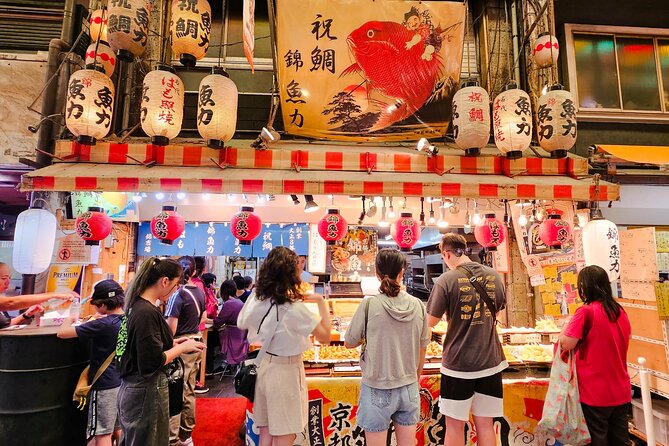
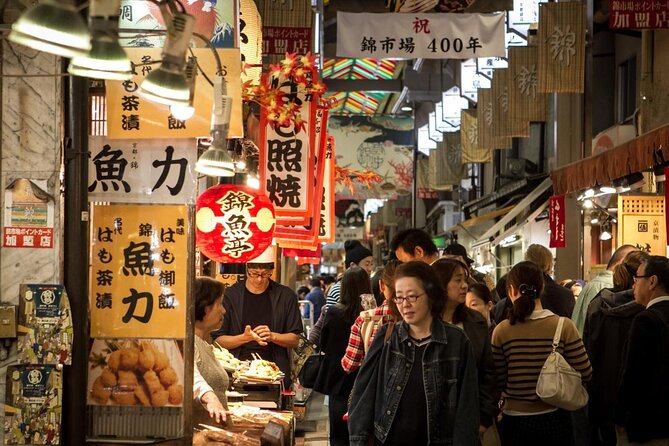
The walk then spends about an hour in Nishiki Market Shopping District. Known as Kyoto’s Kitchen, Nishiki is an indoor market with stalls selling seasonal foods, local specialties, produce, seafood, prepared bites, knives, and cookware.
The market can feel crowded and confusing, especially if this is your first visit. A guide can point out foods that are easy to miss, explain what you are looking at, and keep the group moving through the narrow shopping district. That practical help is one of the strongest reasons to book rather than simply arrive alone.
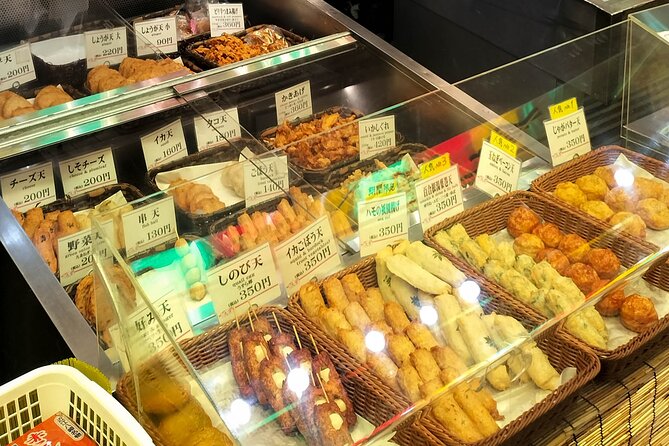
The listed Nishiki tastings include Nishiki gyoza and Uoriki tempura. Gyoza gives you a familiar reference point, though the market version may still introduce a different filling or cooking style. Tempura offers another texture and lets you sample a classic Japanese preparation in a market setting rather than at a formal restaurant.
The food choices can be flexible. One couple found that the guide let them try what interested them instead of forcing every person to eat the same items. That is useful if you have strong preferences or want to ask for recommendations. It also means you should not expect the same exact spread on every departure.
Some foods at Nishiki are mild and easy for first-timers. Others may be more unusual. One guide introduced live octopus pieces, which one person could not eat, while another participant found exotic foods difficult for the stomach. Your guide can help you understand what you are ordering, but the tour does not promise that every sample will suit every palate.
If you have food allergies, dietary restrictions, or foods you avoid, explain them before you start eating. The supplied information does not promise a special dietary menu, and the tour is built around market tastings. You should also remember that other meals and drinks are not included, so this is best treated as a guided introduction, not lunch or dinner.
What the guide adds to the market
The guide is the deciding factor here. The best departures appear to be warm, social, and practical, with the guide explaining Japanese customs as well as food. Mao received especially strong praise for showing local traditions and keeping the experience natural. Jasmine was singled out for taking care with personal tastes and helping the group choose products.
Boris was praised for being patient, helpful, and very well informed about the market. One person even had trouble reaching the meeting point after a taxi became lost, and Boris communicated to help get the meeting sorted out. That kind of calm assistance is useful in Kyoto, where a wrong turn can quickly put you on a busy shopping street far from your intended start.
Other guides named in the feedback include Alex, Ai, and Katz. Alex was appreciated for explaining food and background while moving the group through the stalls. Ai was described as knowing the market closely and pointing out good places to eat. Katz received praise for making the Daimaru portion especially useful, with one family returning to the food hall later in the trip.
You should not book this expecting a formal lecture. The guide’s job is to make the market readable and enjoyable. On the strongest departures, that means a mix of food explanations, local customs, ordering help, and small bits of history about the market and its shops.
The quality can vary by guide. One person felt the explanation of the market’s history and the foods was too thin, with the guide mainly showing items and buying them. If storytelling is your main reason for booking, that is worth keeping in mind. The tour works best when your guide does more than carry food from stall to stall.
A brief pause at Nishiki Tenmangu Shrine
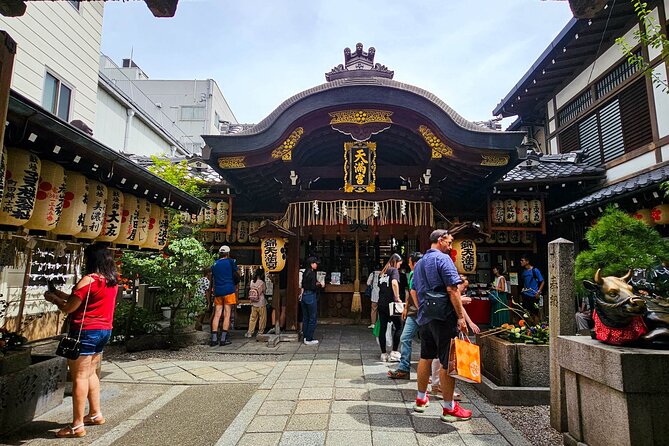
After the market, the group walks to Nishiki Tenmangu Shrine for about 15 minutes. The shrine is dedicated to the deity of learning and provides a calmer ending after the tight market lanes.
This is not a long shrine visit. You will not have time for an extensive tour of the grounds or a detailed religious lesson. Instead, it gives the experience a useful change of pace and links the market visit to Kyoto’s everyday spiritual life.
I like this finish because it prevents the tour from becoming only a sequence of snacks. You get a short look at a local place of worship and a chance to pause before continuing through central Kyoto. The tour ends at Kawaramachi Station, and the guide can help you with your next destination.
That final location is convenient for continuing your day. You can treat the tour as a morning introduction, an afternoon activity before another booking, or a practical way to reach the Kawaramachi area after seeing Nishiki. The exact start time is not provided here, so check the selected departure when booking.
Same base, a completely different sort of day:
- PERFECT KYOTO 1-Day Bus Tour
★ 5.0 · 13,518 reviews - Kyoto: Fushimi Inari, Kinkakuji, Bamboo Grove 1 Day Bus Tour
★ 4.8 · 4,316 reviews - Kyoto: Tea Ceremony in a Traditional Tea House in Kiyomizu
★ 4.9 · 3,519 reviews - Kyoto Geisha Walking Tour: Gion District & Hidden Gems
★ 4.7 · 3,273 reviews
How much food do you actually receive?
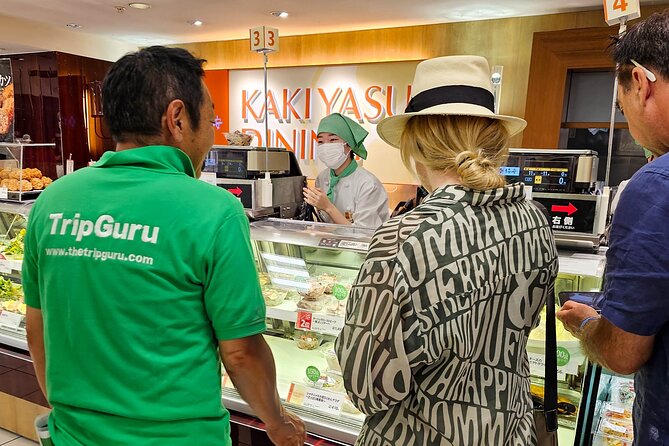
The included tastings are yuba sashimi, a soy milk donut, Nishiki gyoza, and Uoriki tempura. Additional bites may be offered or purchased depending on the guide’s choices, the group’s interests, and what is available at the market.
I would not plan to skip your main meal. One person felt the food portion was smaller than expected, while others sampled beef, shrimp, dessert, tempura, gyoza, and other market foods. The honest way to frame it is this: you receive a useful tasting selection, but not a guaranteed feast.
That can be a strength. A two-hour tour with moderate portions leaves room for you to return to the market and buy the items you liked. It also makes the experience more manageable for families, teenagers, and people who want to sample rather than sit down for a full meal.
The flexible approach is worth understanding before you pay. Some people may prefer a fixed menu with a known number of dishes. Others will appreciate being able to follow the guide’s suggestions and adjust choices to suit the group. If you want a precise food count, ask the provider before booking.
Is $48 a fair price?
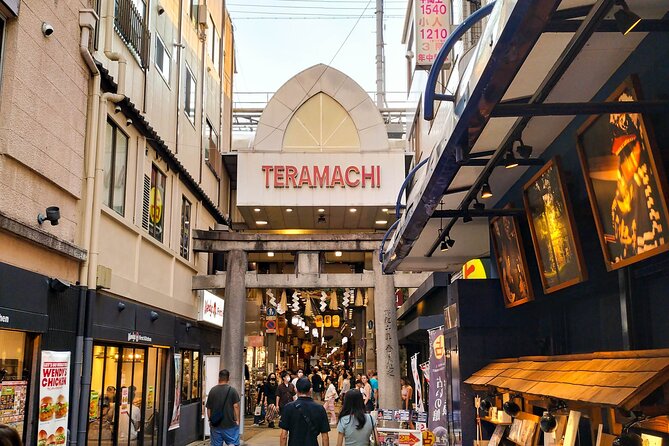
At $48 per person, this is not the cheapest way to walk through Nishiki Market. You can enter both Daimaru and Nishiki Market without paying admission, and you can buy food directly from the stalls.
The fee makes more sense if you value food interpretation and ordering help. You are paying for a local guide, a planned route, the listed tastings, and a small group capped at nine people. A guide can save you from buying something you do not understand, help you find foods that match your taste, and explain customs that are easy to miss when you are shopping alone.
The value is strongest for a first Kyoto visit. You get an introduction to two different shopping styles, learn how to approach the market, and can return later with more confidence. One family used the tour as a starting point and went back to Daimaru several times afterward.
The value is weaker if you already know Japanese market foods, enjoy researching stalls on your own, or want a large meal included. One person felt the tour repeated foods encountered on food tours in Tokyo and Osaka and did not offer enough Kyoto-specific explanation. That is a fair concern, especially for anyone taking several food tours during one Japan trip.
Group discounts are available, and mobile tickets make the booking side simple. The group maximum is nine, but one departure was private for a couple. You should not assume a private tour, though a small group can make it easier to ask questions and adapt the food choices.
Who will enjoy this two-hour walk?
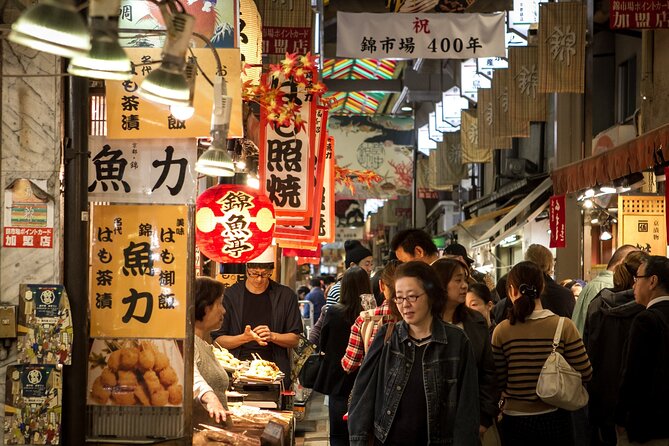
I would recommend this experience to first-time visitors who want a gentle introduction to Kyoto food. It is also a good fit for families with older children or teenagers, since the two-hour length is manageable and the market offers many different sights and flavors.
It suits you if you:
- Want help identifying Japanese foods and Kyoto specialties
- Prefer tasting several small items to sitting through one long meal
- Like a guide who can explain customs while you eat
- Plan to shop for food or kitchen goods after the tour
- Want to combine food with a short cultural stop
- Need a central finish near Kawaramachi Station
It may not suit you if you expect a full lunch, a fixed list of many dishes, or a detailed food-history lecture. It is also not ideal for someone who dislikes unfamiliar textures or cannot eat a broad range of market foods unless dietary needs are confirmed in advance.
The tour can work well early in your Kyoto stay. You will learn enough to return to Nishiki on your own, and the market may feel less intimidating afterward. If you already plan to visit Nishiki several times, book it for the first visit so the guide’s advice can improve the rest of your time there.
Practical details before you book
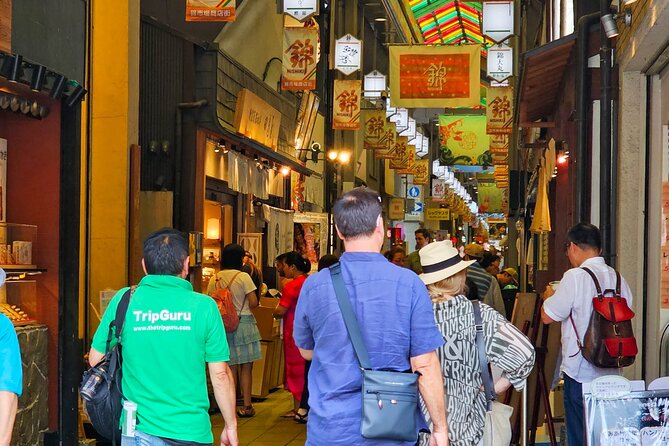
The tour lasts about two hours and includes a guide in your selected language. Hotel pickup and drop-off are not included, so you make your own way to Apple Kyoto for the start.
The route is near public transportation and ends at Kyoto-Kawaramachi Station. Your guide can help you work out where to go next, which is handy if you are heading to another sight, shopping area, or train connection.
Most people can take part, but the supplied details do not give a specific accessibility description. If you need particular assistance, confirm the route and walking conditions before booking.
Free cancellation is available up to 24 hours before the start time for a full refund. Cancellations or changes made less than 24 hours ahead are not accepted for a refund, and the cut-off follows local Kyoto time.
The rating shown for the experience is 4.6 from 23 ratings. The pattern is generally strong for friendly guides, food selection, and help in a busy market, with the main reservations focused on food quantity and uneven depth of explanation.
My recommendation: book it for guidance, not volume
I would book this tour if you want someone to make Nishiki Market easier to understand. The combination of Daimaru’s Depachika, Nishiki’s stalls, four listed tastings, and Nishiki Tenmangu Shrine gives you a well-shaped introduction in only two hours.
Go in expecting a guided tasting walk, not a full meal. The best guide matches, including Jasmine, Mao, Boris, Ai, Alex, and Katz, can make the experience feel personal and useful. The main question is not whether the market is worth seeing. It is whether you want to pay $48 for local help, explanations, and a confident first route through it.
If that sounds useful, this is a sensible early-trip booking. If you prefer to graze at your own speed and choose every dish yourself, keep the $48 for market purchases and explore independently.
FAQ
How long does the Kyoto Nishiki Market food tour last?
The experience lasts approximately two hours. About 30 minutes are spent at Daimaru Kyoto, one hour at Nishiki Market, and 15 minutes at Nishiki Tenmangu Shrine, with time also needed to move between stops.
What food tastings are included?
The listed tastings are yuba sashimi, which is tofu skin, a soy milk donut, Nishiki gyoza, and Uoriki tempura. Other food, meals, and drinks are not included.
Where does the tour start and end?
The meeting point is Apple Kyoto at 83-1 Tachiuri Nakanochō in Kyoto’s Shimogyo Ward. The tour ends at Kyoto-Kawaramachi Station, where the guide can help you with your next destination.
How large is the group?
The tour has a maximum of nine participants. Some departures may be smaller, and one experience was private for a couple, but a private tour is not guaranteed.
Is transportation or hotel pickup included?
No. Hotel pickup and drop-off are not included. The route is near public transportation, and you are responsible for reaching the meeting point.
Can I cancel for a full refund?
Yes. You can cancel at least 24 hours before the experience start time for a full refund. Cancellations or changes made less than 24 hours before the start are not accepted for a refund.
More Shopping in Kyoto
- Kyoto: Local Food Tasting Tour at the Nishiki Market
★ 4.7 · 135 reviews - Kyoto: Nishiki Market and Depachika Food Tour with a Local
★ 4.7 · 76 reviews - Kyoto: Nishiki Market Tour with a Local Foodie & Tastings
★ 4.5 · 67 reviews - Nishiki Market Lunch Tour
★ 5.0 · 47 reviews
More Markets in Kyoto
- Nishiki Market Brunch Walking Tour (7 Tastings + Brunch)
★ 5.0 · 1,355 reviews - Kyoto Nishiki Market Food and Culture Walking Tour
★ 5.0 · 412 reviews - Kyoto: Nishiki Market Tea Ceremony with Koto Performance
★ 4.8 · 294 reviews - Kyoto: Nishiki Market Brunch Walking Tour-7 Tastings+Brunch
★ 4.8 · 197 reviews
Just added around Kyoto
- Kyoto: Zen Meditation at a Private Temple with a Monk★ 5.0 · 25 reviews
- Kyoto: Gion Geisha District & Sake-in-Hand Walking Tour★ 5.0 · 37 reviews
- Private Pewter Sake Cup Experience with a Kyoto Artisan★ 5.0 · 31 reviews
- Your Private Vacation Photography Session In Kyoto★ 5.0 · 110 reviews
- Private Guided Traditional Buddhist Cooking in Japan★ 5.0 · 16 reviews
- Kyoto Wagashi(Japanese sweets) Cooking Class near Fushimiinari★ 5.0 · 60 reviews
- Traditional Japanese Music show & Experience Tour in Kyoto★ 5.0 · 57 reviews
- Kyoto:Family-Friendly Kimono & Yukata Experience at WARGO★ 5.0 · 147 reviews
Kyoto Tours, compared.


Fushimi Inari, Kinkakuji, Bamboo Grove 1 Day Bus Tour
Read our review →
Tea Ceremony in a Traditional Tea House in Kiyomizu
Read our review →
Kyoto Geisha Walking Tour: Gion District & Hidden Gems
Read our review →

Gion Magical Night Walking Tour with Geisha Trivia
Read our review →

Gion Geisha District Walking Tour – Stories of Geisha
Read our review →Browse the lists this tour appears in