
Reviewed · KYOTO TOURS
Private Cooking Class Udon in Kyoto Japan
Making udon in a 130-year-old traditional house is the main draw here. You work through the full noodle process, including mixing saltwater, kneading with your feet, resting the dough, stretching it, and cutting it by hand. I like the setting, filled with old furniture and artifacts, and I like that Tanaka-san and the other local instructors make the lesson lively enough for children.
I also like that you eat the noodles you made, with tempura and dipping sauce provided. The main consideration is timing: the hands-on class lasts about an hour, but lunch and time in the house can keep you there for roughly 1.5 to 2 hours after the lesson. The noodles are boiled by the staff, so this is a good family activity, but not a full lesson in preparing broth or tempura.
Key Points at a Glance
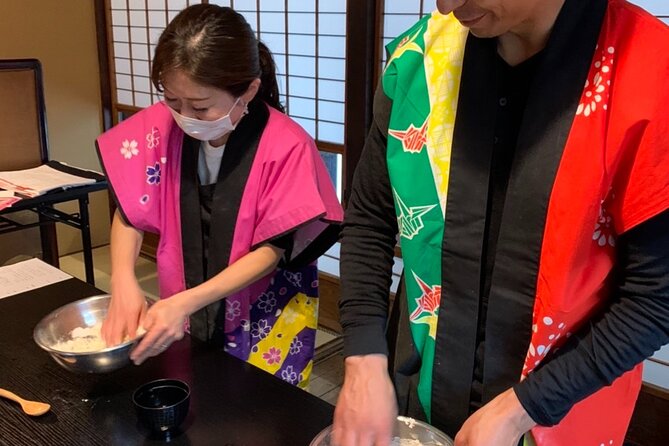
- Foot-kneaded udon dough: You use your feet as part of the traditional preparation, an amusing and memorable step for children and adults.
- A historic Kyomachiya setting: The class takes place in a renovated Japanese house dating back about 120 to 130 years, close to Nishi Honganji Temple.
- A meal made from your work: Your finished noodles are served with tempura, dipping broth, grated ginger, and green onion.
- Friendly local instruction: Tanaka-san is known for an upbeat, patient teaching style, with other local staff helping during the class.
- A practical souvenir: The udon recipe is provided, so you can try the process again at home.
- Easy Kyoto location: The meeting point is about a 12-minute walk from Kyoto Station and a two-minute walk from Nishi Honganji Temple.
Making Udon in a Kyoto Townhouse
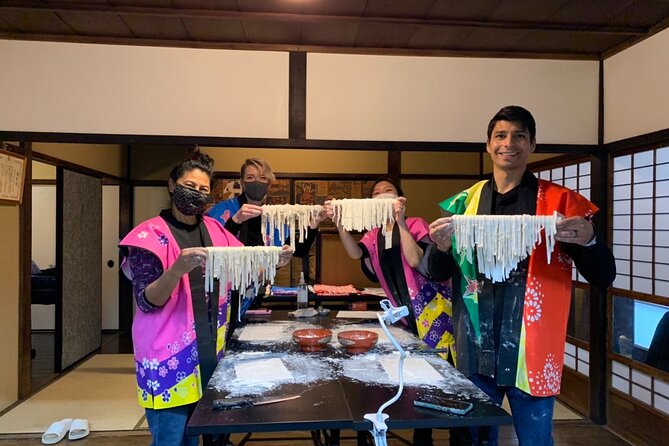
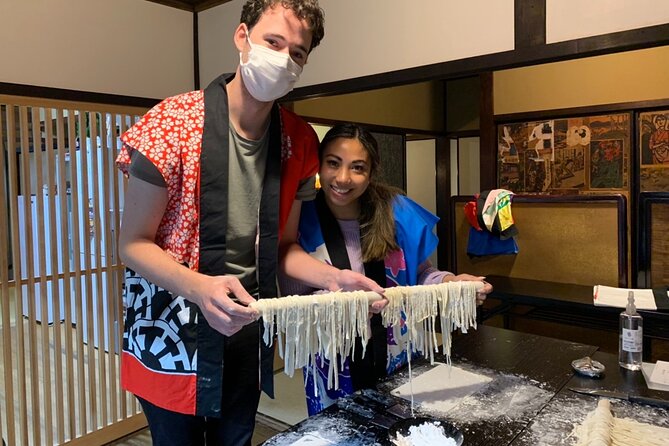
This is not a demonstration where you sit quietly and watch someone else cook. You make the udon yourself, step by step, in a former Kyoto home converted into a cooking classroom.
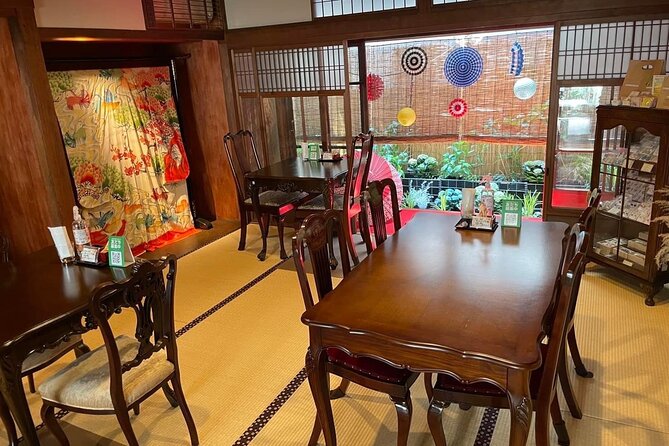
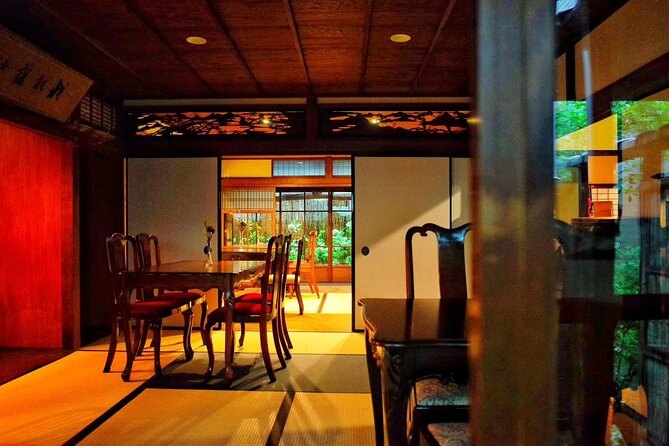
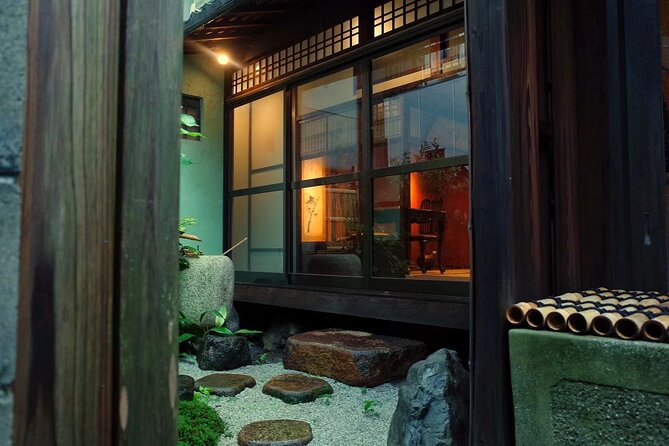
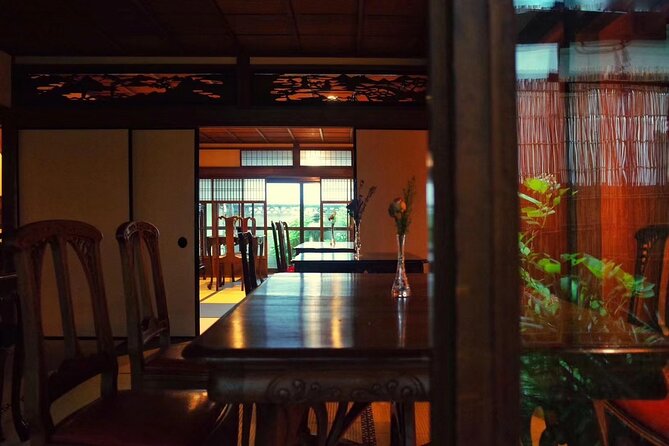
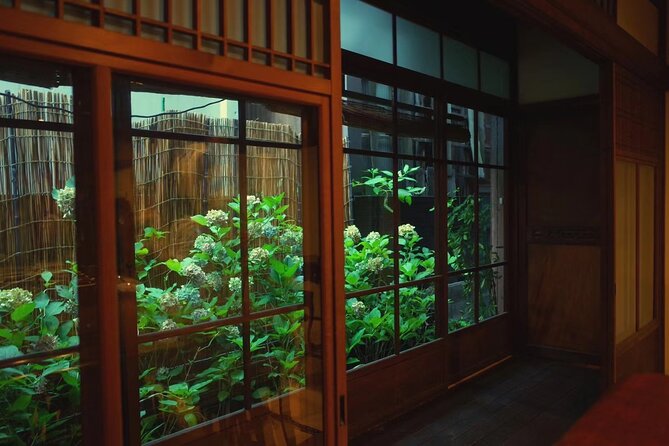
The house is the first part of the experience. It is described as roughly 120 to 130 years old, with antique furniture and objects said to be more than 110 years old. Traditional Japanese music plays inside, adding a sense of time and place without requiring a separate museum visit.
I like this combination of food and architecture. A modern cooking studio could teach you the same basic recipe, but it would miss the atmosphere. Here, the class gives you a reason to enter a traditional wooden house and notice the rooms, furnishings, and old household details.
The location also works well in a sightseeing day. The address is 364 Momijicho in Shimogyo Ward, about a 12-minute walk from Kyoto Station and only two minutes from Nishi Honganji Temple. You can place the noon class before or after visiting the temple, though you should allow extra time beyond the advertised one-hour class.
More cooking classes in Kyoto:
- Ramen Cooking Class at Ramen Factory in Kyoto
★ 5.0 · 1,937 reviews - Kyoto: Ramen Cooking Class at a Ramen Factory with Souvenir
★ 4.9 · 532 reviews - Kyoto: Ramen, Gyoza, and Onigiri Cooking Class
★ 5.0 · 445 reviews
The Eight Steps From Saltwater to Noodles
The process begins with making saltwater. Ingredients are prepared for the class, so you can focus on the method rather than shopping or measuring a long list of items.
Next comes combining the water and flour. The wording of the activity outline is brief, but the hands-on sequence is clear: rinse or work the water into the dough, knead it, let it mature, stretch it, and cut it. This gives you a useful understanding of why udon has its firm, springy texture.
The most playful part is the footwork. You knead the dough with your feet, traditionally using body weight to work it evenly. This is the step that tends to make the class especially appealing for children. One family had children aged four and ten who could take part fully because they did not have to handle boiling water.
The class may also include an udon dance, a cheerful teaching device that helps keep younger participants involved. It sounds silly in the best way, and it breaks up the more careful work of handling the dough.
After the dough rests, you stretch it and cut it with a knife. This is where the activity feels most like a craft. Your noodles may not all be identical, and that is part of the fun. You get a direct look at the handwork behind a food that is often presented as a simple bowl of noodles.
The staff handles boiling the udon. That keeps the class safer and lets you leave the hot-water work to the people running the kitchen. It also means the activity is more accessible for families with small children, though anyone expecting to complete every cooking stage should know this part is not yours to do.
A Lunch Built Around Your Homemade Noodles
Once the noodles are cut, the staff boils them and prepares the rest of the meal. You then sit down and eat what you made.
The meal includes the handmade udon, vegetable tempura, dipping broth, grated ginger, and chopped green onion. The tempura is provided as a separate set, so you do not make it yourself. The broth is also prepared for you, which keeps the class focused on noodles rather than turning it into a longer, more involved Japanese cooking course.
That division works well. Udon dough requires enough attention on its own, and the meal gives you a chance to taste the result while it is fresh. You also get a more complete lunch than you would from noodles alone.
The meal is served after the class in the restaurant area downstairs. Some people finish the formal lesson in about an hour, then spend another 1.5 to 2 hours eating and enjoying the space. If you have timed a temple visit or train connection tightly, plan around the longer visit, not just the class length.
The food is simple, but it has a clear purpose: you can compare the texture of handmade noodles with the store-bought or restaurant versions you already know. The supplied recipe adds value because the experience does not end at the front door. You can try to repeat the dish at home.
Tanaka-san and the Teaching Style
Tanaka-san is the instructor most often singled out by name. Her style is lively, encouraging, and patient, and she explains the steps in English. A younger adult daughter may assist, while other women from the family-run operation help with the lesson and meal.
That matters in a cooking class. Udon dough can feel unfamiliar at first, especially when you are asked to knead it with your feet or cut it into noodles. Clear demonstrations and a relaxed teacher keep the activity from becoming a test of cooking skill.
The class also includes explanations about Japanese culture and the background of udon. One point covered is that udon originated in China before becoming part of Japanese food culture. The history portion is not the main event, but it adds context to the meal and to the traditional preparation.
You should not expect a formal culinary school lesson. The focus is on participation, cultural exchange, and a tasty lunch. If you want advanced knife training, broth preparation, or a detailed study of regional udon styles, this class will feel light. If you want to make something with your hands and understand the basics, it hits the right level.
More hands-on workshops in Kyoto:
- Kyoto: 45-Minute Tea Ceremony Lesson Experience
★ 4.3 · 2,378 reviews - Kyoto : Chopsticks Making Workshop in Gion with Engraving Option
★ 5.0 · 958 reviews - Kyoto: Samurai Sword Class by Experts in Traditional Arts
★ 4.9 · 657 reviews - Ninja 1-hour Hands-on Lesson by Japanese master in Kyoto -Entry
★ 5.0 · 489 reviews
Why Families Like This One-Hour Class
This is one of the better Kyoto food activities for mixed-age groups. Children can help with the dough, take part in the foot-kneading step, cut noodles with guidance, and eat the finished meal. The staff’s friendly manner helps keep the pace comfortable for younger participants.
The absence of boiling-water work is a real advantage for families. Adults still get a complete cooking experience, while children can join in without being placed near the most obvious kitchen hazard.
Teenagers also have a clear role. The process is physical and slightly unusual, rather than another passive sightseeing stop. Older adults can join as well, and one group included a participant aged 83. The activity can suit a broad age range, provided everyone is comfortable standing, working at a table, and taking part in the dough process.
For a private booking, only your group participates. That gives you a more personal setting than a large public class, though the exact amount of individual attention will depend on your group size and the available instructors.
Price, Time, and Location
The price is $60.43 per person. That is not the cheapest way to eat udon in Kyoto, since a regular bowl costs far less. You are paying for instruction, ingredients, the traditional house, the meal, and the time spent with local teachers.
I think the value is strongest if you want an activity rather than just lunch. The house gives the class a sense of place, and the food you eat has a personal connection because you made the noodles yourself. For a family, the price also covers a shared activity that can occupy the middle of the day without requiring a long trip outside central Kyoto.
The class starts at noon and the hands-on portion lasts about one hour. At that point, your actual visit may continue for much longer as the noodles are boiled and lunch is served. Do not book this immediately before another fixed appointment.
The meeting point is near public transportation and within walking distance of Kyoto Station. The short walk from the station makes it practical on an arrival or departure day, but you should still allow time to find the correct traditional house and arrive ready for the noon start.
Bookings are commonly made about 16 days ahead, so popular dates may not remain open at the last minute. Confirmation is sent within 48 hours, subject to availability. The ticket is mobile, which keeps the arrival process simple.
What the Historic House Adds
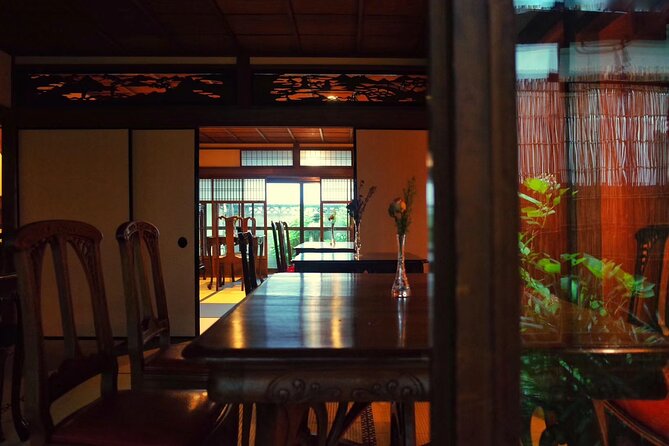
The old house is not just a backdrop for photographs. It changes the rhythm of the class.
You move from making dough to washing your hands, then have time to look around the wooden home while the staff boils the noodles and prepares lunch. This pause is useful. It prevents the class from feeling rushed and gives you a chance to notice the antique furniture and objects that would be easy to miss if you were focused only on the kitchen counter.
The traditional music and preserved furnishings support the cultural side of the activity. You are not simply learning how flour and water become noodles. You are also spending time in a type of Kyoto home that is increasingly difficult to encounter in ordinary daily life.
The setting does have a tradeoff. Historic houses can be less purpose-built than modern studios, and the experience may feel more informal. That is part of its appeal, but visitors who prefer polished, highly structured cooking facilities may find the atmosphere less predictable.
A Few Practical Limits to Know
The class covers handmade udon, not a complete Japanese meal from scratch. You make the noodles, while the staff prepares the boiling, tempura, dipping broth, ginger, and green onion.
The food is suitable for a lunch stop, but the available information does not specify dietary substitutions or allergy procedures. If you need changes to the meal, ask the provider before booking rather than assuming the tempura or broth can be adjusted.
Service animals are allowed. The activity is near public transportation, but the information provided does not describe step-free access, seating arrangements, or restroom facilities. If you have mobility needs, contact the provider ahead of time.
Cancellation is free up to 24 hours before the local start time for a full refund. Changes or cancellations inside 24 hours are not accepted for a refund. The stated policy also says the experience requires good weather, with a different date or full refund offered if poor weather causes cancellation.
Who Should Book the Udon Class?
I would choose this for families, couples, and small private groups wanting a hands-on Kyoto activity that fits neatly around sightseeing. It is especially useful when some people in your group enjoy food but nobody wants a demanding, multi-hour culinary course.
You should also consider it if you are staying near Kyoto Station or planning to visit Nishi Honganji. The central location reduces transit time, and the noon start makes the meal part of the schedule rather than an extra evening commitment.
The class is less suitable if you only want a quick one-hour activity. Once you add lunch and the relaxed time in the house, it can take half a morning or afternoon. It is also not the right choice if your main goal is to learn tempura, soup stock, or restaurant-style udon toppings.
Should You Book This Kyoto Udon Experience?
Book it if you want to make something by hand, eat a real lunch, and spend time in an old Kyoto home. The strongest reasons are the foot-kneaded dough, the warm teaching style of Tanaka-san, the family-friendly format, and the chance to repeat the recipe at home.
Skip it if you are looking for a fast meal or a broad Japanese cooking course. At $60.43 per person, the value depends on treating the class, setting, instruction, and lunch as one experience. For families and food-curious visitors, that package makes good sense. For everyone else, a bowl of udon at a local restaurant will cost less and take far less time.
FAQ
Where does the udon cooking class take place?
It takes place at 364 Momijicho, Shimogyo Ward, Kyoto, 600-8345, Japan, in a renovated traditional Japanese house near Nishi Honganji Temple.
How far is the class from Kyoto Station?
The facility is about a 12-minute walk from Kyoto Station.
How close is the class to Nishi Honganji Temple?
The meeting point is about a two-minute walk from Nishi Honganji Temple.
What time does the class begin?
The activity starts at 12:00 pm.
How long does the cooking class last?
The hands-on class lasts approximately one hour. Eating the finished meal and spending time afterward can extend the visit by roughly 1.5 to 2 hours.
What steps are included in making the udon?
The process includes making saltwater, working the dough, kneading it with your feet, letting it mature, stretching it, cutting it with a knife, and boiling it.
Do participants make the tempura?
No. The tempura is provided as part of the meal, so participants focus on making the udon.
Is the activity private?
Yes. Only your group participates in this private activity.
Can I cancel for a full refund?
Yes, if you cancel at least 24 hours before the experience start time. Cancellations or changes made less than 24 hours before the start are not refunded.
Just added around Kyoto
- Kyoto: Zen Meditation at a Private Temple with a Monk★ 5.0 · 25 reviews
- Kyoto: Gion Geisha District & Sake-in-Hand Walking Tour★ 5.0 · 37 reviews
- Private Pewter Sake Cup Experience with a Kyoto Artisan★ 5.0 · 31 reviews
- Your Private Vacation Photography Session In Kyoto★ 5.0 · 110 reviews
- Private Guided Traditional Buddhist Cooking in Japan★ 5.0 · 16 reviews
- Kyoto Wagashi(Japanese sweets) Cooking Class near Fushimiinari★ 5.0 · 60 reviews
- Traditional Japanese Music show & Experience Tour in Kyoto★ 5.0 · 57 reviews
- Kyoto:Family-Friendly Kimono & Yukata Experience at WARGO★ 5.0 · 147 reviews
Kyoto Tours, compared.


Fushimi Inari, Kinkakuji, Bamboo Grove 1 Day Bus Tour
Read our review →
Tea Ceremony in a Traditional Tea House in Kiyomizu
Read our review →
Kyoto Geisha Walking Tour: Gion District & Hidden Gems
Read our review →

Gion Magical Night Walking Tour with Geisha Trivia
Read our review →

Gion Geisha District Walking Tour – Stories of Geisha
Read our review →Browse the lists this tour appears in