
Reviewed · FUSHIMI INARI TOURS
Kyoto Fushimi Inari Night Walking Tour
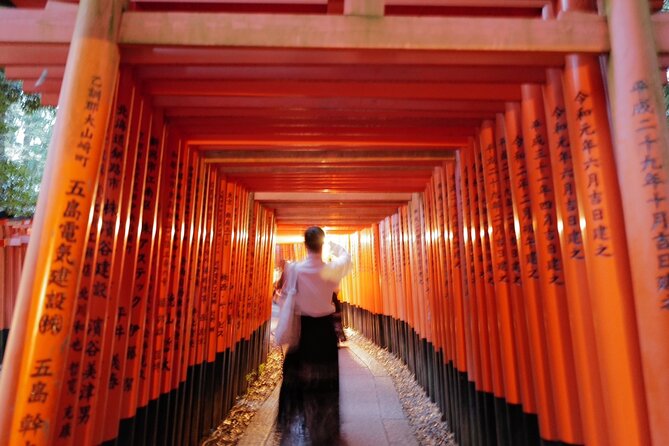
Fushimi Inari is at its most atmospheric when the day begins to cool and the crowds start to thin. This one-hour evening walk takes you from JR Inari Station into Kyoto’s famous tunnel of orange torii gates, with an English-speaking guide explaining the shrine’s customs, background, and links to Shinto and Buddhism.
I like two things right away: the 5:00 pm timing avoids the worst midday heat, and the short format fits neatly before or after dinner. Guides including Kanami, Mai, Satsuki Morikawa, Moto, and Haruki have been praised for clear explanations, photo help, and useful transport advice. The trade-off is simple: one hour gives you a good introduction, not a full climb through every section of the mountain shrine.
Key points to know before you book
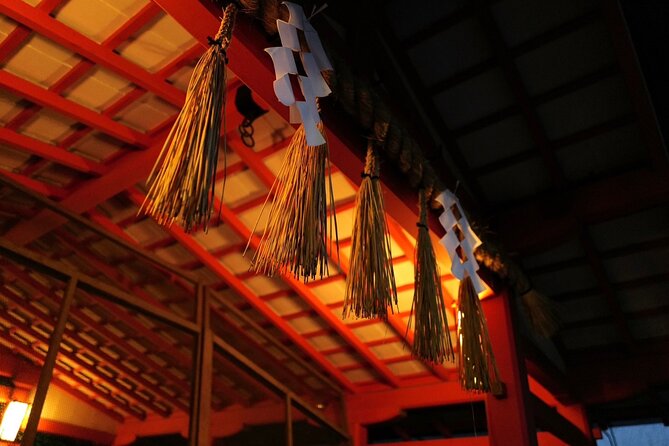
- Evening access at 5:00 pm: A cooler, calmer time to see Fushimi Inari than the middle of the day.
- Meeting point made simple: Meet outside the Daily Yamazaki convenience store beside JR Inari Station.
- A focused one-hour route: Best for a first look, not an extended hike through the entire shrine complex.
- Shinto and Buddhist context: Your guide explains the religious ideas behind the gates and shrine.
- Small group size: The tour accepts a maximum of 15 people.
- Strong guide-led experience: Kanami, Mai, Satsuki Morikawa, Moto, and Haruki have each received praise for explanations, questions, photos, and Kyoto transport tips.
Why Fushimi Inari works so well in the evening
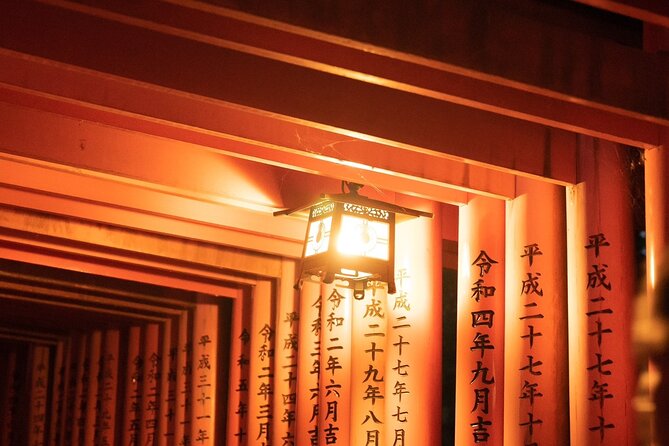
Fushimi Inari-taisha is Kyoto’s most famous torii-gate shrine, and the visual idea is wonderfully simple: one orange gate after another, forming covered paths up the wooded slopes. Even if you have seen photographs, the repeated gates feel different when you walk through them in person.
The evening schedule is the smart part of this experience. You meet at 5:00 pm, when the harshest heat has passed and the shrine begins to take on a quieter mood. The tour does not promise an empty shrine, and you should not expect complete solitude, but the timing gives you a better chance of enjoying the gates without the midday crush.
I also like the way the experience keeps Fushimi Inari manageable. The shrine complex can become a major outing if you walk far up the mountain. This tour lasts about an hour, so you get the key setting and an explanation of what you are seeing without committing your whole afternoon or evening.
That short length does have limits. If you want to reach the higher viewpoints or walk every torii-lined path, you will need more time after the tour. Think of this as a guided introduction with room to continue on your own, rather than a complete exploration of Fushimi Inari.
More ways to walk Fushimi Inari:
- Kyoto: Fushimi Inari, Kinkakuji, Bamboo Grove 1 Day Bus Tour
★ 4.8 · 4,316 reviews - Fushimi Inari Hidden Hiking Tour (Private Option Available)
★ 5.0 · 1,750 reviews - Kyoto/Osaka: Nara, Fushimi Inari Taisha, Arashiyama Bus Tour
★ 4.7 · 1,275 reviews
Finding the group at JR Inari Station
The meeting point is easy to locate if you follow the directions closely. Start at JR Inari Station in Kyoto. After leaving the station, turn left and look for the Daily Yamazaki convenience store. The group meets in front of that store.
The stated start time is 5:00 pm, so plan to arrive early enough to find the station exit and get oriented. The start is near public transportation, and the tour does not include hotel pickup. You are responsible for reaching Inari Station yourself.
The end point is listed as Fushimi Inari Taisha, at 68 Fukakusa Yabunouchicho. That makes sense for a shrine walk: you begin by the station and finish inside the shrine grounds, rather than returning to your hotel or a central Kyoto meeting point.
This arrangement also gives you flexibility. After the walk, you can remain around Fushimi Inari, continue farther along the gates, or make your own plans for dinner. Since food and drinks are not included, you can choose where and when to eat instead of following a fixed meal plan.
Walking beneath the 10,000 torii gates
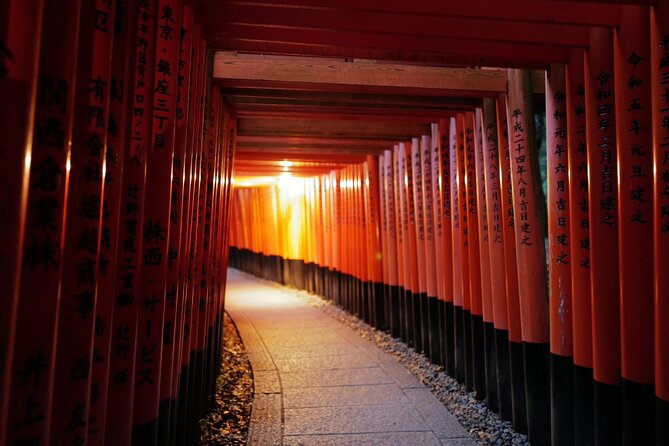
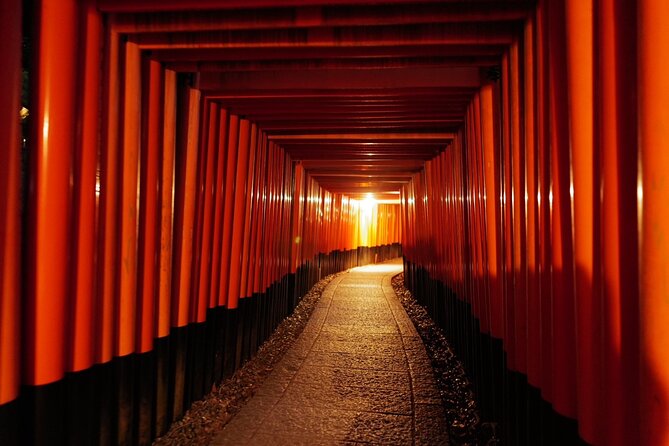
The main attraction is the torii-gate path. Fushimi Inari is widely known for its roughly 10,000 torii gates, donated over time by individuals and businesses. The gates form a bright, repeating corridor that makes even a short walk memorable.
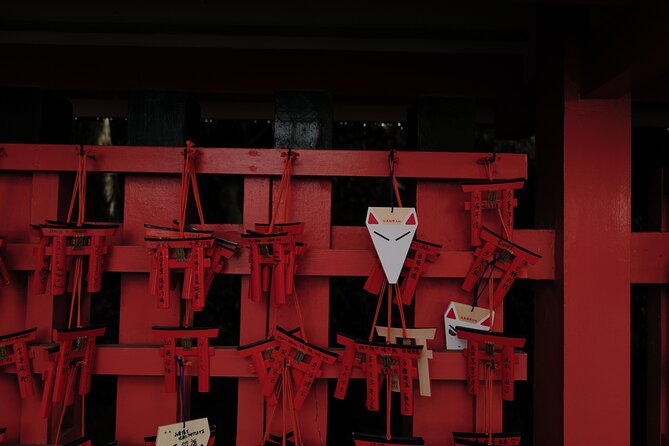
Your guide helps turn the scene into more than a photo stop. You learn about the shrine’s religious purpose and the meaning of the setting. That matters because the gates can otherwise feel like a striking visual trick with little context. A good explanation helps you notice the customs and symbols around you.
The tour also covers the difference between Shinto and Buddhism. That is especially useful in Japan, where religious sites and traditions can seem unfamiliar at first. You do not need a background in either faith. The value is in having someone explain the basics while you are standing in the place itself.
The route is described as a leisurely stroll, but it is still a walking tour at a shrine with paths that rise toward the mountain. The supplied information does not give a precise distance, elevation gain, or route endpoint beyond Fushimi Inari Taisha. If you need a detailed accessibility assessment, contact GuideMe Japan before booking.
What the guide adds to the experience
The guide is the reason to choose this tour instead of simply visiting Fushimi Inari on your own. The shrine is free to enter, so you are paying for interpretation, direction, and the chance to ask questions.
Kanami has been praised for answering questions, pointing out small details, and suggesting photo opportunities. Those are practical skills at a place where it is easy to rush through the first gates, take the same familiar picture, and leave without noticing much else.
Mai has been praised for making the evening a good time for photographs while explaining what you are seeing. Satsuki Morikawa has been singled out for taking time with the group and making the experience work well for a family that included a 13-year-old.
Moto has been described as friendly and well informed about the shrine. Haruki has received particular praise for explaining Shinto and Buddhism, along with offering advice about transport around the area. You may not have these exact guides on your date, but their names show the kind of service the tour aims to provide: clear explanations, patience, and useful help beyond the gates.
The maximum group size is 15 people. That is not a private tour, but it is small enough for the guide to handle questions more easily than on a large coach outing. Group size can affect how smoothly you move through the gates, especially when the paths are busy.
More walking tours in Kyoto:
- Kyoto Geisha Walking Tour: Gion District & Hidden Gems
★ 4.7 · 3,273 reviews - Kyoto: Gion Magical Night Walking Tour with Geisha Trivia
★ 4.9 · 2,393 reviews - Kyoto: Gion Geisha District Walking Tour – Stories of Geisha
★ 4.7 · 2,187 reviews - Night Walk in Gion: Kyoto’s Geisha District
★ 4.5 · 2,003 reviews
A one-hour route with a clear purpose
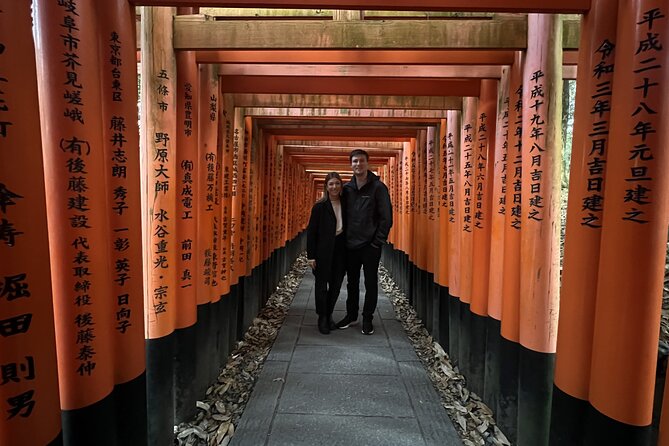
The itinerary has one stop, Fushimi Inari-taisha Shrine. That may sound spare, but it is the right focus for a short evening activity. You are not spending precious time transferring between attractions. The entire hour is devoted to Kyoto’s best-known shrine setting.
A typical flow is easy to understand from the tour plan:
- Meet at the station and walk toward the shrine.
- Enter the Fushimi Inari grounds.
- Follow the torii-lined route at a relaxed pace.
- Hear about the shrine, Shinto, Buddhism, and local customs.
- Pause for questions and photo suggestions.
- Finish at Fushimi Inari Taisha.
The exact stopping points are not specified, so do not book this expecting a published list of every gate section or a guaranteed summit walk. The one-hour format is better suited to learning the basics and seeing the most recognizable part of the shrine.
I would also leave some flexibility in your evening. The tour ends at the shrine, and you may want to take more photographs or continue walking after the guide departs. If you have dinner reservations elsewhere, allow time to get back to your chosen area.
Is $35.93 a fair price?
At $35.93 per person, this is a modestly priced guided activity by Kyoto standards, especially if you value explanation rather than only admission. Entry to Fushimi Inari itself is free, so the price is not buying access. It pays for an English-speaking guide, a planned route, and an hour of focused attention.
The value is strongest for a first visit. If you already know the shrine, Shinto customs, and the difference between Shinto and Buddhism, you may find the added information less important. In that case, visiting independently costs nothing and lets you set your own pace.
For many people, though, the guide earns the fee by preventing a quick, surface-level visit. You receive background while standing at the shrine, can ask questions as they arise, and may get better ideas for photographs and local transport. The advice from Haruki about getting around the area is a useful extra for anyone still finding their way through Kyoto.
The tour is also good value in terms of time. You can place it before dinner, after another Kyoto activity, or during an evening when you want something structured but not exhausting. A full shrine visit on your own could easily take longer, while this walk gives you a defined hour.
Who will get the most from this walk?
I would recommend this tour to a first-time Kyoto visitor who wants an introduction without giving Fushimi Inari an entire day. It suits solo visitors, couples, and families who prefer having a local guide explain what they are seeing.
It also works well for anyone with a tight schedule. The one-hour duration is long enough to feel worthwhile but short enough to combine with dinner or another nearby plan. The evening start is useful in warmer weather, when walking at midday can be tiring.
Families may appreciate the shorter format. Satsuki Morikawa was praised for keeping a 13-year-old engaged, which suggests that the experience can work for younger visitors who might not enjoy a long lecture or a lengthy hike. Still, the tour is built around walking and explanation, so children should be comfortable with both.
You may want a different plan if your main goal is reaching the upper mountain trails. The route details do not promise a summit visit, and one hour is not enough to cover every part of the shrine at a relaxed pace. You can use the guided walk as a starting point, then continue independently if you have time.
Practical details that affect your choice
The tour includes an English-speaking guide and a one-hour guided visit to Fushimi Inari Shrine. Admission is free, and food, drinks, and hotel pickup are not included.
A mobile ticket is provided, which keeps the booking simple. Confirmation is received at the time of booking. The activity is near public transportation, and most people can participate, though the available details do not set out specific mobility arrangements or walking measurements.
The maximum group size is 15. That is worth noting if you prefer a quiet private visit. It is also worth noting if you enjoy meeting other people but do not want to be part of a large tour group.
Cancellation is flexible if your plans are still changing. You can cancel for a full refund up to 24 hours before the local start time. Cancellations or changes made less than 24 hours before the start are not accepted for a refund.
The experience is operated by GuideMe Japan, and the tour is promoted through the GuideMe Japan Instagram account. The guide names associated with the experience include Kanami, Mai, Satsuki Morikawa, Moto, and Haruki.
How to make the most of your hour
Arrive at JR Inari Station with enough time to find the Daily Yamazaki store. The meeting instructions are clear, but a last-minute station search can make the start stressful.
Wear comfortable shoes. The tour is described as a walk, and Fushimi Inari’s paths can lead upward. The exact route is not specified, so sensible footwear is more useful than dressing for a formal shrine visit.
Bring a phone with space for photographs. The guides may suggest good photo opportunities, and the evening light can give the orange gates a different feel than bright midday sun. You may also want to keep your phone available for the mobile ticket and any transport notes you receive.
Ask questions. The tour’s strongest purpose is interpretation, especially around Shinto, Buddhism, and the shrine’s background. If you are curious about customs, symbols, or getting around Kyoto, use the guide’s time rather than simply following the group silently.
Finally, decide in advance if you want to continue after the hour. Since the walk finishes at Fushimi Inari Taisha, you can potentially stay in the area, but no extra route or return transport is included.
Should you book the Kyoto Fushimi Inari Night Walking Tour?
Book it if you want a short, well-timed introduction to Kyoto’s most famous torii-gate shrine. The price is fair for an English-speaking guide, the 5:00 pm start avoids the middle of the day, and the one-hour format is easy to fit around dinner.
I would especially choose it for a first visit, a family outing, or anyone who wants clear cultural background without signing up for a long hike. The praise for guides such as Kanami, Mai, Satsuki Morikawa, Moto, and Haruki points to a useful mix of shrine explanation, questions, photo help, and Kyoto transport advice.
Skip it if you want to explore every gate at your own speed or climb far up the mountain. Fushimi Inari is free to enter, and independent visitors have more freedom. For a focused evening walk with context and a friendly guide, however, this is a sensible way to meet the shrine.
FAQ
Where does the Fushimi Inari Night Walking Tour begin?
It begins at Inari Station in Kyoto. After exiting the station, turn left and look for the Daily Yamazaki convenience store. The meeting point is in front of the store.
What time does the tour start?
The tour starts at 5:00 pm local time.
How long does the tour last?
The tour lasts approximately one hour.
Where does the tour end?
The listed end point is Fushimi Inari Taisha at 68 Fukakusa Yabunouchicho, Fushimi Ward, Kyoto.
Is admission to Fushimi Inari included?
Admission to Fushimi Inari Shrine is free. The tour includes the guided visit, not a separate admission ticket.
Is the tour conducted in English?
Yes. An English-speaking tour guide is included.
What does the tour cover?
The walk covers Fushimi Inari Shrine, its famous torii gates, the shrine’s background, and the differences between Shinto and Buddhism.
Is hotel pickup provided?
No. Hotel pickup is not included. You need to reach the meeting point at JR Inari Station.
Are food and drinks included?
No. Food and drinks are not included.
How many people can join the tour?
The activity has a maximum group size of 15 people.
Can I cancel for a full refund?
Yes, if you cancel at least 24 hours before the experience start time. Cancellations or changes made less than 24 hours before the start are not accepted for a refund.
More Evenings Out in Kyoto
- Kyoto Night Foodie Tour in Gion (9+ dishes + 6 Sake tastings)
★ 5.0 · 1,762 reviews - Kyoto Gion Night Walk & Geisha District Guided Tour
★ 5.0 · 786 reviews - Kyoto Ghost Tour: Dark Tales, Urban Legends, Bamboo Forest Night
★ 5.0 · 625 reviews - Kyoto Bar Hopping Night Tour
★ 5.0 · 613 reviews
Just added around Kyoto
- Kyoto: Zen Meditation at a Private Temple with a Monk★ 5.0 · 25 reviews
- Kyoto: Gion Geisha District & Sake-in-Hand Walking Tour★ 5.0 · 37 reviews
- Private Pewter Sake Cup Experience with a Kyoto Artisan★ 5.0 · 31 reviews
- Your Private Vacation Photography Session In Kyoto★ 5.0 · 110 reviews
- Private Guided Traditional Buddhist Cooking in Japan★ 5.0 · 16 reviews
- Kyoto Wagashi(Japanese sweets) Cooking Class near Fushimiinari★ 5.0 · 60 reviews
- Traditional Japanese Music show & Experience Tour in Kyoto★ 5.0 · 57 reviews
- Kyoto:Family-Friendly Kimono & Yukata Experience at WARGO★ 5.0 · 147 reviews
Fushimi Inari Tours, compared.

Fushimi Inari, Kinkakuji, Bamboo Grove 1 Day Bus Tour
Read our review →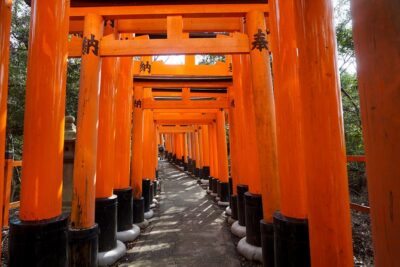
Fushimi Inari Hidden Hiking Tour (Private Option Available)
Read our review →
Kyoto/Osaka: Nara, Fushimi Inari Taisha, Arashiyama Bus Tour
Read our review →
Osaka/Kyoto: Arashiyama, Nara & Fushimi Inari Shrine w/Lunch
Read our review →
Nijo Castle, Kiyomizu & Fushimi Inari Guided Tour
Read our review →
Nijo, Kinkaku-ji, Arashiyama, Kiyomizu & Fushimi Inari
Read our review →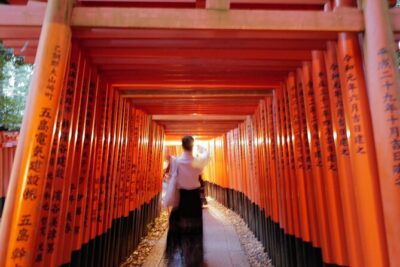
Browse the lists this tour appears in