
Reviewed · KYOTO TOURS
Kyoto Ramen and Gyoza Cooking Class with Professional Chefs
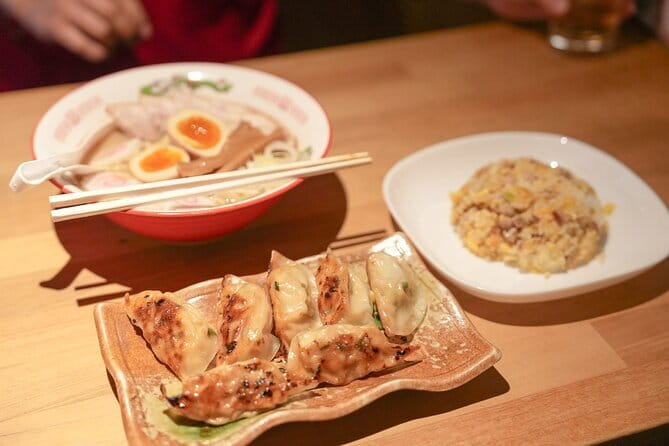
Making noodles by hand is the star of this Kyoto ramen and gyoza class. You knead the dough, cut the noodles, prepare toppings, fold dumplings, and sit down to a full meal of ramen, gyoza, and fried rice. It feels more useful than simply ordering another bowl of noodles because you leave with recipes and a better sense of how these everyday Japanese dishes come together.
I like the small maximum of eight people, which gives the chef and guide room to help at the worktables. I also like the friendly guide-and-chef team. Hosts such as Yuki, Ayuri, Rina, Emi, Miu, and Shun have been praised for translating instructions, explaining Japanese food culture, and offering local suggestions. The main consideration is dietary: the ramen uses pork broth, and vegetarian, vegan, and gluten-free meals cannot be guaranteed.
Key points to know before booking
- Make ramen noodles by hand: Knead, cut, cook, and top your own noodles rather than watching a demonstration only.
- Prepare three Japanese dishes: The meal includes ramen, gyoza, and fried rice, so arrive hungry.
- Beer or sake is included: You receive two drinks to enjoy with the meal.
- English support comes from the guide: The chef teaches the cooking, while the host may translate and explain the food.
- The group is limited to eight: Some sessions may feel especially relaxed if only a few people book.
- Recipes go home with you: You can try the dishes again after returning home.
Turning flour into ramen noodles in central Kyoto
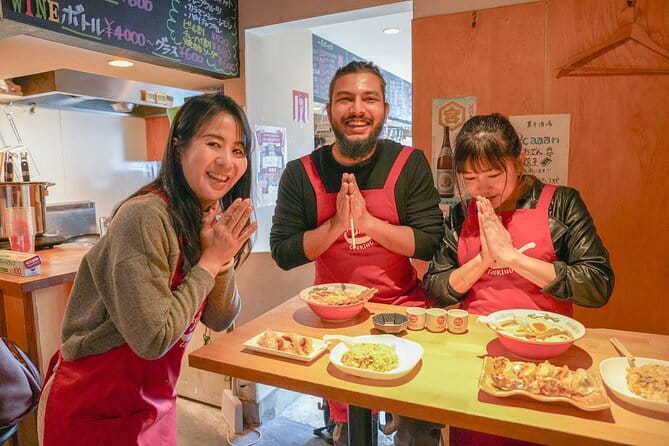
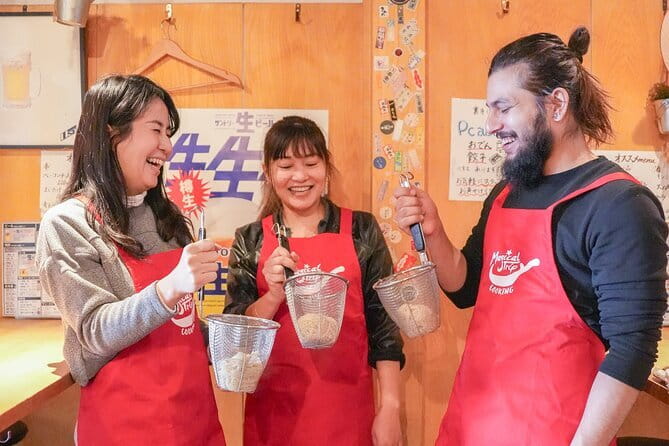
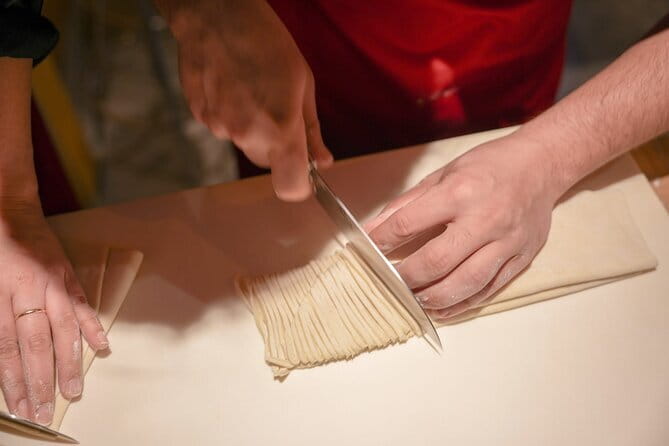
This class puts you to work quickly. You learn how to make ramen from scratch, including kneading the dough, cutting the noodles, and adding toppings. That hands-on sequence is the most distinctive part of the activity. You are not simply stirring a pot while someone else does the skilled work.
For many people, cutting noodles is the part they remember. It gives you a clearer idea of why fresh ramen noodles have their particular texture and shape. The chef guides the process step by step, so you do not need prior cooking experience. The class welcomes all skill levels, including people who rarely cook.
The cooking takes place in a former restaurant space just off a main street in Kyoto. That setting gives the class a practical, working-kitchen feel rather than the polished atmosphere of a large culinary school. One useful caution: the space has several levels and much of the class is upstairs, with steps that require care.
The meeting point is 「北緯35物語」木村光佑 at Shincho in Kyoto’s Shimogyo Ward, postal code 600-8001. It is near public transportation, but you should still allow time to find the exact entrance. The class starts on time, and late arrivals cannot join, reschedule, or receive a refund.
More cooking classes in Kyoto:
- Ramen Cooking Class at Ramen Factory in Kyoto
★ 5.0 · 1,937 reviews - Kyoto: Ramen Cooking Class at a Ramen Factory with Souvenir
★ 4.9 · 532 reviews - Kyoto: Ramen, Gyoza, and Onigiri Cooking Class
★ 5.0 · 445 reviews
Folding gyoza, then making a full Japanese lunch
After the ramen preparation, you wrap your own gyoza. This is a fun task for families and couples because everyone can fold dumplings at a different pace, and imperfect shapes still taste good. The chef helps with the method, while the guide keeps the instructions clear for English-speaking participants.
The menu is larger than the name of the class suggests. You make and eat ramen, gyoza, and fried rice, creating a full meal rather than a small tasting. Plan your earlier meal carefully. The portion is substantial, and you will enjoy the final meal more if you arrive with a reasonable appetite.
Two drinks are included. Beer or sake is the natural pairing for gyoza, though the available drink choices should be confirmed if you need a specific nonalcoholic option. You do not need to pay for the guide’s food or drinks.
The gyoza and fried rice also help balance the class. Ramen-making can take the spotlight, but the dumplings give you another technique to practice, and fried rice adds a familiar dish with its own timing and heat control. The result is a better introduction to a Japanese lunch than a class focused on only one recipe.
What the chef teaches, and what the guide adds
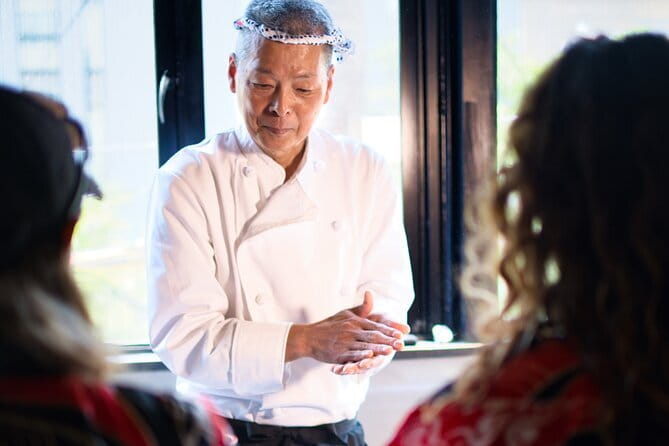
The chef leads the cooking and watches the steps that matter. The guide supports the class with translation and cultural context. This division works well because the chef can focus on technique while the host makes sure you understand what is happening.
Guides named in past sessions include Yuki, Ayuri, Rina, Emi, Miu, and Shun. You should not assume you will receive a particular guide, but these hosts have been singled out for clear interpreting, warm hospitality, and useful information about Kyoto and Japan.
The cultural side is modest but worthwhile. You learn about the background of Japanese dishes while cooking them, rather than sitting through a long lecture. That format suits you if you want context tied to something you are doing with your hands.
Several guides have also helped with directions and local recommendations. This can be handy early in a Kyoto visit, when you are still working out which neighborhoods and restaurants fit your plans. Think of these tips as a bonus, not the main reason to book.
How much cooking do you really do?
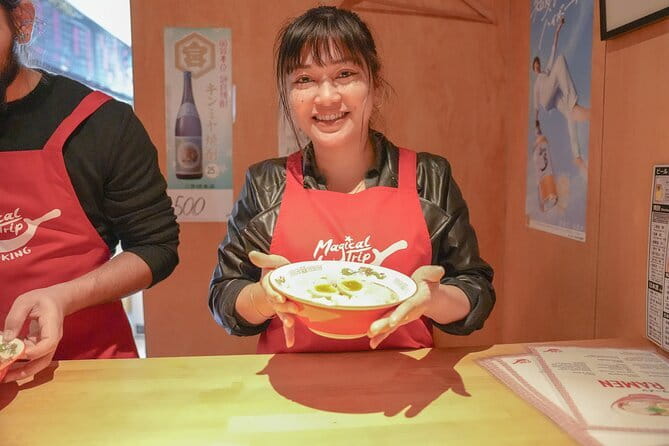
This is a hands-on class, but it is still a guided activity designed for a broad range of abilities. You make the noodles and fold the gyoza, but the professional chef handles or supervises some of the more technical preparation. If you are an experienced cook looking for a detailed culinary workshop, you may find parts of the process simplified.
One participant felt the recipes were easier than expected and wished for more cooking work. That is a fair point. The class aims to be fun, clear, and manageable for families and first-time cooks, not to train you as a ramen specialist.
The advantage is that the process stays approachable. You can follow along even if your kitchen experience is limited, and the chef can keep the meal moving so you finish all three dishes within roughly two and a half hours.
The recipe guide makes the class more useful after your holiday. It gives you a way to repeat the dishes at home, though you should expect a practical home version rather than a closely guarded restaurant formula. One comment also noted that the broth was made from a prepared paste and water instead of a traditional long-cooked stock. If a slow-simmered broth is your main interest, keep that limitation in mind.
More hands-on workshops in Kyoto:
- Kyoto: 45-Minute Tea Ceremony Lesson Experience
★ 4.3 · 2,378 reviews - Kyoto : Chopsticks Making Workshop in Gion with Engraving Option
★ 5.0 · 958 reviews - Kyoto: Samurai Sword Class by Experts in Traditional Arts
★ 4.9 · 657 reviews - Ninja 1-hour Hands-on Lesson by Japanese master in Kyoto -Entry
★ 5.0 · 489 reviews
The pork broth matters for dietary planning
The ramen broth contains pork. This remains true even if you do not add meat toppings, so the class is not suitable for vegetarians.
The activity cannot accommodate vegetarian, vegan, or gluten-free requests. Allergy-free meals also cannot be guaranteed because preparation takes place in a kitchen that is not dedicated to allergy-free cooking. Substitutions may sometimes be attempted, but you should not book this class assuming the menu can be changed.
This is one of the most important details to consider before paying. If you have a serious allergy or follow a strict diet, choose a cooking class with an explicitly suitable menu instead.
A good fit for families, couples, and curious beginners
Children aged six and older may take part. An accompanying adult must supervise children when they handle knives or take part in steps that could be dangerous. The class can work well for families because the menu is familiar, the tasks are varied, and the final meal rewards everyone’s effort.
The activity also suits couples and small groups of friends. Cooking side by side gives you something to do together, and the drinks help turn lunch or dinner into a social occasion. The group size is capped at eight, and some scheduled sessions may have only three or four people. When that happens, the class can feel almost private without the cost of booking a private activity.
The atmosphere is usually friendly and relaxed, with people from different countries sharing the worktable. You may make new friends, but the social side depends on the group booked that day.
The class is not recommended for people with mobility issues. The multilevel space and upstairs areas may make movement difficult. If you need specific physical accommodations, a private class is the better choice.
Is $86.22 a fair price?
At $86.22 per person, this is not the cheapest way to eat ramen in Kyoto. A bowl of ramen costs far less, and you can order gyoza and fried rice at many casual restaurants for a modest amount.
The value comes from the full package. You receive about two and a half hours of instruction, a large meal, two drinks, cultural explanation, professional kitchen guidance, and recipes to take home. You also get the memory of making the noodles and dumplings yourself, which a restaurant meal cannot provide.
The price makes the most sense if you want an activity as well as lunch or dinner. It is less compelling if your only goal is to eat excellent ramen at the lowest possible cost, or if you already cook these dishes regularly.
The maximum of eight helps support the price. A smaller group means less waiting for help and more opportunity to ask questions. Still, the exact group size varies, so do not book solely on the hope of having a private-style session.
Timing, location, and cancellation details
The activity lasts approximately two hours and 30 minutes and ends back at the meeting point. Since the meal is included, avoid scheduling it immediately after a large lunch.
The central Kyoto location and nearby public transportation make it easy to fit into a day of sightseeing, but the exact meeting address deserves attention. Give yourself extra time, especially if you are unfamiliar with Kyoto’s narrow streets and building entrances.
Confirmation is provided when you book, and the ticket is mobile. You can cancel for a full refund if you do so at least 24 hours before the start time. Cancellations or changes made within 24 hours are not refunded or accepted. The class may also be canceled in unsafe weather.
How this class compares with a regular Kyoto food stop
A restaurant visit gives you a finished dish and a chance to watch local dining customs. This class gives you the steps behind the dish. You learn how ramen dough changes under your hands, how gyoza wrappers are filled and folded, and how fried rice fits into a larger Japanese meal.
The class is especially useful if you have already sampled Kyoto’s temples and markets and want an activity with a different rhythm. You spend less time sightseeing and more time working at a table, which can be a welcome change on a rainy day.
It is also a good choice for visitors who want a souvenir that takes up no space. The recipe guide costs nothing to pack, and the skills can be repeated in your own kitchen.
The tradeoff is that the cooking is structured. You follow the chef’s method and may not get to experiment much. If you want a free-form class where you select ingredients or design your own menu, this is not that kind of activity.
Should you book the Kyoto ramen and gyoza class?
I would book this class if you want a social, food-focused break from sightseeing and like the idea of making a real meal with professional guidance. It is particularly well suited to families with children aged six and older, couples, first-time cooks, and anyone who wants recipes to use at home.
I would skip it if you need vegetarian, vegan, gluten-free, or strictly allergy-safe food. I would also look elsewhere if you expect a traditional broth simmered from bones for many hours or a serious chef-training session.
For most suitable participants, the combination of fresh noodles, folded gyoza, fried rice, two drinks, and an attentive guide makes the $86.22 price reasonable. Arrive on time, arrive hungry, and check the pork broth and stair access before booking.
FAQ
How long does the Kyoto ramen and gyoza cooking class last?
The class lasts approximately two hours and 30 minutes.
Where does the cooking class meet?
It starts at 「北緯35物語」木村光佑, located in Shincho, Shimogyo Ward, Kyoto, 600-8001, Japan. The activity ends at the same meeting point.
What food will I make and eat?
You will prepare a full meal of ramen, gyoza, and fried rice. The class includes the food you make.
Are drinks included?
Yes. Two drinks are included, with beer or sake offered as pairings for the meal.
Can vegetarians, vegans, or people avoiding gluten join?
The class cannot accommodate vegetarian, vegan, or gluten-free requests. The ramen uses pork broth, and allergy-free meals cannot be guaranteed.
What happens if I arrive late or need to cancel?
The class starts on time, and late arrivals cannot join, reschedule, or receive a refund. You can receive a full refund by canceling at least 24 hours before the start time.
Just added around Kyoto
- Kyoto: Zen Meditation at a Private Temple with a Monk★ 5.0 · 25 reviews
- Kyoto: Gion Geisha District & Sake-in-Hand Walking Tour★ 5.0 · 37 reviews
- Private Pewter Sake Cup Experience with a Kyoto Artisan★ 5.0 · 31 reviews
- Your Private Vacation Photography Session In Kyoto★ 5.0 · 110 reviews
- Private Guided Traditional Buddhist Cooking in Japan★ 5.0 · 16 reviews
- Kyoto Wagashi(Japanese sweets) Cooking Class near Fushimiinari★ 5.0 · 60 reviews
- Traditional Japanese Music show & Experience Tour in Kyoto★ 5.0 · 57 reviews
- Kyoto:Family-Friendly Kimono & Yukata Experience at WARGO★ 5.0 · 147 reviews
Kyoto Tours, compared.
Fushimi Inari, Kinkakuji, Bamboo Grove 1 Day Bus Tour
Read our review →
Tea Ceremony in a Traditional Tea House in Kiyomizu
Read our review →
Kyoto Geisha Walking Tour: Gion District & Hidden Gems
Read our review →

Gion Magical Night Walking Tour with Geisha Trivia
Read our review →

Gion Geisha District Walking Tour – Stories of Geisha
Read our review →Browse the lists this tour appears in