
Reviewed · KYOTO TOURS
Kyoto Ramen Spoon Painting & Michelin Cooking Class
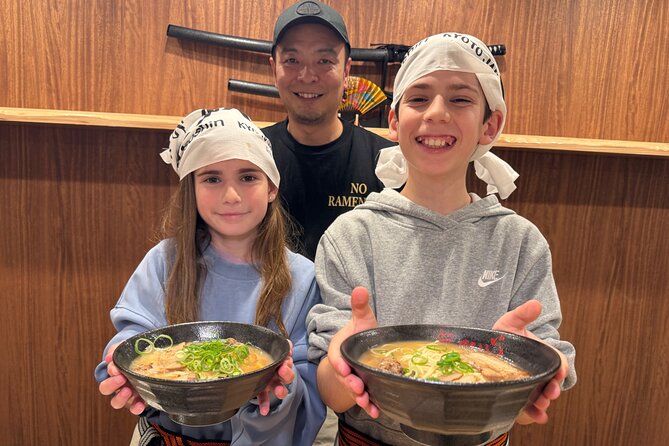
Kyoto has plenty of food classes, but this one gives you two hands-on activities for the price of one: you paint a ceramic ramen spoon, then cook a bowl of ramen in the kitchen of Musoshin Ramen. Chef Shin and assistants such as Amiru lead the class, and your meal is part lesson, part lunch.
I like the clear step-by-step teaching and the chance to see how much work goes into the bowl, from noodles rested overnight to soup cooked for 12 hours. I also like the small maximum of 12 people, plus the vegetarian and vegan options. The main catch is that you do not make the noodles yourself, and the spoon must be fired in a kiln overnight, so it is not ready to take home that day.
Key points at a glance
- Paint a personal ramen spoon: Decorate a ceramic spoon upstairs, then have it kiln-fired overnight as a useful Kyoto souvenir.
- Cook in a real ramen restaurant: Musoshin brings its restaurant ingredients into the academy kitchen for you to prepare.
- Learn the full bowl, not just the toppings: The lesson covers noodles, soup, handmade soy sauce, roast pork, and ramen history.
- Eat what you prepare: Your class ends with a proper bowl of ramen, including a vegetarian or vegan option when arranged.
- Small-group format: The class accepts a maximum of 12 people, making it easier to follow instructions and ask questions.
- Allow extra time to find the venue: The meeting point is at 440-5 Nishigomoncho in Higashiyama, near public transportation, but one booking found it difficult to locate.
A ramen class with a souvenir built in
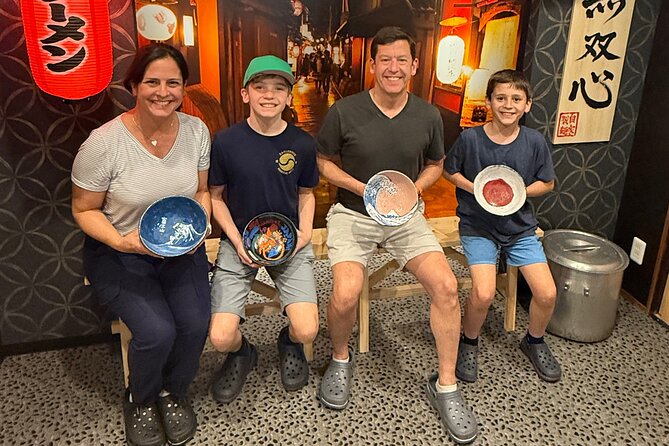
The best idea here is simple: you do not just eat ramen, and you do not just paint a keepsake. You connect the two. Your decorated spoon becomes part of the story of the meal, even though it needs to be fired overnight before it can come home with you.
The experience runs through Musoshin Ramen Academy, linked to Musoshin Ramen, which began in Kyoto in 2022 and now has six restaurants in Kyoto and Toronto. The Toronto restaurant has received Michelin nominations for three consecutive years, and the class uses the same recipe. That does not turn the lesson into a formal culinary school, but it does give you a direct look at a working ramen operation rather than a generic cooking demonstration.
Chef Shin is a hands-on owner and instructor. Amiru is also named as a class chef, and assistants help with the practical work. The teaching style is energetic and friendly, with a good amount of help at the cooking stations. Families can take part, and the class has also handled allergies and vegetarian needs successfully.
The session lasts about 90 minutes. That is long enough to paint, cook, learn, and eat, but not long enough for a slow, from-scratch noodle-making course. Go in expecting to prepare and assemble the ramen with supplied components, not to spend the entire afternoon producing every ingredient.
More cooking classes in Kyoto:
- Ramen Cooking Class at Ramen Factory in Kyoto
★ 5.0 · 1,937 reviews - Kyoto: Ramen Cooking Class at a Ramen Factory with Souvenir
★ 4.9 · 532 reviews - Kyoto: Ramen, Gyoza, and Onigiri Cooking Class
★ 5.0 · 445 reviews
Painting the ceramic spoon upstairs
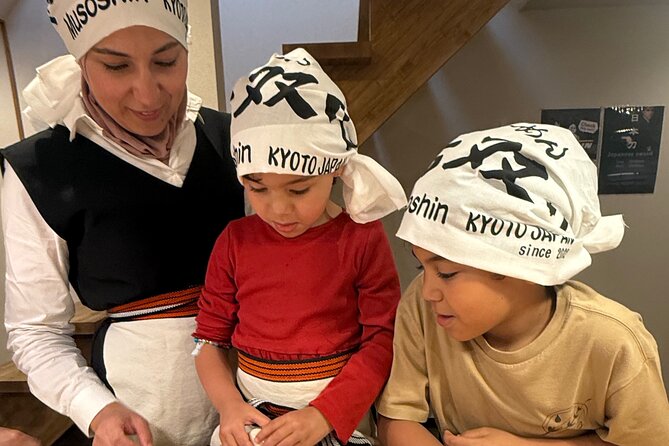
The class begins with the craft portion. You paint your own ceramic ramen spoon on the second floor of the restaurant. This is a relaxed start, and it gives you something personal to do before the kitchen work begins.
The spoon is more than a disposable prop. It is intended as a souvenir, and the finished piece can become a useful reminder of the meal at home. You can add your own design, which makes the item more personal than a standard shop purchase. The activity also gives children and non-cooks a clear way to take part.
There is one detail you need to understand before booking: the spoon is baked in a kiln overnight. You cannot simply pick it up at the end of the 90-minute session. The supplied information does not specify the exact collection or delivery method, so ask the provider how the finished spoon will reach you. One person did not realize the overnight firing was required and could not paint the spoon as planned.
This is also a good reason to check the timing of your Kyoto stay. If you are leaving the city immediately after the class, the spoon may be less convenient than you expect. Confirm the handover arrangements before you pay if taking it home matters to you.
Moving downstairs to the professional kitchen
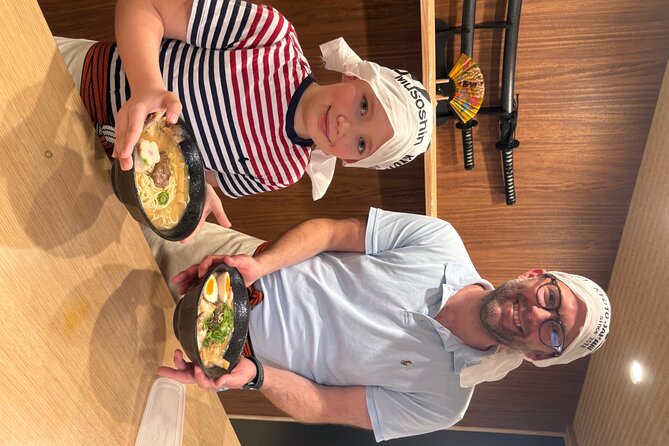
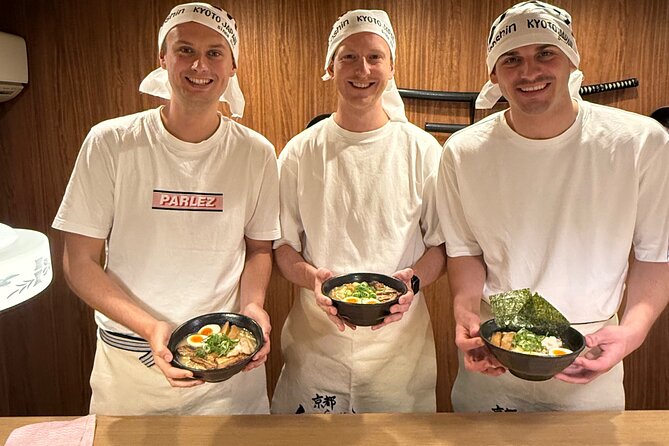
After spoon painting, the class moves downstairs to the cooking area. The setting matters. You are not simply watching a chef assemble a bowl behind a counter. Musoshin brings ingredients from its restaurant and has you work with them in a professional kitchen.
The lesson explains the parts of ramen and how they fit together. You learn about the method behind the soup, the noodles, the soy-based seasoning, and the roast pork. The instructors also discuss ramen history and the amount of preparation that happens before a bowl reaches a restaurant table.
Musoshin makes its ingredients in-house. The shop produces noodles each morning, then lets them sit overnight for use the following day. The soup cooks for 12 hours, while the ramen soy sauce and roast pork are handmade. You will not reproduce all of that work during the short class, but learning about it changes how you taste the finished dish.
That is the real value for a food-minded visitor. Ramen can look like a quick meal, yet the bowl depends on timing, resting, stock preparation, seasoning, and assembly. The class breaks that process into clear steps, so you can understand why the final taste is more than noodles and broth.
What you actually cook and eat
The class supplies part of the ramen and gives you the chance to cook and arrange your bowl. This is hands-on, but it is not a full noodle-making workshop. One person specifically wished the class included making the noodles, which is a fair concern if you want a complete production lesson.
Still, the prepared components let you focus on the parts that matter at the table: cooking, balancing, arranging, and understanding the ingredients. The instructors guide you through the process rather than leaving you to guess. You then eat the ramen you helped prepare, with the bowl and spoon forming part of the experience.
The food is the biggest reason this class earns its price. The ramen is made from Musoshin’s restaurant recipe, and the ingredients include house-made noodles, 12-hour soup, handmade soy sauce, and handmade roast pork. A vegetarian or vegan version is available, and the team has accommodated those needs during the class. If you have an allergy, tell the provider in advance and repeat it to the instructors when you arrive.
Do not expect a tasting portion. The format is designed so you can eat your ramen at the end, which is useful if you are scheduling the class around lunch or dinner. You should not need to plan a separate meal immediately afterward.
More hands-on workshops in Kyoto:
- Kyoto: 45-Minute Tea Ceremony Lesson Experience
★ 4.3 · 2,378 reviews - Kyoto : Chopsticks Making Workshop in Gion with Engraving Option
★ 5.0 · 958 reviews - Kyoto: Samurai Sword Class by Experts in Traditional Arts
★ 4.9 · 657 reviews - Ninja 1-hour Hands-on Lesson by Japanese master in Kyoto -Entry
★ 5.0 · 489 reviews
Why the small group makes a difference
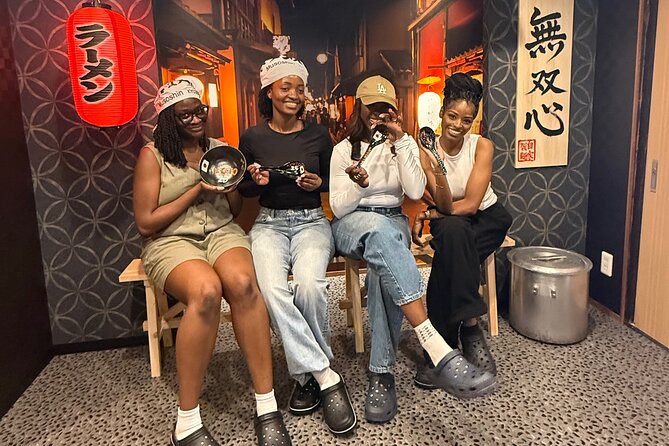
The maximum group size is 12. That is not a private lesson, but it is small enough for the chef and assistants to keep an eye on the cooking process. The class involves painting, preparation, and kitchen work, so a compact group makes practical sense.
A large food class can leave you standing behind someone else or waiting for instructions. Here, you have a better chance of seeing the demonstrations and getting help when you need it. The energetic teaching style also suits families, and one particularly warm account describes Chef Shin engaging gently with a child.
The class is social without being built around a large crowd. You work alongside other people, but the focus stays on your spoon and your bowl. If you prefer a quiet, private cooking lesson, this may feel more communal than ideal. For most people, though, the group limit is a useful middle ground.
The role of Shin, Amiru, and the teaching style
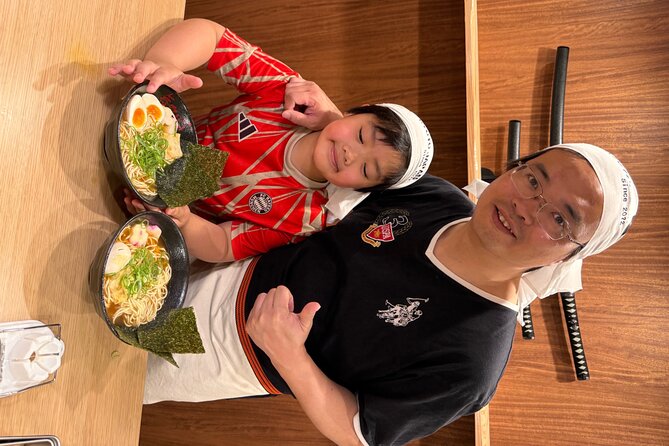
Chef Shin is central to the experience. He is described as the owner-chef who remains closely involved in the class, rather than handing the entire lesson to a junior instructor. His style is warm, energetic, and practical.
Amiru is also named as a chef for the experience. Assistants support the lesson, and the teaching is described as patient and welcoming. That matters because ramen preparation can seem confusing if you are unfamiliar with the ingredients or order of operations.
You should expect instruction rather than a performance. The goal is to understand the components, prepare them correctly, and enjoy the result. If you want to ask about vegetarian ramen or ways to adapt the recipe at home, this is the sort of class where those questions fit naturally.
A vegan ramen option has been useful to people who wanted ideas for cooking at home. That makes the class more than a one-time meal for some participants, especially if you already like ramen and want practical techniques you can reuse.
The listed Kyoto temple stops need clarification
The supplied itinerary lists Kiyomizu-dera Temple, Kennin-ji Temple, and Sanjusangendo Temple. These are major Kyoto sights, but the detailed description of this activity centers on the Musoshin spoon-painting and ramen class, not a temple sightseeing route.
The meeting point is 440-5 Nishigomoncho in Kyoto’s Higashiyama Ward, and the activity ends back there. Nothing in the provided details explains when or how the three temples fit into the 90-minute class. You should therefore confirm this point before booking if you expect guided temple visits.
Kiyomizu-dera is one of Kyoto’s best-known temple sites, Kennin-ji is a central Zen temple, and Sanjusangendo is known for its long hall and rows of Buddhist figures. They are worthwhile places in their own right, but do not assume they are included in the food lesson simply because they appear in the itinerary information.
For planning, treat the ramen academy as the firm centerpiece. Ask the provider about the temple stops, especially if you are comparing this with a separate Higashiyama sightseeing tour.
Meeting point, timing, and practical value
The activity starts and ends at the same meeting point. It is near public transportation, and a mobile ticket is provided. The address is specific, but one person found the venue hard to locate, so allow extra time and keep the address ready on your phone.
At $65.89 per person, the price is reasonable if you value both the meal and the instruction. You are paying for a small-group class, a ceramic spoon, access to a professional ramen kitchen, restaurant ingredients, and a filling bowl at the end. A standard ramen meal would cost less, but it would not include the craft activity or the explanation of how the dish is made.
The value drops if you mainly want to make noodles from flour or take the spoon home immediately. This class does not appear to include noodle production, and the kiln process means the souvenir is not finished on the same day. For a first-time Kyoto visitor seeking a compact food activity, however, 90 minutes is an efficient use of time.
The experience is also popular, with the activity booked five or more times in the previous week. That suggests you should reserve ahead if your Kyoto schedule is tight, though the available information does not promise specific availability on any date.
Free cancellation is offered up to 24 hours before the start time for a full refund. Changes or cancellations made less than 24 hours before the start are not accepted for a refund, and the cut-off follows local Kyoto time.
Who will enjoy this most
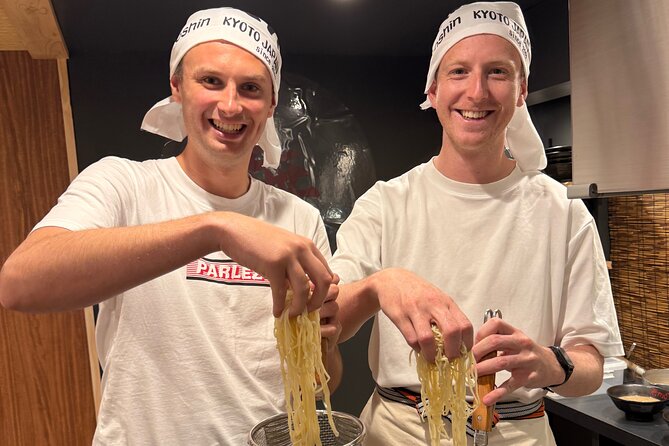
I would recommend this class to you if you love ramen, enjoy making things with your hands, or want a food activity that works for a family. The spoon painting gives children a creative task, while the cooking lesson gives adults more background about ingredients and technique.
It also suits people who want a short activity near Kyoto’s Higashiyama area. The 90-minute length leaves room for other sightseeing, provided you allow time to reach the meeting point and do not assume the listed temple stops are part of the class.
Vegetarians and vegans can also consider it, since those options have been provided. Tell the team about your needs early, especially for allergies.
I would hesitate if your main aim is to learn how to make ramen completely from scratch. You will not appear to make the noodles, and much of the soup, seasoning, and pork preparation happens before the class. This is a practical preparation and assembly lesson built around a restaurant recipe, not a full professional training course.
Should you book the Musoshin ramen class?
Book it if you want a friendly, compact Kyoto food experience with a meal you prepare yourself and a souvenir you design. The strongest reasons are the hands-on format, the small group, Chef Shin’s involvement, the restaurant-quality ingredients, and the chance to choose vegetarian or vegan ramen.
Think twice if you need the spoon immediately, want to make noodles by hand, or are booking it mainly for temple sightseeing. Confirm the spoon collection details and the role of the three listed temples before reserving.
For most ramen fans, the combination is hard to beat at $65.89. You leave with a better sense of how ramen is built, a full bowl to eat, and a ceramic spoon that can eventually bring the memory back to your own kitchen.
FAQ
How long does the Kyoto ramen and spoon-painting class last?
The experience lasts approximately 1 hour and 30 minutes.
Where does the activity start and end?
It starts at 440-5 Nishigomoncho, Higashiyama Ward, Kyoto, 605-0816, Japan, and ends back at the same meeting point.
How many people can join the class?
The activity has a maximum of 12 participants.
Is a vegetarian or vegan ramen option available?
Yes. Vegetarian and vegan options have been provided during the class, and dietary needs should be communicated to the provider.
Can I take the painted spoon home immediately?
No. The ceramic spoon is baked in a kiln overnight, so it is not ready at the end of the class. Confirm the collection or delivery arrangements with the provider.
What is the cancellation policy?
You can cancel at least 24 hours before the local start time for a full refund. Cancellations or changes made less than 24 hours before the start time are not accepted for a refund.
Just added around Kyoto
- Kyoto: Zen Meditation at a Private Temple with a Monk★ 5.0 · 25 reviews
- Kyoto: Gion Geisha District & Sake-in-Hand Walking Tour★ 5.0 · 37 reviews
- Private Pewter Sake Cup Experience with a Kyoto Artisan★ 5.0 · 31 reviews
- Your Private Vacation Photography Session In Kyoto★ 5.0 · 110 reviews
- Private Guided Traditional Buddhist Cooking in Japan★ 5.0 · 16 reviews
- Kyoto Wagashi(Japanese sweets) Cooking Class near Fushimiinari★ 5.0 · 60 reviews
- Traditional Japanese Music show & Experience Tour in Kyoto★ 5.0 · 57 reviews
- Kyoto:Family-Friendly Kimono & Yukata Experience at WARGO★ 5.0 · 147 reviews
Kyoto Tours, compared.


Fushimi Inari, Kinkakuji, Bamboo Grove 1 Day Bus Tour
Read our review →
Tea Ceremony in a Traditional Tea House in Kiyomizu
Read our review →
Kyoto Geisha Walking Tour: Gion District & Hidden Gems
Read our review →

Gion Magical Night Walking Tour with Geisha Trivia
Read our review →

Gion Geisha District Walking Tour – Stories of Geisha
Read our review →Browse the lists this tour appears in