
Reviewed · KYOTO TOURS
Kyoto: Samurai Sword & Kimono Action Filming Experience
Kyoto’s Myokaku-ji Temple becomes a small film set during this lively 70-minute samurai class. You learn sword movements such as makkogiri and kesagiri, put on a traditional kimono, then perform a short action scene under the direction of professional period-drama actors.
I like the small group limit of six, which gives you room to practice without getting lost in a crowd. I also like that the costume fee is included and that you leave with recorded footage, not just a few hurried snapshots. The main consideration is that this is choreographed entertainment, not a serious martial-arts lesson, and the physical movements may not suit everyone.
Key points
- Practice inside a historic temple: Myokaku-ji is linked with Sengoku-era warlords, including Nobunaga Oda.
- Learn named sword movements: Instructors teach basic handling along with makkogiri and kesagiri.
- Wear a real kimono for the session: Rental kimono is included in the $127 price.
- Work with professional actors: Kesuke Irie and Kazuya Naito have performed in Japanese films and television.
- Film your own samurai scene: Bring a camera, or use the recording service with your camera.
- Keep the group personal: The experience is limited to six participants and offered in Japanese and English.
A temple dojo becomes your samurai film set
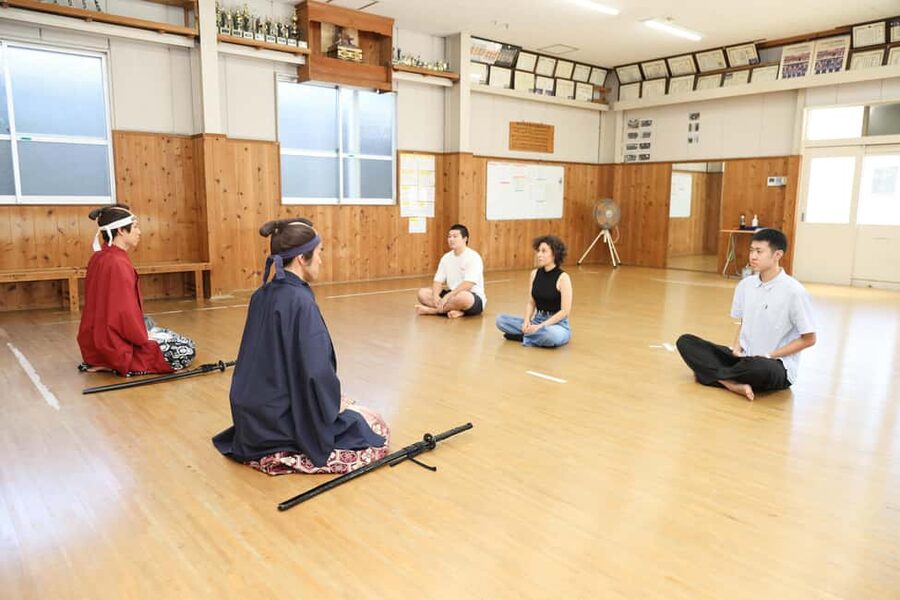
The setting does much of the work here. Myokaku-ji Temple is not a studio dressed up to look old. You meet at the Myokaku-ji Dojo, just to the left after entering the temple’s main gate, and the class takes place in a genuine religious and historic setting.
That matters because sword practice in a plain rental room would feel like a costume activity. Inside the temple, the atmosphere gives the class a stronger sense of place. Myokaku-ji is also associated with Sengoku warlords who stayed there, including Nobunaga Oda about 400 years ago. You are not reenacting a specific battle, but that connection gives the session a useful historical backdrop.
I would allow enough time to find the temple and get settled before the start. Transportation to Myokaku-ji is not included, so you must make your own way there. The meeting point is specific, but it is easy to miss if you do not know to look for the dojo on the left after entering the main gate.
The experience uses Japanese and English instruction. That is especially helpful when learning movements that depend on timing, posture, and clear direction. The small group format should also make it easier to ask for a demonstration or correction.
More Kimono Experiences in Kyoto
- Kimono Tea Ceremony at Kyoto Maikoya, NISHIKI
★ 5.0 · 911 reviews - Kyoto: Kimono Rental with Hairstyling and Accessories
★ 4.8 · 653 reviews - Kyoto: Kimono Tea Ceremony at Orizuruya Gion
★ 4.9 · 618 reviews
The kimono is part of the experience, not an extra charge
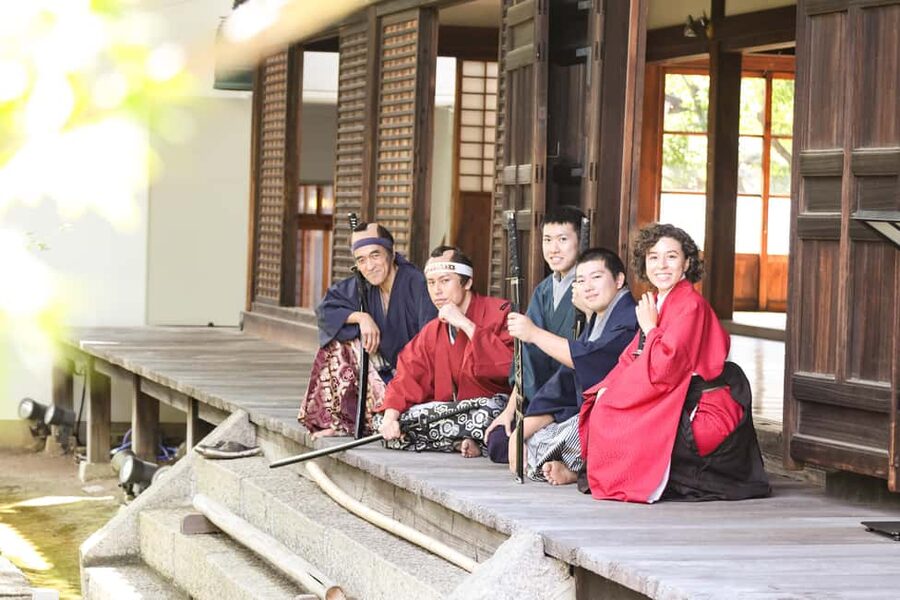
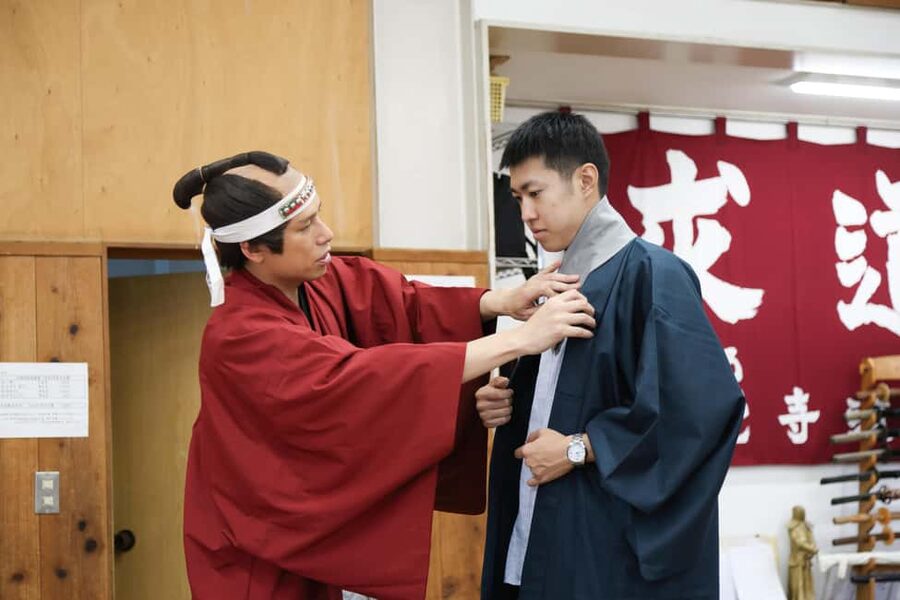
Before the action begins, you put on a traditional kimono. The rental fee is included, which makes the $127 price easier to assess. Many costume activities add clothing charges later, so having the kimono built into the booking keeps the cost more straightforward.
The clothing also changes how the session feels. You are not simply holding a prop sword in ordinary sightseeing clothes. Once dressed, you look the part in photos and on video, and your final scene has a more convincing period-drama feel.
You should still arrive in comfortable clothes suitable for physical activity. The kimono is supplied for the experience, but you will be moving, posing, and repeating sword actions. Tight or awkward clothing underneath would make the class less comfortable.
The dressing portion is not presented as a fashion lecture. It is a chance to learn something about the traditional act of putting on a kimono while preparing for the filming session. If your main goal is a detailed lesson in kimono construction or formal wear, this will feel brief. If you want to wear one and use it in an action scene, it fits the purpose well.
Sword basics first, then choreographed action
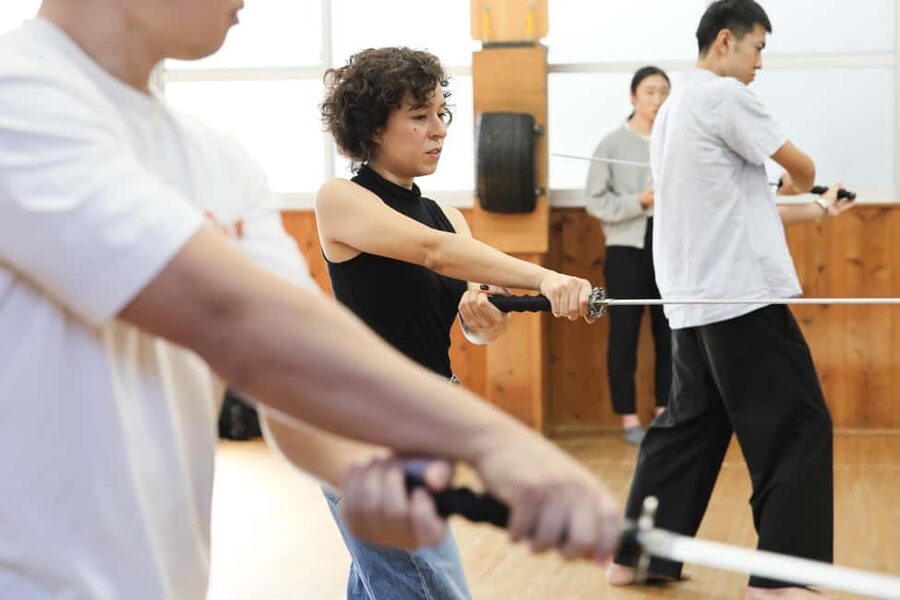
The sword lesson begins with the essentials: how to hold the sword, how to position yourself, and how to perform the assigned movements. You work on techniques identified as makkogiri and kesagiri. The instructors then combine these movements into a short sequence.
The language around sword fighting can make this sound more intense than it is. The class is built around performance and choreography, not unscripted combat. One participant specifically described using a fake sword, and the final scene is designed for safe acting rather than actual fighting.
That is good news for beginners. You do not need prior sword or martial-arts experience to take part. The instructors guide you through the moves, and the pace allows you to repeat them before filming. Clear instruction is important here because the fun comes from looking coordinated, even when you are still figuring out which foot goes where.
I like this part because it gives the final video some structure. You are not simply handed a costume and told to swing a sword. You learn a few recognizable actions, then use them in a scene. The difference is small but important: you feel like you have taken part in the making of the video.
The class can also be silly in the best way. Several people described laughing, acting dramatically, and enjoying the chance to play samurai. You should be ready to commit to the role. If you hold back because you feel self-conscious, the footage will probably look stiff. The instructors appear to encourage a playful approach, so throwing yourself into the choreography is part of the bargain.
Professional actors give the session its energy
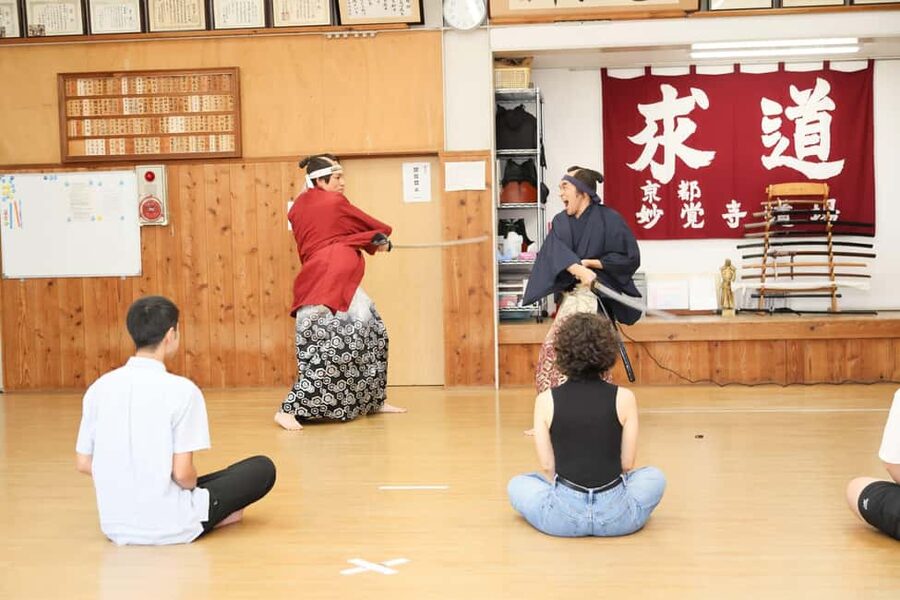
The instructors are not only teaching assistants. Kesuke Irie and Kazuya Naito are identified as actors who have appeared in Japanese movies and television programs, and the experience includes a professional chambara performance.
Chambara is Japanese sword-action cinema, with sharp movements, dramatic timing, and carefully arranged attacks and reactions. Watching trained performers first helps you see the difference between a casual sword swing and a staged action move. It also gives the class a short show before you take your turn.
The value here is not that you will suddenly become a movie stunt performer in 70 minutes. You will not. The value is that the actors can make simple movements look theatrical, then break them down so you can copy the basic idea.
The instructors are also a major part of the mood. Their role is part teacher, part performer, and part director. That combination suits the activity. A strict martial-arts instructor might make beginners nervous, while an actor who only performs might not explain the movements clearly enough. Here, you get both instruction and showmanship.
If you are booking for a family group, pay attention to the physical restrictions. Children under five cannot join, and the activity is not suitable for pregnant women, people with back problems, people with pre-existing medical conditions, or people over 95. The class is playful, but it still involves movement and should not be treated as entirely passive.
More Samurai and Ninja Experiences in Kyoto
- Kyoto Samurai Experience
★ 5.0 · 1,294 reviews - Kyoto: Kendo and Samurai Experience with Uniform and Gear
★ 4.9 · 815 reviews - Kyoto: Samurai Sword Class by Experts in Traditional Arts
★ 4.9 · 657 reviews - Skip the lines Basic Ticket at SAMURAI NINJA MUSEUM KYOTO
★ 4.5 · 632 reviews
Your camera turns the lesson into a short movie
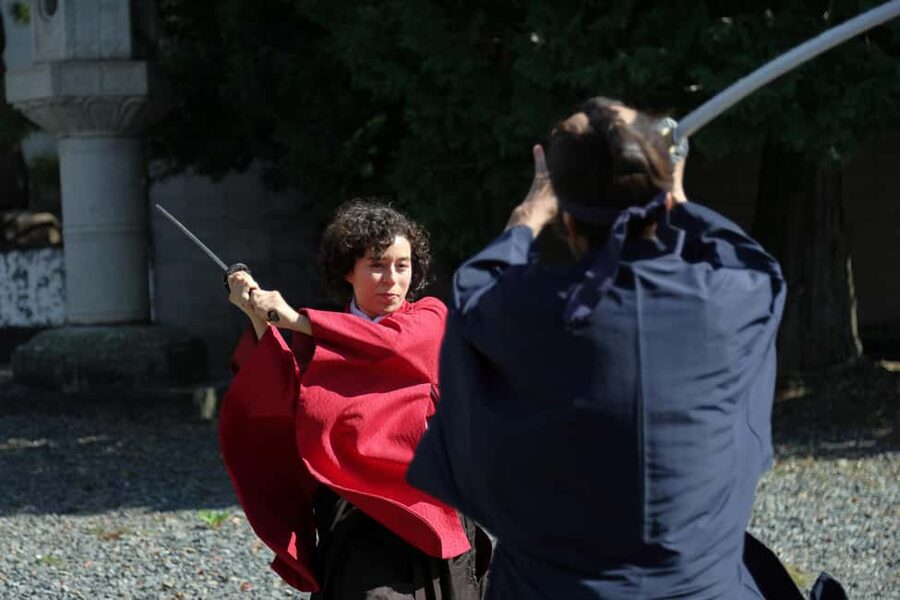
The filming session is the payoff. After practicing and watching the professional performance, you perform the sword sequence yourself. You are welcome to record the scene with your own camera, and photography and video recording using your camera are included.
Bring a camera or phone with enough storage and battery power. The instructions specifically tell you to bring a camera, so do not assume the provider will supply all the equipment needed for your personal recording. The experience also includes a photo download service, giving you another way to keep the memory.
The final footage is likely to be more valuable than a posed costume portrait because it shows you doing something. You can see the movements, the setting, and the comic effort involved. It also gives family members or friends at home a clearer sense of what you actually did in Kyoto.
You should understand that you are acting in a choreographed scene, not receiving a polished film production with elaborate editing. Your performance may be rough. That is part of the fun. One father and son enjoyed the class even while admitting that their sword acting was not very good. The experience succeeds when you treat the video as a souvenir of a funny afternoon, not as a professional demo reel.
If you are filming with your own camera, decide in advance who will hold it. The activity includes recording with the customer’s camera, but the provided information does not promise a particular camera setup or editing package. A small group helps, since there are fewer people competing for space and attention.
What 70 minutes feels like
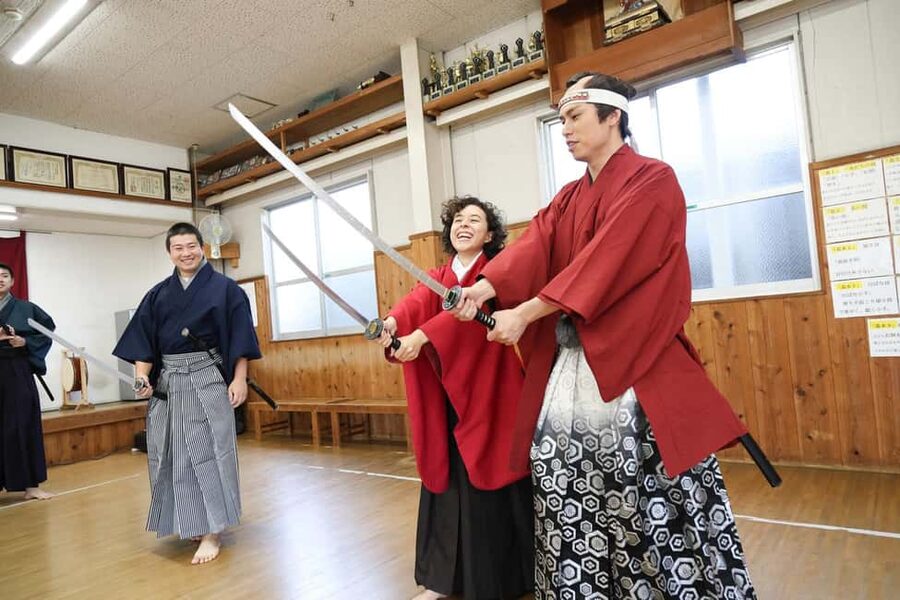
Seventy minutes is a useful length for this activity. It is long enough to include dressing, instruction, a professional performance, practice, and filming, but short enough to fit around temple visits and other Kyoto plans.
The schedule is active rather than slow. You are learning movements, changing into costume, watching a show, and performing. I would avoid placing it between two major attractions on opposite sides of the city, since transportation is your responsibility and you will want time to reach the temple without rushing.
The small group limit is one of the best practical features. With no more than six participants, the instructors can keep the session focused on the people in front of them. That matters when everyone needs a turn in the action scene and when a beginner needs a move shown again.
The class is offered at set starting times, so you need to check availability when choosing a date. Free cancellation is available up to 24 hours before the activity for a full refund, and you can reserve now and pay later. Those terms are useful if your Kyoto plans are still shifting, though they do not remove the need to arrive at the correct temple meeting point.
Is $127 good value in Kyoto?
At $127 per person, this is not a bargain-basement photo stop. You are paying for a guided activity with a rental kimono, instruction, a professional performance, filming, a photo download service, and specified indemnity insurance.
I think the price makes the most sense if you want an active cultural experience rather than another place to look around. The kimono rental alone would not justify the cost for me. The combination of a historic temple, actor-led sword instruction, small group attention, and personal video gives the booking more substance.
The value also depends on your group. A parent and teenage child, a couple, or a small group of friends can share the humor and watch the footage later. If you are traveling alone, the small group still makes participation possible, but the social side may be less important to you.
The activity is less suitable if you want a serious study of bushido, a long martial-arts course, or a quiet temple visit. The temple is the setting, but the class is lively and theatrical. You are there to learn enough sword choreography to perform, not to gain a formal qualification or train with a sharp blade.
Who will enjoy the samurai class most?
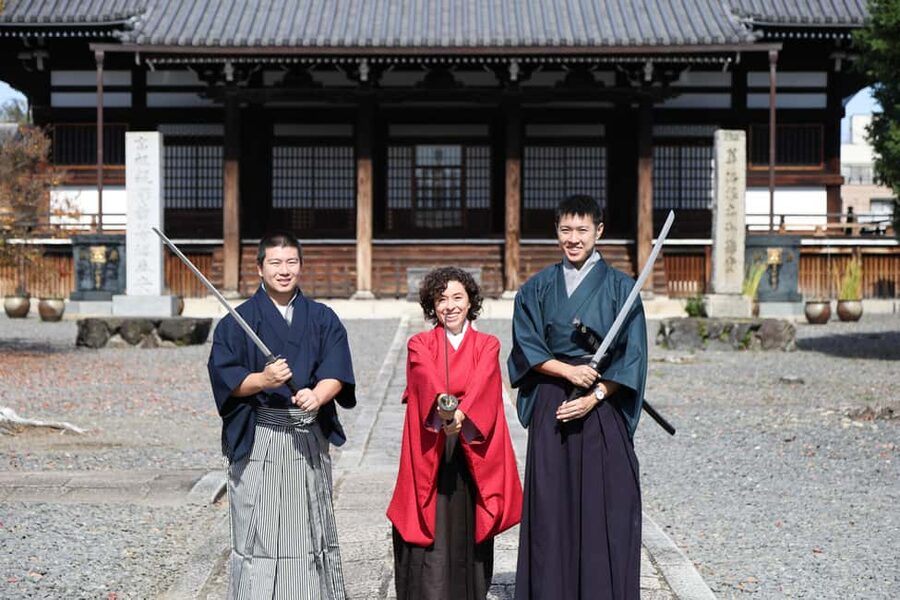
I would recommend this to you if you like hands-on activities, enjoy dressing up, or want a souvenir that shows more than a standard photograph. It is especially well suited to families with older children and teenagers, couples who enjoy playful activities, and anyone who has wanted to appear in a samurai scene.
It also works well for people who do not know much about Japanese sword culture. You get a short introduction through demonstration and practice, without needing to prepare beforehand. The instructors provide the structure, and the performance gives you a glimpse of the style before you attempt it.
You may want to skip it if you dislike being filmed, feel uncomfortable performing in front of others, or have physical conditions that make sword movements difficult. The activity is safe when you follow the instructions, but it is not a sit-down presentation.
Smoking, alcohol, and drugs are not allowed. That is basic, sensible guidance for a movement-based class in a temple setting.
How this fits into a Kyoto itinerary
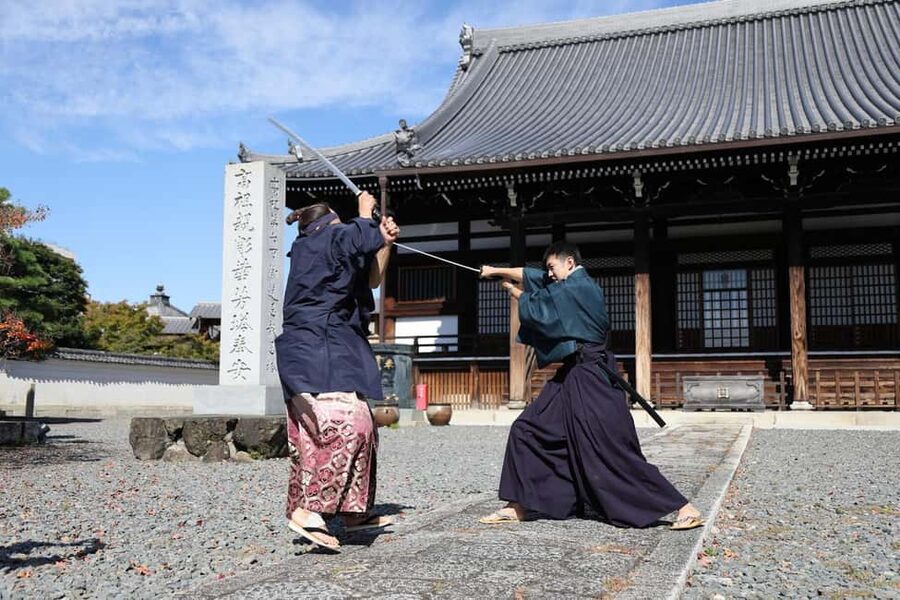
Myokaku-ji can add a different note to a Kyoto day. Temples are often experienced through walking, looking, and listening. Here, you take part in a guided performance inside one.
I would schedule it when you have enough room before and after the 70 minutes. You may want time to arrive, find the dojo, prepare for the costume, and leave without rushing to your next reservation. Since transportation is not included, check your route to the temple before booking.
The activity can work especially well on a day when you want a break from major sightseeing. After several hours of shrines and gardens, learning sword choreography gives you something physical and social to do. It is also a good choice if your group has different interests, since the session is short and produces a shared memory.
Should you book this Myokaku-ji experience?
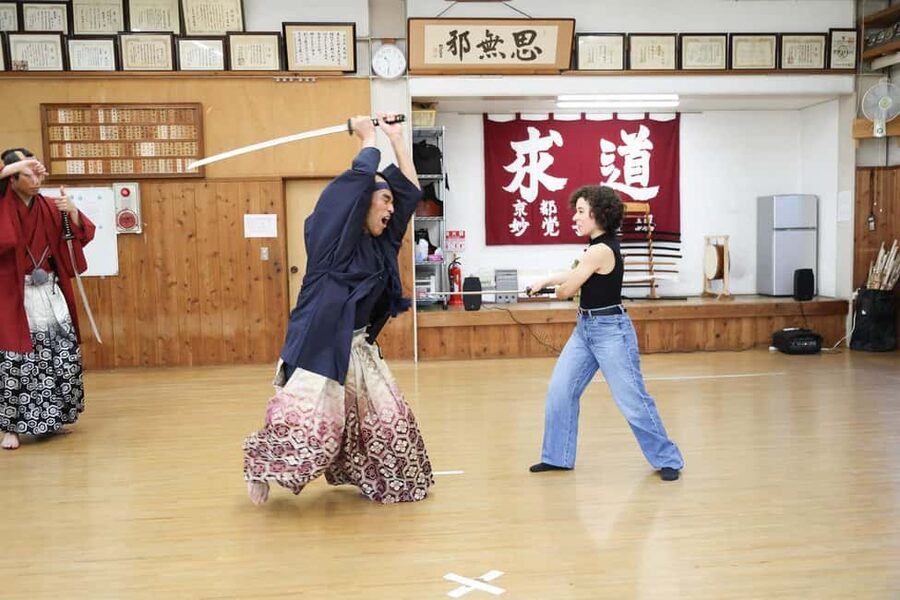
Book it if you want playful samurai role-play with real instruction, a historic temple setting, and downloadable memories from your own action scene. The combination of included kimono rental, professional actors, English support, and a six-person limit gives the experience a clear advantage over a quick costume photograph.
I would not book it expecting a full martial-arts course or a solemn lesson in samurai history. This is choreographed entertainment with a cultural setting. For the right mood, that is exactly why it works. Bring comfortable clothes, a camera, and a willingness to look a little ridiculous. That is likely to produce the best footage.
FAQ
Where does the samurai sword and kimono experience take place?
It takes place at Myokaku-ji Temple in Kyoto. Meet at the Myokaku-ji Dojo, located to the left after entering the temple’s main gate.
How long does the experience last?
The activity lasts 70 minutes.
Is the kimono rental included?
Yes. Rental kimono is included in the activity price.
Can I take photos or videos?
Yes. You are welcome to take photos and videos during the experience. Photography and video recording with your camera are included, and a photo download service is also provided.
What should I bring?
Bring a camera and wear comfortable clothing suitable for physical activity.
Who should not take part?
The activity is not suitable for children under five, pregnant women, people with back problems, people with pre-existing medical conditions, or people over 95. Smoking, alcohol, and drugs are not allowed.
Just added around Kyoto
- Kyoto: Zen Meditation at a Private Temple with a Monk★ 5.0 · 25 reviews
- Kyoto: Gion Geisha District & Sake-in-Hand Walking Tour★ 5.0 · 37 reviews
- Private Pewter Sake Cup Experience with a Kyoto Artisan★ 5.0 · 31 reviews
- Your Private Vacation Photography Session In Kyoto★ 5.0 · 110 reviews
- Private Guided Traditional Buddhist Cooking in Japan★ 5.0 · 16 reviews
- Kyoto Wagashi(Japanese sweets) Cooking Class near Fushimiinari★ 5.0 · 60 reviews
- Traditional Japanese Music show & Experience Tour in Kyoto★ 5.0 · 57 reviews
- Kyoto:Family-Friendly Kimono & Yukata Experience at WARGO★ 5.0 · 147 reviews
Kyoto Tours, compared.


Fushimi Inari, Kinkakuji, Bamboo Grove 1 Day Bus Tour
Read our review →
Tea Ceremony in a Traditional Tea House in Kiyomizu
Read our review →
Kyoto Geisha Walking Tour: Gion District & Hidden Gems
Read our review →

Gion Magical Night Walking Tour with Geisha Trivia
Read our review →

Gion Geisha District Walking Tour – Stories of Geisha
Read our review →Browse the lists this tour appears in