
Reviewed · KYOTO TOURS
Ramen Gyoza Onigiri Japanese Cooking Class in Kyoto
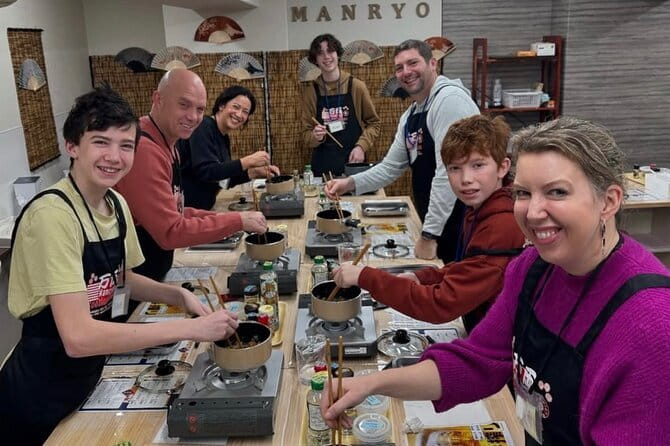
This Kyoto class packs three favorite Japanese dishes into about 90 minutes, with the real focus on homemade ramen broth. Chef Nori and his team, including Minori and Ryho, guide you through ramen, gyoza, and onigiri, then you sit down to eat the full meal you prepared.
I like two things here: you learn recipes built around ingredients you can find at home, and the small maximum of eight people gives you useful time with the instructors. The main consideration is that this is not a noodle-making class, and the vegetarian choice is limited: tofu replaces pork, but other ingredients remain the same.
Key points to know before booking
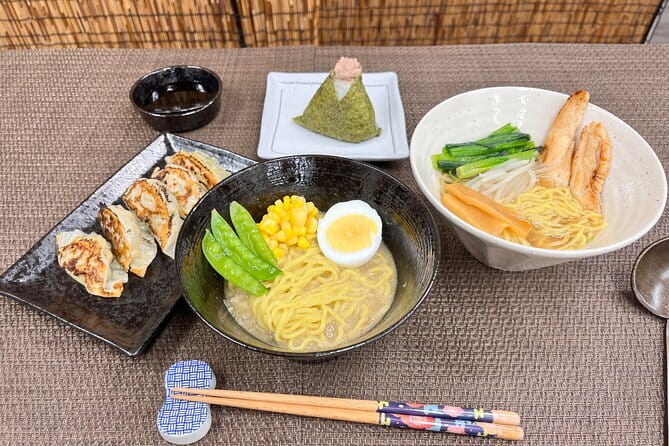
- Three dishes in 90 minutes: Prepare ramen, gyoza, and onigiri in one compact session.
- Broth is the star: You learn how to build ramen soup, while the noodles are supplied rather than made.
- You eat your own work: The activity includes lunch, with enough food to make arriving hungry a smart plan.
- Small class setting: A maximum of eight people helps you follow the demonstrations and ask questions.
- Two menu choices only: Pick the regular menu or a vegetarian menu with tofu replacing pork.
- Central Kyoto meeting point: The class begins and ends at Manryo Japanese Cooking Class, near public transportation.
What this Kyoto cooking class actually teaches
Many Japanese cooking classes focus on one dish. This one takes a broader approach. In a single sitting, you work with ramen broth, gyoza wrapping, and onigiri shaping.
That makes the class a good match for you if you want more than a quick demonstration. You leave with a set of basic techniques that can be repeated at home, rather than one complicated recipe that depends on hard-to-find products.
The class is taught in English by a friendly team led by Chef Nori. The instruction includes a short introduction to ramen before the cooking begins. The pace is brisk, but the teaching is arranged carefully so the group can cover a surprising amount in an hour and a half.
You should not expect a professional kitchen course. This is a hands-on introduction designed for people on a Kyoto holiday. The aim is to help you cook tasty Japanese home-style dishes with seasonings and ingredients that are reasonably practical to use again.
More cooking classes in Kyoto:
- Ramen Cooking Class at Ramen Factory in Kyoto
★ 5.0 · 1,937 reviews - Kyoto: Ramen Cooking Class at a Ramen Factory with Souvenir
★ 4.9 · 532 reviews - Kyoto: Ramen, Gyoza, and Onigiri Cooking Class
★ 5.0 · 445 reviews
Starting with ramen broth, not handmade noodles
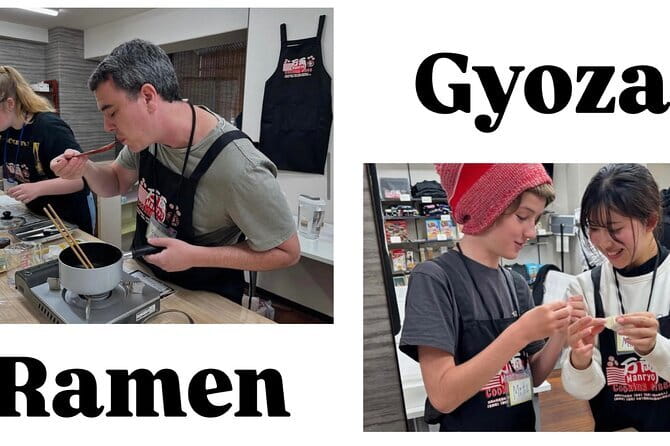
The ramen portion is the most useful part for many home cooks. You can often buy ramen noodles, but the soup is what gives the bowl its character. Here, the class focuses on preparing the broth and explaining how the ingredients work together.
The class includes two ramen styles, according to the detailed descriptions of the session. You prepare the soup, learn how to season it, and then combine it with noodles supplied for the meal.
That distinction matters. If your dream is to stretch, cut, and cook fresh ramen noodles by hand, this is not the right class. The noodles are not made from scratch. Instead, you get practical instruction on the part of ramen that is easier to overlook and harder to reproduce from a packet alone.
I like this choice. Making noodles would take up much of the limited time, while broth gives you a useful skill you can repeat at home. You can buy noodles near home, but learning a simple soup base gives you more control over the finished bowl.
The class also offers a little context about ramen before you start. That short background helps connect the cooking to Japanese food culture without turning the session into a lecture.
Folding gyoza without the usual kitchen frustration
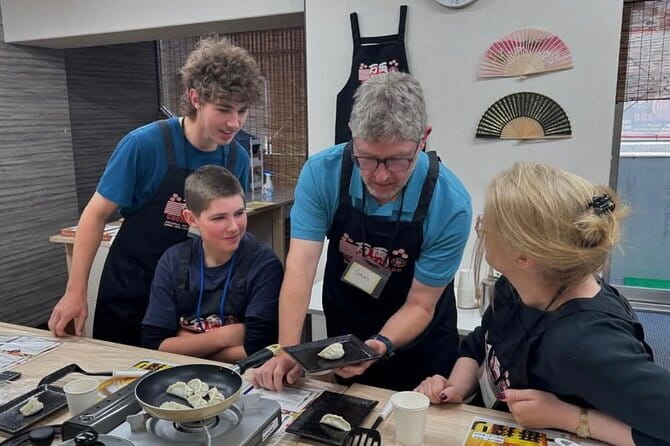
Next comes gyoza, the Japanese-style dumpling familiar from restaurants and convenience stores. The key skill is wrapping. You learn how to fill and fold the dumplings so they hold together during cooking.
This is the sort of task that looks easy until you try it. The instructor demonstrations and guided practice help you get the shape right without spending half the class struggling with one dumpling.
The regular menu uses pork gyoza. If you select the vegetarian menu, pork is replaced with tofu. Be aware that the vegetarian option is narrow rather than fully customized. Other ingredients remain the same, so you should check the menu carefully if you avoid particular foods.
The gyoza section adds a fun, tactile part to the class. Ramen involves building flavor in a pot, while gyoza gives you something to shape with your hands. That change of pace keeps the session lively and gives families and mixed-age groups a task everyone can understand.
Shaping onigiri, the simple Japanese rice ball
Onigiri is the simplest-looking dish of the three, but shaping the rice properly still takes a little practice. You learn how to form Japanese rice balls and handle the rice so it holds its shape.
This is a particularly useful takeaway for a home kitchen. Onigiri does not require elaborate equipment, and the class presents it as something you can make for family or friends after returning home.
The dish also rounds out the meal. Ramen gives you soup and noodles, gyoza brings a savory dumpling, and onigiri adds rice in a compact, familiar form. You are not just sampling separate cooking tricks. You are building a full Japanese-style lunch.
More hands-on workshops in Kyoto:
- Kyoto: 45-Minute Tea Ceremony Lesson Experience
★ 4.3 · 2,378 reviews - Kyoto : Chopsticks Making Workshop in Gion with Engraving Option
★ 5.0 · 958 reviews - Kyoto: Samurai Sword Class by Experts in Traditional Arts
★ 4.9 · 657 reviews - Ninja 1-hour Hands-on Lesson by Japanese master in Kyoto -Entry
★ 5.0 · 489 reviews
The meal at the end is part of the value
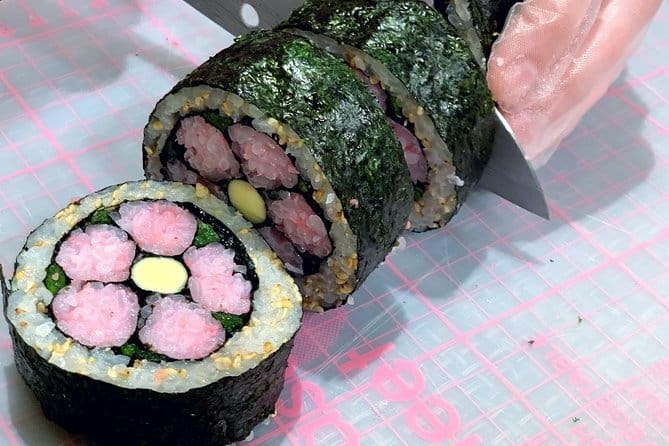
After the cooking, you eat what you have made. The meal includes the ramen, gyoza, and onigiri, so the activity is not just a lesson followed by a small tasting.
Several details make this worth noting. The portions appear generous enough that you should arrive hungry, and the cooking itself may be your main midday meal. If you have an early breakfast or plan to eat soon afterward, keep the amount of food in mind.
I like the fact that the class closes the loop. You can taste the result while the techniques are still fresh. If the broth needs more seasoning or your gyoza fold is imperfect, you can ask about it right away.
The meal also gives you a shared finish with the rest of the small group. The tone is intended to be relaxed and social, with humor from the instructors and clear English explanations. You get a meal, a lesson, and a practical souvenir in the form of recipes and new kitchen skills.
A small class with a carefully managed pace
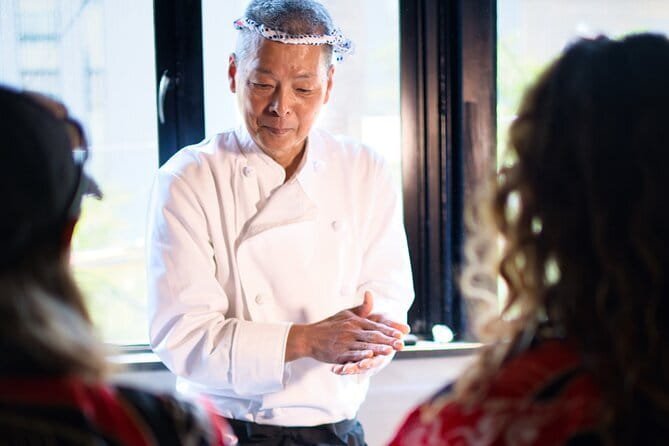
The maximum group size is eight people. That is a useful limit for a class with several dishes and multiple cooking steps.
A larger group could make this feel like a demonstration from the back of a room. With eight or fewer, you have a better chance of seeing the folding and shaping techniques clearly, getting help when needed, and keeping up with the sequence.
The pace is still quick. You make three dishes in 90 minutes, so the class relies on good preparation and clear instructions. This is not a slow afternoon workshop where you linger over each stage.
The advantage is efficiency. You can fit the class into a Kyoto sightseeing day without giving up half a day. The drawback is that you may not spend much time exploring variations or asking long questions about every ingredient.
The instructors appear to keep the tone light while maintaining order. The team includes Chef Nori and assistants such as Minori and Ryho, and the teaching is delivered in English. The class has been especially well received for its organization, easy-to-follow instruction, clean setting, and smooth timing.
Choosing between the regular and vegetarian menus
You have two menu options:
- Regular menu, which includes pork
- Vegetarian menu, with tofu replacing pork
This is an important booking detail. The vegetarian menu is not vegan, pescatarian, gluten-free, halal, or kosher. The provider states that it cannot accommodate those diets or other special dietary requests.
You should read the booking email carefully after reserving. The menu choice is limited, and this experience is not a good fit if you need ingredients removed or substituted beyond the stated tofu replacement.
For someone who eats the regular menu, the selection is straightforward. If you are vegetarian, you can still take part, but you need to understand exactly what the alternative means before paying.
Children under 13 are not accepted. That makes this better suited to older children, teenagers, couples, friends, and adults who can follow a fast series of instructions. Families with children old enough for the age requirement can find it a pleasant shared activity, especially since everyone gets to eat the finished dishes.
Location, timing, and what the price includes
The class begins and ends at Manryo Japanese Cooking Class, at:
Manryo Japanese Cooking Class
Life Building B1
841 Chōshōji Monzenchō
Sakyo Ward, Kyoto 606-8366, Japan
The meeting point is near public transportation. Private transportation is not included, so you need to make your own way there. The activity ends back at the same location, which makes planning the rest of your day easier.
The listed price is $92.47 per person. That is not a budget meal, but it covers more than lunch. You receive instruction in three dishes, hands-on practice, the food you prepare, and the chance to eat the finished meal. You also gain recipes and methods intended for use at home.
I see the value most clearly if you enjoy cooking or want an activity beyond temples and shopping. A standard ramen meal in Kyoto will cost much less. You are paying the difference for the instruction, the social setting, the ingredients, and the chance to prepare several dishes yourself.
The 90-minute length also affects the calculation. You are not committing to a full day, and the class can serve as lunch while leaving plenty of time for other Kyoto plans. For a short visit, that efficient format is useful.
A mobile ticket is provided, and booking confirmation is received at the time of reservation. Free cancellation is available if you cancel at least 24 hours before the local start time. Cancellations or changes made inside that window are not accepted for a refund.
Who will get the most from this experience
I would point you toward this class if you fit one or more of these groups:
- You want to learn Japanese dishes you can repeat at home.
- You prefer a hands-on activity to a passive food tour.
- You have only a short block of time in Kyoto.
- You enjoy ramen but want to understand the broth rather than simply eat a bowl.
- You are traveling with family members aged 13 or older.
- You want lunch built into an activity.
- You like social classes with clear instruction and a small group.
It is less suitable if you want to make noodles from flour, study regional ramen styles in depth, or receive a menu tailored to strict dietary needs.
The class also works well for a return visit to Kyoto. One participant joined Nori’s cooking class for a second time and found the setting familiar and welcoming. That suggests the format has enough warmth to appeal beyond a one-time tourist stop, though the basic menu remains the same.
What the strongest parts of the experience are
The cooking range is the biggest strength. You do not spend the whole session on one recipe. Instead, you learn three recognizable Japanese foods and finish with a meal that feels substantial.
The broth lesson is another strong point. The instructors concentrate on a part of ramen you may not easily learn from a cookbook, while keeping the process realistic for a home kitchen.
The teaching team is also a major reason to book. Chef Nori is described as patient and friendly, and the assistants help keep the class moving. English instruction, humor, and demonstrations make the process accessible even if your cooking experience is limited.
The atmosphere matters, too. The session is organized but not stiff. You get jokes, practical guidance, and enough structure to avoid confusion as the group moves from ramen to gyoza to onigiri.
Finally, you eat everything you make. That may sound obvious, but it changes the feel of the class. You are not assembling a token sample. You are preparing a full lunch, and arriving hungry is good advice.
Should you book this Kyoto cooking class?
I would book it if you want an efficient, friendly introduction to Japanese home cooking and you are happy with supplied ramen noodles. At $92.47, the price makes sense when you value the lesson and the meal together, especially during a short Kyoto visit.
Choose the regular menu unless you specifically need the vegetarian option. If you are vegan, pescatarian, gluten-free, halal, kosher, under 13, or looking for a fully customized menu, skip this one.
For everyone else, this is a strong choice for a 90-minute Kyoto activity. You learn broth, dumpling wrapping, and rice-ball shaping, then eat the results with the instructors and your small group. That is a useful combination of food, skill, and time well spent.
FAQ
How long does the cooking class last?
The class lasts approximately 1 hour and 30 minutes.
What dishes will I make?
You will learn to make ramen, gyoza, and onigiri, also known as Japanese rice balls. The class includes two types of ramen according to the detailed class descriptions.
Are ramen noodles made from scratch?
No. The class does not make ramen noodles. Instead, you learn how to prepare authentic-style ramen broth using ingredients and seasonings that you can get at home.
Can I choose a vegetarian menu?
Yes. You can book a vegetarian menu in which pork is replaced with tofu. Other ingredients remain the same.
Does the class offer vegan, pescatarian, gluten-free, halal, or kosher menus?
No. The provider cannot accommodate vegan, pescatarian, gluten-free, halal, kosher, or other special diets.
Are children allowed to join?
Participants must be at least 13 years old. Children under 13 cannot join the class.
Where does the experience start and finish?
The class starts at Manryo Japanese Cooking Class, Life Building B1, 841 Chōshōji Monzenchō, Sakyo Ward, Kyoto 606-8366, Japan. It ends back at the meeting point.
Is lunch included?
Yes. After cooking, you eat the ramen, gyoza, and onigiri you prepared during the class.
Just added around Kyoto
- Kyoto: Zen Meditation at a Private Temple with a Monk★ 5.0 · 25 reviews
- Kyoto: Gion Geisha District & Sake-in-Hand Walking Tour★ 5.0 · 37 reviews
- Private Pewter Sake Cup Experience with a Kyoto Artisan★ 5.0 · 31 reviews
- Your Private Vacation Photography Session In Kyoto★ 5.0 · 110 reviews
- Private Guided Traditional Buddhist Cooking in Japan★ 5.0 · 16 reviews
- Kyoto Wagashi(Japanese sweets) Cooking Class near Fushimiinari★ 5.0 · 60 reviews
- Traditional Japanese Music show & Experience Tour in Kyoto★ 5.0 · 57 reviews
- Kyoto:Family-Friendly Kimono & Yukata Experience at WARGO★ 5.0 · 147 reviews
Kyoto Tours, compared.


Fushimi Inari, Kinkakuji, Bamboo Grove 1 Day Bus Tour
Read our review →
Tea Ceremony in a Traditional Tea House in Kiyomizu
Read our review →
Kyoto Geisha Walking Tour: Gion District & Hidden Gems
Read our review →

Gion Magical Night Walking Tour with Geisha Trivia
Read our review →

Gion Geisha District Walking Tour – Stories of Geisha
Read our review →Browse the lists this tour appears in