
Reviewed · KYOTO TOURS
Sushi – Authentic Japanese Cooking Class – the best souvenir from Kyoto!
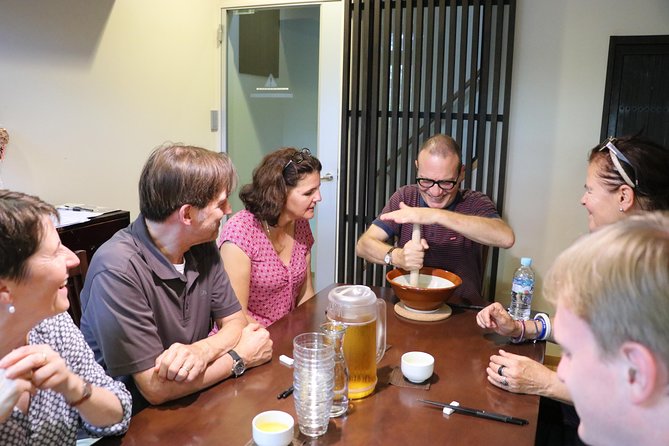
Making sushi at home is one thing. Understanding the rice, the broth, the manners, and the small details behind the meal is another. This two-hour Kyoto cooking class with Kaori at Japanese Cooking Class Roujiya gives you hands-on practice with several sushi styles, dashi soup, and pickled ginger.
I like the small-group feel and the useful four-page guide, which covers recipes, Japanese food culture, and dining etiquette. I also like that you eat what you make, rather than simply watching a demonstration.
The main point to check is group size. The description presents the class as capped at eight, while the booking information allows up to 12 participants, with a maximum of 13 people per booking. Ask for the expected size if a quiet class matters to you.
Key points at a glance
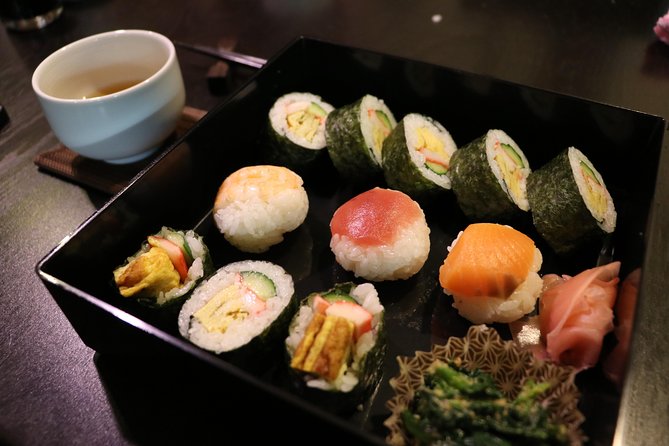
- You make several dishes: Prepare different types of sushi, sushi rice, dashi soup, and pickled ginger.
- Kaori teaches in English: Her clear explanations cover both cooking steps and Japanese food customs.
- Etiquette is part of the lesson: Learn table manners, chopstick points, and the proper context for sushi dining.
- You eat your finished meal: The class includes the food you prepare, an aperitif, and Japanese green tea.
- Recipes go home with you: The handout helps you repeat the sushi, soup, and ginger recipes after Kyoto.
- The setting feels personal: The class takes place in a clean, attractive kitchen at Roujiya, presented as Kaori’s home-style cooking environment.
Why this is more than a sushi lesson
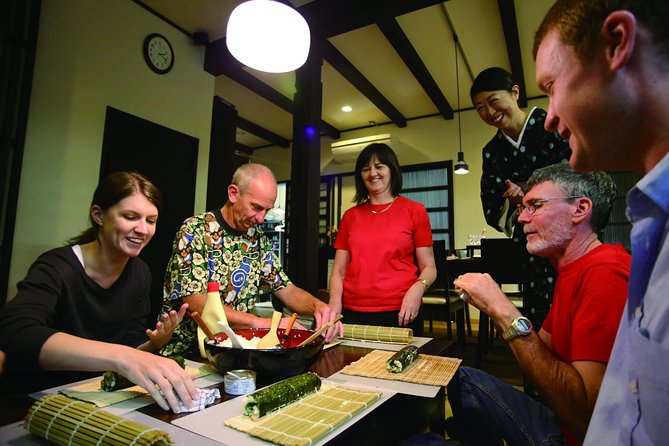
Many cooking classes focus on getting food onto a plate. This one takes a wider view. You learn how Japanese cooks think about flavor, how ingredients are used, and how the meal fits into everyday customs.
The lesson includes an introduction to umami, the savory taste often linked with dashi, seaweed, and bonito flakes. You also learn why sushi rice is fanned, how dashi is made, and how soup and pickled ginger fit alongside sushi.
That extra context gives the class more value than a quick roll-making session. You are not just copying hand movements. You are learning why the rice is treated in a certain way and why a particular broth matters.
Kaori also teaches Japanese table manners. The material includes details about dining etiquette and food traditions, with one handout covering Japanese manners, food, and the recipes used during class. If you plan to eat at traditional restaurants during your stay, this is useful background.
More cooking classes in Kyoto:
- Ramen Cooking Class at Ramen Factory in Kyoto
★ 5.0 · 1,937 reviews - Kyoto: Ramen Cooking Class at a Ramen Factory with Souvenir
★ 4.9 · 532 reviews - Kyoto: Ramen, Gyoza, and Onigiri Cooking Class
★ 5.0 · 445 reviews
Arriving at Roujiya in central Kyoto
The meeting point is Japanese Cooking Class Roujiya, at 22-58 Nishinokyo Ikenouchicho, Nakagyo Ward, Kyoto 604-8375. The class begins at 11:30 am and ends at the same location after roughly two hours.
The venue is near public transportation, but Kyoto addresses can be confusing. One participant had trouble finding the location after an Uber driver could not locate it, so I would not rely on typing the street address into a taxi app alone.
Use the Google Maps location link supplied after booking. Save it before leaving your hotel, and allow extra time for the final approach. This is a practical point, not a minor one: a cooking class cannot easily wait once the lesson has begun.
There is no hotel pickup or drop-off. You are responsible for reaching Roujiya and returning on your own. Since the class is in the late morning, it can fit neatly between breakfast and an afternoon visit to another part of Kyoto.
Meeting Kaori in the kitchen
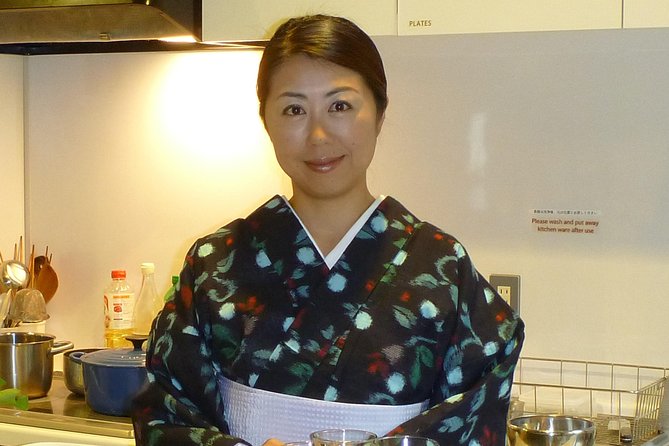
Kaori is the English-speaking instructor and host. The class is presented in a welcoming kitchen setting, with the tone of being invited into her home rather than entering a large commercial school.
That setting is part of the appeal. You get a clean, organized place to work, and the instruction takes place close enough for Kaori to check your technique. Several parts of the class require practice, so direct correction is more useful than watching a video.
The class suits complete beginners. You do not need to arrive knowing how to shape sushi or season rice. Kaori talks you through each stage and explains why you are doing it.
At the same time, people who already make basic sushi at home can still find useful details in the lesson. The focus on umami, dashi, rice preparation, and dining customs gives the class more depth than a basic rolling demonstration.
Starting with umami and dashi
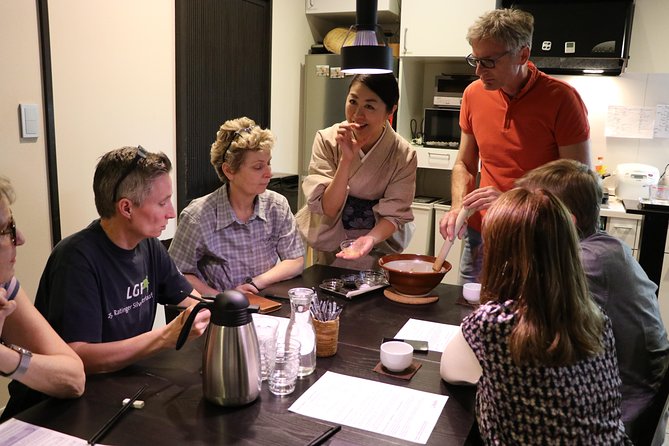
The lesson includes an introduction to the five taste ideas used in Japanese cooking, with particular attention to umami. This gives you a simple framework for understanding why dashi tastes so distinctive.
You learn to prepare a basic dashi broth, using seaweed and bonito flakes. Dashi is a foundation of Japanese cooking, so this section helps place the sushi meal in a broader setting. It also gives you a recipe you can use at home without needing a long list of ingredients.
The soup is part of the meal, not just a side exercise. You are able to see how a few carefully chosen ingredients create a clear, savory flavor. For anyone curious about Japanese cuisine beyond sushi, this may be the most useful part of the class.
The lesson also includes pickled ginger. Ginger cleans and refreshes the palate between bites of sushi, and making it yourself helps you understand its role at the table. These are small additions, but they make the meal feel complete.
More hands-on workshops in Kyoto:
- Kyoto: 45-Minute Tea Ceremony Lesson Experience
★ 4.3 · 2,378 reviews - Kyoto : Chopsticks Making Workshop in Gion with Engraving Option
★ 5.0 · 958 reviews - Kyoto: Samurai Sword Class by Experts in Traditional Arts
★ 4.9 · 657 reviews - Ninja 1-hour Hands-on Lesson by Japanese master in Kyoto -Entry
★ 5.0 · 489 reviews
Preparing sushi rice and several sushi styles
Rice is the heart of sushi, and the class gives it proper attention. You learn how to prepare the rice and why it must be handled carefully.
One detail highlighted during the lesson is fanning the rice. This is not a theatrical flourish. It is part of cooling and preparing the rice for sushi, and it shows how technique can affect the final texture.
From there, Kaori guides you through several types of sushi. The exact selection can vary, but the class is designed to include more than one form, giving you practice with different shapes and methods.
The hands-on format is important. You prepare ingredients, follow each stage, and then eat the result. Kaori checks that you have understood the instructions rather than leaving you to guess.
You should expect some uneven pieces at first. That is part of the fun. The goal is not restaurant-level speed or perfect presentation. It is to leave with enough confidence to try sushi again at home.
Learning the customs behind the meal
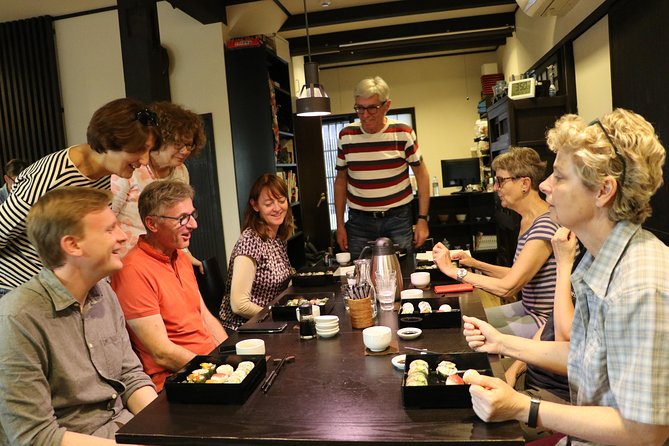
The etiquette section makes this class particularly useful for a first visit to Japan. Sushi dining can involve small rules that are easy to miss when you are simply following what people around you do.
You learn Japanese table manners along with information about food traditions. The class also covers cultural details such as why Japanese chopsticks are shorter than Chinese chopsticks.
These points may seem modest, but they help you read a meal more clearly. You begin to understand that Japanese cuisine is not only about ingredients. It also includes how food is served, handled, and appreciated.
Kaori’s explanations are delivered in English, and the supplied information describes her English as excellent. That matters in a class built around timing and technique. If you miss one instruction while shaping rice or preparing an ingredient, you can quickly fall behind.
Eating what you make
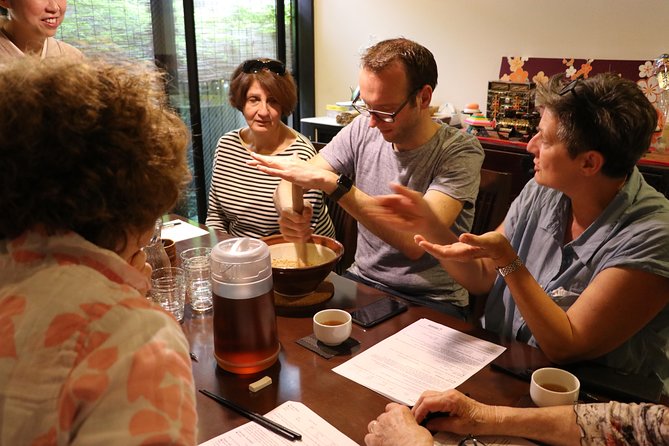
After the preparation, you sit down to enjoy your sushi, soup, and pickled ginger. The meal is included in the price, so you are not paying extra to eat the food prepared during the lesson.
An aperitif and Japanese green tea are also included. One class account noted that tea, sake, and beer were offered after the cooking for an extra charge, so I would treat alcoholic drinks as optional rather than part of the standard package.
The food portion appears generous. If you book this class, arrive ready for a full meal rather than a small taste. That makes the $72.67 price easier to assess, especially since the fee also covers ingredients, instruction, recipes, and the cultural lesson.
The real value is not only the amount of food. You are paying for the chance to make it under supervision and take the method home. A sushi meal at a restaurant may cost less or more depending on the venue, but it will not teach you how to prepare the rice or make dashi.
What you take home
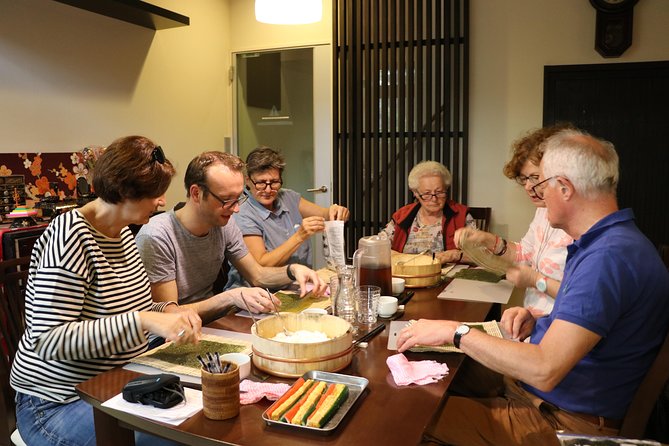
The recipes are one of the strongest practical features. You receive instructions for sushi rice, soup, and pickled ginger, along with guidance on the sushi styles prepared in class.
That turns the cooking lesson into a souvenir you can use. Kyoto offers plenty of beautiful purchases, but a recipe you can repeat with family or friends has a different kind of value.
The class also gives you a better basis for judging sushi after you leave Kyoto. You will have learned how rice texture, seasoning, broth, and garnish work together. Even if you do not recreate the meal perfectly, you can appreciate the details more clearly.
I especially like this for couples and families. One person may arrive mainly because they love sushi, while another may be more interested in Japanese culture. The class gives both people something to do and something to discuss.
Group size and the class atmosphere
The experience is promoted as a small-group class, with an eight-person cap described in the main material. The booking information elsewhere gives a maximum of 12 participants and a maximum of 13 people per booking.
That difference deserves attention. Eight people would allow a more relaxed, personal lesson, while 12 would feel busier in a kitchen. Since the class depends on direct instruction, I would contact the operator before booking if the smaller format is important to you.
The available information consistently points to a friendly, patient teaching style. Families with children have taken part, and the class has been described as easy to follow. Still, children need to be able to listen, handle ingredients, and take part in a two-hour lesson.
The home-style setting may not suit you if you want a formal culinary school or advanced chef training. This is a welcoming introduction, not a professional sushi apprenticeship.
Is $72.67 a fair Kyoto price?
At $72.67 per person, this is not the cheapest way to eat lunch in Kyoto. It is also more than a short food demonstration. The price includes the meal, ingredients, an English-speaking instructor, recipes, an aperitif, and green tea.
I see the value in the combination. You receive food, instruction, cultural background, and a usable souvenir in one two-hour session. For a visitor who already plans to eat sushi in Japan, the class adds understanding to a meal you would likely purchase anyway.
The price is strongest for couples, families, and small groups who enjoy participating rather than watching. It is less compelling if you are only looking for a quick lunch or if you have little interest in cooking.
The class is booked about 40 days ahead on average. That suggests you should reserve early, especially if you need a particular date or want to visit during a busy Kyoto period. Confirmation is sent within 48 hours, subject to availability.
Free cancellation is available until 24 hours before the start time. Cancellations or changes made inside that window are not accepted for a refund, so keep your transport plans firm on the day.
Who should book this class?
I would recommend Roujiya for:
- First-time visitors who want a gentle introduction to Japanese cooking
- Sushi fans who want to understand rice, dashi, and dining customs
- Couples looking for an interactive Kyoto activity
- Families whose children can follow a two-hour cooking lesson
- People who want recipes they can use after returning home
- Anyone who prefers a personal kitchen setting to a large classroom
You should think twice if you want to make only sashimi, study advanced knife work, or spend the class sampling restaurant-grade sushi. This activity is about preparing several accessible dishes and learning the culture around them.
Dietary requirements should be provided when booking. The class has been described as gluten-friendly for at least one family, but you should not assume every dietary need can be accommodated without checking first.
Should you book the Kyoto sushi class?
Yes, if you want more than a meal. The strongest reason to book is the mix of hands-on cooking and Japanese food culture. You make sushi, soup, and pickled ginger, then sit down to eat them while learning about umami, dashi, manners, and culinary traditions.
I also like the practical follow-through. The recipes and four-page guide give you a real chance to repeat the dishes at home, making the class a useful souvenir rather than a one-time activity.
Before paying, confirm the expected group size, save the Google Maps location, and disclose dietary needs. If those points work for you, this is a well-priced, friendly way to spend a Kyoto morning and take a little of Japan home with you.
FAQ
Where does the sushi cooking class take place?
The class takes place at Japanese Cooking Class Roujiya, located at 22-58 Nishinokyo Ikenouchicho, Nakagyo Ward, Kyoto, 604-8375, Japan.
What time does the class begin?
The start time is 11:30 am.
How long does the experience last?
The class lasts approximately two hours.
What food will I learn to prepare?
You will prepare several types of sushi, sushi rice, dashi soup, pickled ginger, and other related items.
Is the class taught in English?
Yes. An English-speaking cooking instructor teaches the class, and Kaori leads the experience.
Is the meal included?
Yes. The meal and all cooking ingredients are included.
Are drinks included?
An aperitif and Japanese green tea are included. One account also noted sake and beer available afterward for an extra charge, so alcoholic drinks should be treated as optional.
Are recipes provided?
Yes. Recipes are included, covering items such as sushi rice, soup, and pickled ginger.
Is hotel transportation included?
No. Hotel pickup and drop-off are not included, and the class ends back at the Roujiya meeting point.
Can I cancel for a full refund?
Yes, if you cancel at least 24 hours before the experience start time. Cancellations or changes made less than 24 hours in advance are not refunded or accepted.
How many people can join the class?
The experience is described as a small-group class capped at eight in one section. The booking information also states a maximum of 12 participants and a maximum of 13 people per booking, so confirm the expected group size before reserving.
Just added around Kyoto
- Kyoto: Zen Meditation at a Private Temple with a Monk★ 5.0 · 25 reviews
- Kyoto: Gion Geisha District & Sake-in-Hand Walking Tour★ 5.0 · 37 reviews
- Private Pewter Sake Cup Experience with a Kyoto Artisan★ 5.0 · 31 reviews
- Your Private Vacation Photography Session In Kyoto★ 5.0 · 110 reviews
- Private Guided Traditional Buddhist Cooking in Japan★ 5.0 · 16 reviews
- Kyoto Wagashi(Japanese sweets) Cooking Class near Fushimiinari★ 5.0 · 60 reviews
- Traditional Japanese Music show & Experience Tour in Kyoto★ 5.0 · 57 reviews
- Kyoto:Family-Friendly Kimono & Yukata Experience at WARGO★ 5.0 · 147 reviews
Kyoto Tours, compared.


Fushimi Inari, Kinkakuji, Bamboo Grove 1 Day Bus Tour
Read our review →
Tea Ceremony in a Traditional Tea House in Kiyomizu
Read our review →
Kyoto Geisha Walking Tour: Gion District & Hidden Gems
Read our review →

Gion Magical Night Walking Tour with Geisha Trivia
Read our review →

Gion Geisha District Walking Tour – Stories of Geisha
Read our review →Browse the lists this tour appears in