
Reviewed · KYOTO TOURS
Kyoto 8hr Private Tour with Government-Licensed Guide
Kyoto is best understood one neighborhood at a time, and this private tour lets you choose the neighborhood that fits your interests. You can focus on Fushimi Inari and Higashiyama, build a temple-heavy day, or ask your guide to shape a route around gardens, food, imperial sites, or old Kyoto streets.
I like the private format and the chance to work with guides such as Karkoo Tanigawa, Ichiro, or Shu. I also like the freedom to select four to six places rather than race through a fixed checklist. The catch is that $201.46 per person covers the guide, not transport, meals, or most admission fees, and eight hours on foot can be a demanding day.
Key points to know before you book
- You choose four to six sights: The long list of possible stops is a menu, not a promise that you will see them all.
- The tour is genuinely private: Only your group participates, so the pace and interests can shape the day.
- It is mainly a walking day: Pickup and drop-off are on foot within a designated Kyoto area, while buses, trains, taxis, and entrance tickets cost extra.
- A licensed English-speaking guide leads the day: Karkoo Tanigawa, Ichiro, and Shu are among the guides connected with especially praised outings.
- The strongest routes stay in one part of Kyoto: Fushimi Inari, Kiyomizu-dera, Gion, and nearby Higashiyama work better together than distant northern and western temples.
- You should reserve early: Booking at least two weeks ahead is requested, and the average reservation is made about 69 days before the tour.
How the eight-hour private format works
Once you reserve, a guide contacts you to discuss your interests and plan the day. You can name three or four places you want to see, then allow the guide to build the route around them. If Kyoto is new to you, ask for a suggested itinerary based on history, architecture, food, gardens, or religious sites.
The advertised plan allows four to six stops. That matters. The long list of 34 possible places can look like an ambitious sightseeing schedule, but the 15-minute and 10-minute entries are best understood as planning options, not realistic time allocations for a full visit. Kyoto’s major temples deserve more than a quick photograph, and moving across the city takes time.
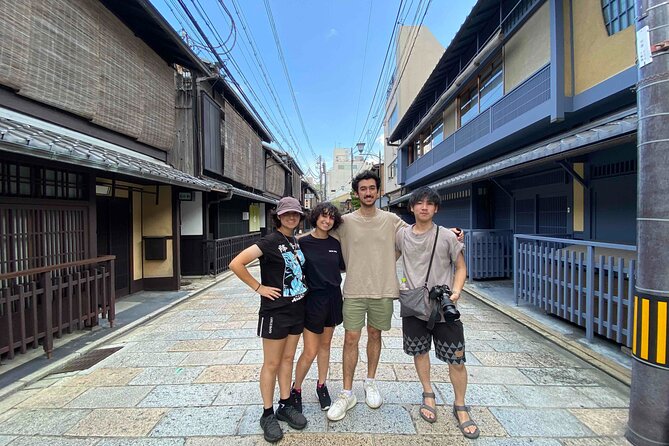
The experience is private, so you do not have to match the pace of strangers. A group of six adults previously worked with Karkoo Tanigawa and had enough flexibility to enjoy the bamboo forest, Kinkakuji, Sannenzaka, and Kiyomizu-dera. That combination gives you a useful model: mix one or two major sights with streets and neighborhoods where the pleasure comes from simply walking.
The meeting and return are on foot within a designated area of Kyoto. There is no private vehicle included. Public transportation is nearby, but transportation fees are yours to pay. Having Japanese yen and transportation cards ready can save time at the start, especially if your group wants to get moving without stopping to arrange fares.
More Licensed Guide Tours in Kyoto
- Kyoto 6hr Private Tour with Government-Licensed Guide
★ 5.0 · 1,369 reviews - Kyoto 4hr Private Tour with Government-Licensed Guide
★ 5.0 · 629 reviews - Kyoto: Private Tour with Local Licensed Guide
★ 4.8 · 463 reviews
A strong eastern Kyoto route: Fushimi Inari to Gion
For a first day in Kyoto, I would seriously consider an eastern route. Fushimi Inari-taisha, Kiyomizu-dera, Higashiyama, and Gion give you shrines, temple architecture, old streets, and Kyoto’s traditional entertainment district without forcing you to cross the city repeatedly.
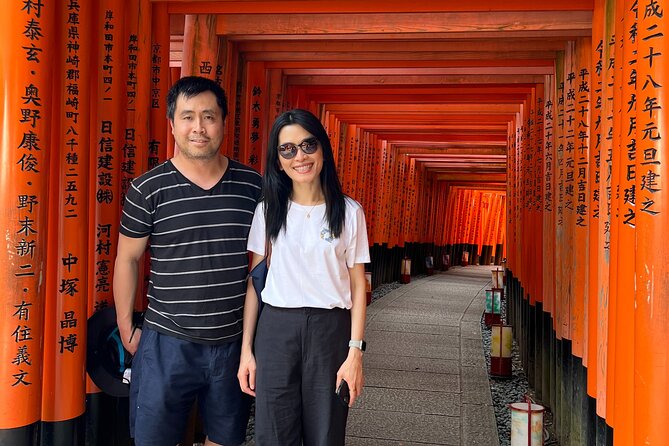
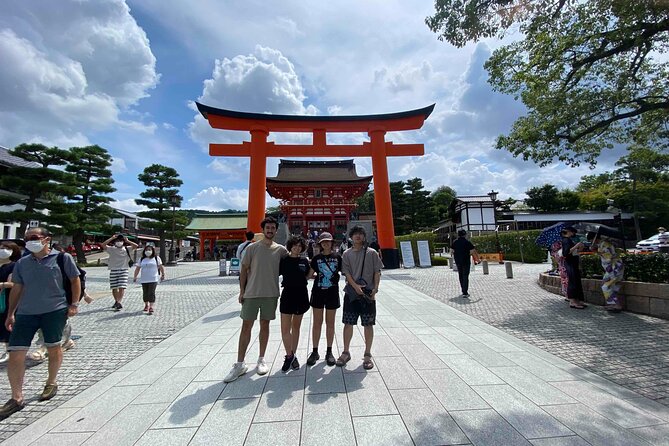
Fushimi Inari is famous for its long corridors of vermilion torii gates. The listed visit time is only 15 minutes, but that is too brief for most people if you want to walk beyond the first busy section. Ask your guide how far your group should go based on your energy and schedule. The shrine is free to enter, which helps keep costs down, but the hill paths can make this an active start.
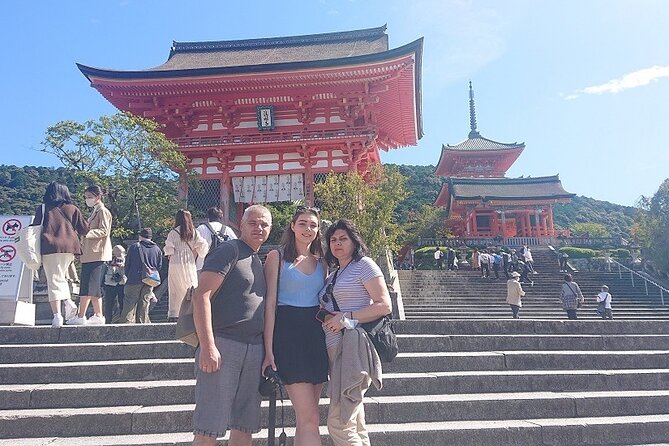
Kiyomizu-dera is one of Kyoto’s essential sights. It sits above the historic Higashiyama area, and the approach leads through streets filled with traditional buildings, small shops, and food counters. Admission is not included, so keep some cash available. A guide adds value here by explaining the temple’s religious meaning and helping you make sense of the buildings rather than treating the visit as a quick photo stop.
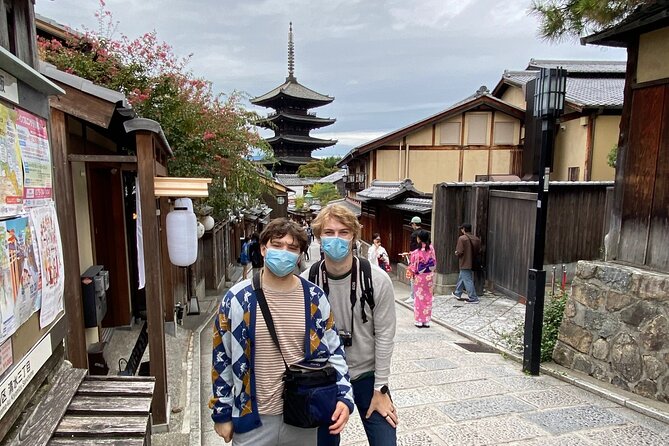
The Sannenzaka and Ninenzaka streets near Kiyomizu-dera are not listed as separate official stops, but they appeared in the day enjoyed by a group with Karkoo Tanigawa. Ask about including them if old Kyoto streets are a priority. They fit naturally with Kiyomizu-dera, though the lanes can be crowded and uneven.
Gion is a good follow-up. Its narrow lanes and preserved wooden buildings make it one of the city’s most atmospheric districts. You may see signs asking visitors to behave respectfully around private streets and people working in the area. A guide can help you understand the difference between public sightseeing streets and places where you should simply pass quietly.
Higashiyama is the wider historic district along Kyoto’s eastern mountains. It works less like a single attraction and more like a setting for a slow walk. Pontocho, on the opposite side of the Kamogawa River, can also fit an evening-oriented route, with its narrow dining alley and restaurants. Just remember that a sightseeing stop in Pontocho does not include a meal.
Kyoto’s central sights: Nijo Castle, Nishiki Market, and the palace
A central Kyoto route offers a different day. Nijo Castle was built in 1603 as the Kyoto residence of Tokugawa Ieyasu, the first shogun of the Edo period. It gives you political history and castle architecture rather than the mountain views and religious symbolism found in eastern Kyoto. Admission costs extra.
Nishiki Market is a narrow, five-block shopping street known as Kyoto’s Kitchen. More than 100 shops and restaurants line the passage, selling food and local specialties. This is a useful place to ask your guide about unfamiliar foods, but it is not a relaxed picnic stop. The lane is narrow, and you should check the tour timing if you want to shop or eat instead of simply walk through.
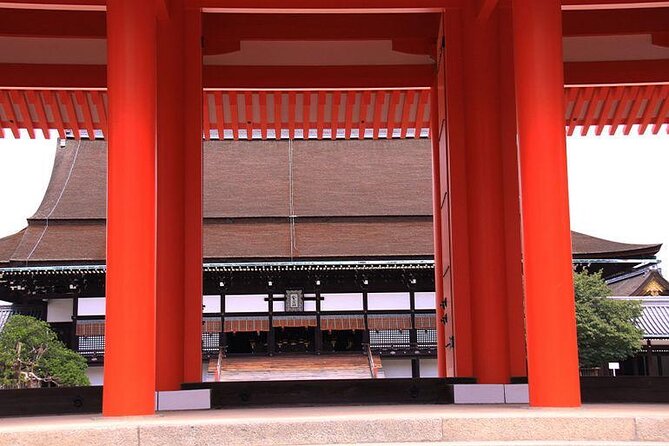
The Kyoto Imperial Palace occupies a large park and served as the imperial residence until 1868, when the emperor and capital moved to Tokyo. It gives you a sense of the city’s former national role. Admission is not included, and palace visits may require more time than the short listing suggests, so place it on the route only if imperial history is important to you.
These three stops can work well together because they tell a broad story: shogunal power at Nijo Castle, everyday food culture at Nishiki Market, and imperial Kyoto at the palace. They are not as naturally connected on foot as Gion and Kiyomizu-dera, so transportation planning matters.
Northern Kyoto for famous temples and quieter compounds
If your priority is classic temple architecture, ask about a northern route. Kinkakuji, the Golden Pavilion, is the visual star. Its upper two floors are covered in gold leaf, and the building reflects across a pond. Admission costs extra, and the setting is popular, so do not expect a private or empty visit. The guide’s role is most useful in explaining the site’s history and helping you appreciate more than the famous facade.
Ryoanji is home to Japan’s best-known rock garden. Its plain arrangement of stones and gravel rewards a quiet pause, though you may find the grounds busy. The experience is deliberately spare. If you enjoy gardens and Zen design, give this stop enough time rather than squeezing it between too many other temples.
Ninna-ji is a World Heritage temple and the head temple of the Omuro school of Shingon Buddhism. Its scale and religious importance make it a good choice for someone who wants more than Kyoto’s most photographed buildings. Admission is not included.
Daitoku-ji and Myoshinji are large temple complexes with many subtemples. Daitoku-ji is linked with the Rinzai school of Zen, while Myoshinji includes about 50 subtemples in addition to its main buildings. Their size gives you room to explore different forms of temple architecture, but it also makes them poor choices for a rushed 10 or 15-minute stop.
A northern itinerary can become temple-heavy. I would pair two major temple compounds with a food break or a historic district, rather than attempt to collect every famous name in one day.
More licensed-guide days in Kyoto:
- Private Kyoto Tour with Licensed Guide & Vehicle (Max 15 persons)
★ 5.0 · 417 reviews - Nara 8hr Private Tour – Kyoto DEP. with Licensed Guide
★ 5.0 · 115 reviews - Kyoto Arashiyama & Sagano Bamboo Private Tour with Government-Licensed Guide
★ 5.0 · 49 reviews - Kyoto Early Morning Private Tour with Government-Licensed Guide
★ 5.0 · 23 reviews
Arashiyama: bamboo, gardens, and mountain temples
Arashiyama lies on Kyoto’s western edge and has been a destination since the Heian period, when aristocrats came for its natural setting. Today it is one of Kyoto’s busiest sightseeing areas, but the district still rewards careful planning.
Tenryu-ji is the major temple here and a World Heritage site. Its garden and buildings provide a strong introduction to Arashiyama’s religious and artistic traditions. Admission costs extra. The Togetsukyo Bridge, or Moon Crossing Bridge, is free to view and gives you the district’s signature river scene.
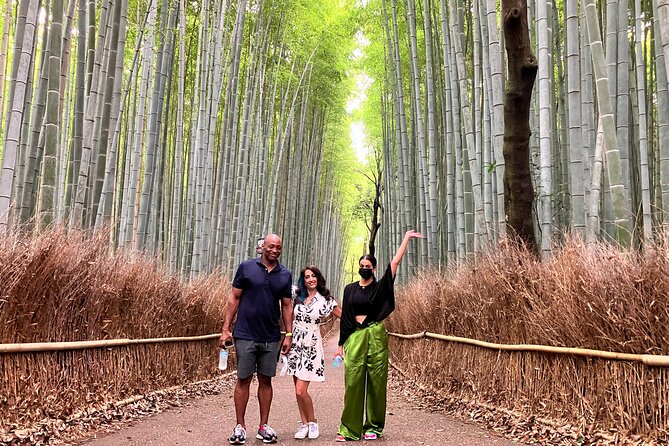
The bamboo paths are also free, but the walk can be short and crowded. Go with realistic expectations. The bamboo is beautiful when the stalks sway in the wind, yet the path itself is not an isolated wilderness walk.
Okochi Sanso Garden, the former villa of actor Okochi Denjiro, sits beyond the bamboo groves. It includes gardens and buildings, and admission is not included. Jojakkoji, Nisonin, Gioji, Adashino Nenbutsuji, and Otagi Nenbutsuji offer quieter alternatives farther into the Saga area.
Gioji is known for its moss garden and thatched buildings. Otagi Nenbutsuji is famous for 1,200 stone figures, each with a different expression. These places suit you if you want a slower, less obvious side of Arashiyama. They also require more walking, so do not combine too many of them with a full eastern Kyoto route.
Daikaku-ji, the former detached palace of Emperor Saga, and the nearby Sagano temples can make a full western Kyoto day. Katsura Imperial Villa is another choice for architecture and garden design, but it should be confirmed carefully during planning because imperial sites can have specific visiting arrangements. The tour data states that admission is not included, so budget separately.
Northern mountains: Kibune, Kurama, and Shugakuin
Kyoto is not only temples in the city center. Kibune is a small mountain town built around Kifune Shrine, while Kurama is a rural settlement less than an hour from central Kyoto. Kurama is known for Kurama-dera and its hot spring.
These areas offer forest, hills, and a change of pace. They are not sensible add-ons to Fushimi Inari, Arashiyama, and Kinkakuji in one day. If you choose them, make them the main purpose of the tour and accept that you will see fewer central sights.
Shugakuin Imperial Villa also lies away from the core sightseeing route. It was built in the 17th century by Emperor Gomizuno and is managed by the Imperial Household Agency. It is a strong choice for garden design and imperial history, but the distance and extra planning make it better for a focused itinerary.
Smaller temples worth choosing for specific interests
Nanzenji is one of Kyoto’s major Zen temples, set at the foot of the Higashiyama mountains. The nearby Nanzenji Suirokaku aqueduct adds an unusual piece of brick engineering to the temple setting. Eikando Zenrinji, north of Nanzenji, is especially known for autumn color and evening illumination. Eikando is a good seasonal choice, but admission costs extra and a 30-minute listing still gives you only a taste of the grounds.
Tofukuji in southeastern Kyoto is famous for autumn color and is another logical partner for Fushimi Inari. Toji, the East Temple, dates to the early Heian period and is known for its connection to Kyoto’s early development. Both make sense for visitors interested in Buddhist history and old Kyoto.
Sanjusangendo is famous for its hall containing 1,001 statues of Kannon, the goddess of mercy. It offers a very different experience from an open garden or hillside temple, with the power coming from repetition and scale inside the hall. Kennin-ji, close to Hanamikoji and Shijo streets, has pleasant grounds and two dry gardens. The listed visit time is only one minute, which is plainly not enough for a meaningful visit, so ask for a realistic schedule.
Yoshiminedera sits in Kyoto’s western mountains and is built along a hillside, much like Kiyomizu-dera on the other side of town. It suits you if you want mountain views and a temple setting away from the central streets, but the uphill layout adds physical effort and travel time.
What the $201.46 price really covers
At $201.46 per person, the value depends heavily on the size of your group and how much planning help you want. You receive a licensed local English-speaking guide and a private eight-hour experience. For a group that wants history explained, help with navigation, and a flexible pace, that can be worthwhile.
The price does not include transportation, entrance fees, lunch, or personal expenses. There is no private vehicle, and you cannot combine separate tour groups. If you choose several paid temples, the final day will cost more than the headline price.
Group discounts are offered, which may improve the value for a family or larger private party. The example of six adults working with Karkoo Tanigawa shows why the format can appeal to a group that wants to stay together without splitting into smaller bookings.
I would not book this mainly to avoid walking. This is a walking tour, with pickup and drop-off on foot. I would book it for the guide’s local context and the chance to build a sensible day around your own priorities.
Practical planning for a better Kyoto day
Reserve at least two weeks ahead. Since the average booking is made 69 days in advance, early planning is sensible if your dates are fixed or you want a particular guide.
Before the tour, send your guide a short priority list. Name the two places you most want to see, then add one food or neighborhood interest. For example, choose Fushimi Inari, Kiyomizu-dera, Gion, and Nishiki Market for a first visit. Choose Ryoanji, Kinkakuji, Ninna-ji, and Arashiyama for a temple-focused day, though that route needs careful transport planning.
Wear shoes suited to long walks and stairs. Keep admission money separate from the tour budget. Have transportation cards and local currency ready, a practical tip that helped one six-adult group start promptly.
The tour is suitable for most people, and service animals are allowed. Still, the amount of walking, hills, temple steps, and uneven historic streets should shape your choices. Tell the guide if your group needs a gentler route.
Free cancellation is available up to 24 hours before the local start time. Changes or cancellations inside that window are not accepted for a refund.
Should you book this Kyoto tour?
Book it if you want a private day with a licensed English-speaking guide and prefer choosing your own four to six sights. It is especially useful for first-time visitors who want help linking Kyoto’s history, temples, food streets, and old districts without joining a large group.
I would choose the eastern Kyoto route for a first booking, with Fushimi Inari, Kiyomizu-dera, Gion, and either Nishiki Market or Pontocho. For a second day, use the private format for Arashiyama or the northern temple area.
Skip it if you want a private car, a fixed luxury itinerary, or a day with little walking. Also skip it if the extra transport and admission costs would make the $201.46 starting price uncomfortable. The real strength here is not seeing 34 places. It is having a guide help you choose a manageable few and make them meaningful.
FAQ
How long is the Kyoto private tour?
The tour lasts approximately eight hours.
How many sights can I choose?
The tour includes a customizable itinerary of four to six sites from the available list. You can suggest places you want to visit, or ask the guide for a recommended route based on your interests.
Is transportation included?
No. Transportation fees are not included, and the tour does not provide a private vehicle. Meeting and return are on foot within the designated Kyoto area.
Are temple admission fees included?
No. Entrance fees are generally not included. The guide’s entry fees are covered only for sights specifically listed under the tour details.
Is this a private tour?
Yes. Only your group participates, and separate tour groups cannot be combined.
What is the cancellation policy?
You can cancel up to 24 hours before the experience start time for a full refund. Cancellations or changes made less than 24 hours before the start are not accepted for a refund.
Just added around Kyoto
- Kyoto: Zen Meditation at a Private Temple with a Monk★ 5.0 · 25 reviews
- Kyoto: Gion Geisha District & Sake-in-Hand Walking Tour★ 5.0 · 37 reviews
- Private Pewter Sake Cup Experience with a Kyoto Artisan★ 5.0 · 31 reviews
- Your Private Vacation Photography Session In Kyoto★ 5.0 · 110 reviews
- Private Guided Traditional Buddhist Cooking in Japan★ 5.0 · 16 reviews
- Kyoto Wagashi(Japanese sweets) Cooking Class near Fushimiinari★ 5.0 · 60 reviews
- Traditional Japanese Music show & Experience Tour in Kyoto★ 5.0 · 57 reviews
- Kyoto:Family-Friendly Kimono & Yukata Experience at WARGO★ 5.0 · 147 reviews
Kyoto Tours, compared.


Fushimi Inari, Kinkakuji, Bamboo Grove 1 Day Bus Tour
Read our review →
Tea Ceremony in a Traditional Tea House in Kiyomizu
Read our review →
Kyoto Geisha Walking Tour: Gion District & Hidden Gems
Read our review →

Gion Magical Night Walking Tour with Geisha Trivia
Read our review →

Gion Geisha District Walking Tour – Stories of Geisha
Read our review →Browse the lists this tour appears in