
Reviewed · FUSHIMI INARI TOURS
Kyoto Magical Night English Tour: Gion & Fushimi Inari Shrine
Kyoto feels most atmospheric after sunset, when Fushimi Inari’s red torii gates glow against the forest and Gion’s old wooden streets grow quieter. This 2.5-hour private walking tour links the two areas with a local English-speaking guide, including stops at Yasaka Pagoda, Ninenzaka, Nene-no-Michi, and Yasaka Shrine.
I like the way the tour combines major sights with small cultural lessons, such as how to pay respects at a Shinto shrine and what to do at the relationship stone at Yasui-Konpiragu. I also like the practical help: guides such as Ikki have offered restaurant advice, transit tips, and quick photo stops along the way.
The main thing to consider is the pace. You will use public transportation and spend most of the evening on foot, sometimes moving quickly to cover the route. This is not the right pick if you need a slow, seated tour or want to climb far up Mount Inari.
Key points to know before booking
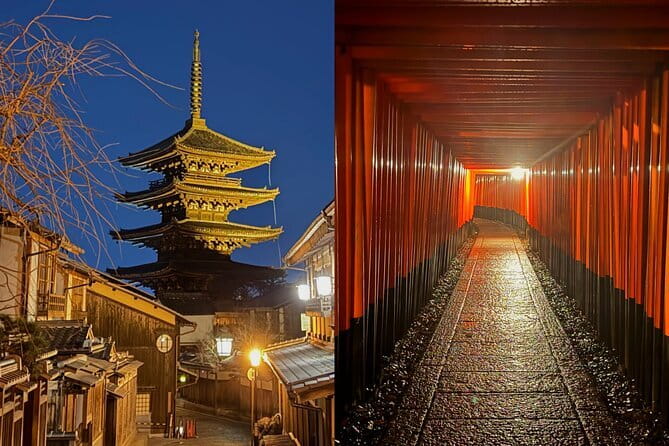
- Fushimi Inari after dark: Spend about an hour among the famous torii gates, with no admission fee.
- A private evening outing: Only your own group participates, giving the guide room to answer questions and adjust the pace.
- Gion and Higashiyama in one route: See Hanamikoji Street, Yasaka Pagoda, Ninenzaka, Nene-no-Michi, and Yasaka Shrine.
- Useful cultural guidance: Learn the difference between Shinto shrines and Buddhist temples, along with basic shrine etiquette.
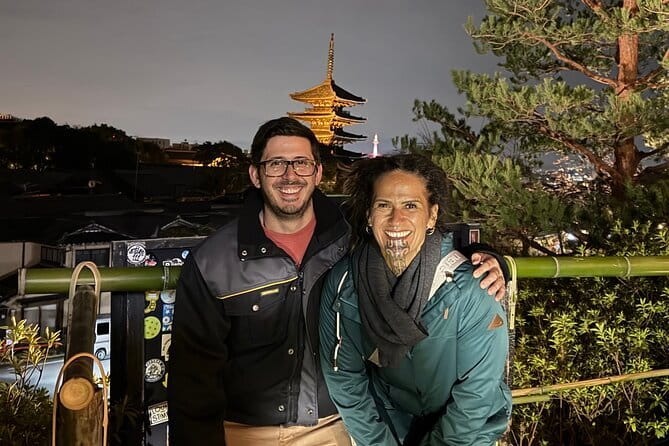
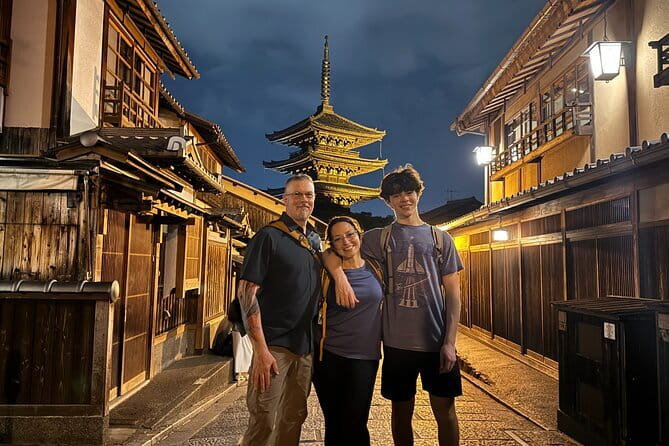
- Photos are included: Guides take professional photos, and one group received more than 40 photos and short videos soon after the tour.
- Budget-friendly pricing: At $26.43 per person, the tour offers strong value, though you must add ¥480 per person for public transportation.
Why Kyoto at night works so well
Daytime Kyoto can be crowded, especially around Fushimi Inari and the narrow lanes of Higashiyama. An evening outing changes the feel of both places. The red gates at Fushimi Inari take on a softer mood, while Gion’s wooden facades and stone lanes become easier to appreciate without the same daytime rush.
This is not a late-night food crawl or a theatrical show. It is a guided introduction to Kyoto’s sacred places and old neighborhoods. You walk, listen, take photos, and learn how these places fit into Japanese religious and cultural life.
The price is modest for a private activity. At $26.43 per person, it costs less than many longer guided tours, yet includes a local English-speaking guide, admission fees, and professional photos. The advertised admission fees do not add much practical value here because the listed shrine stops have no admission charge, but the guide’s time and local help are the real value.
You also pay ¥480 per person for public transportation. That extra cost is clearly stated, and it matters because the route links Fushimi Inari with Gion rather than keeping you in one compact neighborhood.
More ways to walk Fushimi Inari:
- Kyoto: Fushimi Inari, Kinkakuji, Bamboo Grove 1 Day Bus Tour
★ 4.8 · 4,316 reviews - Fushimi Inari Hidden Hiking Tour (Private Option Available)
★ 5.0 · 1,750 reviews - Kyoto/Osaka: Nara, Fushimi Inari Taisha, Arashiyama Bus Tour
★ 4.7 · 1,275 reviews
Meeting at the Izumo-no-Okuni statue
The tour begins at the Statue of Izumo-no-Okuni in Kawabatacho, in Kyoto’s Higashiyama Ward. The activity ends back at the meeting point, so plan your evening around returning there rather than being dropped at a restaurant or hotel.
Arrive early. The late policy is strict: if you miss the meeting time, you cannot join the tour and will not receive a refund. This matters more than usual in Kyoto, where train stations can be busy and their exits can be confusing.
The meeting point is near public transportation, but your guide may still need to locate you if you are turned around. One guide, Ikki, has helped a group find the correct pickup spot after they became lost at the station. That kind of communication is useful, but it is not a substitute for giving yourself extra time.
One hour beneath the torii at Fushimi Inari
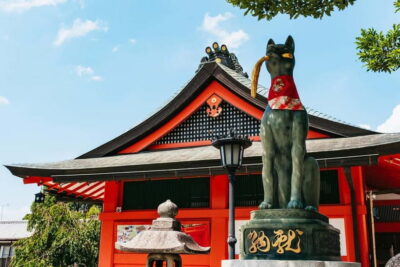
Fushimi Inari-taisha is the tour’s first major stop and receives about an hour. It is dedicated to Inari, the Shinto deity linked with rice and prosperity, and is famous for its thousands of red-orange torii gates.
The gates form long corridors that rise into the wooded slopes of Mount Inari. You do not need to complete the entire mountain route to enjoy the famous sections. The tour provides a concentrated introduction, which is sensible for a 2.5-hour outing that also includes Gion and Higashiyama.
The guide’s role is especially useful here. Without context, Fushimi Inari can become a quick photo stop. With an explanation of the shrine’s myths, symbols, and customs, the gates make more sense. Guides have also shown participants how to pay their respects properly, an easy detail to miss when exploring alone.
Bring a few coins if you would like to make a small offering or wish at the shrine. One guide specifically suggested carrying coins for this purpose. You should also expect uneven paths and steps, so sensible shoes are important.
The evening setting is one of the tour’s strongest features, but it comes with limits. Lower sections of the shrine are easy to reach, while the route up the mountain requires more time and stamina. If your main goal is a long forest hike, this tour will feel too short. If you want a well-explained look at the famous gates without giving up the rest of the evening, the one-hour stop is well judged.
Hanamikoji Street and the quieter side of Gion
After Fushimi Inari, the route turns toward Gion. Hanamikoji Street receives about 10 minutes, enough to see its traditional wooden buildings and get an introduction to the district’s teahouse culture.
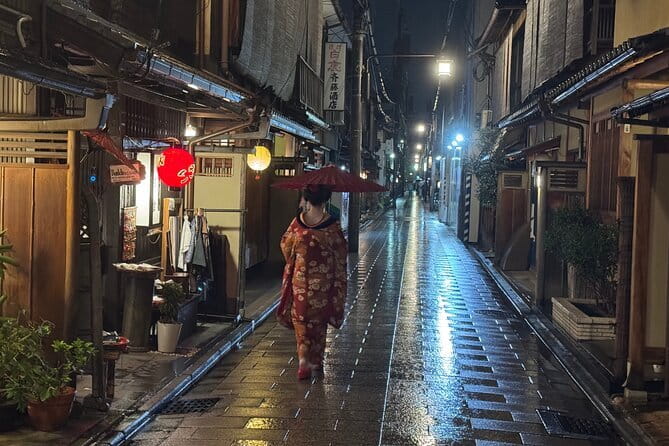
Hanamikoji is one of Kyoto’s best-known streets for its preserved machiya houses and connection with geisha and maiko culture. You may see a maiko or geisha, but this is not promised, and you should never treat such a sighting as a photo opportunity without behaving respectfully.
The short stop makes sense as part of a larger walk. Hanamikoji is narrow, and the real pleasure comes from noticing the details: dark timber, tiled roofs, discreet entrances, and the contrast between the polished teahouses and modern Kyoto beyond them.
You then spend another 10 minutes in Gion more broadly. The district is famous, but it is not a museum set. People live and work here, so the guide can help you understand how to look without turning private streets or working establishments into scenery.
Several guides have been praised for adding quiet alleys and lanes to the route. That is important because Gion’s appeal is not limited to its main street. A short turn away, you might find a more peaceful view of old Kyoto, especially later in the evening.
More geisha-district evenings:
- Kyoto Geisha Walking Tour: Gion District & Hidden Gems
★ 4.7 · 3,273 reviews - Kyoto: Gion Magical Night Walking Tour with Geisha Trivia
★ 4.9 · 2,393 reviews - Kyoto: Gion Geisha District Walking Tour – Stories of Geisha
★ 4.7 · 2,187 reviews - Best of Kyoto: Gion, Geisha, Pagodas & Cobblestones
★ 4.9 · 2,058 reviews
Yasui-Konpiragu and the relationship stone
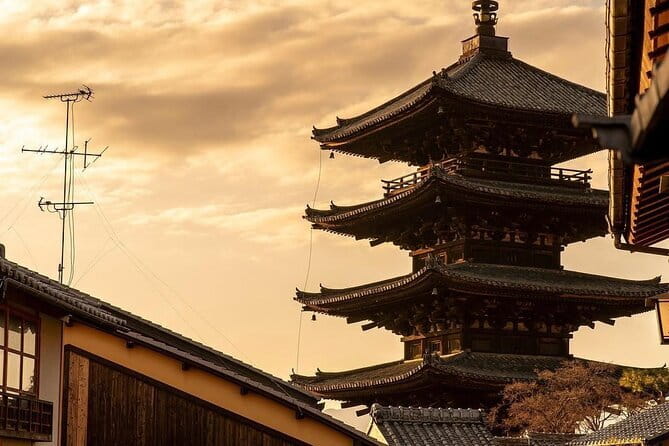
Yasui-Konpiragu is a small but memorable stop. The shrine is known for prayers to end harmful relationships and encourage positive new connections.
Its best-known feature is the relationship stone, a large stone covered with paper charms. The custom involves passing through the opening while praying for the change you want. Your guide can explain the meaning and help you understand the ritual rather than treating it as a strange photo prop.
This stop gives the tour a personal side. Kyoto’s major shrines can feel grand and formal, while Yasui-Konpiragu connects religious practice with ordinary concerns such as relationships, luck, and fresh starts.
The visit lasts about 10 minutes, so do not expect a long temple lecture. It works as a compact cultural pause between the main Gion streets and the Higashiyama walk.
Yasaka Pagoda and the old Higashiyama lanes
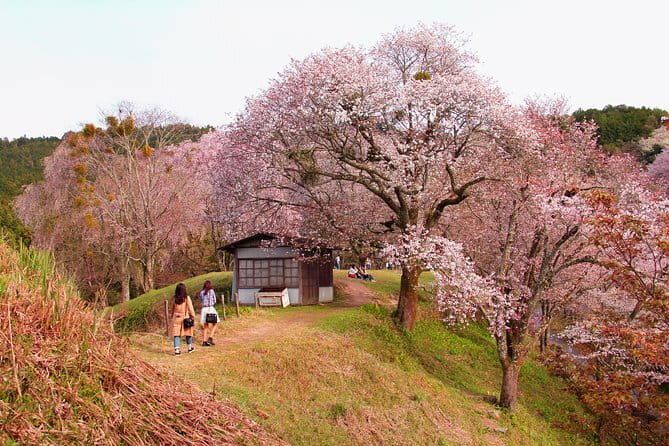
The next part of the route moves through Yasakanoto, better known as Yasaka Pagoda at Hokanji Temple. The stop lasts about 15 minutes.
The pagoda is one of Kyoto’s most recognizable wooden structures and a major symbol of the Higashiyama area. Its size is striking when viewed from the surrounding streets, where the old buildings frame it from several angles.
The tour does not list entry inside the pagoda, so think of this as an exterior viewing and photography stop. That is still worthwhile because the surrounding lanes offer some of Kyoto’s most recognizable scenes.
From there, you walk through Sannenzaka and Ninenzaka, two traditional stone-paved paths lined with shops and restaurants in old wooden buildings. These lanes feel especially atmospheric in the evening, though shop hours and crowd levels can vary.
Your guide can explain the local warning about walking carefully on these slopes. The paths are uneven, and a fall here is no joke. One guide responded to a participant with a sore knee by adding a stop at Nade Ushi near Kodaiji Tenmangu for a prayer for recovery. That shows how the route may be adjusted for personal needs, but you should still be prepared to manage a moderate amount of walking.
Ninenzaka and Sannenzaka are also commercial streets. You will see souvenirs and restaurants, not only historic buildings. That mix is part of modern Kyoto, but visitors seeking empty lanes should understand that these are popular areas and may still have foot traffic.
Nene-no-Michi, a calmer fifteen minutes
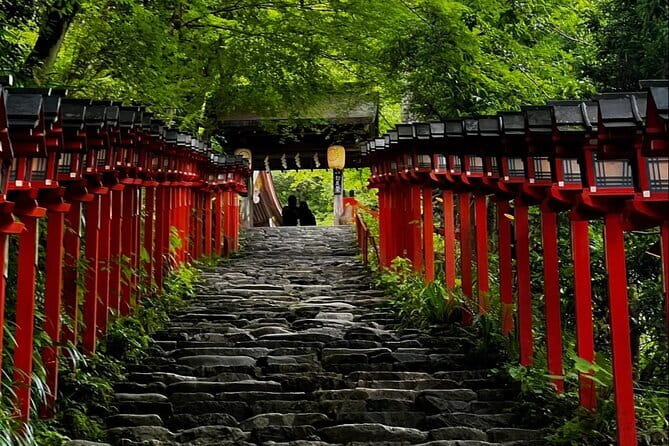
Nene-no-Michi provides a welcome change of pace. This 15-minute stretch is named after Nene, the wife of a powerful shogun, and passes historic temples and quiet lanes in the Higashiyama area.
I like this part of the route because it gives you time to notice Kyoto at walking speed. The path is less about a single famous object and more about the feeling of moving through an old district, with temple walls, wooden homes, and subdued evening light.
It is also a good photo section. Guides regularly take group photos during the tour, and several have been singled out for finding strong picture spots. Night photography can be tricky, so having someone who knows where to position a group is a useful extra.
Still, the photo service should not be mistaken for a formal photography session. The tour’s focus remains guiding and interpretation, with pictures taken along the way. If you want a dedicated portrait shoot, book a separate photographer.
Ending at Yasaka Shrine

Yasaka Shrine is the final stop, with about 15 minutes devoted to the complex. It is the headquarters of roughly 2,300 related shrines across Japan and is associated with prosperity and protection.
The shrine makes a fitting finish because it brings the evening back to a major religious site after the smaller stop at Yasui-Konpiragu and the residential lanes of Gion. Your guide can help you compare Shinto shrine customs with Buddhist temple practices encountered elsewhere in Kyoto.
This distinction is one of the tour’s most useful teaching points. Several guides have used simple charts, graphics, and clear explanations to show how the two traditions differ. You do not need prior knowledge of Japanese religion to follow along.
The tour ends back at the original meeting point. That is convenient for orientation, but it means you should not count on finishing at Yasaka Shrine itself. Ask your guide for help with onward directions if needed. Guides have provided advice on public transit, restaurants, and evening plans beyond the tour.
What the guides add
The experience depends heavily on the individual guide. The names appearing most often in the available information are Ikki, Yui, Yuki, Mariko, and Joi.
Ikki is described as organized, warm, and especially good at explaining Kyoto’s customs. He has used laminated visual materials, taken large sets of photos, helped with restaurant seating, and offered transit suggestions. Yui has been praised for making movement through the city feel easy and for giving useful recommendations during a stay.
Yuki is noted for energy and warmth, while Mariko is described as enthusiastic and quick-moving. Joi has been associated with a well-paced evening that helped participants get their bearings with fewer crowds.
You cannot necessarily request a particular guide, so do not book solely on the hope of receiving Ikki. The broader pattern is clear, though: the guides are expected to provide more than directions between sights. They explain what you are seeing, answer questions, take pictures, and may tailor parts of the evening to your interests.
The private format is a major advantage. Only your group takes part, which makes it easier to ask basic questions, pause for photos, or tell the guide about a knee problem or tired child. One family of eight, including children aged five to twelve, found the guide patient and able to keep the children engaged.
Walking pace, families, and older participants
The tour is suitable for people with a moderate level of fitness. You will walk through shrine grounds, streets, lanes, and stone-paved slopes, and you will also use public transportation. Good walking shoes are essential.
The route can be manageable for families, but children must be ready to keep moving for 2.5 hours. The guide may be patient and flexible, yet this is not a stroller-focused or seated activity.
Older adults can enjoy it too, provided the group discusses the pace. One guide adjusted well when older participants needed frequent breaks, and another helped a participant with a knee problem. These are encouraging signs, but the operator does not present the tour as accessible or low-mobility. If anyone in your group has serious walking limits, ask before booking.
Rain does not automatically ruin the evening. One participant found that wet weather added to the mood. Even so, you will want rain protection and shoes with a secure grip because stone paths become less forgiving when wet.
Photos, food, and practical value
Professional photos are included, and this is more useful than it may sound. Evening group pictures are hard to take well, especially around dark shrine gates and narrow lanes. Guides have sent large batches of photos and short videos soon after the tour, sometimes within an hour.
Food and drinks are not included. That is reasonable for a walking route with frequent changes of location, but plan a meal before or after. Guides have recommended restaurants and even helped groups communicate with hosts, though restaurant arrangements are not part of the formal service.
The public transportation fare is also extra at ¥480 per person. With that added, the total remains a good deal for a private guide, cultural explanations, and photography. The value is strongest if this is your first evening in Kyoto and you want a quick orientation before exploring on your own.
Free cancellation is available if you cancel at least 24 hours before the start time. Changes or cancellations inside that window are not accepted for a refund, so check your plans before booking.
Should you book this Kyoto night tour?
Book it if you want a compact, personal introduction to Fushimi Inari, Gion, and Higashiyama without spending an entire day on sightseeing. It suits first-time visitors, couples, families with older children, and anyone who wants help understanding shrine customs rather than simply collecting photos.
I would especially choose it for your first evening in Kyoto. The route gives you a useful sense of the city, and the guide can answer practical questions that make the rest of your stay easier.
Skip it if your priority is hiking high up Mount Inari, spending hours inside temples, shopping in Gion, or moving at a very slow pace. The tour covers many stops in a short time, so expect an efficient walk rather than long visits at each place.
For most people, the combination of private guiding, evening light, cultural explanation, and included photos makes $26.43 per person a strong value. Add the ¥480 transit fare, wear good shoes, arrive early, and you have a smart way to meet Kyoto after dark.
FAQ
How long does the Kyoto Magical Night English Tour last?
The tour lasts approximately 2 hours and 30 minutes, including public transportation and walking between the listed stops.
Where does the tour begin and end?
It begins at the Statue of Izumo-no-Okuni in Kawabatacho, Higashiyama Ward, Kyoto. The activity ends back at the meeting point.
Is transportation included in the tour price?
No. Public transportation costs ¥480 per person and must be paid separately.
Are admission fees included?
Yes. Admission fees for all temples and shrines visited are included. The listed stops have no admission fee.
Is this a private tour?
Yes. Only your group participates in the activity.
Can I cancel for a full refund?
Yes, if you cancel at least 24 hours before the experience start time. Cancellations or changes made less than 24 hours before the start time are not refunded.
More Evenings Out in Kyoto
- Night Walk in Gion: Kyoto’s Geisha District
★ 4.5 · 2,003 reviews - Kyoto Night Foodie Tour in Gion (9+ dishes + 6 Sake tastings)
★ 5.0 · 1,762 reviews - Kyoto Gion Night Walk & Geisha District Guided Tour
★ 5.0 · 786 reviews - Kyoto Ghost Tour: Dark Tales, Urban Legends, Bamboo Forest Night
★ 5.0 · 625 reviews
Just added around Kyoto
- Kyoto: Zen Meditation at a Private Temple with a Monk★ 5.0 · 25 reviews
- Kyoto: Gion Geisha District & Sake-in-Hand Walking Tour★ 5.0 · 37 reviews
- Private Pewter Sake Cup Experience with a Kyoto Artisan★ 5.0 · 31 reviews
- Your Private Vacation Photography Session In Kyoto★ 5.0 · 110 reviews
- Private Guided Traditional Buddhist Cooking in Japan★ 5.0 · 16 reviews
- Kyoto Wagashi(Japanese sweets) Cooking Class near Fushimiinari★ 5.0 · 60 reviews
- Traditional Japanese Music show & Experience Tour in Kyoto★ 5.0 · 57 reviews
- Kyoto:Family-Friendly Kimono & Yukata Experience at WARGO★ 5.0 · 147 reviews
Fushimi Inari Tours, compared.

Fushimi Inari, Kinkakuji, Bamboo Grove 1 Day Bus Tour
Read our review →
Fushimi Inari Hidden Hiking Tour (Private Option Available)
Read our review →
Kyoto/Osaka: Nara, Fushimi Inari Taisha, Arashiyama Bus Tour
Read our review →
Osaka/Kyoto: Arashiyama, Nara & Fushimi Inari Shrine w/Lunch
Read our review →
Nijo Castle, Kiyomizu & Fushimi Inari Guided Tour
Read our review →
Nijo, Kinkaku-ji, Arashiyama, Kiyomizu & Fushimi Inari
Read our review →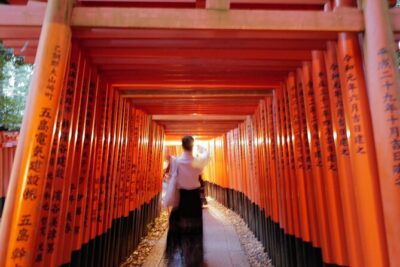
Browse the lists this tour appears in