
Reviewed · KYOTO TOURS
Nijo Castle Samurai Inside Story — Top-Rated Guide (Max 8)
Nijo Castle is far more than a handsome Kyoto landmark. With Richard as your guide, its gates, corridors, gardens, and rooms become clues to samurai power, palace politics, and unspoken rules. I like the small group cap of eight and the included admission, which lets you focus on the story instead of tickets and navigation.
I also like the mid-tour green tea break and the way Richard connects Nijo Castle with the Imperial Palace and wider Japanese history. The main drawback is that three hours can feel long for small children, and the tour requires good weather, so this is best for adults and older children who enjoy a detailed walk.
Key points at a glance
- Richard’s personal guiding style: He explains samurai life, Japanese customs, and political change in clear English, with room for questions.
- A small group of no more than eight: You get a better chance to hear the guide and ask about details that larger groups often skip.
- Nijo Castle admission included: The tour covers the full castle visit, so you do not need to arrange entry separately.
- A green tea pause during the three hours: The break gives your feet a rest and adds a simple local touch.
- A useful history connection: Richard can place Nijo Castle alongside the Imperial Palace, shogun rule, the emperor, and the Edo period.
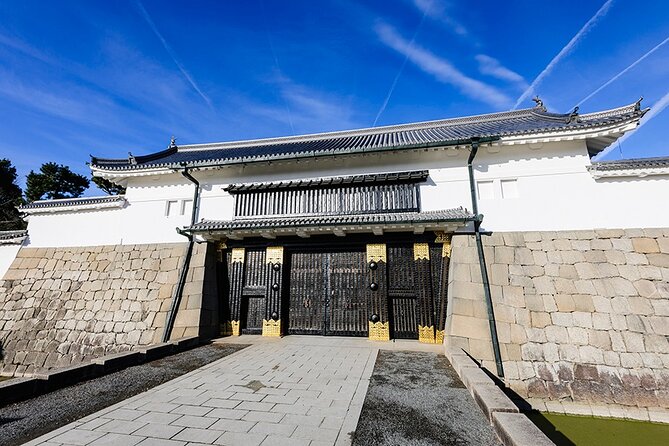
- A precise meeting point: Meet at the large white main gate on the west side of Nijo Castle, not at a vague city-center location.
Why Nijo Castle makes a good samurai lesson
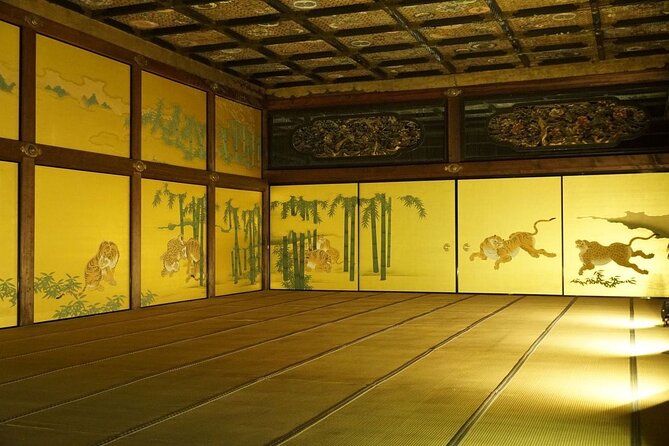
Many castle visits are mostly about walls, roofs, and photographs. Nijo Castle offers something more subtle. Its spaces were built to manage people, status, movement, and access, so a good guide can turn the building itself into a lesson about power.
This tour focuses on the parts you might miss if you simply follow the signs. You learn about the secret roles of samurai, the rules people were expected to follow, and the systems that helped control life inside the castle. The exact emphasis may shift with the group’s questions, but the experience is designed to go beyond a list of dates.
That approach suits me because Nijo Castle is best understood through human behavior. Who could enter? Who waited? Who was allowed to speak? Why were certain areas arranged as they were? A guide who asks those questions gives you a reason to look closely at rooms and routes that might otherwise blur together.
Richard also places the castle within the change from shogun rule to imperial authority. Several people who booked the tour specifically valued his explanations of the shogun, the emperor, the Edo period, and Japanese culture. That wider setting matters because Nijo Castle is not an isolated samurai display. It helps explain how political power worked in Kyoto.
More Samurai and Ninja Experiences in Kyoto
- Kyoto Samurai Experience
★ 5.0 · 1,294 reviews - Kyoto: Kendo and Samurai Experience with Uniform and Gear
★ 4.9 · 815 reviews - Kyoto: Samurai Sword Class by Experts in Traditional Arts
★ 4.9 · 657 reviews
Meeting Richard at the west gate
The meeting point is in front of Nijo Castle’s main gate, described as the large white gate on the west side. That detail is important. Nijo Castle is a substantial site, and arriving at the wrong side could cost you time before a three-hour visit even begins.
The address is 541 Nijojocho, Nakagyo Ward, Kyoto, 604-8301. The castle is near public transportation, though private transportation is not included. You should plan your route before the start time and allow enough time to reach the west-side gate without rushing.
Richard is the named guide associated with the experience. His strongest qualities are his English, enthusiasm, and willingness to answer questions about Japan beyond the castle itself. The tone described by the available feedback is friendly and conversational, more like walking with an interested local than listening to a stiff lecture.
That does not mean the tour is unstructured. Richard’s role is to guide you through the castle and keep the historical thread clear. The small group helps here. With no more than eight people, the walk should feel more personal than a large group tour, and you have a fair chance to ask about a detail that catches your eye.
Following the castle route for three hours
The full experience takes place at Nijo Castle and ends back at the meeting point. Admission for the castle visit is included, which is one of the practical strengths of the booking. You can arrive ready to explore rather than sorting out a separate entry purchase.
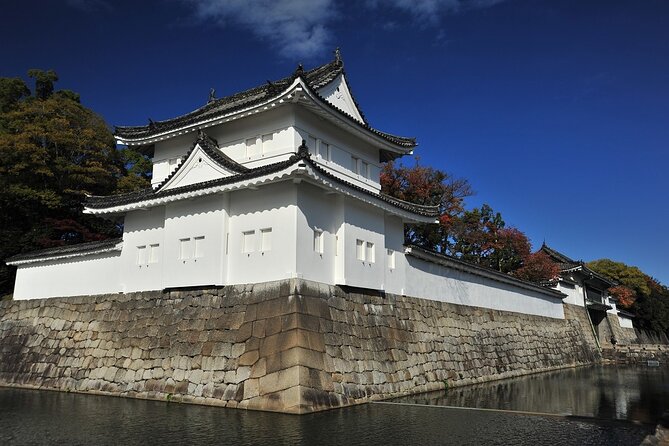
The tour is not presented as a quick highlights sprint. Three hours allows Richard to explain both the major sights and the less obvious details. You should expect a steady walk through the castle grounds and interiors, with stops for explanations about samurai life, Japanese customs, the castle’s purpose, and the people who used its spaces.
The grounds give the tour room to breathe. As you move between major areas, the guide can connect architecture with behavior and politics. A gate is not just an entrance. A room is not just a decorated interior. A path can show how people were expected to approach authority.
The interior areas are particularly useful for the tour’s theme. Richard explains the lives of the inhabitants and the rules that shaped their conduct, helping you read the castle as a working political setting. The experience is strongest when you pause to consider why a space looks and functions as it does, rather than treating each room as a separate photo stop.
There is also a tea break in the middle of the tour, with coffee and/or tea listed as included and green tea specifically described as part of the pause. This is a modest feature, but a welcome one. Three hours on your feet is enough time for a rest, and the break gives Richard a natural moment to handle questions before the next section.
Samurai stories beyond the usual facts
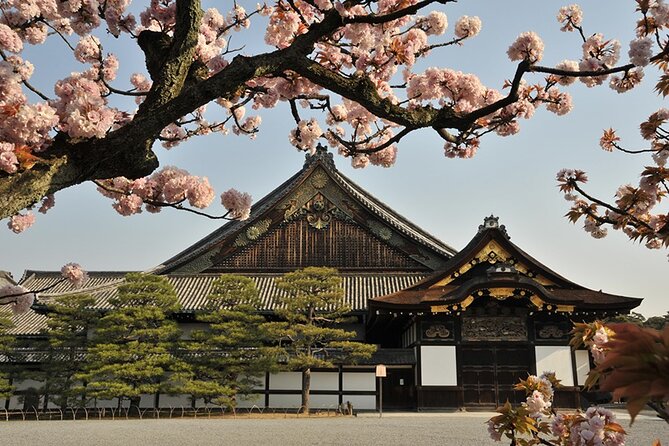
The word samurai can make a tour sound like a simple lesson in armor and battles. This experience takes a wider view. The focus includes social roles, behavior, authority, and the unspoken systems that shaped daily life.
That is where the tour can offer real value. You are not only told who held power. You are shown how power could be expressed through space, ceremony, access, and custom. These details help explain why a castle visit can teach you about Japanese society as well as military history.
Richard’s explanations also cover Japanese culture and customs. You can ask questions about points that interest you, and the feedback repeatedly highlights his ability to discuss Japan beyond Nijo Castle. That makes the tour useful early in a Kyoto visit, when you are still forming a framework for the city.
I would not book this expecting a theatrical samurai performance. Nothing in the description promises costumes, demonstrations, sword work, or staged scenes. This is a guided historical walk, and its appeal lies in explanation, context, and close attention to the site.
More samurai and ninja sessions in Kyoto:
- Skip the lines Basic Ticket at SAMURAI NINJA MUSEUM KYOTO
★ 4.5 · 632 reviews - Ninja 1-hour Hands-on Lesson by Japanese master in Kyoto -Entry
★ 5.0 · 489 reviews - Kyoto: Ninja Weapon Forging Experience
★ 4.8 · 478 reviews - Kyoto: Samurai Kenbu Traditional Sword Dancing Show
★ 4.5 · 426 reviews
Linking Nijo Castle with the Imperial Palace
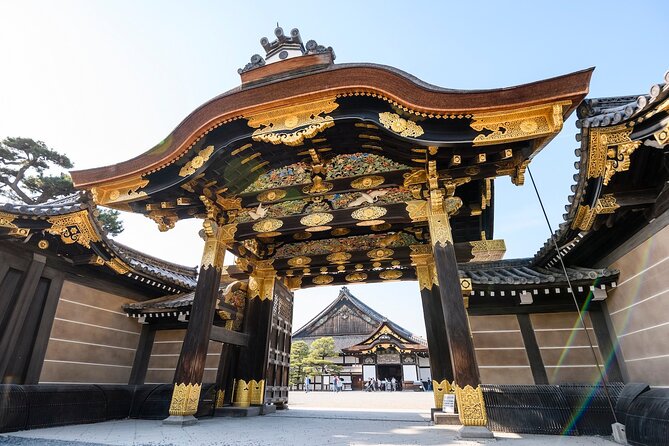
One unusual strength is the connection between Nijo Castle and the Imperial Palace. Richard has included the Imperial Palace in his explanations for some groups, allowing you to compare the two sites and understand their different roles in Japanese history.
The two places are not treated as interchangeable attractions. The comparison helps you see how political and imperial authority related to one another, especially when discussing the shogun, the emperor, and the Edo period. If you have already visited the Imperial Palace, tell Richard. If you plan to visit it later, the castle tour may give you useful questions to carry with you.
You should keep expectations clear. The listed itinerary is Nijo Castle, and admission is for Nijo Castle. The Imperial Palace connection is best understood as added historical context, not a separate included stop or a guaranteed second attraction.
This is a good example of why the guide matters. Without context, you might see two important Kyoto sites and remember only their roofs and gardens. With a careful comparison, you can begin to understand the different kinds of authority they represented.
What the small group changes
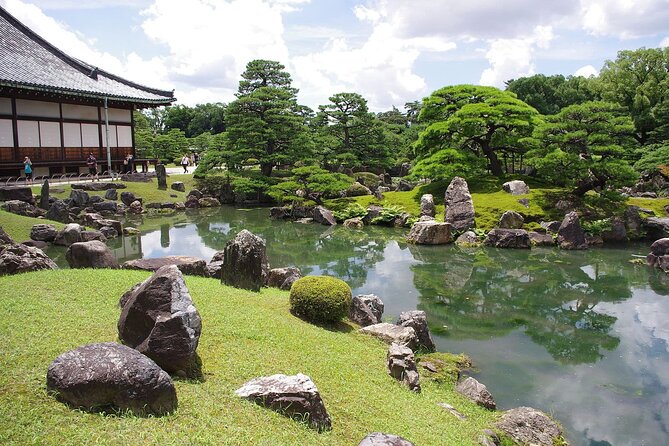
A maximum of eight people is a practical advantage, not just a marketing detail. Large groups can make it hard to hear, ask questions, or stay close to the guide inside busy historic sites. A group this size gives Richard more room to adjust his explanations.
If you are interested in a particular topic, such as samurai customs, castle design, or Japanese political history, you should ask. The available feedback places strong emphasis on Richard’s willingness to answer questions and explain clearly. That makes the group format especially useful for curious adults who do not want a fixed script.
The tradeoff is that this is not a private tour. Eight people is small, but you will still share the guide’s attention. The description sometimes uses private-tour language, yet the stated maximum is eight, so book with the expectation of a small-group experience rather than exclusive guiding.
The pace may also reflect the interests of the group. That can be a benefit if you enjoy conversation, but less so if you want to move quickly and take photographs without stopping. The three-hour duration favors detail over speed.
Is $98 a fair price?
At $98 per person, this is not the cheapest way to enter Nijo Castle. You are paying for more than admission, though. The price includes a three-hour guided visit, a small group limited to eight, castle admission, and a tea break.
The value depends on how you like to sightsee. If you are happy reading signs and exploring at your own pace, a self-guided visit will cost less and give you more freedom. If you want the site explained in fluent English, with the samurai story connected to Japanese customs and national history, the guide can justify the added cost.
I see the strongest value for first-time visitors to Kyoto who want a firm historical foundation. It is also useful if you have already seen Nijo Castle but felt you were missing the meaning behind the rooms and routes. Richard’s ability to compare the castle with the Imperial Palace adds value for anyone planning both sites.
Admission being included removes one small task, but private transportation is not part of the price. Tips are optional and never required, though they are appreciated if you feel the guide has earned one. You should budget for your own transport to the castle and arrive at the correct west-side gate.
Who should book this experience?
This tour suits adults, older children, history fans, and anyone who prefers asking questions instead of simply following a printed route. It is particularly good for people who want to understand samurai life as a social and political system, not just as a subject of battles and weapons.
It also suits visitors who value a warm guide. Richard’s manner is repeatedly described as friendly, enthusiastic, and clear, while his command of English makes it easier to ask about small points of Japanese history and culture.
Small children may not be the best match. The experience is not recommended for them, and three hours at a historic castle can require more patience than a young child has. There is no promise of a children’s format or hands-on activity, so families should consider the age and interests of everyone in the group.
The tour is also a good fit if you want help finding your way around Nijo Castle. You will not need to plan your own route through the full visit, and the guide can direct your attention to details that are easy to pass without explanation.
Practical points before you go
The activity offers a mobile ticket, and booking confirmation is received at the time of booking. The meeting and ending point are both at Nijo Castle, so you do not need to arrange a separate return transfer.
Wear comfortable shoes. The walk lasts about three hours, and although there is a tea pause, the experience is still an extended visit through a large historic site. The description does not promise special transport within the castle or a shortened route.
Check the weather forecast before setting out. The experience requires good weather, and if poor weather causes cancellation, you are offered another date or a full refund. For a full refund when canceling yourself, you must do so at least 24 hours before the start time. Changes or cancellations made inside that window are not accepted.
Most people can participate, but the tour is not recommended for small children. No special accessibility details are provided, so if you have mobility concerns, contact the provider before booking rather than assuming the route will suit you.
The final call: book it for context, not spectacle
I would book this tour if you want Nijo Castle explained as a living political setting, with samurai customs, Japanese culture, and the relationship between shogun and emperor brought into one clear story. Richard’s friendly English and the eight-person limit are the main reasons to choose it over a cheaper self-guided visit.
I would skip it if you want a fast photo stop, a staged samurai show, or a completely private experience. At $98, the tour earns its price through time, interpretation, and access to a guide’s perspective, not through entertainment or transportation.
For most history-minded visitors with three hours to spare, this is a strong way to make Nijo Castle mean more than a beautiful building. Plan carefully for the west gate, allow for the weather policy, and come ready to ask questions.
FAQ
How long does the Nijo Castle samurai tour last?
The tour lasts approximately three hours and ends back at the meeting point at Nijo Castle.
What is included in the price?
The price includes admission to Nijo Castle for the full visit, guiding, and coffee or tea. Green tea is included during the break in the middle of the tour.
Is the Nijo Castle admission ticket included?
Yes. Admission to Nijo Castle is included in the experience.
Where do I meet the guide?
Meet the guide in front of Nijo Castle’s main gate, described as the large white gate on the west side of the castle. The address is 541 Nijojocho, Nakagyo Ward, Kyoto, 604-8301, Japan.
Who is the guide?
The guide identified for this experience is Richard. The tour focuses on samurai history, Japanese culture, castle details, and wider Japanese history.
How many people can join the tour?
The maximum group size is eight people.
Is transportation included?
No. Private transportation is not included. The activity starts and ends at Nijo Castle, which is near public transportation.
Is the tour suitable for small children?
The activity is not recommended for small children. Most people can participate, but no special children’s format is listed.
What is the cancellation policy?
You can cancel at least 24 hours before the experience start time for a full refund. Cancellations or changes made less than 24 hours before the start are not accepted for a refund. If poor weather causes the activity to be canceled, you are offered another date or a full refund.
Just added around Kyoto
- Kyoto: Zen Meditation at a Private Temple with a Monk★ 5.0 · 25 reviews
- Kyoto: Gion Geisha District & Sake-in-Hand Walking Tour★ 5.0 · 37 reviews
- Private Pewter Sake Cup Experience with a Kyoto Artisan★ 5.0 · 31 reviews
- Your Private Vacation Photography Session In Kyoto★ 5.0 · 110 reviews
- Private Guided Traditional Buddhist Cooking in Japan★ 5.0 · 16 reviews
- Kyoto Wagashi(Japanese sweets) Cooking Class near Fushimiinari★ 5.0 · 60 reviews
- Traditional Japanese Music show & Experience Tour in Kyoto★ 5.0 · 57 reviews
- Kyoto:Family-Friendly Kimono & Yukata Experience at WARGO★ 5.0 · 147 reviews
Kyoto Tours, compared.


Fushimi Inari, Kinkakuji, Bamboo Grove 1 Day Bus Tour
Read our review →
Tea Ceremony in a Traditional Tea House in Kiyomizu
Read our review →
Kyoto Geisha Walking Tour: Gion District & Hidden Gems
Read our review →

Gion Magical Night Walking Tour with Geisha Trivia
Read our review →

Gion Geisha District Walking Tour – Stories of Geisha
Read our review →Browse the lists this tour appears in