
Reviewed · KYOTO TOURS
Samurai Performance and Casual Experience: Kyoto Ticket
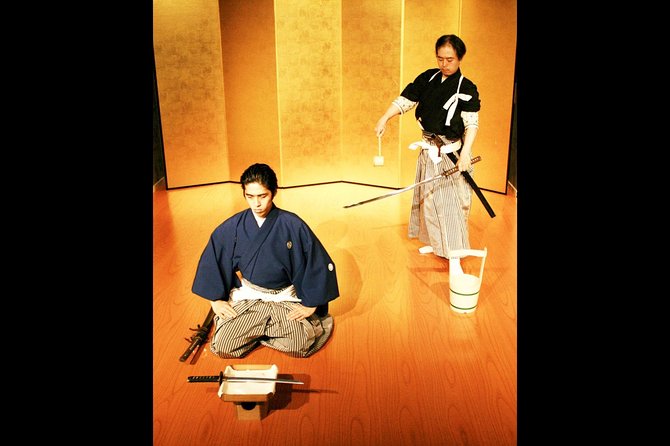
Kyoto’s Samurai Kembu Theater gives you something more theatrical than a museum display and less demanding than a martial-arts class. Performers wield swords, recite samurai poems, explain the meaning of fan movements, and show how kembu was used to build courage and concentration. The result is a compact stage performance with history, humor, and gleaming steel.
I especially like the small theater setting, which lets you see the performers’ footwork and facial expressions up close. I also like the photo and practice session afterward, since you do not simply watch from a seat. The main thing to keep in mind is that this is not a realistic sword-fighting show. It is a stylized cultural performance with quite a bit of narration and only a little hands-on practice.
Key points to know before booking
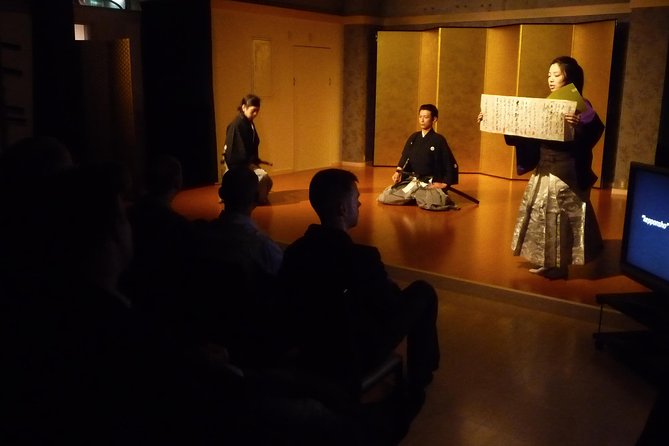
- About 40 minutes of stage performance: The show mixes traditional and new-style kembu with short explanations before each section.
- A short interactive finale: You can handle a sword, try fan and sword movements, and pose for photos with performers.
- An English-language introduction: The presentation explains samurai customs, poems, seppuku, and the purpose of kembu.
- Shoes come off at the theater: You sit in either a low chair or a standard chair after entering.
- A useful rainy-day or evening plan: The one-hour schedule fits neatly after Kyoto sightseeing.
- Best for culture seekers and families: It suits people curious about samurai traditions more than anyone seeking staged combat.
What kembu is, and what this show is trying to do
Kembu, also written as kenbu, is a traditional Japanese sword performance linked with the samurai class. It combines controlled sword movements with recited poems, fan gestures, posture, and ceremonial rhythm.
The art is presented as a way for samurai to gather courage and focus before battle. That does not mean the show recreates a battlefield. Instead, it uses formal movement to express ideas such as bravery, discipline, sorrow, and resolve.
That distinction matters. If you expect a long series of sword clashes, you may leave wanting more action. If you want a clear introduction to samurai customs through dance, theater, and sword work, the format makes good sense.
The performance also gives you a glimpse of how Japanese traditions can carry meaning through small gestures. A sword is not used only as a weapon here. Its angle, speed, and position help communicate mood. The folding fan has its own role, with movements that add ceremony and visual variety.
More Samurai and Ninja Experiences in Kyoto
- Kyoto Samurai Experience
★ 5.0 · 1,294 reviews - Kyoto: Kendo and Samurai Experience with Uniform and Gear
★ 4.9 · 815 reviews - Kyoto: Samurai Sword Class by Experts in Traditional Arts
★ 4.9 · 657 reviews
Arriving at the Samurai Kembu Theater
The theater is in central Kyoto, near public transportation and within reach of the Gion area. The meeting time provided for this experience is 4:15 pm, though another showtime may be available when you book.
Give yourself enough time to find the entrance. The instructions direct you down the stairs on the right side toward the GOZAN building, where you check in at the reception desk. This is one place where arriving early helps. You should be there 15 to 5 minutes before the performance begins.
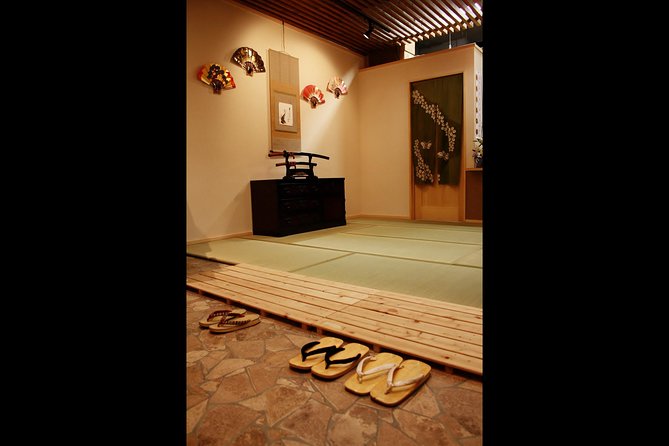
Once inside, you remove your shoes in the traditional Japanese manner. Seating includes low chairs close to the floor and ordinary-height chairs, so the room is not limited to floor cushions. If sitting close to the ground is difficult, ask the staff about the standard chairs as you enter.
The theater’s smaller size works in its favor. It creates a close setting for the performers and makes the explanation feel more like a personal introduction than a large tourist production. It also means the experience is designed around attention and atmosphere rather than spectacle.
The opening talk makes the movements easier to follow
Before the sword work begins, a performer introduces kembu and places it in the context of Japan’s feudal period. The samurai class held power from the 12th through the 19th centuries, and the presentation explains how kembu relates to that long period.
The explanations come before each short demonstration. You hear about samurai customs and the purpose of a movement, then see the idea performed on stage. That pattern is helpful because the sword gestures can otherwise look beautiful but hard to interpret.
The narration is in English, although the clarity of pronunciation may vary for some listeners. If English is not your first language, sit where you can see the performer clearly and pay close attention to the demonstrations. The presentation is still understandable, but it is not a replacement for a museum guide or a long historical lecture.
The tone is not solemn from beginning to end. The performers use jokes and light dialogue, which helps keep the hour moving, especially for children. Some people will find the humor welcome. Others may prefer a more serious presentation of samurai culture.
Traditional and new-style kembu on the stage
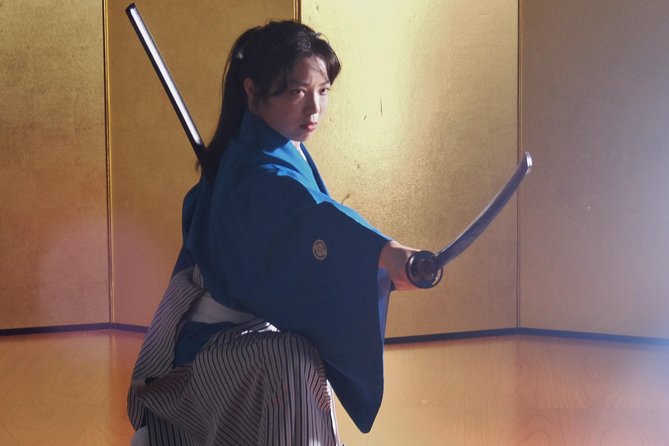
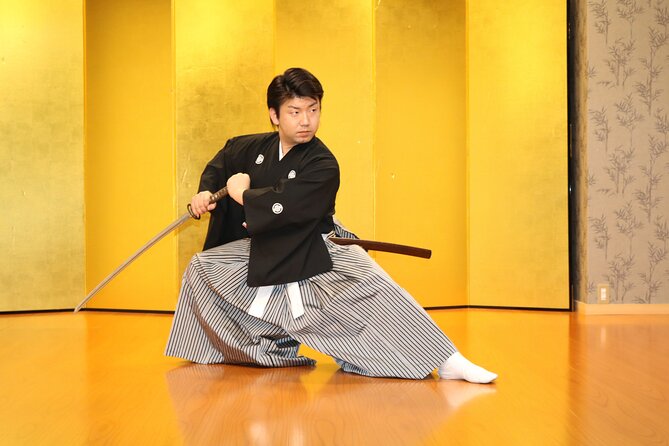
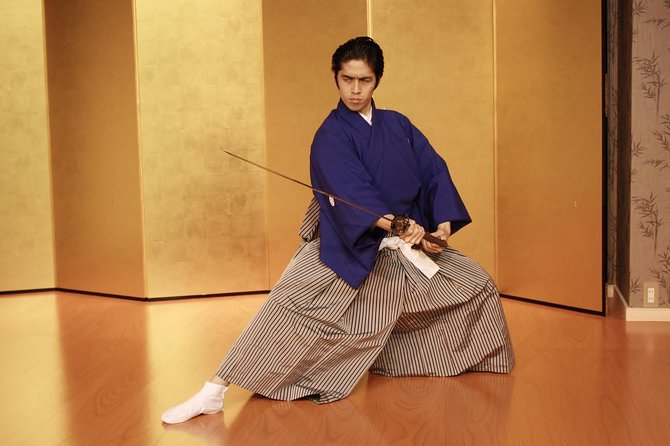
The central part of the experience is a sequence of short kembu demonstrations. Performers draw and wield swords through precise patterns while reciting brief poems associated with samurai preparing for battle.
The sword movements are the main reason to book. You see physical control, changes in pace, formal poses, and the careful handling of a blade. The skill is easy to appreciate from a close seat, even if you know little about Japanese martial traditions.
The show includes both traditional and newer forms of kembu. That gives you a little variety rather than one repeated routine. The exact balance of demonstrations may vary, but the structure remains a series of explanations followed by performance segments.
You will also hear about seppuku, sometimes called hara-kiri, and the cultural ideas connected with that ceremony. This subject can be uncomfortable, but it is part of the samurai code presented in the show. The explanation provides context rather than treating the topic as a cheap shock.
The production is theatrical. Costumes, music or spoken poetry, posture, and dramatic sword movements all work together. One useful way to think of it is as a short live stage piece about samurai ideals, not a practical lesson in combat.
More samurai and ninja sessions in Kyoto:
- Skip the lines Basic Ticket at SAMURAI NINJA MUSEUM KYOTO
★ 4.5 · 632 reviews - Ninja 1-hour Hands-on Lesson by Japanese master in Kyoto -Entry
★ 5.0 · 489 reviews - Kyoto: Ninja Weapon Forging Experience
★ 4.8 · 478 reviews - Kyoto: Samurai Kenbu Traditional Sword Dancing Show
★ 4.5 · 426 reviews
The fan demonstration adds welcome variety
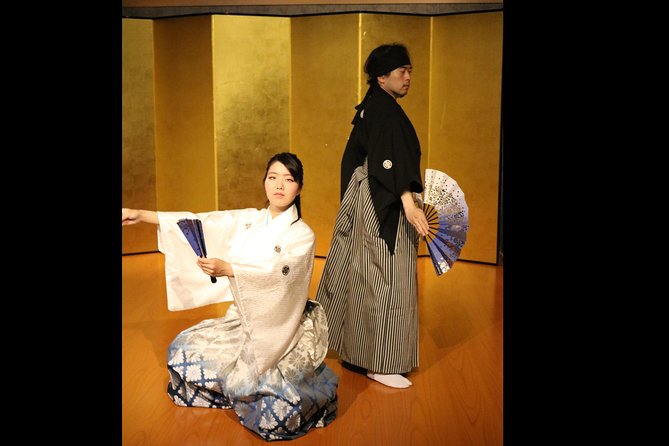
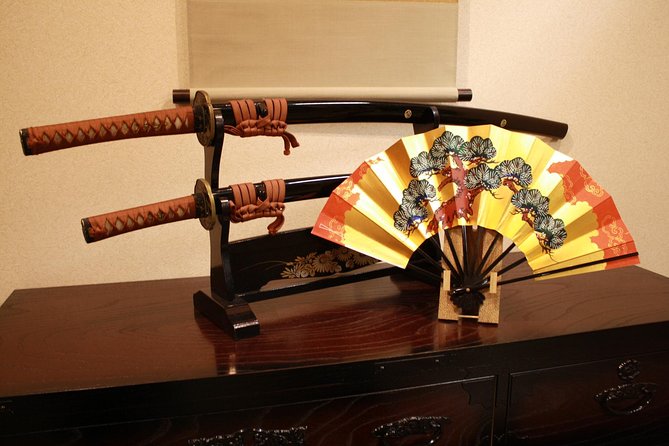
The Japanese folding fan may seem like a small detail beside a sword, but it gives the program a change of pace. The fan is handled as part of formal movement and expression, showing that kembu is not only about strength or weapon technique.
This section helps explain why the show can appeal to people who are interested in Japanese arts more broadly. You are watching movement, costume, and ritual as much as swordsmanship.
The variety is also useful for families. Younger children may lose interest during a long talk, but the fan, costumes, poems, and changes in movement provide different things to watch. The program is short enough that it does not ask for an entire evening of concentration.
The final mini experience and photo session
About 40 minutes of the one-hour visit is devoted to the main show. The remaining time is used for a short interactive session and photos.
You can try simple fan and sword movements under direction, then pose with a performer while holding a sword and fan. This is not a full training course, and you should not expect detailed instruction in samurai technique. It is a light introduction designed to let you take part after watching the professionals.
The photo session is one of the strongest practical features of the experience. You can take your own pictures with the performers, which makes the visit more memorable than a performance where you simply leave after the final scene. Families in particular can get a useful group photo, and the activity provides a clear ending rather than an abrupt exit.
Some participants have also received small keepsakes such as samurai socks, but that should not be treated as a guaranteed inclusion. The confirmed experience includes the mini sword activity and photo opportunity.
One tip is worth noting: ask about costume options if dressing up interests you. A participant wished they had known that practice clothing might be available. The supplied details do not confirm the exact costume arrangements, so check with the theater rather than assuming it is included.
How much time and money does it represent?
The listed price is $33.03 per person, with a duration of about one hour. For Kyoto, that is a moderate fee for a compact indoor cultural activity.
The value depends on what you want from the evening. If you want a full martial-arts workshop, the price may feel high because the hands-on part is short. If you want an English introduction, a live performance, and a photo opportunity in one hour, the cost is easier to justify.
I see it as especially useful on a day when you have already visited temples and shrines and want a different type of activity. It also works well in rain, when an outdoor plan becomes less appealing. Since food and drinks are not included, think of it as an attraction to pair with dinner or an evening walk around Gion.
The one-hour length is another advantage. You do not need to give up half a day, and the 4:15 pm start can fit between afternoon sightseeing and dinner. Check the available showtimes when booking if that starting time does not suit your plans.
Who will enjoy this most?
I would recommend the show to:
- Families looking for a short cultural activity with a hands-on finish
- First-time visitors curious about samurai customs
- Fans of Japanese history, theater, costumes, or traditional arts
- People who want an indoor evening plan near central Kyoto
- Couples and friends who would enjoy a distinctive group photo
It is less suitable if your main goal is realistic combat, detailed sword instruction, or an advanced study of bushido. The performance gives you an introduction, not specialist training.
The show also works better if you treat the comedy as part of the format. Some people expect a stern, highly serious display and are surprised by the jokes. The humor is intended to make the material accessible, but it may not match the mood you had in mind.
Practical details that can improve your visit
Confirmation is provided when you book, and the ticket is mobile, so you do not need a printed voucher. You still need to find the correct stairway and reception desk, so do not cut arrival too close.
Plan to remove your shoes before taking your seat. Wear socks you are comfortable being seen in, especially if you are visiting in warm weather or walking around Kyoto all day.
The show is near public transportation, but the exact route is not supplied in the booking information. Use the theater address and allow time to locate the GOZAN building entrance. Arriving 15 to 5 minutes early gives you room to check in, remove shoes, and settle into the seating area.
Most people can participate, and the experience is relatively short. Still, anyone concerned about low seating, stairs, or handling a sword should contact the provider before booking. The available information does not give detailed accessibility specifications.
The provider is Ginbu Co., LTD., formerly Samurai Kenbu Co., LTD. Free cancellation is available if you cancel at least 24 hours before the local start time. Changes or cancellations inside that window are not accepted for a refund, and you must make the cancellation yourself through Viator.
Why the strongest praise centers on the staff and explanations
The most consistent strength is the combination of friendly staff and clear stage explanations. The performers do not simply swing swords without context. They explain what you are about to see, connect it with samurai customs, and then demonstrate it.
That structure helps the show reach a wide audience. You do not need prior knowledge of kembu, and children can follow the broad ideas without sitting through a long academic talk. The staff’s light jokes also make the room feel relaxed.
The performers themselves receive strong praise for their physical control, costumes, and stage presence. The small theater allows you to notice details that might disappear in a large hall. The performance has enough drama to create memorable moments, but it remains approachable.
The overall rating is 4.6 out of 5 from 115 ratings, with 91 percent recommending the activity. Those numbers fit the experience’s strengths: it is well-liked as a fun cultural introduction, not as a serious battle reenactment or a lengthy workshop.
Should you book the Kyoto Samurai Kembu experience?
Book it if you want a short, entertaining introduction to samurai culture with an indoor setting, English narration, live sword performance, and a chance to pose with the performers. It is an easy addition to a Kyoto itinerary, especially after a day of temple visits or during bad weather.
Skip it if you are hoping for extended sword fighting or intensive instruction. The main show takes most of the hour, and the interactive section is deliberately brief.
For most first-time visitors, the balance works. You learn why kembu mattered, see skilled performers use swords and poems to tell a story, then get a small chance to try the movements yourself. At $33.03, that is a fair exchange for an hour that feels different from Kyoto’s usual temple circuit.
FAQ
How long is the Samurai Performance and Casual Experience?
The experience lasts approximately one hour. About 40 minutes is devoted to the stage show, followed by a short interactive session and photo opportunity.
Where does the experience take place?
It takes place at the Samurai Kembu Theater in downtown Kyoto. The theater is near public transportation and close to the Gion area.
What time does the experience start?
The provided meeting time is 4:15 pm. The experience also offers a choice of showtimes, depending on availability.
Do I need to arrive early?
Yes. You should arrive 15 to 5 minutes before the scheduled start time so you can find the reception desk, check in, remove your shoes, and take your seat.
Do I have to remove my shoes?
Yes. You remove your shoes before entering the seating area, following a traditional Japanese custom.
What will I see during the performance?
You will see traditional and new-style kembu, including sword movements, samurai poems, fan techniques, and explanations of samurai customs. The program also discusses seppuku, or hara-kiri.
Can I take a photo with a performer?
Yes. After the show, you can hold a sword and fan and take photos with the performers.
Is food or drink included?
No. Food and drinks are not included in the experience.
Is the ticket available on a mobile device?
Yes. The experience provides a mobile ticket.
Can I cancel for a full refund?
Yes, if you cancel at least 24 hours before the experience’s local start time. Cancellations or changes made less than 24 hours before the start are not accepted for a refund.
Just added around Kyoto
- Kyoto: Zen Meditation at a Private Temple with a Monk★ 5.0 · 25 reviews
- Kyoto: Gion Geisha District & Sake-in-Hand Walking Tour★ 5.0 · 37 reviews
- Private Pewter Sake Cup Experience with a Kyoto Artisan★ 5.0 · 31 reviews
- Your Private Vacation Photography Session In Kyoto★ 5.0 · 110 reviews
- Private Guided Traditional Buddhist Cooking in Japan★ 5.0 · 16 reviews
- Kyoto Wagashi(Japanese sweets) Cooking Class near Fushimiinari★ 5.0 · 60 reviews
- Traditional Japanese Music show & Experience Tour in Kyoto★ 5.0 · 57 reviews
- Kyoto:Family-Friendly Kimono & Yukata Experience at WARGO★ 5.0 · 147 reviews
Kyoto Tours, compared.


Fushimi Inari, Kinkakuji, Bamboo Grove 1 Day Bus Tour
Read our review →
Tea Ceremony in a Traditional Tea House in Kiyomizu
Read our review →
Kyoto Geisha Walking Tour: Gion District & Hidden Gems
Read our review →

Gion Magical Night Walking Tour with Geisha Trivia
Read our review →

Gion Geisha District Walking Tour – Stories of Geisha
Read our review →Browse the lists this tour appears in