
Reviewed · KYOTO TOURS
Cycle Kyoto’s Hidden Gems & Gion Stroll
Kyoto is easy to admire from a bus, but a bicycle lets you see how the city fits together. This tour takes you from riverside paths and quiet neighborhoods to the Imperial Palace, Shimo-gamo Shrine, and the narrow streets of Gion or Pontocho. I like the peaceful cycling route and the chance to pause for tea and a traditional Japanese sweet. I also like that guides such as Benjamin, Ko, Claire, and Mr. Go add local food suggestions and cultural context rather than simply pointing at famous buildings.
The main consideration is stamina. You need to ride a bike confidently, and children must be at least 9 years old. Kyoto can be hot and humid, and the tour combines a substantial ride with a 30-minute walk, so comfortable shoes, water, and weather-ready clothing matter.
Key points to know before you book
- Ride beyond the main sightseeing circuit: Follow riverside roads, residential streets, university areas, and quieter shrines that are difficult to connect on your own.
- See Kyoto’s major sights by bike: The route includes the Imperial Palace, a famous Zen temple, and UNESCO-listed Shimo-gamo Shrine.
- Take a cultural walk after cycling: Finish in Gion or Pontocho, where your guide explains flower towns and geisha culture.
- Stop for a traditional treat: Japanese tea and a sweet at a traditional snack shop are included.
- Good for active families: Children 9 and older can join if they are comfortable cyclists.
- Bring flexibility for weather: The experience runs rain or shine, with temple or shrine entrance fees included if the plan changes on a rainy day.
Why cycling works so well in Kyoto
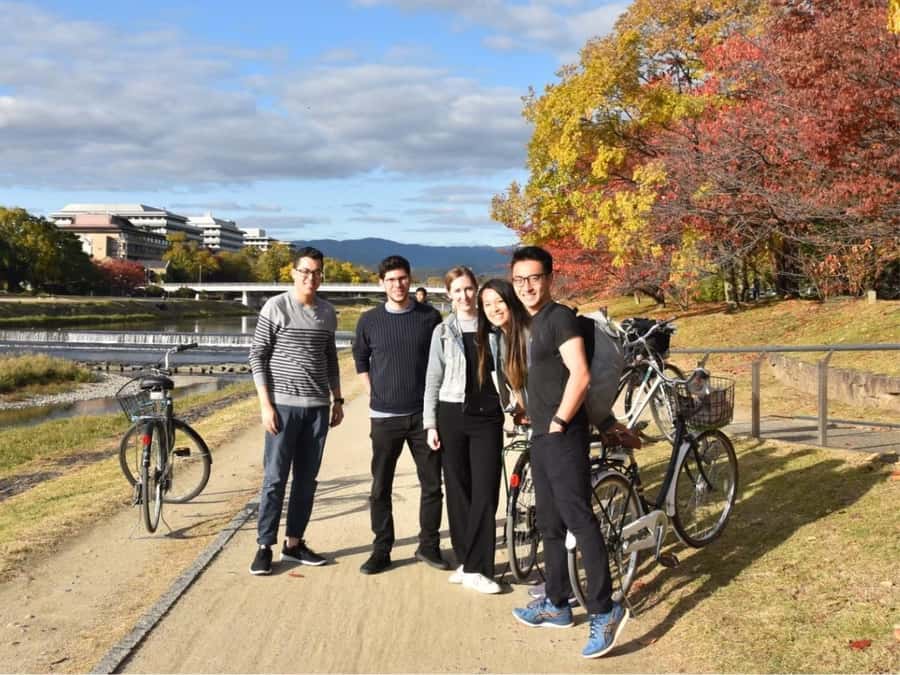
Kyoto’s famous sights are spread across a broad city basin. Walking between them takes time, while a taxi gives you little sense of the city between stops. A bicycle fills that gap nicely. You can move efficiently, feel the open air, and notice the shift from busy tourist streets to calm residential lanes.
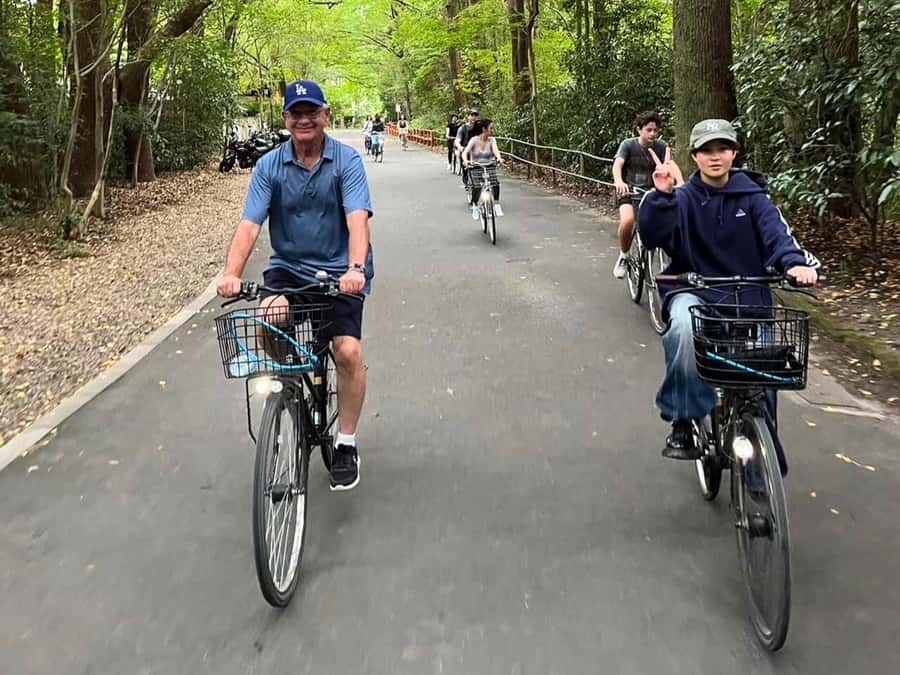
This is not a race or a serious cycling workout. The route includes regular stops, and the pace is designed around seeing places and hearing explanations. Margaret’s guide, Claire, was praised for choosing a good rhythm, with stops often enough to keep the ride comfortable without breaking the morning into tiny pieces. That balance matters in Kyoto, where the best moments often come from slowing down beside a shrine or river.
You should still expect real pedaling. The tour is not suitable for someone who cannot ride a bike, and an electric bicycle costs an extra 1,000 yen, payable on the spot. If you are unsure about managing a city ride in warm weather, the electric option may be worth considering.
More Hidden Gems Walks in Kyoto
- Kyoto Geisha Walking Tour: Gion District & Hidden Gems
★ 4.7 · 3,273 reviews - Private Kyoto Tour with a Local, Highlights & Hidden Gems, Personalised
★ 5.0 · 1,543 reviews - Arashiyama Bamboo Forest & Hidden Gems Bike Tour (Early Bird)
★ 5.0 · 613 reviews
Meeting at Sanjo Ohashi
The tour begins at the kneeling man statue on the southeast corner of the Sanjo Ohashi intersection. From the east end of Sanjo Ohashi Bridge, cross the street and look for the statue. If you are arriving by subway, come up to street level first, then locate the meeting point.
That detail is worth taking seriously. Large Kyoto intersections can be confusing, and searching for a statue while watching the clock is not a pleasant start. I would allow a little extra time and use the supplied map before leaving your hotel.
The activity returns to this same meeting point. That makes the tour easy to fit into a Kyoto day, since you are not left at a distant shrine or neighborhood with a separate trip back.
Riverside roads and a spring-water shrine
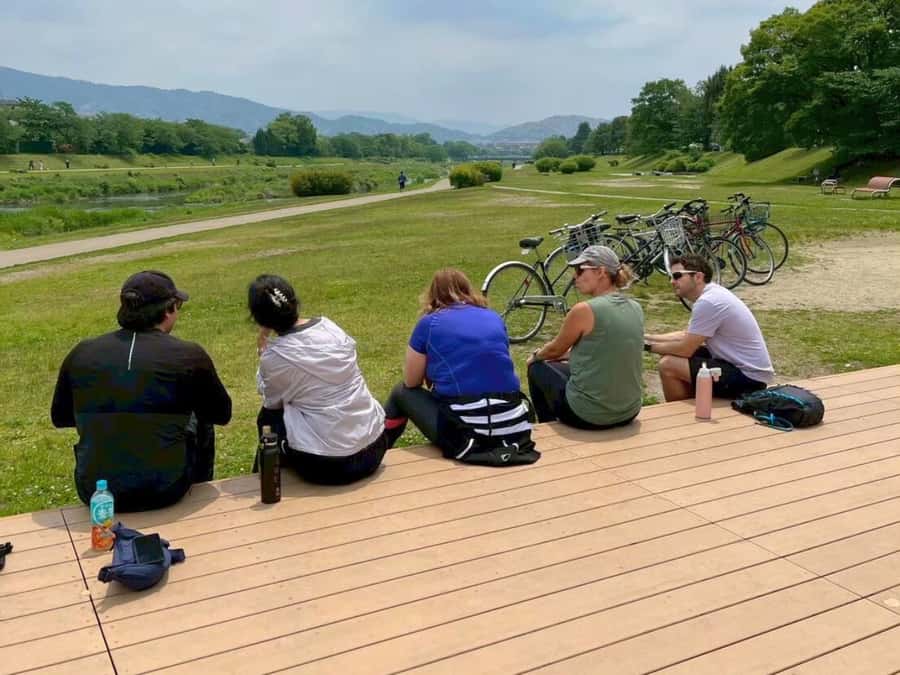
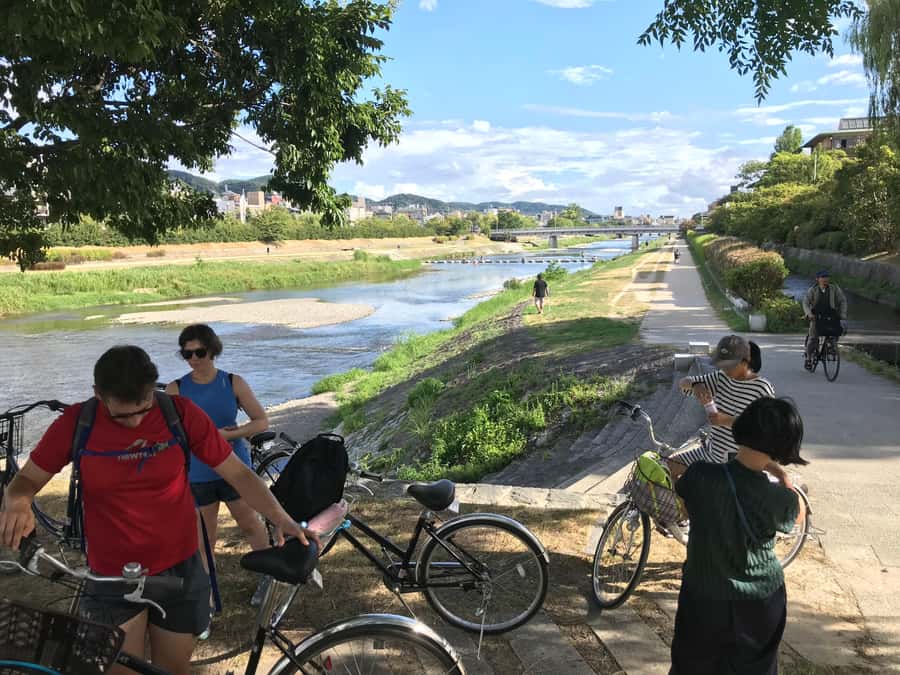
The opening ride follows a peaceful road beside the river. This is a smart way to begin. You get open sky, a cooler feel than on a crowded street, and a gentle introduction to Kyoto’s pace before the temples and palace arrive.
Along the way, you stop at a lesser-known shrine where you can try pure natural spring water. It is a small detail, but it gives the morning a local texture. Instead of rushing from one major landmark to another, you get a moment tied to the place itself.
The riverside section also helps families settle into the ride. Mr. Go was especially praised for being patient with two children, ages 9 and 10, and the river route was a welcome choice on a hot, humid day. Still, children should be able to handle their own bikes and stay alert around other road users. The minimum age is 9, not because this is an extreme ride, but because cycling in a city requires basic confidence.
The Imperial Palace without the usual bus routine
The huge Imperial Palace gives the ride a grand change of scale. Approaching by bicycle lets you understand its broad grounds in a way that a quick roadside photo does not. You are not simply checking off a palace visit. You are moving through the central city and seeing how much open space the former imperial compound occupies.
The tour is built around outdoor viewing and explanation, rather than promising a detailed interior visit. That distinction is useful if you want a long palace tour with formal rooms. Here, the value is the setting, the size, and the guide’s ability to place the site within the wider route.
The ride then continues through university campuses and quiet residential areas. These stretches may not sound as dramatic as a major temple, but they are part of what makes this experience different from a standard Kyoto highlights tour. You see everyday districts, not only the polished streets prepared for sightseeing.
I like this middle ground. It gives you a better feel for Kyoto as a lived-in city. The tradeoff is that the tour will not offer a grand attraction at every minute. Some riders may prefer a tighter schedule packed with ticketed sights. If you want breathing room and local streets, the slower transitions are an advantage.
More off-the-list walks in Kyoto:
- Kyoto: Hidden Gems E-Bike Tour with Local Japanese Guide
★ 4.9 · 189 reviews - Kyoto: Gion Hidden Gems & Geisha Culture Tour
★ 4.9 · 126 reviews - Highlights & Hidden Gems With Locals: Best of Kyoto Private Tour
★ 5.0 · 121 reviews - Kyoto: Hidden Gems E-Bike Tour Through Backstreets & Temples
★ 4.9 · 54 reviews
A Zen temple and the value of a guided stop
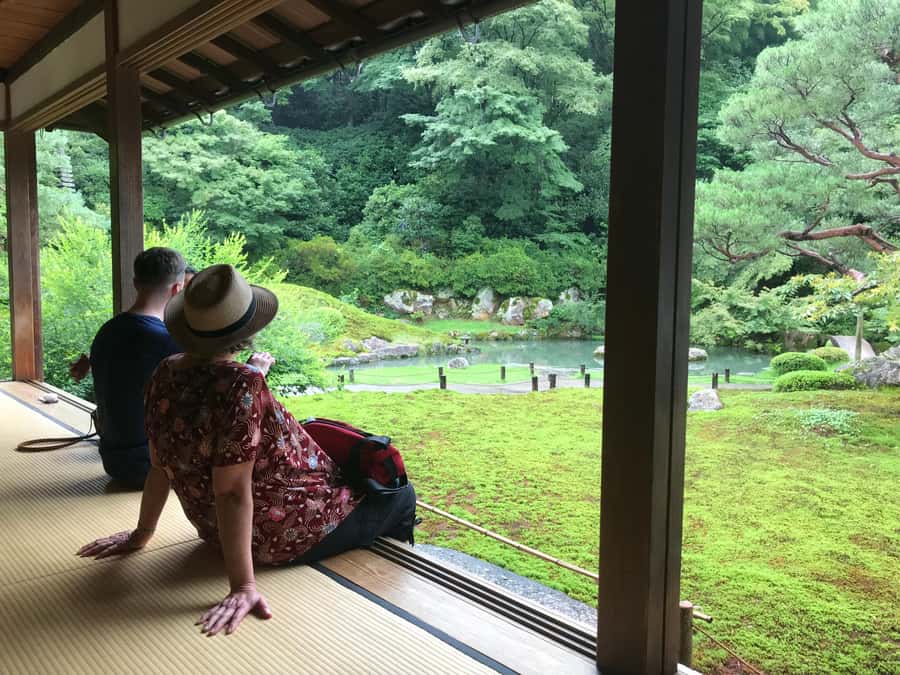
The itinerary includes a famous Zen temple before reaching Shimo-gamo Shrine. The exact temple can change, since the stated destinations are examples and the plan may adjust for weather. That means you should not book this expecting one fixed temple interior or a guaranteed set of buildings.
What you do get is a chance to pause at an important religious site with someone who can explain what you are seeing. Yuya appreciated visiting shrines and temples that would have been hard to reach alone, while Hashimura valued the calm of local religious sites. That is the practical strength of the guide here: connecting places that do not form an obvious route on a normal city map.
Entrance fees are included for a temple or shrine used as an alternative plan on a rainy day. The information does not promise that every regular stop has an admission charge included, so I would ask your guide if a particular paid entrance matters to you.
Shimo-gamo Shrine and its ancient forest
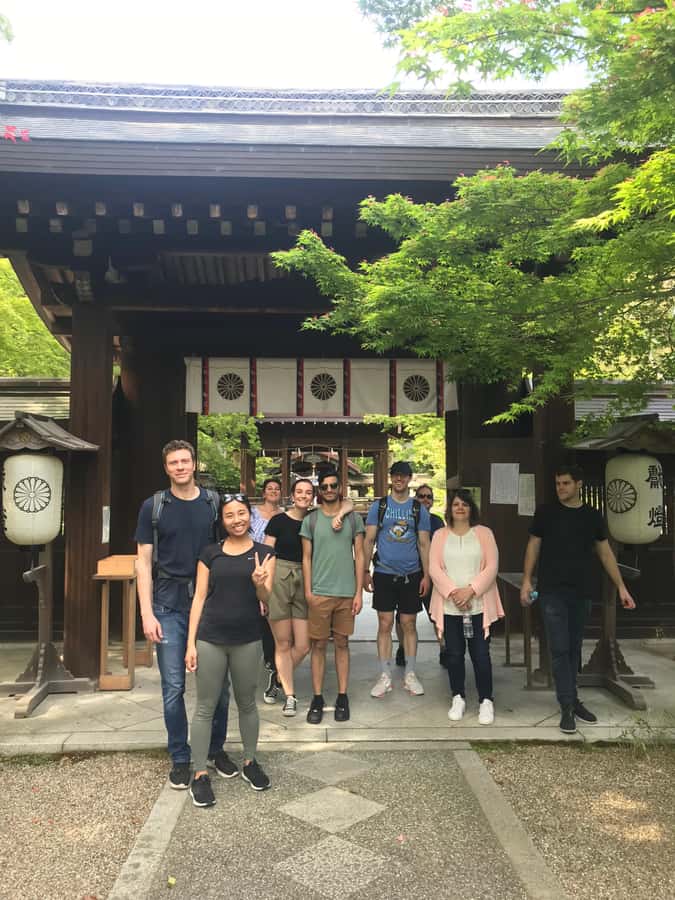
Shimo-gamo Shrine is one of the major stops. It is a UNESCO World Heritage site, but the appeal is not only the formal designation. The shrine is known here for its primitive forest and beautiful buildings, offering a calm contrast to Kyoto’s busy shopping lanes.
The forest gives the visit a sense of separation from the city. You can arrive by bike, leave the road behind, and spend time among old trees and shrine architecture. This is the sort of stop that benefits from a guide’s pacing. You need enough time to notice the setting, but not so much that the rest of the ride feels rushed.
The shrine also shows why a bicycle is useful. You can reach it as part of a connected route rather than treating it as a single destination reached by train, taxi, or a long walk. Ishiguro appreciated being taken to charming places that would have been difficult to find alone. That is exactly the kind of value you are paying for here.
The river junction and the ride back
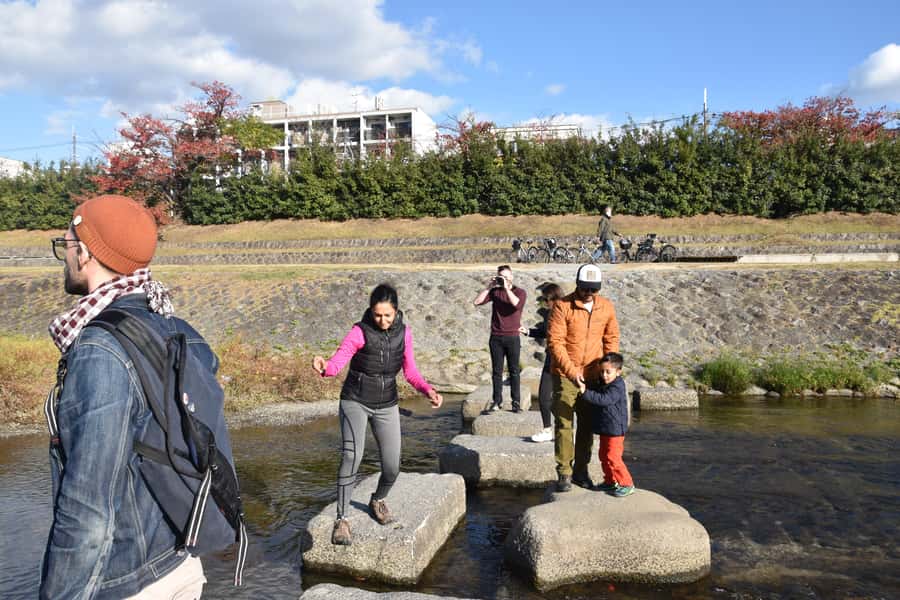
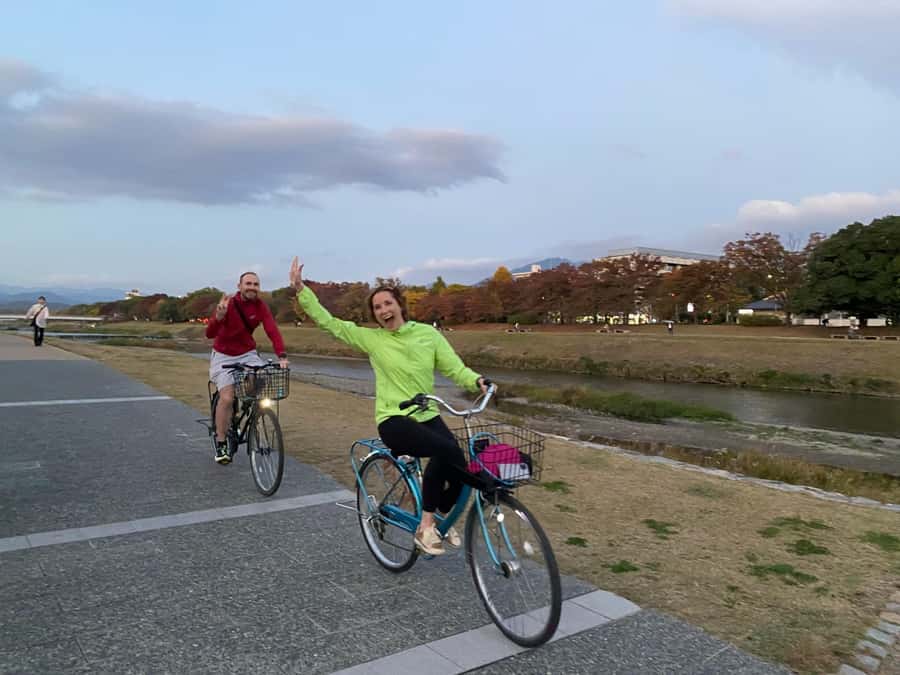
After Shimo-gamo Shrine, the route heads toward a distinctive river junction. The rivers meet at a memorable point, and the ride follows a scenic riverside route back toward the starting area. The return is described as lighted up, which adds a pleasant visual quality if the timing reaches that section later in the day.
This final cycling stretch gives the tour a satisfying shape. You start by the river, leave it for major sights and quieter neighborhoods, then return to the water after the shrine. The route is not simply a collection of unrelated stops.
Do not expect every part of the ride to be a photo stop. Some stretches exist to connect the city’s districts, and you will need to pay attention to your guide and surroundings. That is normal for an urban bike tour. The reward is a broader sense of Kyoto, not only a series of isolated viewpoints.
Tea, sweets, and a slower finish
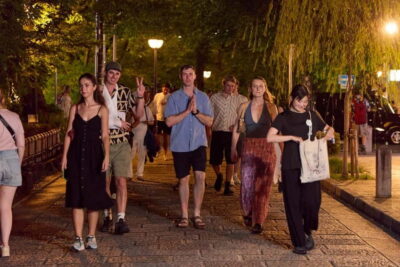
After the bikes are returned, the experience shifts to a 30-minute walk through Gion or Pontocho. These are two of Kyoto’s best-known entertainment areas, with narrow streets and traditional establishments. Your guide takes you through the main flower towns, the historic areas associated with geisha work and training.
The language around geisha culture can be confusing, so a guide’s explanation is useful. You learn about the system behind the flower towns, not just the visual appeal of the streets. The buildings are highly photogenic, but they are also working cultural districts. I would keep your camera respectful and follow your guide’s advice about where photography is appropriate.
You may spot a geisha, but that is not guaranteed. Treat it as a lucky possibility, not the purpose of the walk. The streets are attractive even without a sighting, and the cultural explanation gives the area more meaning than a quick stroll with a camera.
The tour includes Japanese tea and a sweet at a traditional snack shop. Eva-Maria especially valued this stop, and it gives the walk a welcome change of pace after the bicycle ride. The snack is not a full meal, so plan lunch or dinner separately. During the walk, the guide can also suggest restaurants and bars based on what you want to eat or drink.
That food advice can be especially useful after a busy sightseeing day. You can ask for a certain type of cuisine, a casual bar, or a place suited to your group. The activity does not include a restaurant meal, so any recommendation is guidance rather than part of the price.
Guides who shape the experience
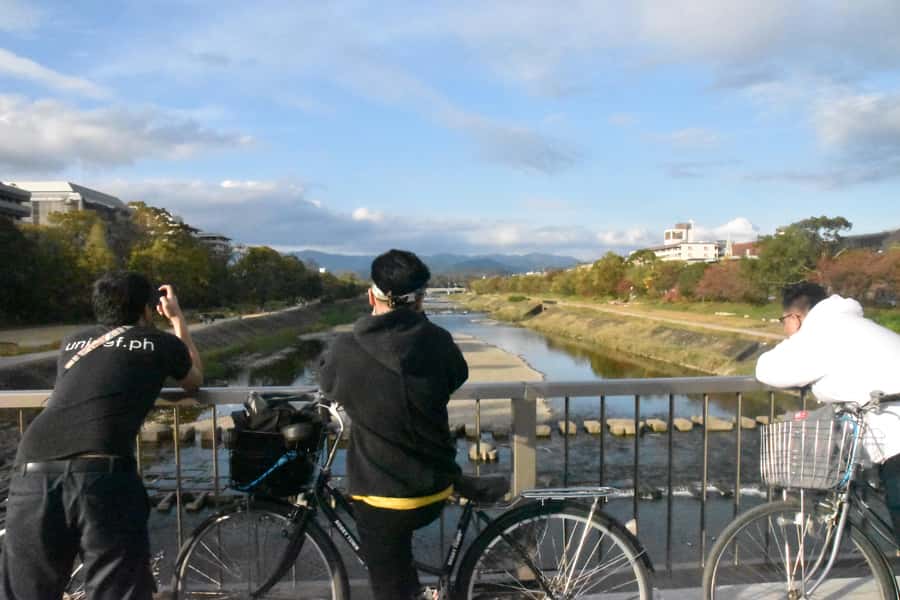
The guides named in the feedback include Benjamin, Ko, Claire, and Mr. Go. The strongest pattern is not one particular stop, but the guides’ friendly care, clear explanations, and willingness to adjust the experience to the group.
Benjamin was praised for making the ride run smoothly and for giving restaurant tips. Ko added explanations at shrines and temples, then shared tea and a sweet at the traditional shop. Claire kept the ride comfortable while mixing major sights with quieter places. Mr. Go was patient with young riders.
That range matters because the tour depends on the person leading it. The route has many moving parts, and a good guide makes the transitions feel natural. You should expect an English-language experience, but guide style can vary. Some people may enjoy a more conversational afternoon, while others may prefer a tightly scripted historical tour.
Is $73 good value?
At $73 per person, the price is reasonable if you want more than a basic bicycle rental. You are paying for the rental bike, a guide for the cycling route and Gion or Pontocho walk, Japanese tea, a traditional sweet, and help connecting several parts of Kyoto in one outing.
The value is strongest for first-time visitors who do not yet understand Kyoto’s geography. In roughly four hours of combined riding and walking, you see major cultural sites, quiet streets, river scenery, and an entertainment district. Recreating that route on your own would require planning, map work, bike rental arrangements, and a good deal of backtracking.
It is less valuable if you already know Kyoto well, prefer to move entirely at your own pace, or want long visits inside each temple. The experience gives you a broad, guided look rather than deep time at one building.
The electric bike is not included. Add 1,000 yen if you request one, and pay that fee on the spot. For a strong cyclist, the regular rental bike should be the straightforward choice. For anyone worried about heat, distance, or keeping up, the extra cost may buy comfort.
Who should book this ride?
I would recommend it to active families with children 9 and older, couples who want a break from crowded sightseeing streets, and first-time Kyoto visitors who want a quick sense of the city’s layout. It also suits people who enjoy local shrines, riverside scenery, and small cultural details as much as headline attractions.
Bring comfortable shoes, water, a camera, and clothing suited to the weather. Do not bring pets, smoke during the activity, or arrive with luggage or a large bag. You need your hands and attention free for cycling.
The tour runs rain or shine. If the weather forces a change, the plan can use a temple or shrine alternative, with the relevant entrance fee included. That flexibility is helpful, but you should still dress for the forecast. Kyoto rain can make cycling less pleasant, even when the activity continues.
Should you book Cycle Kyoto’s Hidden Gems & Gion Stroll?
Book it if you want to pedal through Kyoto rather than view it from behind a bus window. The best parts are the river roads, the quiet residential stretches, Shimo-gamo Shrine, and the final Gion or Pontocho walk with tea, sweets, and restaurant advice.
Skip it if you cannot ride confidently, want a purely indoor cultural tour, or dislike a schedule that combines steady cycling with walking. For everyone else, $73 buys a well-connected introduction to Kyoto, with enough major sights to feel substantial and enough quiet space to feel personal.
FAQ
How long does the activity last?
The experience includes a 3.5-hour bike ride and a 30-minute town walk through Gion or Pontocho.
What sights does the cycling route include?
The route includes the Imperial Palace, a famous Zen temple, Shimo-gamo Shrine, a shrine with natural spring water, university campuses, residential areas, and a distinctive river junction.
Is the tour suitable for children?
Children must be at least 9 years old, and all participants need to be able to ride a bike. The experience is described as suitable for families.
Is an electric bike included?
No. A regular rental bike is included. An electric bike costs an additional 1,000 yen, payable on the spot.
What food or drink is included?
You receive Japanese tea and a Japanese sweet at a traditional snack shop. Restaurant and bar suggestions are also available during the walking portion, but meals are not included.
Where does the tour start and finish?
The tour starts at the kneeling man statue at the southeast corner of the Sanjo Ohashi intersection and finishes back at the same meeting point.
More Bike Tours in Kyoto
- Hidden Kyoto E-Biking tour
★ 5.0 · 1,843 reviews - Bike Tour Exploring North Kyoto plus Lunch
★ 5.0 · 1,087 reviews - 5 Top Highlights of Kyoto Full Day Bike Tour (E-bike option)
★ 5.0 · 511 reviews - Full Day Biking Tour Exploring the Best of Kyoto
★ 5.0 · 498 reviews
More Geisha Experiences
- Kyoto: Gion Magical Night Walking Tour with Geisha Trivia
★ 4.9 · 2,393 reviews - Kyoto: Gion Geisha District Walking Tour – Stories of Geisha
★ 4.7 · 2,187 reviews - Best of Kyoto: Gion, Geisha, Pagodas & Cobblestones
★ 4.9 · 2,058 reviews - Night Walk in Gion: Kyoto’s Geisha District
★ 4.5 · 2,003 reviews
Just added around Kyoto
- Kyoto: Zen Meditation at a Private Temple with a Monk★ 5.0 · 25 reviews
- Kyoto: Gion Geisha District & Sake-in-Hand Walking Tour★ 5.0 · 37 reviews
- Private Pewter Sake Cup Experience with a Kyoto Artisan★ 5.0 · 31 reviews
- Your Private Vacation Photography Session In Kyoto★ 5.0 · 110 reviews
- Private Guided Traditional Buddhist Cooking in Japan★ 5.0 · 16 reviews
- Kyoto Wagashi(Japanese sweets) Cooking Class near Fushimiinari★ 5.0 · 60 reviews
- Traditional Japanese Music show & Experience Tour in Kyoto★ 5.0 · 57 reviews
- Kyoto:Family-Friendly Kimono & Yukata Experience at WARGO★ 5.0 · 147 reviews
Kyoto Tours, compared.
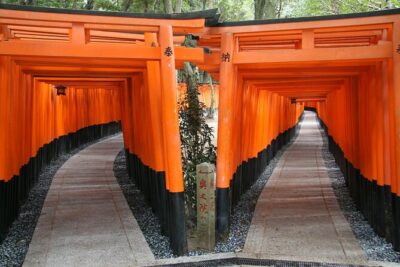
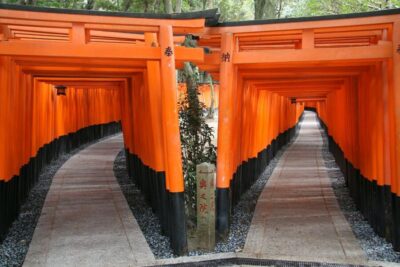
Fushimi Inari, Kinkakuji, Bamboo Grove 1 Day Bus Tour
Read our review →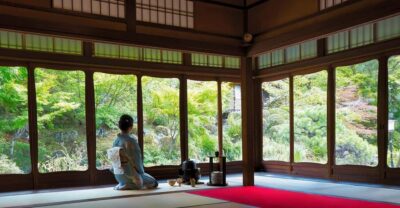
Tea Ceremony in a Traditional Tea House in Kiyomizu
Read our review →
Kyoto Geisha Walking Tour: Gion District & Hidden Gems
Read our review →
Gion Magical Night Walking Tour with Geisha Trivia
Read our review →
Gion Geisha District Walking Tour – Stories of Geisha
Read our review →Browse the lists this tour appears in