
Reviewed · HIROSHIMA TOURS
An Amazing set of Cultural experience: Kimono, Tea Ceremony and Calligraphy
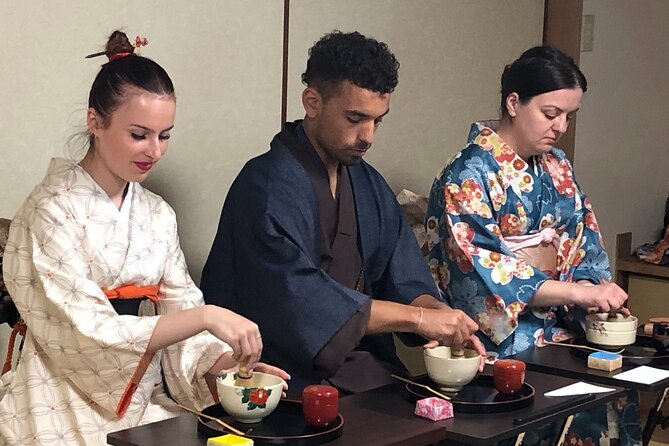
The best part of this Miyajima experience is the setting: you learn Japanese customs inside a historic Zen temple, not in a staged hotel room. At Okeiko Japan, you choose a kimono, learn the basic gestures of a tea ceremony, whisk your own matcha, and practice calligraphy.
I like the personal scale, with no more than eight people, and the generous photo-taking throughout the session. I also like the mix of quiet ceremony and hands-on fun. The main thing to consider is the price, $132.14 per person, which is a serious spend for about 90 minutes, or up to two hours depending on the schedule.
Key points to know before booking
- Three traditions in one visit: Kimono dressing, a matcha tea ceremony, and Japanese calligraphy are all included.
- A calm Miyajima setting: Okeiko Japan is about a five-minute walk from the ferry port toward Tokujuji Temple.
- Helpful dressing service: Staff help you choose a kimono, socks, obi, cords, flowers, and other accessories.
- Small groups matter: The activity accepts a maximum of eight people, allowing time for questions and photographs.
- Photos are a major bonus: Staff take pictures during the session, including in the temple gardens.
- Good for families: Children from age six can participate, and most people can take part.
Why this Miyajima activity feels different
Miyajima is famous for its giant torii gate, shrine, deer, and water views. Those sights are worth your time, but they can also make the island feel like a checklist. This experience gives you a slower hour or two and lets you take part in customs rather than simply look at them.
The location at Tokujuji Temple is important. A temple gives the tea ceremony a natural setting, and the quiet grounds make the kimono photographs feel connected to the place. You are not just borrowing clothing for a quick snapshot. You are learning how several parts of Japanese culture fit together.
The tone is friendly rather than stiff. The staff help with the clothing, explain the tea ceremony in English, guide you through the calligraphy, and take family or group photos. That combination makes the session approachable even if you know nothing about kimono or matcha.
The activity is also compact. With morning and afternoon start times, you can fit it around a larger Miyajima visit. I would treat it as a planned cultural pause, not as your only reason to visit the island.
More tea ceremonies in Hiroshima:
- Hiroshima Local guided Hiking Tour&Open-air Tea Ceremony
★ 5.0 · 213 reviews - Kimono and Tea Ceremony in Miyajima
★ 5.0 · 73 reviews - Hiroshima: Morning Hiking Tour with Open-air Tea Ceremony
★ 4.8 · 58 reviews
Getting from the ferry to Okeiko Japan
The meeting point is Okeiko Japan Miyajima, at 741-1 Miyajimachō, Hatsukaichi, Hiroshima 739-0588. From the Miyajima ferry port, walk about five minutes toward Tokujuji Temple.
That short walk is useful when planning your day. You do not need to arrange a separate transfer after crossing to Miyajima. The activity starts and finishes at the same place, so you can continue to the island’s other sights afterward.
Give yourself enough time to find the meeting point. The activity begins at a set time, and kimono dressing is part of the session rather than something to rush through. Morning and afternoon departures provide some choice, but your ferry timing still matters.
The experience is near public transportation, and confirmation is provided when you book. Since the activity is on Miyajima, remember to allow time for the ferry crossing before the five-minute walk. The booking information gives no exact ferry schedule, so check that separately when planning your day.
Choosing a kimono and getting dressed
The session begins with the kimono. You choose from available garments in your size, with help from the staff. Accessories can include socks, an obi, cords, flowers, and sandals or other traditional footwear.
This is one of the most enjoyable parts because the staff do the difficult work. Proper kimono dressing involves layers and careful tying, so it is not a matter of simply putting on a robe. The assistance also helps you avoid treating the clothing carelessly.
Size is worth considering before you book. One person noted that the staff had a suitable size, even after worrying that the fit might be a problem. That is encouraging, but the supplied information does not list a full size chart. If fit is a concern, ask Okeiko Japan before paying.
The clothing is available for men as well as women. One group found that the men enjoyed the session too, so this is not only a dress-up activity for women or children. It works well for couples, families, and mixed groups.
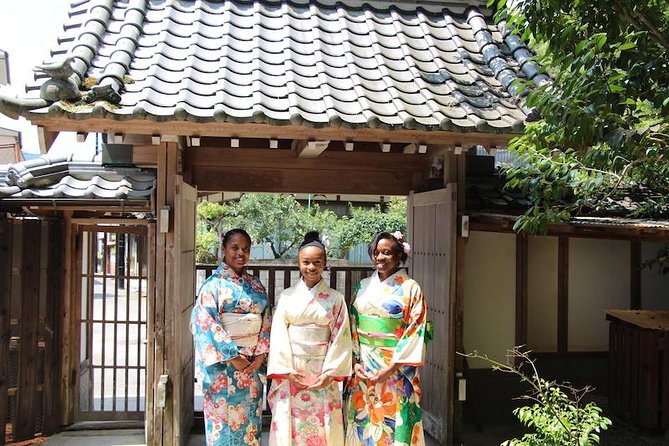
Once you are dressed, the staff take photographs. They may take many pictures during the complete experience, including individual, family, and group shots. This adds real value if you want a record of the day without asking a companion to be the photographer.
The photos are shared digitally, and one person had trouble with the app used to receive them. Okeiko Japan acknowledged that issue and said it was considering another way to share pictures. I would keep that small practical point in mind: enjoy the photographs, but ask how they will be delivered before you leave.
The tea ceremony: watch first, then make matcha
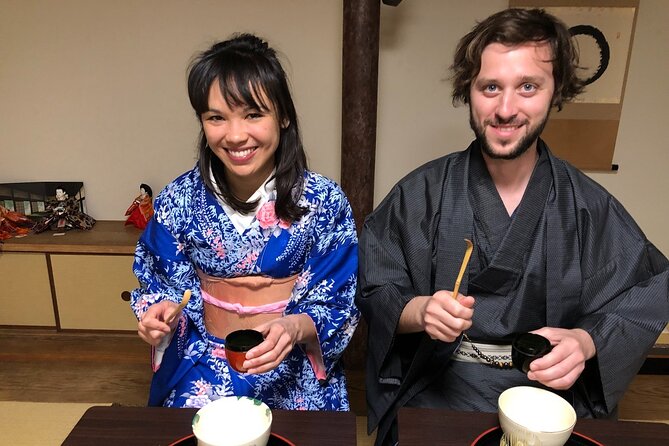
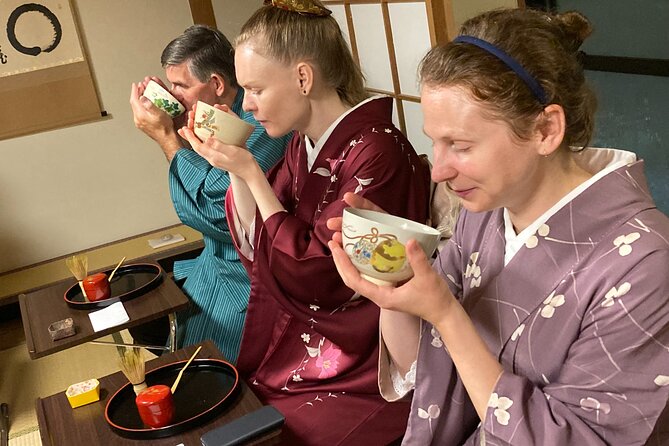
The tea portion combines a demonstration with your own attempt. You first watch the ceremony, including its small movements and manners, then learn to whisk matcha yourself.
That order is helpful. Japanese tea ceremony can look simple until you notice the details: how the bowl is handled, how the tea is prepared, and how guests behave. Seeing the performance first gives you a frame for the hands-on part.
You make your own matcha rather than only sipping a cup prepared for you. This makes the activity more memorable, though your whisking technique may take some practice. The point is not to produce a perfect bowl. It is to understand the care and rhythm behind the drink.
The tea bowls used during the session have been described as beautiful pieces made by local artisans. That detail adds a sense of place and gives the ceremony a connection to Japanese craft. The setting, tools, and gestures all help the activity feel like a cultural lesson rather than a themed refreshment stop.
The staff explain the ceremony in English, including the small customs that are easy to miss. If you have just come from Hiroshima’s more emotionally heavy sights, this quiet portion can provide time to slow down and think.
There is a balance here. You will not become a tea master in one sitting, and the ceremony is presented in a visitor-friendly format. But you will leave knowing more about matcha preparation and the meaning of the gestures than you would from simply ordering tea at a café.
More kimono rentals in Hiroshima:
- Cultural Activities :Kimono, tea ceremony, Calligraphy and Amulet
★ 5.0 · 44 reviews - Kimono and Calligraphy Experience in Miyajima
★ 5.0 · 16 reviews - Kimono Tea Ceremony at Kyoto Maikoya, NISHIKI
★ 5.0 · 911 reviews - Kyoto: Kimono Rental with Hairstyling and Accessories
★ 4.8 · 653 reviews
Calligraphy that gives you something to take home
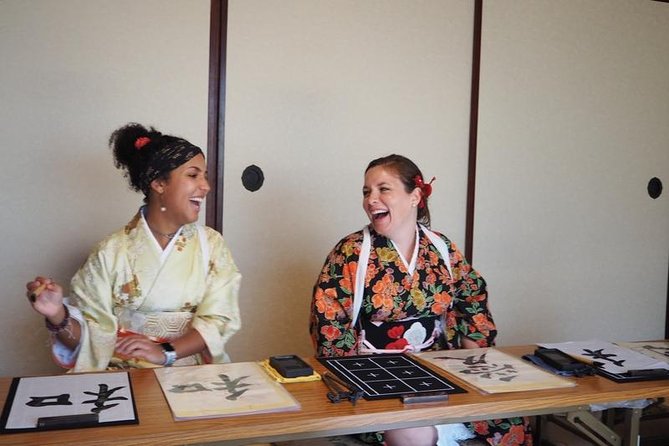
The final major activity is Japanese calligraphy. You practice kanji and can also work on writing your name. It looks easier than it is, especially when you are trying to control a brush and copy unfamiliar symbols.
That challenge is part of the fun. The lesson is not built around producing museum-quality work. It gives you a physical way to pay attention to line shape, pressure, and balance.
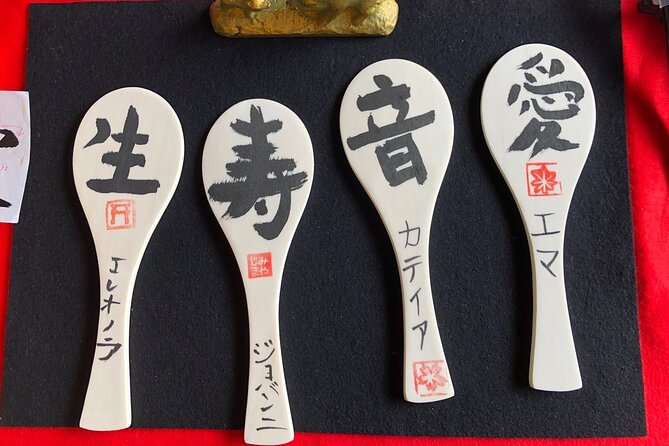
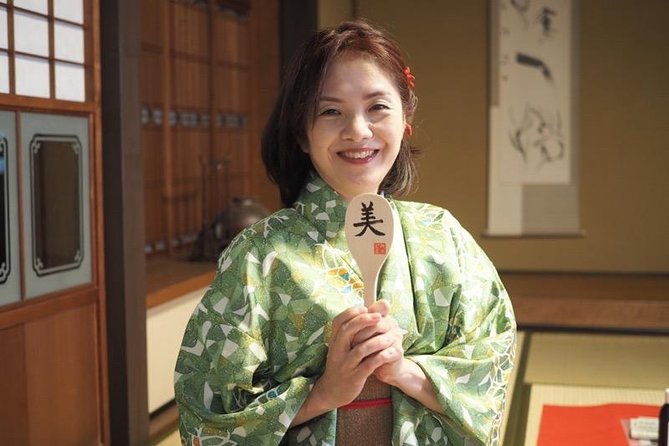
One particularly nice touch is the chance to write on wooden spoons, which are then beautifully wrapped as souvenirs. This is more useful than a generic printed certificate because it connects the object to something you made during the session.
Calligraphy also changes the pace. After the visual pleasure of choosing a kimono and the formal rhythm of tea, you get a more active task. Families can work together, and children age six or older are permitted to participate.
The details of the exact calligraphy lesson can vary, so do not expect an advanced language class. You will practice symbols and names, not study Japanese grammar or gain fluency. Still, it is a good introduction to an art that is hard to appreciate fully until you try it yourself.
The photographs and temple grounds
Photography runs through the experience rather than being limited to one quick stop. Staff take pictures while you are dressed, during the cultural activities, and in the surrounding gardens.
The temple grounds are a major reason to choose this activity over a standard kimono rental. You get a traditional setting for the images, with staff who know how to organize the session and help create family photographs.
The photo service is especially valuable for groups. It lets everyone appear in the picture, and it means you do not have to spend the experience handing a phone to strangers. The staff’s willingness to take many photographs was repeatedly praised, which matches the practical value of the service.
Do not assume the photos are delivered instantly or in a particular format. The information confirms that photographs are taken and shared, but the app has not worked perfectly for everyone. Ask about the delivery process if the images are important to you.
How much value do you get for $132.14?
At $132.14 per person, this is not a bargain activity. You are paying for instruction, kimono use, dressing help, tea preparation, calligraphy, the temple setting, and staff-taken photographs. The group size of eight or fewer also helps keep the session personal.
The price makes more sense if you value participation and keepsake photos. A simple visit to a temple costs far less, and you can drink matcha elsewhere for a small amount. What you cannot easily reproduce on your own is the combination of dressing, ceremony instruction, calligraphy, and guided photography in one place.
It is also a useful choice if you have limited time in Japan. Instead of arranging separate activities, you receive three introductions in a single appointment. The experience is short enough to fit into a larger Miyajima day, though the ferry and island sightseeing add time around it.
I would be more cautious if you are mainly seeking a long tea ceremony or a serious calligraphy course. This is an introductory cultural session designed to be friendly and accessible. Its value lies in variety, atmosphere, and personal attention.
The strong satisfaction record is worth noting, with 100 percent recommendation and a five-star rating from 69 reviews at the time of the supplied information. One four-star rating shows that the experience is not beyond criticism, but the overall pattern is unusually consistent.
Who will enjoy this most?
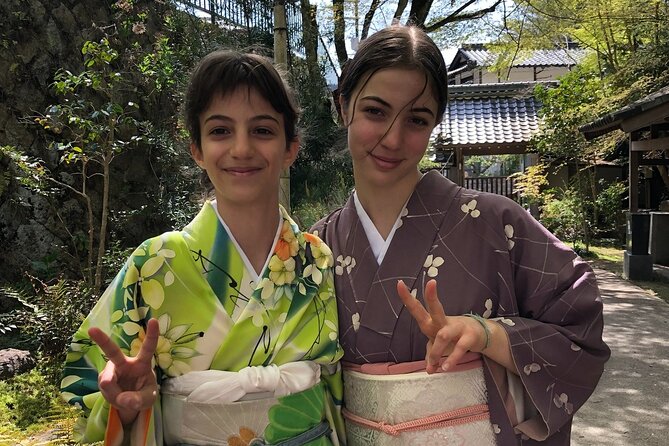
This activity suits you if you want a hands-on introduction to Japanese customs and prefer doing something rather than only sightseeing. It works particularly well for first-time visitors who want an easy entry into kimono, tea, and calligraphy.
Families can take part because the minimum age is six. The activity also suits couples, friends, and mixed groups. Men are welcome, and the clothing selection is not limited to women’s kimono.
It is a strong option after visiting Hiroshima’s Peace Memorial sites. A quiet temple, careful tea preparation, and calligraphy offer a different pace from the city’s more intense historical stops. One person even made the long journey from Osaka early in the morning and considered the visit worth the effort.
You may want to skip it if you dislike dressing up, sitting through explanations, or posing for photographs. The kimono and photo session are central parts of the experience, not optional extras.
The age minimum is six, and most people can participate. The supplied information does not give detailed accessibility guidance, so contact the provider if you need specific assistance with clothing, movement, or sitting arrangements.
Timing, group size, and cancellation
The advertised duration is about one hour and 30 minutes, while the stop information allows two hours. Plan for roughly 90 minutes to two hours so you are not forced to hurry to your next booking.
Morning and afternoon start times make it easier to pair the session with other Miyajima sights. Since the activity ends where it begins, you can continue sightseeing afterward or walk back toward the ferry port.
The maximum group size is eight. That is small enough for individual help with kimono dressing, questions during tea, and time for photographs. It also means popular times can fill ahead of schedule. The average booking point is 38 days before the experience, so reserve early if your Hiroshima dates are fixed.
You can cancel for a full refund up to 24 hours before the local start time. Cancellations or changes made less than 24 hours in advance are not accepted for a refund.
Should you book the Okeiko Japan experience?
I would book this if you want a friendly, well-rounded introduction to Japanese culture in a memorable Miyajima setting. The strongest reasons are the small group, the patient dressing help, and the photographs taken throughout the visit.
The price is high for the duration, so compare it with your interests. If you want a serious tea study or a long calligraphy workshop, this may feel brief. If you want to wear a kimono, learn the basic manners of tea, make matcha, practice calligraphy, and take home photographs and a handmade-style souvenir, the combination is hard to match in one short session.
For most first-time visitors to Hiroshima, I see it as a worthwhile add-on to Miyajima, not a replacement for the island’s major sights. Book it when you want a calm, personal cultural experience and are happy to pay for guidance, setting, and memories.
FAQ
Where does the experience take place?
It takes place at Okeiko Japan Miyajima, at 741-1 Miyajimachō, Hatsukaichi, Hiroshima 739-0588, Japan.
How far is Okeiko Japan from the Miyajima ferry port?
The meeting point is about a five-minute walk from the ferry port toward Tokujuji Temple.
How long does the activity last?
The advertised duration is approximately one hour and 30 minutes. The itinerary allows two hours, so plan for roughly 90 minutes to two hours.
What activities are included?
You will try on a kimono, take part in a tea ceremony, make your own matcha, and practice Japanese calligraphy.
Are photographs included?
Staff take photographs during the experience, including while you are wearing the kimono and in the temple grounds. The supplied information does not state a separate photo fee.
How many people can join?
The activity has a maximum of eight participants.
What is the minimum age?
The minimum age is six.
Are morning and afternoon times available?
Yes. The experience offers both morning and afternoon start times.
Does the activity begin and end at the same place?
Yes. It begins at Okeiko Japan Miyajima and ends back at the meeting point.
Can I cancel for a full refund?
Yes. You can cancel at least 24 hours before the local start time for a full refund. Changes or cancellations made less than 24 hours before the start are not accepted for a refund.
Just added around Hiroshima
- The Peace Memorial to Miyajima : Icons of Peace and Beauty★ 4.5 · 31 reviews
- Shore Excursion from Hiroshima Port : Private Tour in Hiroshima★ 5.0 · 17 reviews
- Hiroshima Saijo Sake Tasting Tour with visit to 7 Breweries★ 5.0 · 104 reviews
- Hiroshima & Miyajima All-Inclusive Tour w/Licensed guide Pancho★ 5.0 · 54 reviews
- Hiroshima Country Cycling: Explore Rural Life 1 HR from City★ 5.0 · 22 reviews
- Okunoshima Rabbit Island Cycling Tour with Local Guide★ 4.5 · 17 reviews
- Private Full Day Hiroshima Tour★ 4.5 · 29 reviews
- Hiroshima Private Tour with a Local – Highlights & Hidden Gems★ 4.5 · 24 reviews
Hiroshima Tours, compared.

Peaceful Hiroshima & Miyajima UNESCO 1 Day Bus Tour
Read our review →
Hiroshima and Miyajima UNESCO Sites 1-Day Tour
Read our review →
Hiroshima Historical Walking Tour – Why A-Bomb was Dropped
Read our review →
Hiroshima Peace (Heiwa) Walking Tour at World Heritage Sites
Read our review →
Hiroshima in a Nutshell: Morning Bike Adventure
Read our review →
Hiroshima City 4hr Private Walking Tour with Licensed Guide
Read our review →

Japanesel Archery Experience HIROSHIMA CASTLE SHARAKU
Read our review →Browse the lists this tour appears in