
Reviewed · HIROSHIMA TOURS
Hiroshima Local guided Hiking Tour&Open-air Tea Ceremony
Hiroshima’s Futaba Mountains rise just behind the station, yet they feel far removed from the city streets. This small-group walk pairs quiet forest paths and sacred shrines with Nodate, a traditional tea service held outdoors above Hiroshima. The setting gives you a thoughtful way to see the city beyond Peace Memorial Park.
I like the personal scale, with no more than six people, and I like the way the guide connects Shinto practices, local history, forest bathing, and the city’s recovery. Guides such as Nana, Michi, and Naomi are warm and attentive, stopping often to explain what you are seeing. The early start also leaves most of your day open.
The catch is the climb. You go up about 500 steps on uneven, sometimes steep paths, so this is not a casual stroll. It is manageable for many people, with frequent pauses, but summer heat can make it much harder than the modest distance suggests.
Key points about the Futaba Mountains hike
- A rare city-to-forest route: You start at Hiroshima Station and reach shrines and wooded mountain paths without a long transfer.
- About 500 steps uphill: The trail is maintained, but the stairs and slopes call for steady shoes and a reasonable level of fitness.
- Three local guides are named: Nana, Michi, and Naomi have led visitors through the route, customs, and tea service.
- Nodate tea outdoors: The tea ceremony takes place near Kinko Inari’s upper shrine area, with wide views toward Hiroshima, the Seto Inland Sea, and Miyajima.
- A small group of six or fewer: The size allows time for questions and a more relaxed pace.
- Five percent supports conservation: Part of your fee goes toward care of Futaba Mountain.
Why this is a different side of Hiroshima
Most first visits to Hiroshima focus on the Peace Memorial Park, the Atomic Bomb Dome, and Miyajima. Those places matter, but this walk gives you another way to understand the city. You see the religious traditions that shaped daily life before and after the war, then look out over a city known for rebuilding itself.
The Futaba Mountains are close to Hiroshima Station, so the experience is efficient. You do not spend half the morning in a bus or train. After meeting your guide, you move from the station area toward Hiroshima Toshogu Shrine, then gradually leave the buildings behind.
I find the route appealing because it combines several activities that are often sold separately. You get a guided hike, shrine visits, an introduction to Shinto customs, a quiet period of forest bathing, a major city view, and an outdoor tea service. None of these elements alone would fill a day, but together they make a well-shaped morning.
The small group matters here. Shrine etiquette can be confusing if you have never visited Japan, and a guide can show you how to approach a shrine, where offerings fit into the ritual, and why certain features are present. You are not simply looking at gates and buildings. You are given enough context to understand what people do there.
More tea ceremonies in Hiroshima:
- Kimono and Tea Ceremony in Miyajima
★ 5.0 · 73 reviews - An Amazing set of Cultural experience: Kimono, Tea Ceremony and Calligraphy
★ 5.0 · 69 reviews - Hiroshima: Morning Hiking Tour with Open-air Tea Ceremony
★ 4.8 · 58 reviews
Meeting at Hiroshima Station at 7:30
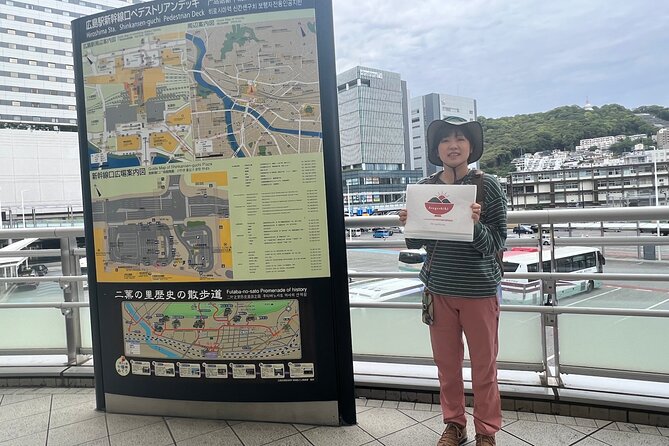
The main meeting point is at the Shinkansen exit of Hiroshima Station. The morning departure is scheduled for 7:30, though the experience also has later start times listed at 10:00 and 13:00. Confirm your selected departure when booking, since the start time affects how much of the day remains afterward.
At the station, the guide introduces the route and explains what lies ahead. This short orientation is useful because the climb is broken into several stops rather than treated as one long push uphill.
Arrive early. A late arrival of more than 10 minutes without contact can lead to automatic cancellation with the full fee charged. That is a harsh rule, but it is easy to avoid if you allow time to find the correct station exit.
The station meeting point also makes this a practical choice if you are arriving by train or staying nearby. The tour ends back at the same place, so you can collect luggage, continue sightseeing, or catch onward transport without arranging a separate return.
Hiroshima Toshogu Shrine: the cultural opening
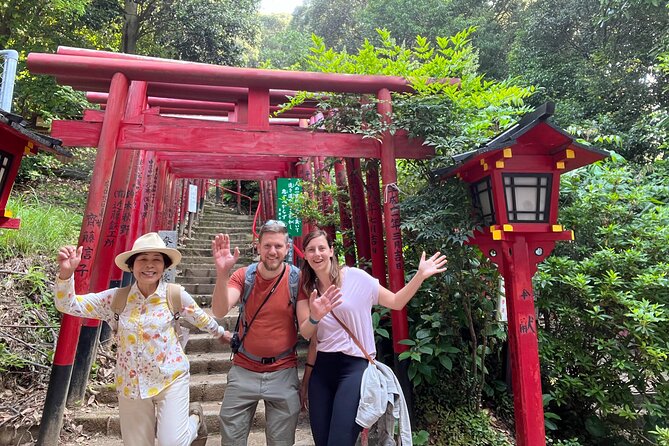
The first substantial stop is Hiroshima Toshogu Shrine. Here, the guide introduces important cultural features and explains how to appreciate the site. This gives you a calm start before the trail becomes more physical.
A shrine visit can seem brief when you do it alone. You may notice the entrance gate, the worship hall, and the general form of the grounds, then move on. With Nana, Michi, Naomi, or another guide, you can ask about Shinto rituals and the meaning behind actions that might otherwise look like simple tourist customs.
This is also a good place to make your first offering or wish, if you choose to do so. The walk is not built around a long lecture. Instead, the information arrives in short portions during pauses, which keeps the morning moving.
The setting changes quickly from urban Hiroshima to a more secluded route. You may still see signs of the city at the lower stages, but the wooded slopes soon give the walk a quieter feel.
Kinko Inari Shrine and the 500-step climb
From Toshogu, the route continues toward Kinko Inari Shrine and into Mt. Futaba. This is where you should take the physical challenge seriously. The total climb includes about 500 steps, along with uneven and steep sections.
The good news is the pace. The guide does not simply race to the top. Stops at shrines and scenic points break the ascent into manageable parts, and the guides are attentive about water and rest, especially in hot weather.
The trail is described as easy to moderate by some participants, but that label depends on your condition and the season. A fit hiker may find it fairly light. If you are new to hiking, you can still enjoy it, but expect to breathe hard and use the pauses.
Summer deserves special attention. One account describes temperatures reaching 36 degrees Celsius, with the perceived heat closer to 40. Under those conditions, even a well-maintained trail becomes demanding. Choose light clothing, bring water, and avoid treating this as a city sightseeing walk in comfortable shoes.
Kinko Inari is not just a marker on the route. It is part of the spiritual character of the mountain. The guide explains shrine customs as you go, helping you see the route as a local pilgrimage path rather than a random staircase through the trees.
More walks and treks around Hiroshima:
- Fushimi Inari Hidden Hiking Tour (Private Option Available)
★ 5.0 · 1,750 reviews - Kyoto: 3-Hour Fushimi Inari Shrine Hidden Hiking Tour
★ 4.9 · 270 reviews - Hiking the Historic Nakasendo Trail [1 Day Tour from Nagoya]
★ 5.0 · 104 reviews - Kyoto Hiking Tour: The Nature and Legends of Kurama and Kibune
★ 5.0 · 75 reviews
Futabayama Peace Pagoda and the Hiroshima view
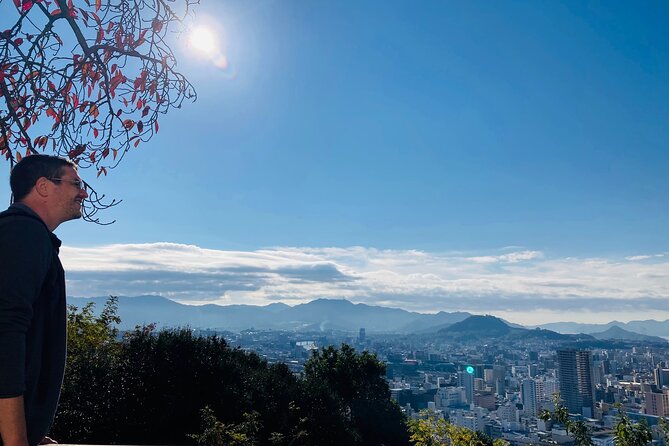
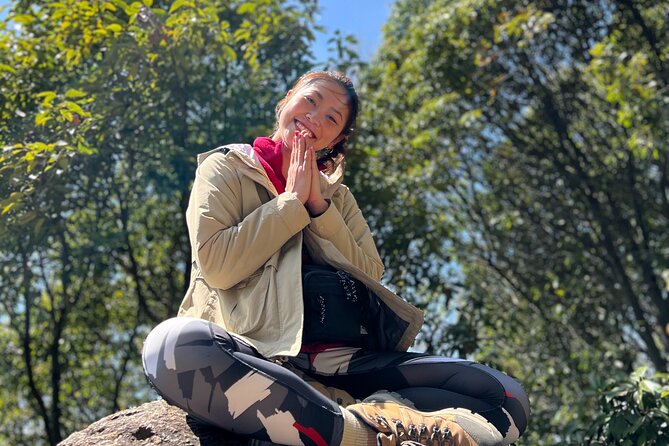
At the top, the Futabayama Peace Pagoda provides the payoff. From here, you can look across Hiroshima, toward the Seto Inland Sea and Miyajima. The view gives physical meaning to the city’s recovery. You are standing above the place, seeing how the built-up center fits between the surrounding hills and water.
The pagoda is also a useful contrast to the earlier Shinto shrines. The tour moves between religious sites and shows how several traditions share space in Japan. You are not asked to become an expert in Buddhism or Shinto. You simply receive enough guidance to notice the difference.
I would not book this walk for the view alone. Hiroshima has several fine viewpoints, and weather can affect what you see. But after the climb, the panorama feels earned, and the guide’s explanation of the city makes it more than a photo stop.
Take a moment here before moving on. The schedule allows time for the scenery and conversation, and the top is a natural place to catch your breath. If clouds or haze reduce the view, the shrines and forest still give the walk value.
Forest bathing and a slower pace
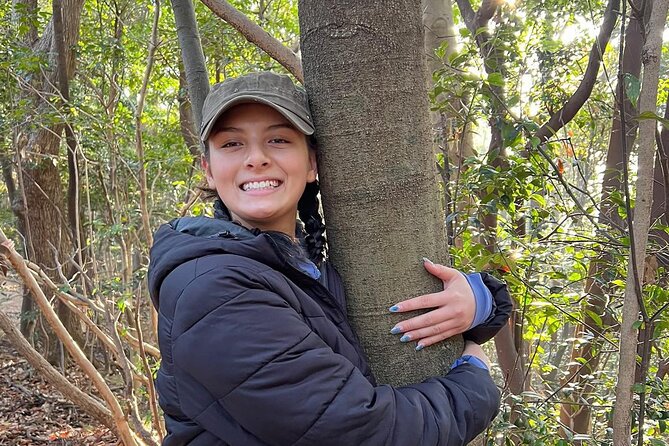
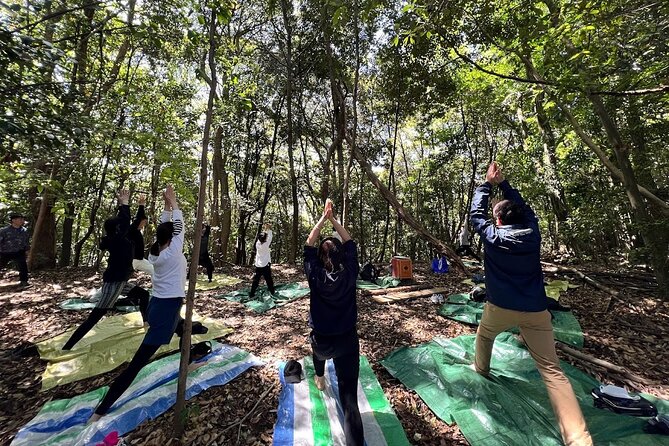
The next part introduces Shinrinyoku, often translated as forest bathing. In practical terms, this means slowing down and paying attention to the woods through your senses rather than treating the path as a route between attractions.
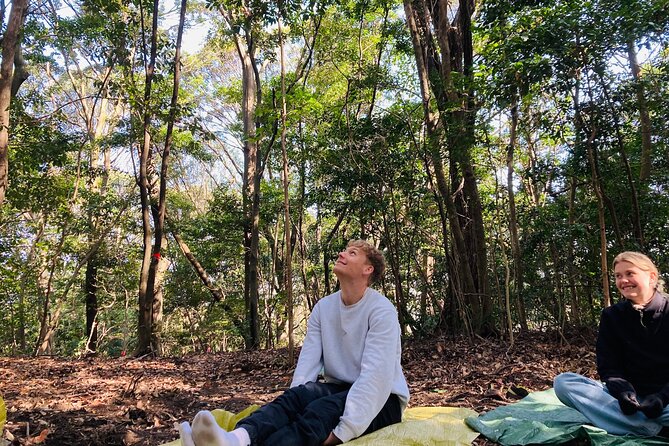
The guide may lead a short meditation or sensory exercise in a clearing. Groundsheets can be set out, allowing you to sit and focus on sounds, smells, and the feel of the forest. This is a simple idea, but it changes the mood of the morning.
I like this pause because it gives the tour breathing room. Many guided walks are packed with facts and photo stops. Here, you are asked to stop doing and notice where you are. It also makes the tea ceremony feel like part of the same experience rather than an unrelated add-on.
Do not expect a long formal meditation session. The forest bathing portion is brief, and the exact feel may depend on weather, group pace, and the guide. Still, it is a welcome counterpoint to Hiroshima’s busy central sights.
Nodate tea with a view of the city
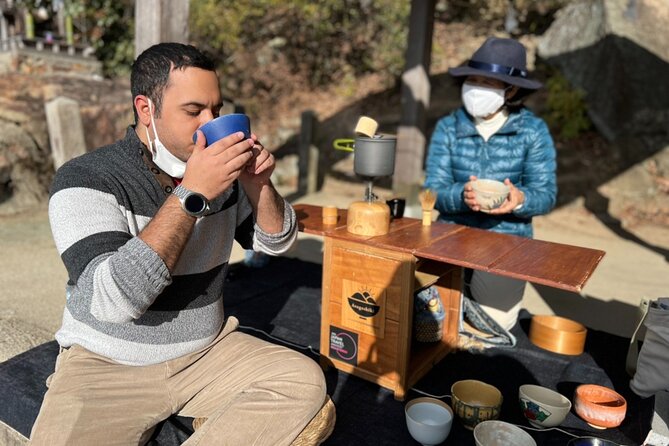
The final major activity is Nodate, an open-air tea ceremony near the upper Kinko Inari shrine area. This is not the formal indoor tea-room experience you might find in Kyoto. It is more relaxed and tied to the mountain setting.
The guide prepares and serves tea outdoors, using the view and quiet surroundings as part of the ceremony. Depending on conditions, the tea may be served hot or cold. One particularly hot outing included cold green tea, which was a welcome refreshment after the climb.
This is where the tour feels most personal. You are not watching a staged performance in a large group. You sit near a sacred site with the city spread below and learn about the tea, the setting, and the customs around it.
The tea service is scheduled for about an hour, although the full experience is listed at roughly three hours. The timing indicates that the ceremony is not a rushed sip before descending. It is meant to be a genuine pause.
People who already know Japanese tea traditions may find this version less formal than a specialized ceremony. That is part of its appeal, but also an important expectation to set. You are paying for a cultural experience in nature, not a technical lesson in every rule of tea preparation.
What the three-hour schedule feels like
The morning departure offers the best use of time. Starting at 7:30 and returning around 10:30 leaves the rest of the day for the Peace Memorial Museum, the Atomic Bomb Dome, a ferry trip, or lunch in central Hiroshima.
Later start times are listed at 10:00 and 13:00, with corresponding return times around 13:30 and 16:30. These options may suit a slower itinerary, but they change the experience from a morning activity into a larger part of your day.
The route is organized around short stops:
- Meet at the station and receive the route briefing.
- Visit Hiroshima Toshogu Shrine.
- Walk through Kinko Inari Shrine and begin the mountain ascent.
- Reach the Futabayama Peace Pagoda and city viewpoint.
- Pause for forest bathing.
- Take part in Nodate tea near the upper shrine area.
- Return to Hiroshima Station.
The published timing includes a 20-minute station introduction, a 30-minute Toshogu visit, a 25-minute Kinko Inari visit and climb, a viewpoint stop, forest bathing, and about an hour for tea. Expect the pace to feel steady rather than rushed, but be ready for the schedule to flex with the group.
Is $109.43 a fair price?
At $109.43 per person, this is not the cheapest way to spend three hours in Hiroshima. You can visit many shrines independently for little or no admission cost. The price makes sense only if you value the guide, interpretation, small group, tea service, and route planning.
I think the value is strongest for first-time visitors who want cultural context but do not want a large bus tour. You are paying for access to a local route, help with shrine etiquette, a planned mountain walk, and a tea experience that would be difficult to arrange on your own during a short stay.
The maximum group size of six is another part of the calculation. A private tour would cost more, while a large group would likely be less personal. With six or fewer people, you have a fair chance to ask questions and move at a pace that suits the group.
Five percent of the fee goes to Futaba Mountain conservation activities. That will not transform the price into a bargain, but it adds a useful local purpose to the booking.
Who should book this experience?
I would choose this tour if you want a break from Hiroshima’s central monuments and enjoy learning through movement. It suits people who like short hikes, shrine culture, city views, and low-key conversation with a guide.
Families can take part, and children from 0 to 5 years old participate free. Still, the 500 steps mean parents should judge the route by their child’s stamina rather than age alone.
This is also a good match for visitors who have already seen Peace Memorial Park and want a different side of Hiroshima. Guides such as Nana, Michi, and Naomi are praised for explaining customs clearly, taking breaks in the heat, and making the experience feel friendly rather than stiff.
I would hesitate if you dislike stairs, have trouble on uneven paths, or are visiting during extreme summer heat. The route is not described as technical, but it is still a mountain climb. Good weather is required, and poor conditions can lead to a rescheduled date or full refund.
Wear shoes with a firm grip, carry water, and arrive early at the station. Most importantly, leave room in your morning for pauses. The value of this walk comes from its calm pace, not from covering ground as fast as possible.
Should you book the Futaba Mountains hike?
Book it if you want a small, thoughtful experience that joins nature, religion, and Hiroshima’s recovery. The tea service above the city is memorable, but the full appeal lies in the progression from station to shrine, forest, pagoda, view, and quiet ceremony.
Skip it if you are looking for a formal tea-school lesson, a completely level walk, or a tour focused only on the atomic-bomb memorial sites. For everyone else, especially visitors with one extra morning in Hiroshima, this is a strong way to see the city from a peaceful and distinctly local angle.
FAQ
Where does the tour start and finish?
It starts at the Shinkansen exit of Hiroshima Station, at 1-2-37 Matsubaracho, Minami Ward, Hiroshima. The experience ends back at the same meeting point.
How long does the hiking and tea experience last?
The tour lasts about three hours. Listed return times are around 10:30 for the 7:30 departure, 13:30 for the 10:00 departure, and 16:30 for the 13:00 departure.
How difficult is the hike?
You need to climb about 500 steps on the Futaba Mountains route. The path is maintained but can be uneven and steep, and the guide includes regular pauses.
Is the tour suitable for children?
Children from 0 to 5 years old can participate free. The hike still includes about 500 steps, so you should consider your child’s ability to manage stairs and a mountain path.
What happens if the weather is poor?
The experience requires good weather. If it is canceled because of poor conditions, you will be offered another date or a full refund.
Can I cancel for a full refund?
Yes. You can cancel at least 24 hours before the local start time for a full refund. Cancellations or changes made less than 24 hours in advance are not accepted for a refund.
Just added around Hiroshima
- The Peace Memorial to Miyajima : Icons of Peace and Beauty★ 4.5 · 31 reviews
- Shore Excursion from Hiroshima Port : Private Tour in Hiroshima★ 5.0 · 17 reviews
- Hiroshima Saijo Sake Tasting Tour with visit to 7 Breweries★ 5.0 · 104 reviews
- Hiroshima & Miyajima All-Inclusive Tour w/Licensed guide Pancho★ 5.0 · 54 reviews
- Hiroshima Country Cycling: Explore Rural Life 1 HR from City★ 5.0 · 22 reviews
- Okunoshima Rabbit Island Cycling Tour with Local Guide★ 4.5 · 17 reviews
- Private Full Day Hiroshima Tour★ 4.5 · 29 reviews
- Cultural Activities :Kimono, tea ceremony, Calligraphy and Amulet★ 5.0 · 44 reviews
Hiroshima Tours, compared.
Peaceful Hiroshima & Miyajima UNESCO 1 Day Bus Tour
Read our review →
Hiroshima and Miyajima UNESCO Sites 1-Day Tour
Read our review →
Hiroshima Historical Walking Tour – Why A-Bomb was Dropped
Read our review →
Hiroshima Peace (Heiwa) Walking Tour at World Heritage Sites
Read our review →
Hiroshima in a Nutshell: Morning Bike Adventure
Read our review →
Hiroshima City 4hr Private Walking Tour with Licensed Guide
Read our review →

Japanesel Archery Experience HIROSHIMA CASTLE SHARAKU
Read our review →Browse the lists this tour appears in