
Reviewed · BAMBOO GROVE TOURS
Arashiyama Hidden Gems: Walking Tour escaping crowds
Arashiyama is famous for its bamboo grove, but the best part of this walk comes after you leave that narrow strip of green. Yusuke Tanaka leads you to old temples, imperial grounds, and a quiet pond where the pace feels far removed from Kyoto’s busiest sightseeing routes.
I like two things right away: the group is limited to six people, and Yusuke includes a 15-page tour booklet plus help with photos. The optional Tale of Genji focus also gives the same sites an extra layer of meaning. The drawback is simple: this is a walking tour of about 3 kilometers, and the full outing can take four hours, so heat, footwear, and stamina matter.
Key points to know before booking
- Yusuke Tanaka guides the walk himself, drawing on experience with more than 3,000 guests.
- The route goes beyond the bamboo forest, with Nonomiya Shrine, Seiryoji Temple, Daikakuji, and Osawa Pond.
- The Tale of Genji option adds literary context to most stops, excluding the bamboo forest.
- The group maximum is six people, which allows time for questions and individual help with photos.
- Temple entry costs extra, and you must remove your shoes inside Seiryoji and Daikakuji.
- The walk ends at Daikakuji, though Yusuke offers a free walking return to the starting point if you prefer.
Why this Arashiyama walk feels different
The usual Arashiyama visit often centers on one famous bamboo lane, a river view, and the main shopping streets. This experience uses the bamboo forest as only one short chapter in a longer route through Saga and the surrounding temple district.
That matters because Arashiyama is not just a photo stop. Its quieter paths connect religious sites, former imperial spaces, gardens, and stories from classical Japanese literature. Yusuke’s route gives you time to understand how those places relate to one another instead of rushing from one landmark to the next.
The tour lasts about three to four hours, including walking and transfers between stops. You walk roughly 3 kilometers, with about 55 minutes counted as walking time. The rest is spent inside shrines and temples, looking at gardens, hearing explanations, and taking photographs.
With only six people, the format should feel more personal than a large coach outing. Yusuke guides the tour himself, and his focus is not only on facts. He also helps with photos and tries to keep the pace comfortable, a useful touch in an area where many people want a good picture but do not know where to stand.
More Hidden Gems Walks in Kyoto
- Kyoto Geisha Walking Tour: Gion District & Hidden Gems
★ 4.7 · 3,273 reviews - Private Kyoto Tour with a Local, Highlights & Hidden Gems, Personalised
★ 5.0 · 1,543 reviews - Arashiyama Bamboo Forest & Hidden Gems Bike Tour (Early Bird)
★ 5.0 · 613 reviews
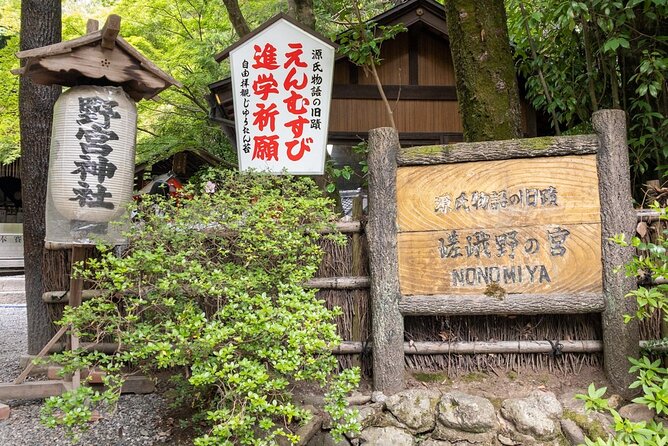
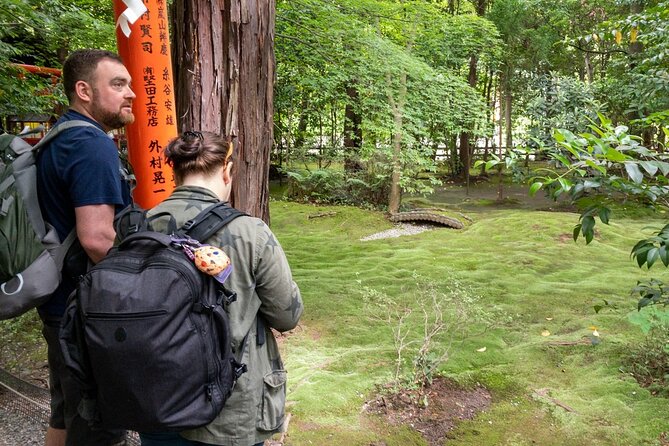
Nonomiya Shrine and its black torii
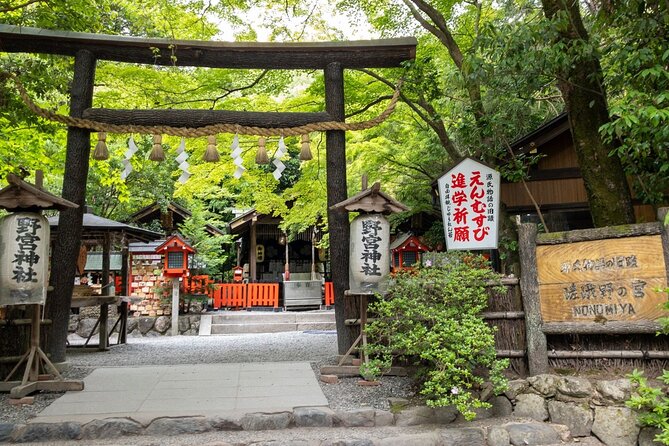
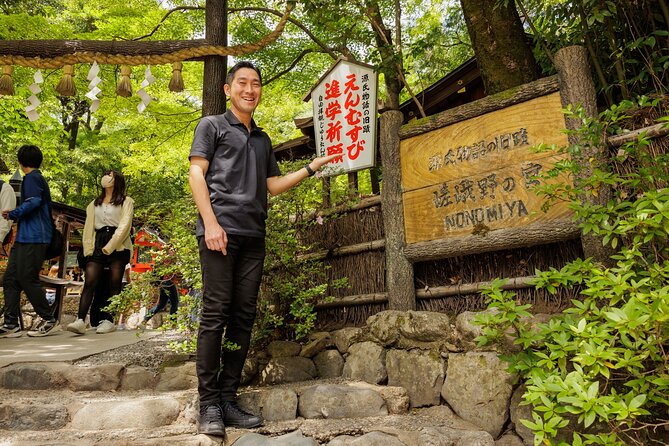
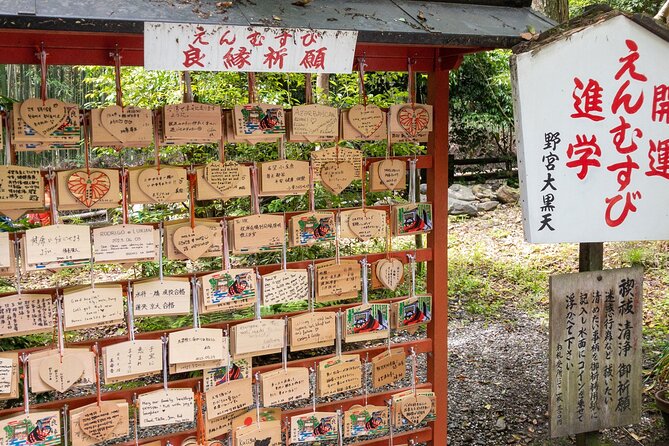
The first stop is Nonomiya Shrine, a compact but atmospheric place near the bamboo forest. Its black wooden torii gate is the first detail to look for. Yusuke explains that only two shrines in Japan have a black torii gate, making this an unusual sight even before you enter the grounds.
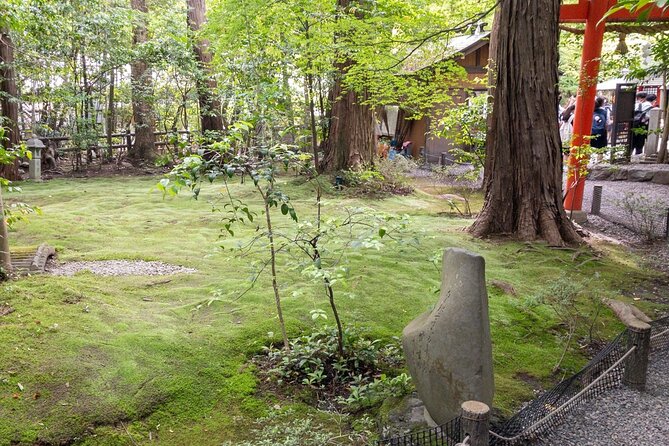
You also get time in the moss garden, where the setting feels softer and more secluded than the broad lanes near Arashiyama Station. This is a good opening stop because it introduces the difference between a Shinto shrine and a Buddhist temple, something that can be confusing when you first visit Japan.
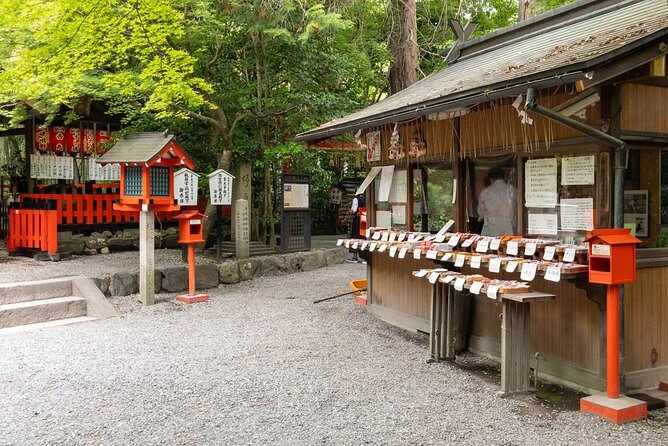
Yusuke also explains how to approach a shrine and pray. That practical guidance is useful because you can follow local customs without worrying about copying the wrong gesture or sequence. The stop lasts about 30 minutes, enough time for an explanation, photographs, and a calm look around.
Nonomiya is close to the famous bamboo forest, so this is also where the route begins to move from the familiar Arashiyama circuit toward quieter places. You are still near the main sight, but the experience is more structured than simply arriving alone and wandering through.
The bamboo forest in a short, focused visit
The bamboo forest receives about 15 minutes on this route. That may seem brief if the grove is your main reason for coming to Arashiyama, but it is a deliberate choice.
You get time to hear the bamboo sounds, take photographs, and enjoy the tall green stalks without letting the entire tour become a single photo stop. Yusuke helps with memorable pictures, which is particularly useful for solo visitors or couples who would otherwise need to ask someone passing by.
The short visit also keeps the walk balanced. Afterward, you move toward temples and older parts of the district rather than staying among the busiest paths. I like this approach for visitors who want to see the bamboo but do not want to spend half a day waiting for a clear view.
If the bamboo forest is your absolute priority, you may want to arrive early or return independently for more time. The tour gives you an introduction, not a long photography session.
Seiryoji Temple and a 1,200-year-old foundation
Seiryoji Temple is the first substantial temple visit, with about 55 minutes set aside for it. The original temple was built roughly 1,200 years ago, while the present building dates from about 300 years ago.
The age of the site is interesting, but the visit becomes more meaningful when you see how the building, religious objects, and customs fit together. The temple contains the Shaka Nyorai Buddhist statue, identified as a Japanese national treasure. Yusuke explains the significance of the statue and the place rather than leaving you to look at an unfamiliar interior without context.
You must remove your shoes before entering Seiryoji. Wear socks and choose footwear that comes off easily. This is a small practical matter, but it can affect your comfort during a long day of walking.
Admission is not included. The stated cost for Seiryoji is ¥500 per person. Since the temple visit takes nearly an hour, this is not a quick exterior stop. You are paying for access to a substantial religious site and the time to understand it.
The 68-year-old participant whose experience informs the practical side of this tour found the route tiring on a warm day. That does not make the walk unsuitable for older people, but it does make the weather and your walking pace worth considering. Ask for a slower rhythm if needed, and do not treat the 3-kilometer distance as trivial in Kyoto’s summer heat.
More off-the-list walks in Kyoto:
- Kyoto: Hidden Gems E-Bike Tour with Local Japanese Guide
★ 4.9 · 189 reviews - Kyoto: Gion Hidden Gems & Geisha Culture Tour
★ 4.9 · 126 reviews - Highlights & Hidden Gems With Locals: Best of Kyoto Private Tour
★ 5.0 · 121 reviews - Kyoto: Hidden Gems E-Bike Tour Through Backstreets & Temples
★ 4.9 · 54 reviews
Daikakuji, the former Saga Gosho
Daikakuji is the largest stop on the route, with about 50 minutes inside the former imperial palace known as Saga Gosho. The site was built roughly 1,200 years ago and later became a temple.
This is one of the strongest reasons to choose the walk. Daikakuji offers a chance to see an imperial setting without the same concentration of people found around the bamboo forest. Its rooms, corridors, and traditional details give you a clearer sense of how court life and temple life overlapped in old Kyoto.
The route also includes unusual details at the temple, which Yusuke uses to explain the site in a way that goes beyond dates and names. If you choose the Tale of Genji option, this is one of the places where the literary background can add real interest.
Most stops on the tour, except the bamboo forest, appear in The Tale of Genji. You can book the standard version for a broader cultural explanation, or choose the Tale of Genji option for more detailed discussion of the novel’s settings and atmosphere. Both options visit the same locations, so the decision comes down to how much literary context you want.
You will remove your shoes again at Daikakuji. The temple admission and Osawa Pond are listed together as ¥800 per person in the tour details, while Osawa Pond is also separately noted as ¥300. Because those amounts do not line up perfectly, check the current total when booking or with Yusuke before the tour.
Osawa Pond and the quiet end of the route
Osawa Pond, or Osawa-no-ike, is described as the oldest artificial pond in Japan. It sits beside Daikakuji and provides a calm final stop after the temple interiors.
The pond changes with the seasons, so its appeal is not limited to one famous view. You also see a quieter bamboo area here, which gives you another chance to enjoy bamboo without treating the main grove as the whole story.
The stop lasts about 20 minutes. That is enough for a look around and photographs, but not a full circuit of a large body of water. Bring a snack if you need one. There are not many restaurants near the ending point, and the route finishes away from the busiest restaurant area.
The official end is Daikakuji Temple. If you want to return to the starting point, Yusuke offers a free walking return tour. That extra walk may be welcome if you still have energy, but it also adds time to an already full outing.
What Yusuke adds to the experience
Yusuke Tanaka designed the route and guides it himself. His background as a local Kyoto guide, along with experience leading more than 3,000 people, gives the walk a clear personal focus.
The strongest part of his role is the combination of cultural explanation and practical help. He covers shrine etiquette, the difference between Shinto and Buddhism, the importance of the sites, and the Tale of Genji when requested. At the same time, he helps you take better photographs and pays attention to comfort.
That second point matters more than it may sound. Arashiyama is full of places where you want a picture, but group tours often move on before you have framed one. A group of six gives Yusuke more room to help with photos without turning every stop into a long wait.
The original booklet is about 15 pages. It gives you something to keep after the walk, which can help you remember the names and connections among the temples. It is a modest inclusion, but useful if you want to read more after returning home.
The Tale of Genji option
The literary option is aimed at people who have read The Tale of Genji or want to see Kyoto through an old story. Most of the locations on the route, apart from the bamboo forest, appear in the novel.
You visit the same places either way. The difference is the level of storytelling. With the Tale of Genji option, Yusuke adds more historical and literary context as you move through the district.
This choice makes the most sense if you already know the book and want to connect its scenes with real places. It can also work if you are curious about classical Japanese literature but do not expect a lecture. The details provided describe added storytelling, not a separate route or longer list of stops.
If you prefer temples, gardens, and customs without a literary theme, the regular version should be the simpler fit. You still visit every location.
Price, extra fees, and what you receive
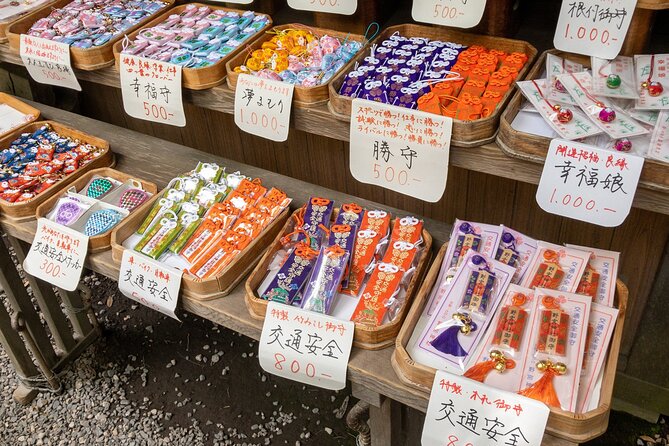
The tour costs $89 per person. That is not the cheapest way to see Arashiyama, especially because temple tickets are extra. The stated additional costs include ¥500 for Seiryoji and ¥800 for Daikakuji Temple and Osawa-no-ike Pond, with a separate note listing Osawa Pond at ¥300. Japanese snacks are optional at about ¥500.
The price makes more sense if you value a small group and a guide who handles interpretation, pacing, and photographs. You are not simply paying for admission. You are paying for a half-day route that links several places you could visit independently but might not understand as well on your own.
The value is weaker if you only want the bamboo forest. That stop lasts about 15 minutes, and you could see the grove without booking a guided experience. The tour earns its cost through the temples, imperial setting, literary explanation, and local context.
Insurance is not included, so arrange your own if you want coverage. Gratitude is also not included, which means any tip is up to you rather than part of the listed price.
The tour is often booked about 25 days ahead. If your Kyoto dates are fixed, reserving early is sensible, especially because the maximum group size is six.
Timing, meeting point, and practical comfort
You meet at Randen-yaJapan inside Arashiyama Station Hannari Hokkori Square, at 202 Sagatenryuji Tsukurimichicho. The location is near public transportation and places you close to the first part of the route.
The outing takes about four hours, though the stated range is three to four hours. Walking and travel between stops are included in that time. Plan for a half-day rather than trying to fit this between two tightly scheduled attractions.
Bring water and a snack if you need one. There are not many restaurants near Daikakuji, so do not assume you can easily buy lunch at the finish.
Comfortable shoes are essential, even though you will remove them at two temples. Socks are a good idea. Warm weather can make the route feel longer, and one person aged 68 found the distance tiring on a hot day. The experience requires good weather, and poor conditions may lead to a rescheduled date or full refund.
The tour is suitable for most people, but it is not a seated sightseeing trip. You should be comfortable walking for several hours, standing at shrines and temples, and moving between stops.
Who should book this walk
I would choose this tour if you want Arashiyama to feel like a district rather than a single famous grove. It suits people interested in temples, Japanese customs, imperial culture, gardens, photography, or The Tale of Genji.
It is also a good fit for solo visitors and small parties who want photo help without joining a large group. The six-person limit gives the route a more flexible feel and lets you ask questions as they come up.
You may want to skip it if your main goal is a quick bamboo forest photograph, if you dislike removing shoes, or if a 3-kilometer walk in warm weather sounds uncomfortable. It is also less convenient for anyone who needs a restaurant immediately at the end.
The experience has a very high 4.9 rating from 14 posted ratings, with 100 percent recommending it. The praise centers on Yusuke’s historical explanations, his care with comfort, and the chance to see the bamboo forest and nearby temples from a more personal angle. Those strengths match the design of the route: less rushing, more context, and time in places many independent visitors pass by.
Should you book Arashiyama Hidden Gems?
Book it if you want a calm, guided half-day with Yusuke Tanaka and you are willing to pay extra for temple entry. The route gives you far more than bamboo, with Nonomiya Shrine, Seiryoji, Daikakuji, and Osawa Pond forming a thoughtful chain of stops.
Choose the Tale of Genji option if classical literature interests you. Otherwise, the standard version still offers the same locations and cultural guidance.
My main advice is to check the extra admission total, bring a snack, and reserve enough time for the full four hours. If you can handle the walking, this is a useful way to see an older, quieter side of Arashiyama without giving up its most famous sight.
FAQ
How long does the Arashiyama walking tour take?
The tour takes about three to four hours, with the full experience generally taking about four hours. Walking and travel time between stops are included.
How far do you walk?
You walk about 3 kilometers during the tour. About 55 minutes of the total time is spent walking while enjoying the local scenery.
What places does the tour visit?
The route visits Nonomiya Shrine, the Arashiyama Bamboo Forest, Seiryoji Temple, Daikakuji Temple, and Osawa-no-ike Pond.
Is the Tale of Genji option a different route?
No. Both options visit the same locations. The Tale of Genji option adds more literary and historical storytelling about the places connected with the novel.
Are admission tickets included?
No. Seiryoji Temple costs ¥500 per person according to the tour details. Daikakuji Temple and Osawa-no-ike Pond are listed together at ¥800 per person, while Osawa Pond is also separately noted as ¥300. Check the current amount when booking.
Do I need to remove my shoes?
Yes. You must remove your shoes when entering Seiryoji Temple and Daikakuji Temple.
Where does the tour finish?
The tour ends at Daikakuji Temple in Sagaosawacho, Kyoto. If you prefer to return to the starting point, Yusuke offers a free walking return tour.
What happens if the weather is poor?
The experience requires good weather. If it is canceled because of poor weather, you will be offered another date or a full refund. You can also cancel for a full refund up to 24 hours before the start time.
More Walking Tours in Kyoto
- Kyoto: Gion Magical Night Walking Tour with Geisha Trivia
★ 4.9 · 2,393 reviews - Kyoto: Gion Geisha District Walking Tour – Stories of Geisha
★ 4.7 · 2,187 reviews - Night Walk in Gion: Kyoto’s Geisha District
★ 4.5 · 2,003 reviews - Kyoto Gion Geisha District Walking Tour – The Stories of Geisha
★ 5.0 · 1,441 reviews
More Bamboo Grove Walks
- Kyoto: Fushimi Inari, Kinkakuji, Bamboo Grove 1 Day Bus Tour
★ 4.8 · 4,316 reviews - Osaka/Kyoto:Kinkakuji,Arashiyama,FushimiInariShrine,NaraPark
★ 4.1 · 1,596 reviews - Kyoto/Osaka: Nara, Fushimi Inari Taisha, Arashiyama Bus Tour
★ 4.7 · 1,275 reviews - Kyoto Arashiyama Walking Tour: Bamboo, Monkeys, Gardens & Secrets
★ 5.0 · 1,216 reviews
Just added around Kyoto
- Kyoto: Zen Meditation at a Private Temple with a Monk★ 5.0 · 25 reviews
- Kyoto: Gion Geisha District & Sake-in-Hand Walking Tour★ 5.0 · 37 reviews
- Private Pewter Sake Cup Experience with a Kyoto Artisan★ 5.0 · 31 reviews
- Your Private Vacation Photography Session In Kyoto★ 5.0 · 110 reviews
- Private Guided Traditional Buddhist Cooking in Japan★ 5.0 · 16 reviews
- Kyoto Wagashi(Japanese sweets) Cooking Class near Fushimiinari★ 5.0 · 60 reviews
- Traditional Japanese Music show & Experience Tour in Kyoto★ 5.0 · 57 reviews
- Kyoto:Family-Friendly Kimono & Yukata Experience at WARGO★ 5.0 · 147 reviews
Bamboo Grove Tours, compared.

Fushimi Inari, Kinkakuji, Bamboo Grove 1 Day Bus Tour
Read our review →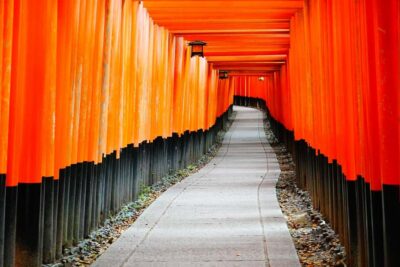
Osaka/Kyoto:Kinkakuji,Arashiyama,FushimiInariShrine,NaraPark
Read our review →
Kyoto/Osaka: Nara, Fushimi Inari Taisha, Arashiyama Bus Tour
Read our review →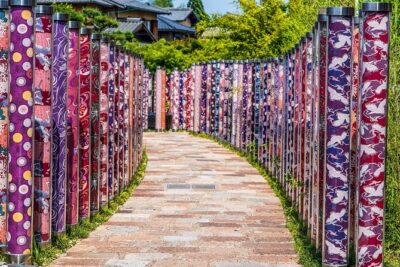
Kyoto Arashiyama Walking Tour: Bamboo, Monkeys, Gardens & Secrets
Read our review →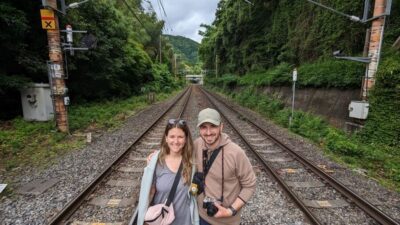
Arashiyama Bamboo, Temple, Monkeys, or Secret Sake Brewery
Read our review →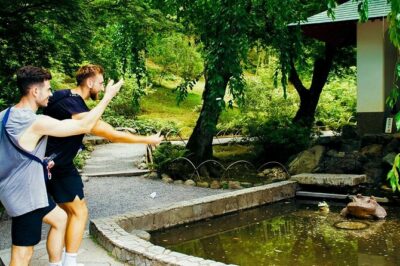
Arashiyama Bamboo Forest, Monkeys, Matcha & Temple Tour
Read our review →
Osaka/Kyoto: Arashiyama, Nara & Fushimi Inari Shrine w/Lunch
Read our review →
Nijo, Kinkaku-ji, Arashiyama, Kiyomizu & Fushimi Inari
Read our review →Browse the lists this tour appears in