
Reviewed · HIROSHIMA TOURS
Hiroshima: Peace Walking Tour of World Heritage Sites
Hiroshima’s most powerful lesson comes through ordinary details: a tree that survived the blast, a paper crane made by your own hands, and a local guide explaining what happened beyond the museum labels. This five-hour walking tour links the city’s key peace sites with stories about recovery, faith, and daily life.
I like the way the tour combines the Atomic Bomb Dome and Peace Memorial Museum with the Orizuru Tower, a shrine visit, and lunch. I also like the personal touch offered by guides such as Yasue, Yuki, Yuji, Fumiko, and Etsko, many of whom add local memories and thoughtful explanations. The main drawback is emotional: the museum can be crowded and difficult to absorb, and the schedule may feel brisk at busy times.
Key points to know before booking
- A local guide gives the museum context: Guides such as Yuji, Yasue, Yuki, and Etsko explain difficult subjects with care and answer questions in clear English.
- The Peace Memorial Museum takes about an hour: Expect confronting exhibits and time to pause if needed.
- The Orizuru Tower adds a lighter, hopeful moment: You’ll see Hiroshima from above and fold a paper crane for peace.
- Lunch is included: The meal is generally Hiroshima’s famous okonomiyaki, though food choices are limited for some diets.
- The tour covers more than the main memorials: Shirakami-sha Shrine, the Aorigi Tree, the Peace Memorial Park, and the Atomic Bomb Dome connect the city’s past with its present.
- Arrive early: Meet ten minutes before departure in front of the Montbell store near Kamiya-cho-nishi Station. Arrivals more than 15 minutes late cannot join.
Why this Hiroshima walking tour works
Hiroshima is easy enough to explore independently, but the meaning of its memorials is not always easy to grasp from signs alone. This tour gives you a local voice as you move through the city, helping connect the museum’s objects with the streets, trees, shrines, and buildings around them.
The tone is serious without being hopeless. Hiroshima’s story includes devastation, but it also includes rebuilding and a continuing call for peace. That balance matters. You are not simply looking at ruins and wartime displays. You are also seeing a modern city that chose to remember, rebuild, and speak to the world.
The experience lasts 270 minutes, or four and a half hours, though it is described as a five-hour tour in the inclusions. Plan on a substantial half day. You will be walking and standing, with the museum and park taking much of your attention before the more relaxed tower visit and meal.
The tour is offered in English, with private or small-group options available. A small group is especially useful here. It gives you room to ask sensitive questions and allows the guide to adjust the pace when the museum becomes overwhelming.
More history-led days in Hiroshima:
- Hiroshima Historical Walking Tour – Why A-Bomb was Dropped
★ 4.8 · 893 reviews - Hiroshima Peace (Heiwa) Walking Tour at World Heritage Sites
★ 5.0 · 872 reviews - Miyajima Half-day Trip Historical Walking Tour
★ 5.0 · 284 reviews
Starting with a shrine near Kamiya-cho-nishi Station
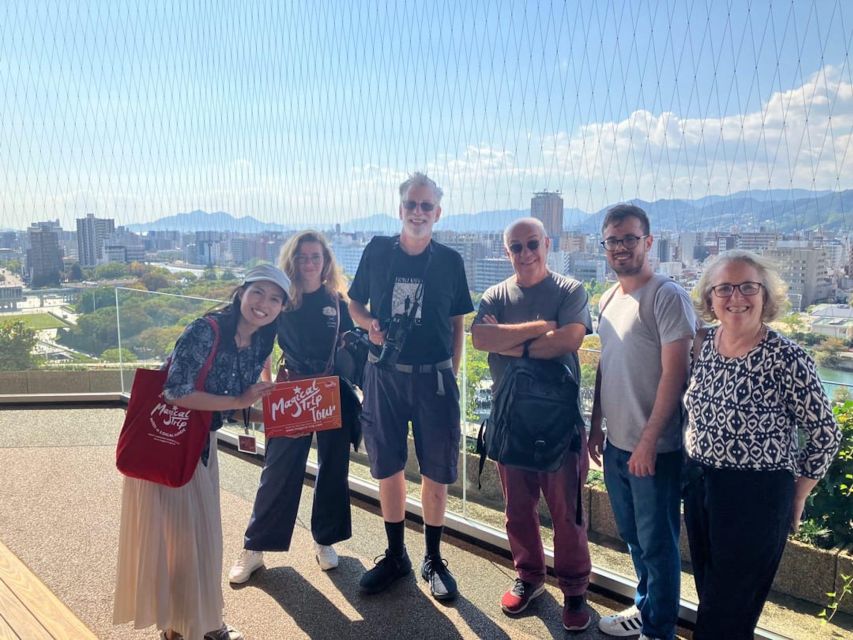
The meeting point is straightforward. Go to the front of the Montbell store near Kamiya-cho-nishi Station, about a one-minute walk from the station. Your guide will hold an orange sign marked Magical Trip Tour, and you should arrive ten minutes before the stated start time.
The first stop is Shirakami-sha Shrine, visited for about 25 minutes. This creates a useful contrast with the memorial sites that follow. You begin with a living place of Japanese worship, where your guide can show you the proper entry manners and explain how to receive a blessing respectfully.
One guide, Kippei, was especially attentive to shrine protocol, showing how to enter correctly rather than treating the stop as a quick photo break. That small lesson gives you a better sense of how Japanese religious spaces work.
The shrine stop is short, so do not expect a long cultural lecture. Its value is in setting the scene and reminding you that Hiroshima is not only a place connected with 1945. It is also a working city with traditions that continued through the disaster.
Facing the museum’s hardest exhibits
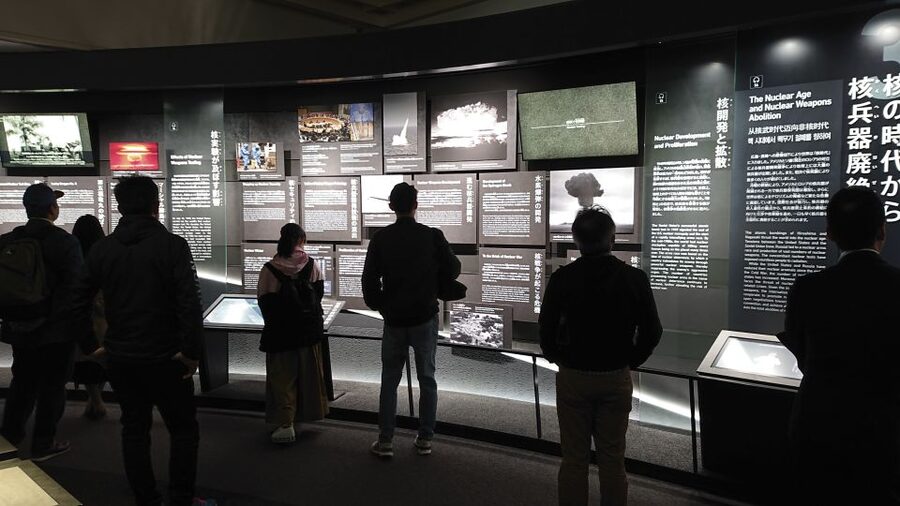
The Hiroshima Peace Memorial Museum is the emotional center of the tour. You spend about an hour inside with your guide, looking at artifacts and personal stories that show the human cost of the atomic bombing.
This is not a light museum visit. Some exhibits are upsetting, and the material can be difficult even if you already know the basic history. The tour’s advantage is that your guide can explain the background, answer questions, and help you understand why particular objects matter.
Several guides bring a personal connection to the subject. Eri has spoken about a grandmother affected by the bombing, while other guides share local perspectives on Hiroshima’s past and recovery. That personal element can make the history feel immediate, but it also means the experience may hit harder than a self-guided visit.
Give yourself permission to slow down. One guide, Kippei, allowed a visitor to move through the museum at a personal pace and take a break when needed. You should not feel pressure to examine every display closely if you need a moment outside.
Crowds are the chief practical problem. At busy times, the museum may be packed, and you may need to move faster than you would like. The guide can provide context, but cannot control the number of people inside. If you want a very quiet, unhurried museum visit, an independent return visit may still be worthwhile.
Walking through Peace Memorial Park
After the museum, the tour continues through Hiroshima Peace Memorial Park for about an hour. This is where the information inside the museum begins to connect with the physical city.
The park gives your guide room to explain important memorials and the way Hiroshima presents its message of peace. You will hear about the bombing, the city’s response, and the hope that grew from the ruins.
The open-air portion is also a useful pause after the museum. You can walk, breathe, and ask questions while looking at the surrounding city. The guide may point out details you would likely pass without noticing, including places connected with the bombing and the city’s rebuilding.
The park is not merely a green break between indoor attractions. It is part of the memorial itself. The broad paths and monuments ask you to consider both the scale of the destruction and the deliberate effort to create a place of reflection.
Comfortable shoes help. The route involves walking between several sites, and the emotional weight can make the hours feel longer than the distance suggests. Bring water if you need it, though additional food and drinks are not included beyond the provided lunch.
More walking tours in Hiroshima:
- Hiroshima City 4hr Private Walking Tour with Licensed Guide
★ 5.0 · 437 reviews - Hiroshima Walking Tour Why A Bomb was dropped to Hiroshima
★ 5.0 · 347 reviews - Hiroshima: History of Hiroshima Group Walking Tour
★ 4.8 · 266 reviews - Hiroshima: Food and Culture Guided Walking Tour with Dinner
★ 4.9 · 212 reviews
Seeing the Atomic Bomb Dome up close
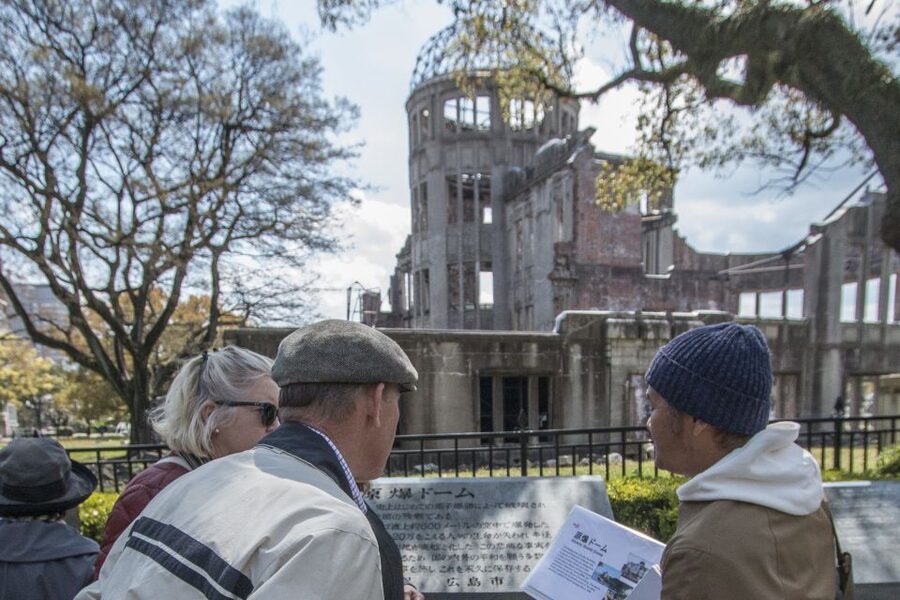
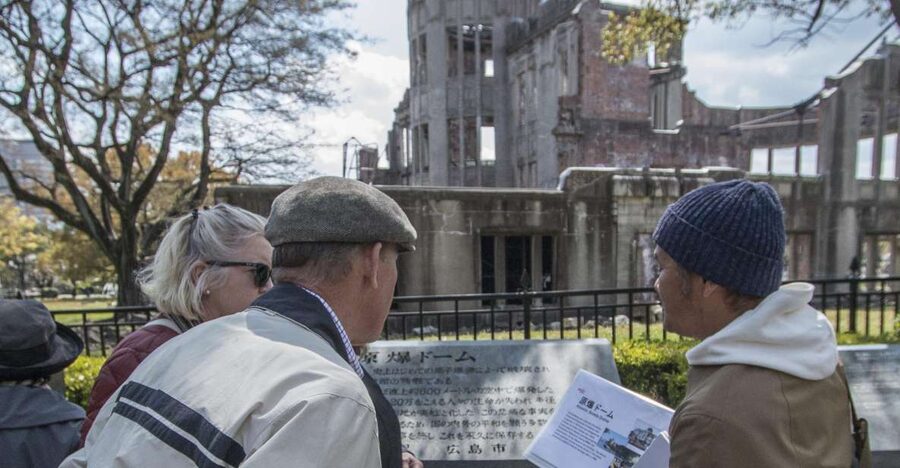
The Atomic Bomb Dome is the tour’s clearest visual link to the destruction of 1945. The building’s exposed framework and damaged walls make a strong impression because they sit within a functioning city rather than behind museum glass.
Your guide spends about an hour around the dome and explains its connection to the bombing and Hiroshima’s recovery. The building is a UNESCO World Heritage Site, and the visit gives you time to consider why this one structure was preserved.
The dome is powerful partly because it is quiet. There is no need for a long list of facts to understand its impact. A good guide helps you notice the relationship between the ruin, the river, the park, and the newer buildings around it.
This part of the walk also brings the story into the present. Hiroshima is not frozen in the past. You will see a city that has grown around a preserved reminder of what happened, with the memorial remaining part of everyday urban life.
Folding a crane at Orizuru Tower
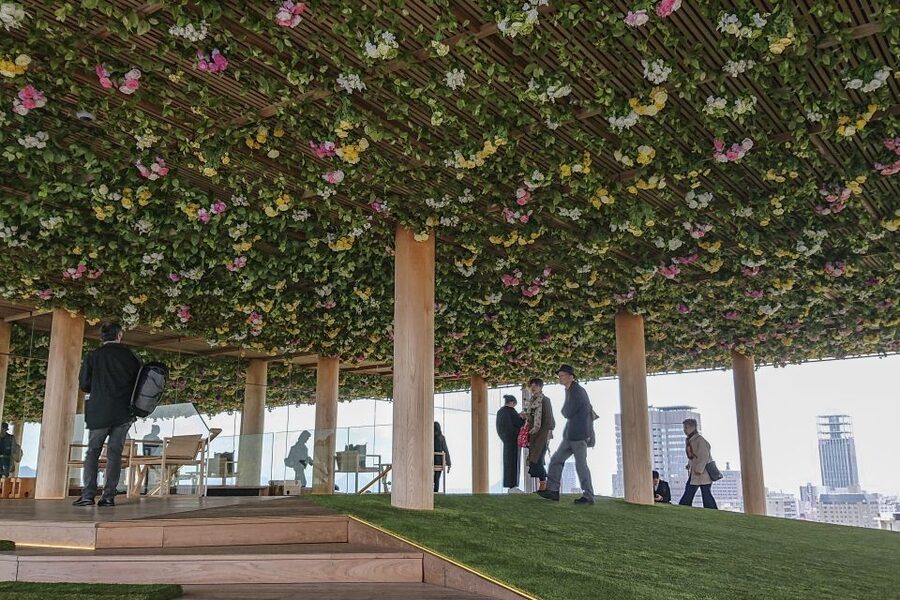
Orizuru Tower changes the mood without breaking the theme. The tower’s observatory provides wide views across Hiroshima, and the breeze and open air offer a welcome contrast after the museum and memorial park.
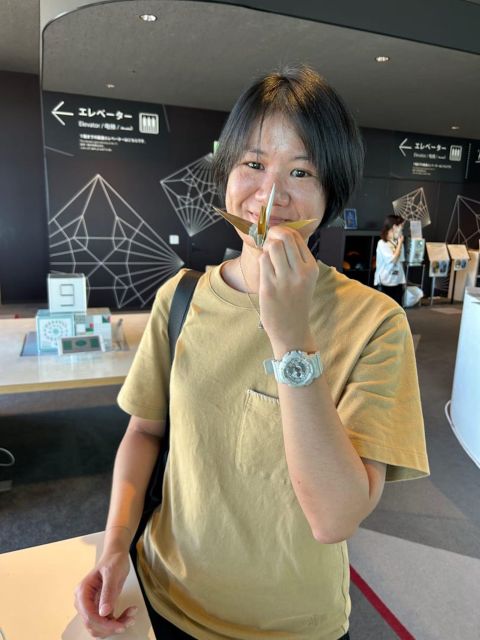
The orizuru, or folded paper crane, is a symbol of peace. During the visit, you learn how to fold one and make a wish for peace. It is a simple activity, but it gives you something physical to do after hours of listening and looking.
The paper crane also adds a personal touch for families and younger visitors. A group with three teenagers found the activity a memorable part of the day, while other visitors enjoyed having their names written in Japanese afterward. That name-writing is not listed as a guaranteed feature, so treat it as a possible extra rather than part of the formal promise.
One particularly moving detail is the tower’s glass wall, where cranes gather in large numbers. You may have the chance to send your own folded crane down to join the others. The tower entry ticket can also allow a return visit for sunset, according to the supplied tour information, so check the exact terms on the day.
The tower is not just a viewpoint. It shows Hiroshima from a different angle, helping you see the size and shape of the rebuilt city. After the museum’s close focus on individual lives, the view gives you space to think about the city’s future.
Lunch with Hiroshima-style okonomiyaki
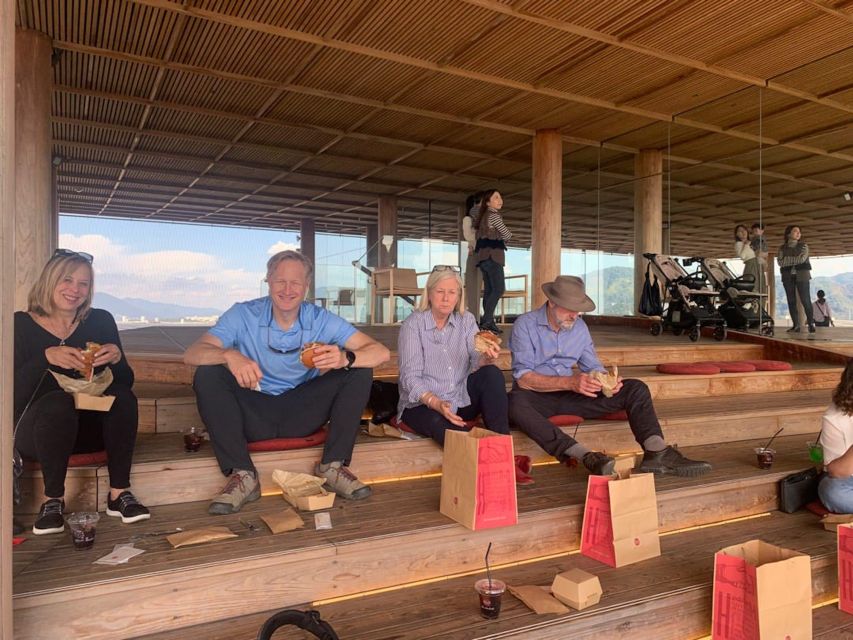
Lunch follows the tower visit and is included in the price. The meal is generally Hiroshima’s well-known okonomiyaki, a savory layered pancake-style dish that makes a satisfying end to a long walking route.
This is one of the tour’s strongest practical features. You do not need to find a restaurant after an emotionally demanding morning, and sitting down gives you time to talk with your guide and the rest of the group.
Food choices are not especially flexible. Vegetarian options are limited, and the tour is not suitable for people with gluten intolerance. Tell the operator about allergies or dietary requests at least one day in advance. Same-day requests cannot be accommodated, and the meal is prepared in kitchens not operated by MagicalTrip, so allergy-free food cannot be guaranteed.
If you have already eaten okonomiyaki and want a different version, ask about the available choices before the meal. At least one participant would have preferred a choice of okonomiyaki style or flavor. Additional food and drinks are available for purchase, but they are not included.
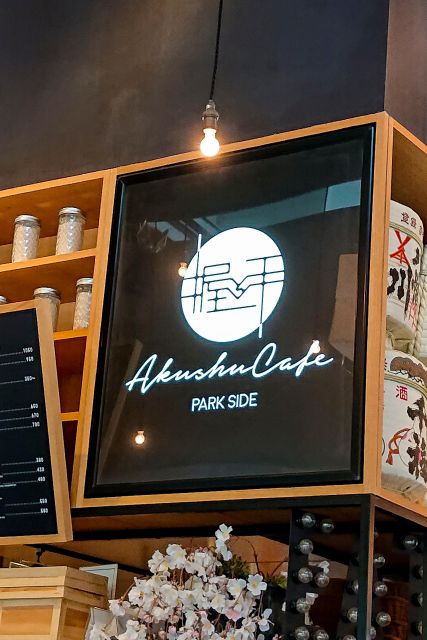
The tour finishes at Akushu Cafe inside Hiroshima Orizuru Tower. Depending on the exact timing and restaurant arrangement, lunch may feel like a relaxed conversation rather than a formal final lecture. That is a good fit for this subject. You leave with room to talk, not simply a final fact to memorize.
The Aorigi Tree and Hiroshima’s recovery
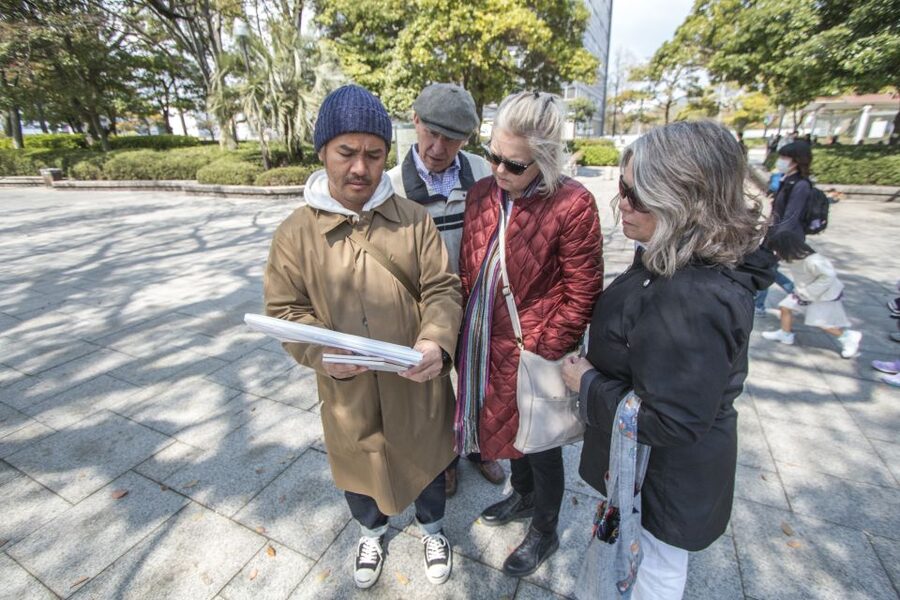
The Aorigi Tree is included among the planned sights and represents hope after the atomic bombing. It is a useful stop because it shifts attention from destruction to survival and renewal.
The supplied schedule places the shrine, museum, park, dome, and Orizuru Tower in a stated order, while the experience description also includes the Aorigi Tree before the final dome visit. The precise order can change with the guide, crowd levels, and opening arrangements. Ask your guide at the start when the tree will be visited.
That flexibility is not necessarily a problem. Hiroshima’s memorial sites are close enough to connect on foot, and guides may adjust the route to avoid rushing the museum or to fit the tower and lunch schedule. The key point is that the tree is part of the tour’s wider message: Hiroshima’s story includes life returning after catastrophe.
What the $92 price includes

At $92 per person, this is not the cheapest way to see Hiroshima’s Peace Memorial Park. You can walk through the park and view the Atomic Bomb Dome without booking a tour, and the museum itself is inexpensive compared with the total tour price.
The value comes from what is bundled around those basic sights. You receive entry to the Peace Memorial Museum and Orizuru Tower, a five-hour local guide, lunch, and tour photos. You also get help with shrine etiquette, historical context, the paper-crane activity, and practical movement between several sites.
For a first visit or a tight schedule, that package makes sense. One visitor specifically found the tour a good use of limited time during a day in Hiroshima. You can cover the major memorials, add the tower and shrine, and finish with food without planning each step yourself.
The price is less compelling if you already have strong background knowledge, want to spend several hours alone in the museum, or prefer to choose your own restaurants. It is also worth remembering that food restrictions may reduce the lunch benefit.
Who should book this experience
I would choose this tour if you want a clear introduction to Hiroshima and prefer a human explanation beside the memorials. It suits couples, families, first-time visitors, and anyone spending only part of a day in the city.
Families with older children and teenagers may appreciate the mixture of serious history, outdoor walking, views, and crane folding. The subject is heavy, but the route does not stay inside the museum all day.
The tour also suits people who want local perspective. Guides have included Yasue, Yuji, Yuki, Etsko, Fumiko, Naoya, Risa, Aki, and others, with several praised for personal stories, strong English, patience, and a warm manner. Guide assignment is not guaranteed, but the range of feedback suggests that the human side is central to the experience.
I would hesitate if you have gluten intolerance, need guaranteed allergy-free meals, or require a fully vegetarian menu. I would also avoid booking it immediately before a train or flight. The tour must start on time, and arrivals more than 15 minutes late cannot join or receive a refund.
Cancellation is flexible up to 24 hours before the tour for a full refund, and you can reserve now and pay later. Starting times vary, so check availability before planning the rest of your Hiroshima day.
Should you book the Hiroshima Peace Walking Tour?
Book it if you want Hiroshima’s memorials explained with care, plus a few details you would probably miss alone. The best parts are the local storytelling, the thoughtful handling of the museum, the Atomic Bomb Dome, the crane-folding activity, and lunch at the end.
Do not book it expecting a casual sightseeing stroll. The museum is confronting, the schedule is full, and food choices are limited. But if you are ready for a serious morning that ends with a view, a shared meal, and a message of peace, the $92 cost is reasonable for the time and guidance included.
FAQ
How long does the Hiroshima Peace Walking Tour last?
The activity duration is 270 minutes, or four and a half hours. The inclusions describe it as a five-hour tour, so you should reserve roughly half a day.
What language is the tour offered in?
The tour is offered with a live English-speaking guide.
Where does the tour meet?
Meet in front of the Montbell store near Kamiya-cho-nishi Station. It is about a one-minute walk from the station. The guide will hold an orange sign marked Magical Trip Tour.
What sights are included?
The route includes Shirakami-sha Shrine, Hiroshima Peace Memorial Museum, Hiroshima Peace Memorial Park, the Atomic Bomb Dome, Orizuru Tower, and the Aorigi Tree as described in the experience. The exact order may vary.
Is lunch included?
Yes. Lunch is included, and it is generally Hiroshima-style okonomiyaki. Additional food and drinks can be purchased separately.
Can people with dietary restrictions join?
Vegetarian options are limited, and the tour is not suitable for people with gluten intolerance. Tell the operator about dietary requests or allergies at least one day before the tour. Same-day requests cannot be accommodated, and allergy-free meals cannot be guaranteed.
What happens if I arrive late?
Arrive ten minutes before the tour begins. If you are more than 15 minutes late from the meeting time, you cannot join the tour, receive a refund, or reschedule.
Can I cancel the booking?
You can cancel up to 24 hours in advance for a full refund. The reserve-now, pay-later option lets you book without paying immediately.
Just added around Hiroshima
- The Peace Memorial to Miyajima : Icons of Peace and Beauty★ 4.5 · 31 reviews
- Shore Excursion from Hiroshima Port : Private Tour in Hiroshima★ 5.0 · 17 reviews
- Hiroshima Saijo Sake Tasting Tour with visit to 7 Breweries★ 5.0 · 104 reviews
- Hiroshima & Miyajima All-Inclusive Tour w/Licensed guide Pancho★ 5.0 · 54 reviews
- Okunoshima Rabbit Island Cycling Tour with Local Guide★ 4.5 · 17 reviews
- Private Full Day Hiroshima Tour★ 4.5 · 29 reviews
- Hiroshima Country Cycling: Explore Rural Life 1 HR from City★ 5.0 · 22 reviews
- Hiroshima Private Tour with a Local – Highlights & Hidden Gems★ 4.5 · 24 reviews
Hiroshima Tours, compared.

Peaceful Hiroshima & Miyajima UNESCO 1 Day Bus Tour
Read our review →
Hiroshima and Miyajima UNESCO Sites 1-Day Tour
Read our review →
Hiroshima Historical Walking Tour – Why A-Bomb was Dropped
Read our review →
Hiroshima Peace (Heiwa) Walking Tour at World Heritage Sites
Read our review →
Hiroshima in a Nutshell: Morning Bike Adventure
Read our review →
Hiroshima City 4hr Private Walking Tour with Licensed Guide
Read our review →

Japanesel Archery Experience HIROSHIMA CASTLE SHARAKU
Read our review →Browse the lists this tour appears in