
Reviewed · HIROSHIMA TOURS
History of Hiroshima Group Walking Tour
Hiroshima’s Peace Memorial Park can feel quiet and orderly at first, but each monument carries a human story. This two-hour walk links those stories together, from the Gates of Peace to the Atomic Bomb Dome and the exact Ground Zero area.
I like the Peace Studies background offered by the guide, and I like the way the route includes less obvious memorials, including the Korean Victims monument and the Mother and Baby in the Storm statue. The main consideration is pace: two hours gives you a strong introduction, but not time for every museum display or a long pause at each stop.
Key points to know before booking
- Nine important park stops plus Ground Zero: You move through the main memorial area instead of seeing only the Atomic Bomb Dome.
- Guides with a personal teaching style: Ali, Cva, Moe, Malek, and Shiva are among the guides associated with this experience, depending on the date.
- A useful short visit: The route suits you if Hiroshima is one stop on a larger Japan itinerary and your time is tight.
- Free sights keep the price reasonable: At $32.84 per person, your payment covers the guide rather than entry tickets.
- The route tackles difficult subjects with care: Expect stories about mothers, children, Korean victims, survivors, and the city’s transformation into a symbol of peace.
- A group of up to 30 people: This is not a private walk, so the quality of the experience depends partly on how well you can hear the guide.
Why this two-hour Hiroshima walk works
I find Hiroshima easier to understand when you visit the memorials in a sensible order. A guide can explain why each monument exists, who it remembers, and how the city presents its past. Without that link, the park can become a string of solemn objects with little context between them.
This tour begins near Ristorante Mario at 4-11 Nakajimacho and ends at the Hiroshima Atomic Bomb Hypocenter Monument. That direction matters. You finish at Ground Zero, the location tied most directly to the bombing, rather than simply circling back to where you started.
The tour is listed at about two hours, with each stop taking from five to twenty minutes. That makes it a brisk walk, but the route is described as easy. You will want comfortable shoes and a willingness to keep moving while the guide talks.
The price is $32.84 per person. Since all listed stops are free, the value comes from explanation, organization, and access to the guide’s view of Hiroshima before and after the bombing. I think that is fair for a short group tour, especially if you would otherwise spend much of your visit trying to work out what the memorials mean.
More history-led days in Hiroshima:
- Hiroshima Historical Walking Tour – Why A-Bomb was Dropped
★ 4.8 · 893 reviews - Hiroshima Peace (Heiwa) Walking Tour at World Heritage Sites
★ 5.0 · 872 reviews - Miyajima Half-day Trip Historical Walking Tour
★ 5.0 · 284 reviews
Starting at the Gates of Peace
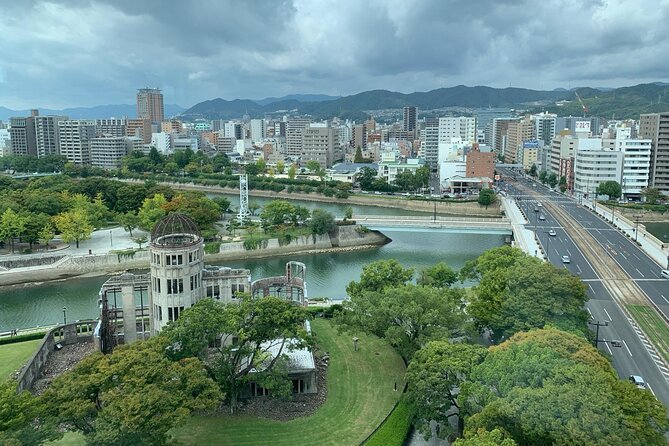
The walk opens at the Gates of Peace, where the guide sets the historical frame. You hear why an atomic bomb was dropped on Hiroshima and how that decision affected world history. This is a useful beginning because it puts the city’s experience into a wider setting before the tour turns to individual lives.
The Gates of Peace give the opening some physical shape. Rather than starting with a museum room or a long lecture, you begin outdoors and move through the memorial area. The guide’s job here is especially important: the subject is complex, and a short tour can oversimplify it if the explanation is rushed.
This stop lasts about twenty minutes. If you want political and military detail at the level of a full history course, you will need additional reading or museum time. For a first orientation, though, it gives you a firm base for the rest of the walk.
The Mother and Baby in the Storm statue
The Arashi no Naka no Boshi Statue, translated as Mother and Baby in the Storm, is a brief but powerful stop. It honors mothers who sacrificed their lives while trying to save their children.
You spend about five minutes here, so do not expect an extended discussion. Its importance comes from the human scale of the story. After the opening explanation of war and world events, this monument brings the cost back to one family relationship.
I appreciate this inclusion because it keeps the route from focusing only on famous buildings. Hiroshima’s memorial park includes many forms of remembrance, and this statue helps you see how the bombing affected parents and children in very direct ways.
The Cenotaph and the names of the victims
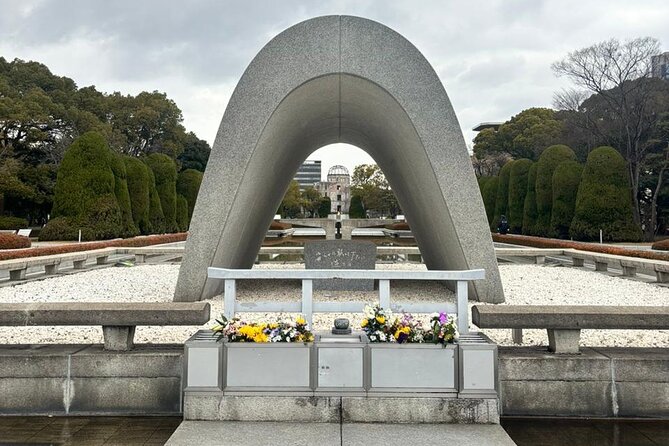
The Hiroshima Peace City Monument, also called the Cenotaph for the Atomic Bomb Victims, is given about twenty minutes. The monument is connected with the names of those who died in the bombing.
This is one of the places where a guide can add real value. You are not simply looking at a memorial form. You are asked to consider the scale of the loss and the city’s effort to remember each victim.
The stop also gives the guide room to explain Hiroshima’s identity as a peace city. The tour presents the city not only as a place marked by destruction, but also as a place shaped by a continuing message of peace and resilience.
The Cenotaph is likely to be one of the more reflective parts of the walk. Keep your questions focused and give the group space to pause. The guide can help you understand the monument, but no explanation can remove the solemn mood of the site.
More walking tours in Hiroshima:
- Hiroshima City 4hr Private Walking Tour with Licensed Guide
★ 5.0 · 437 reviews - Hiroshima Walking Tour Why A Bomb was dropped to Hiroshima
★ 5.0 · 347 reviews - Hiroshima: History of Hiroshima Group Walking Tour
★ 4.8 · 266 reviews - Hiroshima: Food and Culture Guided Walking Tour with Dinner
★ 4.9 · 212 reviews
Inside the National Peace Memorial Hall
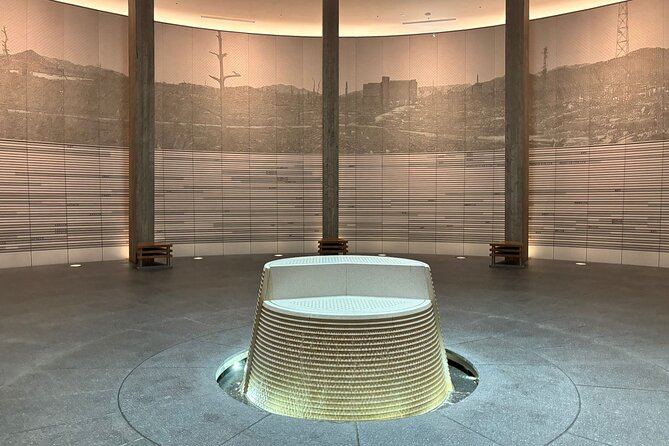
The Hiroshima National Peace Memorial Hall for the Atomic Bomb Victims is scheduled for about twenty minutes. The hall shows the destruction of the city, giving you a more direct look at what happened than the outdoor monuments alone can provide.
The supplied details do not promise a full museum visit or a long self-guided session, so think of this as a guided introduction. If you want to read every display at your own pace, plan separate time after the walk.
This distinction matters. A two-hour route can show you the park’s main ideas, but it cannot replace a careful museum visit. I would use the tour to get your bearings, then return to the hall or another memorial facility if the subject calls for more time.
The Rest House and its link to Ground Zero
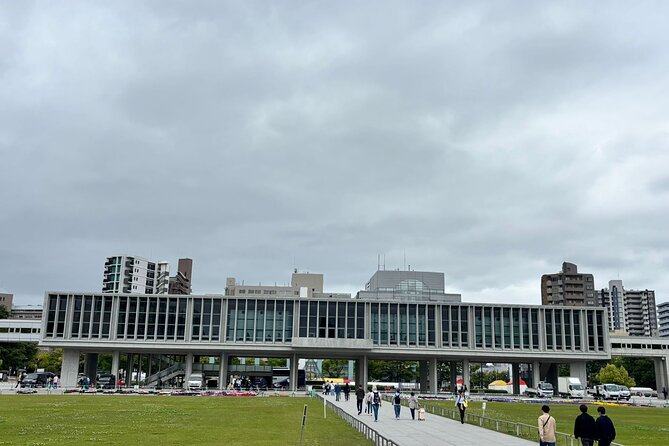
The Rest House of Hiroshima Peace Park offers one of the tour’s most striking physical details. The building is described as a solo survival, located 170 meters from Ground Zero.
That number gives you a way to picture the blast’s reach. Instead of hearing only about distance in abstract terms, you are looking at a building that survived close to the point of detonation. The guide can connect the structure to the wider destruction shown at the memorial hall.
The stop lasts about fifteen minutes. It is a good example of why walking with a guide helps. A building that might look ordinary when passed on your own becomes a piece of evidence, tied to the city’s story and the experience of people nearby.
Sadako, paper cranes, and the Children’s Peace Monument
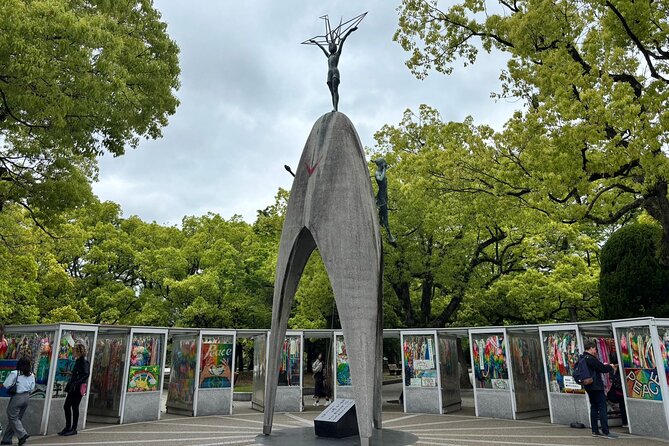
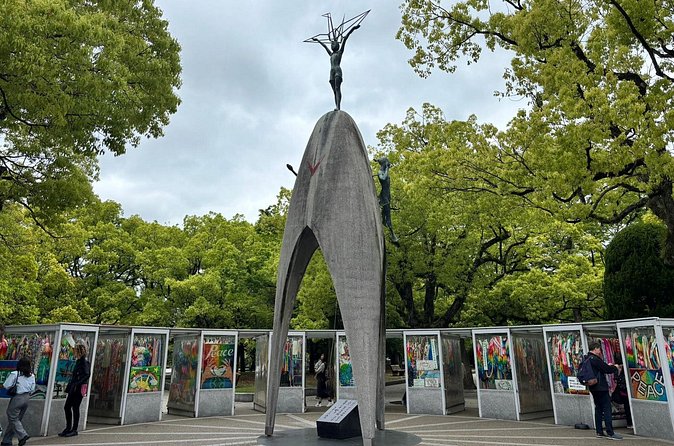
The Children’s Peace Monument receives about ten minutes. It is dedicated to Sadako and other children who died in the bombing, and it explains the story behind the paper crane as a symbol of peace.
This is likely to be one of the most accessible stops for families and younger visitors. The story gives you a personal way into a painful subject without reducing the history to a single anecdote. It also shows how children became part of Hiroshima’s peace message.
The monument is not only about Sadako. The stop also remembers other children, which keeps the focus wider than one well-known story. Listen for that broader connection, especially if you already know the paper crane story from books or school lessons.
Remembering Korean victims and survivors
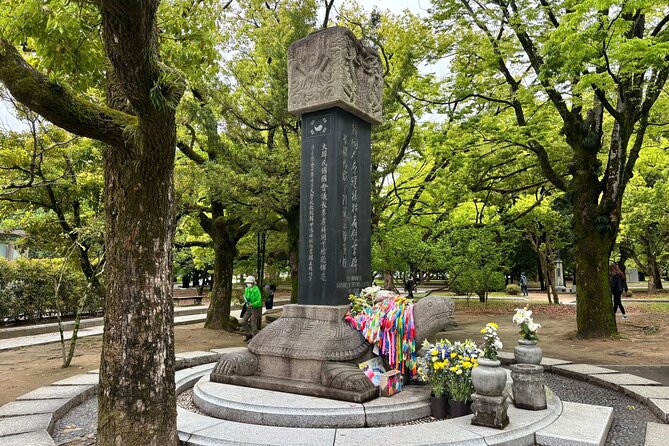
The Monument to Korean Victims and Survivors takes about five minutes. Its inclusion is important because Hiroshima’s wartime population and wartime experience were not limited to one national group.
This can be an easy monument to miss if you walk through the park alone. A short explanation helps you notice whose experiences are represented and whose stories need a place in the wider account of the bombing.
Five minutes is enough to identify the monument and understand its purpose, but not enough for a full study of Korean victims and survivors. If this part of Hiroshima’s history matters to you, write down questions and continue your reading afterward.
Ringing the Peace Bell
The Peace Bell is a short, five-minute stop. The information provided simply identifies the bell as part of the route, but its place among the memorials gives the walk a moment of sound and action after several quiet monuments.
The guide may use this point to connect the park’s peace message with the physical act of ringing a bell, though the exact handling can vary by guide. You should treat it as a brief part of the route, not a major activity in its own right.
That short pause also helps the tour’s rhythm. The walk moves between monuments, buildings, and personal stories, so a compact stop keeps the group on schedule.
The Atomic Bomb Dome
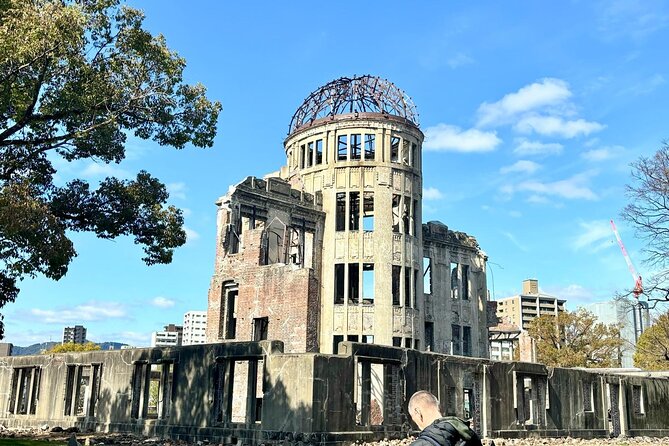
The Atomic Bomb Dome is the best-known structure on the route. The building survived the bombing and remains one of Hiroshima’s clearest visual reminders of what happened.
You spend about fifteen minutes here. That is enough for the guide to explain the building’s place in the city’s memory and for you to see it from the park. It is also a natural point for photographs, though the subject calls for restraint.
The Dome can be crowded with attention even when the park itself feels calm. A guide helps you look past the familiar image and understand why this particular building matters. It survived when so much of the surrounding city did not, and its damaged form links the present city with the day of the bombing.
The route does not end here. That is a useful choice. The Atomic Bomb Dome is the symbol most people recognize, but the final stop takes you closer to the event itself.
Finishing at Ground Zero
The tour ends at the Hiroshima Atomic Bomb Hypocenter Monument, at 1-5-25 Otemachi. This is the Ground Zero area and gives the walk a serious closing point.
Ending here means the tour does not finish with a postcard view or a shopping street. You leave with the physical location of the bombing fresh in your mind. The guide’s earlier explanations about the park’s monuments, survivors, children, and victims all lead toward this final place.
The ending also gives you a practical next step. From Ground Zero, you can continue exploring on your own, return to a memorial hall, or simply take time to process what you have heard. The tour itself does not include lunch, so plan food separately if this walk fits around a meal.
What the guides add to the experience
The experience provider is Ali, while the guide names associated with the tours include Ali, Cva, Moe, Malek, and Shiva. You may not receive a particular guide, so I would not book solely on the hope of meeting one person.
The strongest pattern in the available comments is the guide’s ability to explain difficult material clearly while keeping the group engaged. Cva is described as warm, personable, and able to use light humor carefully. Malek is praised for historical insight, Moe for explaining the Japanese perspective before and after the bombing, and Shiva for answering questions with energy and clarity.
Those details matter because this is not a sightseeing walk built around scenery. The guide’s delivery shapes almost everything. A good guide can make a five-minute monument meaningful, answer questions without losing the group, and bring some humanity to a subject that could otherwise become a list of dates and names.
The experience is conducted in English, based on the specific comments about clear English-speaking guides. The maximum group size is thirty people. That is small enough to feel organized, but it is not intimate. If you are at the back of the group, move closer when the guide begins speaking.
Price, pace, and who gets the most value
At $32.84, this tour makes sense for you if you want a structured introduction to Hiroshima without giving up half a day. The admissions are free, so you are paying for the guide’s time and the route’s order. That is worthwhile when you want more than a quick photo at the Atomic Bomb Dome.
I especially like the fit for first-time visitors with limited time. The walk covers the main memorial park points and finishes at Ground Zero, all in roughly two hours. You gain a clear framework, then you can decide which museum or monument deserves a longer visit.
The tour is less suitable if you prefer complete independence, long periods of silence, or detailed reading at every stop. The pace is described as easy, but the schedule is full. You will spend five to twenty minutes at each point, not an hour at one exhibit.
Group discounts are available, and two children aged ten or younger can join free of charge. Most people can participate, and the meeting point is near public transportation. The mobile ticket is handy for a short visit, since you do not need to collect a paper voucher.
Free cancellation is available up to 24 hours before the start time. Within 24 hours, you cannot receive a refund or make changes. The walk also requires good weather and a minimum number of participants, with another date or a refund offered if the operator cancels for those reasons.
Practical advice for making the walk worthwhile
Arrive ready to walk, listen, and keep the group’s pace. Comfortable shoes matter more than dressing for a formal museum visit, since the experience connects several outdoor sites.
You should also leave room in your day afterward. The tour gives you a clear account of Hiroshima, but the subject may call for a quiet break or more time at the memorial hall. Do not schedule an immediate rushed activity if you know you prefer time to reflect.
If you have specific questions about the bombing, the Japanese perspective, Korean victims, children, or the peace movement, prepare them before you arrive. The guides are praised for answering questions, and a focused question can make a short stop much more useful.
Families can benefit from the Children’s Peace Monument and the paper crane story, but parents should decide how much detail is right for younger children. The walk deals with death, destruction, and sacrifice throughout.
Should you book this Hiroshima walking tour?
I would book it if you have about two hours, want a guide to connect Hiroshima’s memorials, and prefer human stories to a simple landmark checklist. The route includes the Atomic Bomb Dome, but it does not stop there. You also see the Cenotaph, National Peace Memorial Hall, Rest House, Children’s Peace Monument, Korean Victims monument, Peace Bell, and Ground Zero.
I would skip it if you already have a full day planned inside Hiroshima’s museums or if you strongly prefer exploring alone. For most first visits, though, $32.84 is a sensible price for a focused introduction, particularly because the guide may bring the kind of historical and personal context that is hard to gather while walking by yourself.
FAQ
How long does the Hiroshima walking tour last?
The tour lasts approximately two hours.
How much does the tour cost?
The listed price is $32.84 per person.
Where does the tour start and finish?
It starts at Ristorante Mario, 4-11 Nakajimachō, Naka Ward, Hiroshima. It ends at the Hiroshima Atomic Bomb Hypocenter Monument, also known as Ground Zero.
What sites are included?
The route includes the Gates of Peace, Mother and Baby in the Storm statue, the Cenotaph for the Atomic Bomb Victims, Hiroshima National Peace Memorial Hall, the Rest House, Children’s Peace Monument, Monument to Korean Victims and Survivors, Peace Bell, Atomic Bomb Dome, and Ground Zero.
Are children allowed to join for free?
Two children aged 0 to 10 can join free of charge.
What happens if I need to cancel?
You can cancel at least 24 hours before the start time for a full refund. Cancellations or changes made within 24 hours are not accepted for a refund. If poor weather or an insufficient number of participants causes the operator to cancel, you will be offered another date or a full refund.
Just added around Hiroshima
- The Peace Memorial to Miyajima : Icons of Peace and Beauty★ 4.5 · 31 reviews
- Shore Excursion from Hiroshima Port : Private Tour in Hiroshima★ 5.0 · 17 reviews
- Hiroshima Saijo Sake Tasting Tour with visit to 7 Breweries★ 5.0 · 104 reviews
- Hiroshima & Miyajima All-Inclusive Tour w/Licensed guide Pancho★ 5.0 · 54 reviews
- Hiroshima Country Cycling: Explore Rural Life 1 HR from City★ 5.0 · 22 reviews
- Okunoshima Rabbit Island Cycling Tour with Local Guide★ 4.5 · 17 reviews
- Private Full Day Hiroshima Tour★ 4.5 · 29 reviews
- Hiroshima Private Tour with a Local – Highlights & Hidden Gems★ 4.5 · 24 reviews
Hiroshima Tours, compared.

Peaceful Hiroshima & Miyajima UNESCO 1 Day Bus Tour
Read our review →
Hiroshima and Miyajima UNESCO Sites 1-Day Tour
Read our review →
Hiroshima Historical Walking Tour – Why A-Bomb was Dropped
Read our review →
Hiroshima Peace (Heiwa) Walking Tour at World Heritage Sites
Read our review →
Hiroshima in a Nutshell: Morning Bike Adventure
Read our review →
Hiroshima City 4hr Private Walking Tour with Licensed Guide
Read our review →

Japanesel Archery Experience HIROSHIMA CASTLE SHARAKU
Read our review →Browse the lists this tour appears in