
Reviewed · KYOTO TOURS
Kendo and samurai experience in Kyoto
A real sword, a bamboo shinai, formal movements, and the quiet focus of a dojo make this Kyoto activity more than a costume photo stop. You learn how samurai-era sword skills connect with modern kendo, then practice posture, handling, and controlled strikes under an instructor such as Taka or Kengo.
I like the small-class attention and the chance to handle several types of training swords rather than simply pose with one. I also like the setting near Shugakuin, away from central Kyoto’s crowds, where the lesson feels more personal and less like a stage show.
The main caution is important: tatami-mat cutting may no longer be included because of a change in Japanese law, despite older descriptions and some past bookings mentioning it. Full samurai armor is not guaranteed either, so confirm exactly what your session includes before paying.
Key points to know before you book
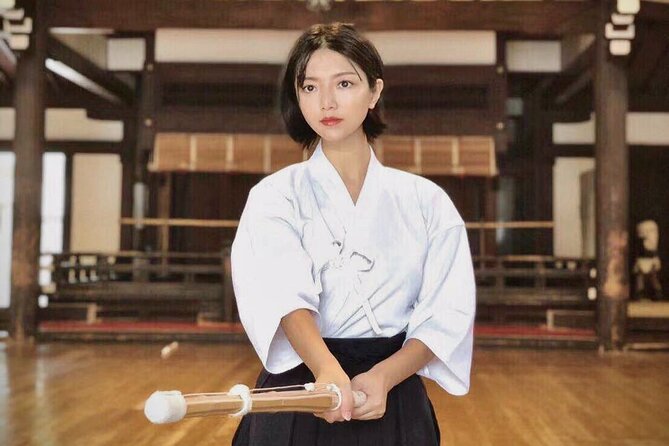
- A hands-on two-hour lesson: Learn basic kendo movements, sword handling, posture, and samurai customs rather than just watching a demonstration.
- A private-style class: Your group may receive the instructor’s full attention, though the stated maximum is 15 people.
- Several training tools: Practice can include bamboo swords, foam swords, and blunt replica blades.
- English support: Instructors including Taka and Kengo have taught international participants in English, though communication may sometimes rely on Google Translate.
- A northern Kyoto location: Studio NIN is near Shugakuin Imperial Villa, but it is outside the main sightseeing center and can take effort to find.
- Confirm the finale: Tatami cutting has appeared in some sessions, but current legal restrictions mean you should not assume it is available.
What this Kyoto samurai class is really like
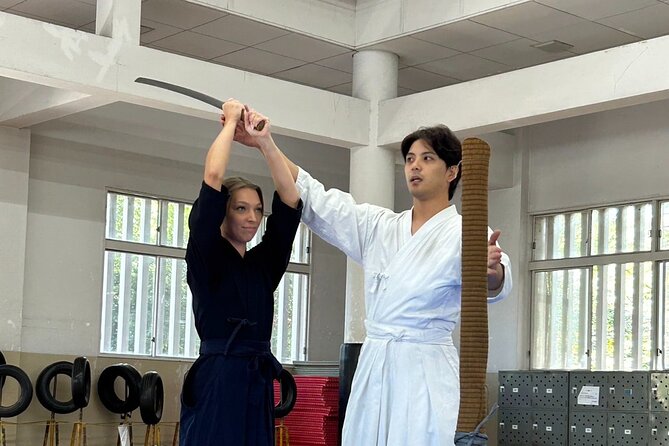
This experience gives you a practical introduction to the way a sword is held, moved, and respected. You are not signing up for a full martial arts course. In two hours, you get a brisk lesson in the basic ideas of kendo and traditional swordsmanship, with time for practice and photographs.
The teaching begins with context. Your instructor explains the background of kendo, the role of discipline, and the difference between modern bamboo-sword practice and older samurai sword traditions. That background matters because the activity is not simply about swinging a katana. A correct stance, controlled movement, and careful handling count more than brute force.
You then work with different training tools. A bamboo sword, known in kendo as a shinai, lets you learn the basic feel of the sport without using a sharp blade. Foam swords provide another low-risk way to rehearse movements, while blunt replica blades help you understand how a katana is handled.
The instructor guides you through practical details such as how to hold the sword, how to draw and return it, and how to keep proper posture. You learn that an efficient cut comes from technique and body alignment, not simply from trying to hit hard. That is one of the most useful lessons for beginners.
More Samurai and Ninja Experiences in Kyoto
- Kyoto Samurai Experience
★ 5.0 · 1,294 reviews - Kyoto: Kendo and Samurai Experience with Uniform and Gear
★ 4.9 · 815 reviews - Kyoto: Samurai Sword Class by Experts in Traditional Arts
★ 4.9 · 657 reviews
Learning kendo without martial arts experience
You do not need previous martial arts training. The class is designed for first-timers, and the teaching style is described as patient and light-hearted rather than strict or intimidating.
That makes this a good pick for families with older children, couples, and small groups who want something active but not physically punishing. The session can also work well if you have never worn martial arts equipment or held a sword before.
The focus is on learning a few clear foundations:
- Basic kendo movements
- Safe sword handling
- Posture and footwork
- Traditional rules and customs
- The difference between kendo practice and katana techniques
- Controlled striking and cutting form
Some participants have had time for light sparring with one another, but you should treat that as part of the instructor’s chosen program rather than a fixed promise. The exact balance between explanation, practice, dressing, and photographs can vary.
One useful tip is to arrive ready to listen and copy small movements carefully. This is not an activity where bigger swings produce better results. The instructor’s corrections are part of the value, especially when you are learning how to move with control.
The instructors: Taka, Kengo, and a personal teaching style
The experience is run by Atelier NIN, and individual sessions have been led by instructors including Taka and Kengo. Both names appear in connection with warm, hands-on teaching, sword practice, and help with photographs and videos.
Taka has been praised for making group sessions friendly and enjoyable, including sessions with katana practice and kendo. Kengo has also been described as encouraging and attentive, with a strong interest in explaining the techniques and helping participants capture photos of the experience.
English ability can differ by instructor. Some sessions have been conducted comfortably in English, while others have involved slower explanations and Google Translate. That is not necessarily a problem for a physical lesson, since much of the teaching involves demonstration and repetition, but you should allow extra patience if detailed questions become hard to explain.
I like the fact that the instructor can take photographs and videos for you. That saves you from trying to set up a phone while wearing training gear or handling a sword. Still, remember that photo time reduces practice time, so tell the instructor if you would rather spend more of the two hours learning technique.
Dressing up, training gear, and what is actually included
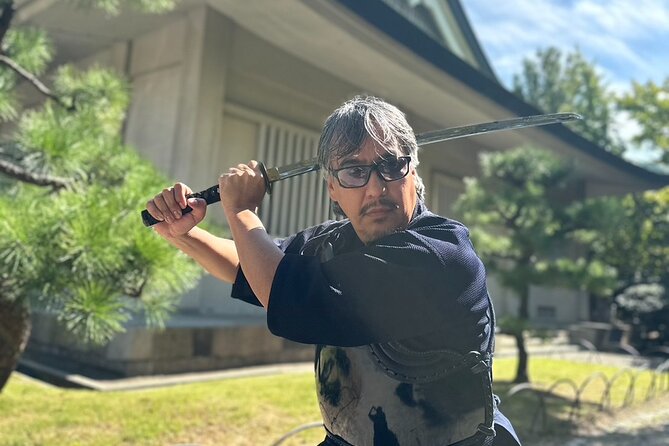
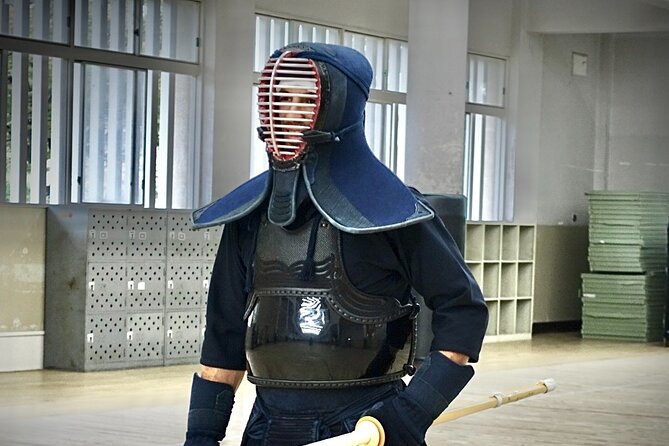
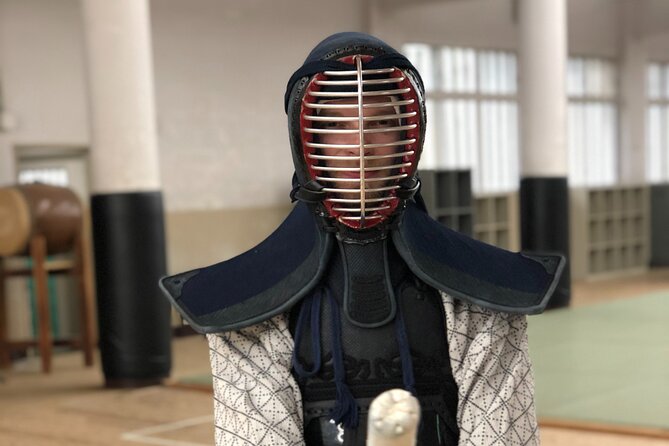
The experience may include traditional kendo or samurai-style clothing and opportunities to pose with swords. Several accounts describe dressing in samurai attire, wearing training armor, or having access to formal equipment for photographs.
But the clothing is not entirely consistent from one session to another. One disappointing experience involved seeing only a helmet rather than wearing a complete uniform. For that reason, you should regard full armor as possible, not guaranteed.
The difference matters if your main goal is a polished costume session. This activity is better understood as a sword and kendo lesson that may include dressing and staged photographs, not as a dedicated photo studio package.
You may handle:
- Bamboo practice swords
- Foam swords
- Blunt replica blades
- A katana for demonstration or controlled practice, depending on the current session
- Kendo or samurai-style training clothing, depending on availability
Do not assume that every item will be used for every booking. If wearing full armor or holding a particular type of sword is essential to your plans, contact Atelier NIN before booking.
More samurai and ninja sessions in Kyoto:
- Skip the lines Basic Ticket at SAMURAI NINJA MUSEUM KYOTO
★ 4.5 · 632 reviews - Ninja 1-hour Hands-on Lesson by Japanese master in Kyoto -Entry
★ 5.0 · 489 reviews - Kyoto: Ninja Weapon Forging Experience
★ 4.8 · 478 reviews - Kyoto: Samurai Kenbu Traditional Sword Dancing Show
★ 4.5 · 426 reviews
The tatami-cutting issue needs careful attention
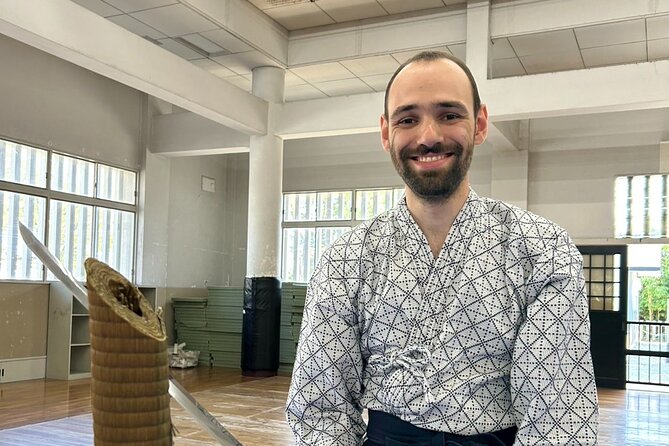
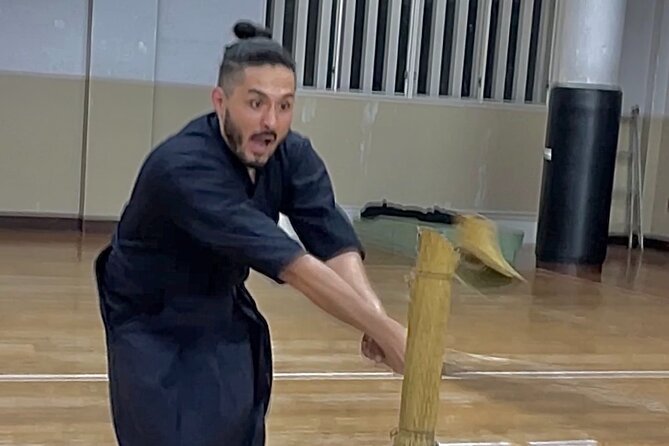
Tatami cutting, known in Japanese sword practice as tameshigiri, has been one of the most appealing parts of the experience. Older sessions included accounts of cutting a tatami mat with a katana, sometimes successfully in one stroke. That sounds memorable, and it explains why this activity has attracted people who grew up with samurai films or anime.
The current situation is less clear. A recent legal change in Japan means the provider may no longer be allowed to offer tatami cutting. Some descriptions still refer to it, while other accounts specifically warn that it was not available. This creates a genuine mismatch between expectation and reality.
My advice is simple: do not book this class solely for tatami cutting. Ask Atelier NIN directly whether it is legal and scheduled on your date. If the answer is no, the class still offers kendo practice, sword handling, cultural background, and photographs, but it is a different product from a sword-cutting session.
This is the single biggest point to settle before booking. It also explains why one person could describe the cutting as the best part, while another felt let down after not receiving it. The experience appears to have changed over time.
Reaching studio NIN near Shugakuin
The meeting point is studio NIN 修学院, at 16 Shugakuin Daidōchō in Sakyo Ward, Kyoto. The activity begins and ends there.
The location is near Shugakuin Imperial Villa, in the northern part of Kyoto. It is not in the central sightseeing zone around Gion, Nishiki Market, or Kyoto Station. That quieter setting can be a welcome break from the city center, but it also means you need to plan your route carefully.
Several participants have found the studio difficult to locate, especially after arriving in the outskirts of Kyoto where there may be fewer people nearby to ask for directions. Build in extra time. Do not assume that a short distance on a map means a quick arrival, particularly if you are changing trains.
The activity does not include sightseeing at Shugakuin Imperial Villa. The villa is a useful geographic reference for the meeting point, not a separate stop on the class. Once the lesson ends, you return to the same studio.
How the two hours are likely to be divided
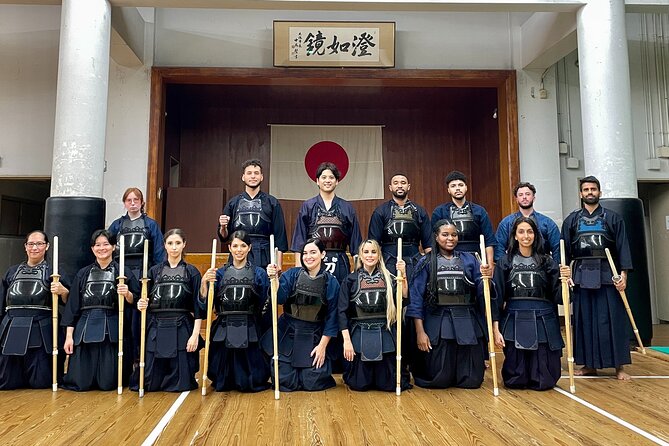
The published duration is about two hours, though the precise schedule can change. A typical session may include the following stages:
Arrival and introduction
You meet the instructor at studio NIN, receive an explanation of the activity, and learn some basic background about kendo and samurai sword traditions. This is also the time to ask about photographs, equipment, and whether any katana-cutting practice is available.
Clothing and equipment
You may change into training or samurai-style clothing and see the protective equipment used in kendo. Dressing can be part of the fun, but it also takes time. If your priority is practice, say so early.
Basic sword handling
The instructor demonstrates how to hold, draw, return, and move with a sword. You then copy the actions using bamboo, foam, or blunt replica swords. These early exercises establish the control needed for later strikes.
Kendo practice
You learn basic kendo movements and may practice simple exchanges or light sparring, depending on the group and instructor. The setting is intended to be low-pressure, so you are not expected to perform like an experienced martial artist.
Photographs and videos
The instructor can help capture your samurai moment. You may pose in training clothing, hold a sword, and recreate formal movements. This is a useful feature for couples and families, but it can reduce the time available for technique.
Possible cutting demonstration or practice
Tatami cutting should be treated as uncertain. It has been part of some earlier sessions, but current restrictions may prevent it. Confirm in advance rather than counting on it.
Is $105.68 good value?
At $105.68 per person, this is not a bargain activity. The price makes the most sense if you value personal instruction, a small-group setting, equipment, cultural explanation, and photographs in one package.
The value improves when your group is the only booking in the time slot. A five-person booking has sometimes resulted in what feels like a private lesson, with the instructor able to give each person more attention. The advertised maximum is 15 people, though, so you should not assume every date will be intimate.
The price is harder to justify if you mainly want to put on armor for a few photographs. It is also less appealing if you expect a guaranteed tatami cut and arrive to find that the activity has changed.
I would compare this with the cost of other guided cultural activities in Kyoto, but the key question is not simply the number of minutes. Ask how much hands-on instruction you want. If you value learning proper form and hearing the cultural explanation directly from an instructor, the cost can be fair. If you want a quick photo opportunity, it may feel high.
What I like most about the experience
The best part is the attention to technique. You learn that sword work depends on posture, timing, and a clean motion rather than strength. That gives the activity more substance than a simple costume session.
I also like the calm setting. Northern Kyoto feels removed from the packed temple routes, and the dojo atmosphere offers a change of pace. One session has even been described as a peaceful break from the busy city.
The instructors’ attitude is another strength. Taka and Kengo have been praised for being friendly, encouraging, and willing to answer questions. If you are nervous about looking awkward, that relaxed approach helps.
Finally, the activity gives you photographs with a story behind them. You are not just holding a prop. You have learned how to stand, move, and handle it with care.
Drawbacks to weigh before booking
The location is the first drawback. Studio NIN is outside central Kyoto and can be difficult to find, so poor planning may make you late or frustrated before the class starts.
The second is communication. English support is available, but fluency may vary. Demonstration makes the lesson workable, yet you may need a translation app for detailed questions about history or technique.
The third is the equipment and setting. One account described a small, dusty, run-down space and limited access to the full uniform. That may not reflect every session, but it is a fair warning not to expect a grand museum-quality dojo.
The last issue is time management. Dressing, conversation, and photographs can take a noticeable part of the two hours. If you want more sword practice, make that clear at the beginning.
The experience is generally suitable for most participants, and service animals are allowed. It is near public transportation, but the precise ease of the journey depends on where you are staying in Kyoto.
Who should book this Kyoto experience?
I would recommend it to you if you want an active cultural lesson and have a genuine interest in kendo, samurai customs, or Japanese martial arts. It suits first-timers especially well because you do not need prior training.
It is also a good choice for a small group that wants a shared activity away from the main tourist routes. Couples and families can enjoy the photographs, while martial arts fans may appreciate the details of posture, movement, and sword etiquette.
I would be more cautious if your main goal is a full suit of armor, a pristine traditional dojo, or guaranteed tatami cutting. Those expectations may not match the current format.
The free-cancellation policy gives you some flexibility: you can cancel for a full refund up to 24 hours before the local start time. Changes or cancellations inside that window are not accepted for a refund, and the activity requires a minimum number of participants, so a provider cancellation may lead to another date, another experience, or a full refund.
Should you book it?
Book this experience if you want to learn basic kendo, handle several training swords, and spend two hours with an instructor who can give your group personal guidance. The chance to practice technique, dress in martial arts gear, and take photographs makes it a memorable addition to a Kyoto visit.
Before booking, ask two direct questions: Will tatami cutting be offered on my date, and exactly what clothing and equipment will I wear? If the answer suits you, the class is a worthwhile way to explore samurai culture beyond castles and display cases.
If the answer disappoints you, choose it only if the kendo lesson itself still sounds appealing. That is where the experience is most dependable.
FAQ
How long does the kendo and samurai experience last?
The experience lasts approximately two hours.
Where does the activity start and finish?
It starts and ends at studio NIN 修学院, 16 Shugakuin Daidōchō, Sakyo Ward, Kyoto, 606-8037, Japan.
Is the experience suitable for beginners?
Yes. No martial arts experience is required, and the instructor teaches basic movements and sword-handling skills in a low-pressure setting.
Is the class private?
The experience is presented as a private class, and some bookings may have only one group in the session. The stated maximum is 15 participants, so the exact group size can vary.
Will I wear a full samurai or kendo uniform?
Training or samurai-style clothing may be available, but full armor or a complete uniform is not guaranteed. Confirm the current clothing arrangement with Atelier NIN before booking.
Does the experience include tatami-mat cutting?
Do not assume it does. Tatami cutting was offered in some earlier sessions, but a recent legal change in Japan may prevent it from being offered now. Confirm directly before booking.
Can I cancel for a full refund?
Yes. You can cancel up to 24 hours before the local start time for a full refund. Cancellations or changes made less than 24 hours before the start time are not accepted for a refund.
Just added around Kyoto
- Kyoto: Zen Meditation at a Private Temple with a Monk★ 5.0 · 25 reviews
- Kyoto: Gion Geisha District & Sake-in-Hand Walking Tour★ 5.0 · 37 reviews
- Private Pewter Sake Cup Experience with a Kyoto Artisan★ 5.0 · 31 reviews
- Your Private Vacation Photography Session In Kyoto★ 5.0 · 110 reviews
- Private Guided Traditional Buddhist Cooking in Japan★ 5.0 · 16 reviews
- Kyoto Wagashi(Japanese sweets) Cooking Class near Fushimiinari★ 5.0 · 60 reviews
- Traditional Japanese Music show & Experience Tour in Kyoto★ 5.0 · 57 reviews
- Kyoto:Family-Friendly Kimono & Yukata Experience at WARGO★ 5.0 · 147 reviews
Kyoto Tours, compared.


Fushimi Inari, Kinkakuji, Bamboo Grove 1 Day Bus Tour
Read our review →
Tea Ceremony in a Traditional Tea House in Kiyomizu
Read our review →
Kyoto Geisha Walking Tour: Gion District & Hidden Gems
Read our review →

Gion Magical Night Walking Tour with Geisha Trivia
Read our review →

Gion Geisha District Walking Tour – Stories of Geisha
Read our review →Browse the lists this tour appears in