
Reviewed · IMPERIAL PALACE TOURS
Kyoto: Discover Every Bit of Kyoto Imperial Palace
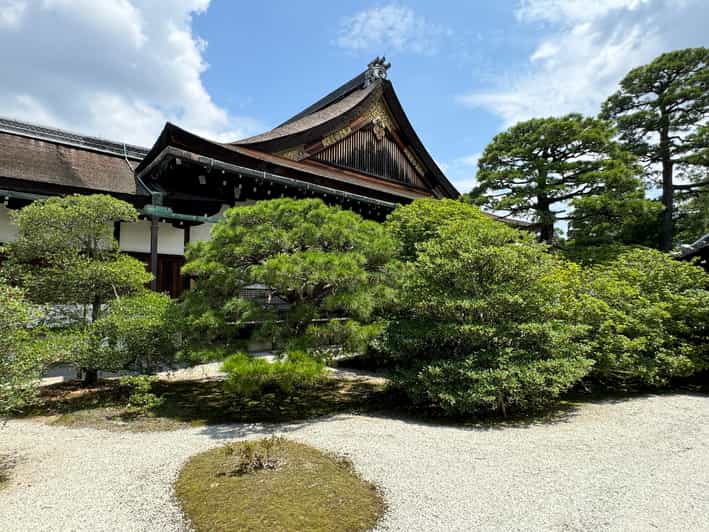
Kyoto Imperial Palace gives you a close look at the former home of Japan’s imperial family, with Shishinden Hall and its broad ceremonial courtyard providing the main visual punch. The palace sits inside Kyoto Gyoen National Garden, where formal buildings give way to quiet paths and carefully tended gardens.
I like the mix of grand public spaces and small details about court life. I also like the chance to ask questions in a private or small group, especially when the guide is as strong as Yoshi, who has been praised for pointing out details others might miss. The main drawback is that the quality depends heavily on the guide, and some visitors have found the tour too light on information for the price.
Key points to know before you go
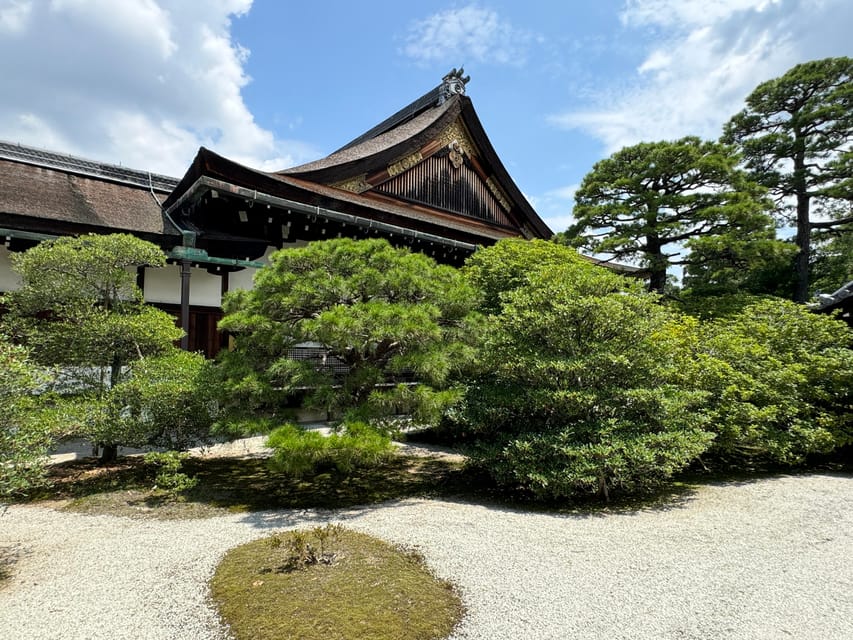
- Shishinden Hall is the star: See the majestic hall used for major imperial ceremonies and official occasions.
- The gardens soften the grandeur: Quiet paths and interior garden views provide a welcome change from the formal palace buildings.
- Your guide matters: Yoshi has received praise for his historical explanations and for noticing details around the grounds.
- The palace entrance is free: The $38 fee pays for the guided experience, not admission itself.
- The timing needs checking: The activity is advertised as one hour, while the guided palace visit is also described as lasting 1.5 hours.
- Small groups offer the best value: A private or small-group setting makes it easier to ask about customs, buildings, and the imperial family.
Why Kyoto Imperial Palace is worth your time
Kyoto Imperial Palace was the residence of Japan’s imperial family until the capital moved to Tokyo in 1869. That date gives the visit its basic shape: you are not simply looking at old wooden buildings, but at the former center of imperial life in Kyoto.
The palace complex is set within Kyoto Gyoen National Garden, so the approach feels open and calm. You do not go straight from a crowded city street into a single monument. Instead, the garden creates space around the palace, helping you appreciate the scale of the grounds and the difference between public ceremony and private life.
I find this kind of place much easier to understand with a guide. Japanese court customs, building names, and ceremonial rules can seem abstract when you see them without explanation. A good guide connects the architecture to the people who used it.
That said, this is not a tour built around entering every grand interior. Much of the experience is about viewing buildings from designated areas, understanding their purpose, and taking in the gardens. If you prefer a museum packed with objects and labels, you may find the palace quieter and less immediately rewarding.
More Imperial Palace visits:
- Kyoto: Imperial Palace & Nijo Castle Guided Walking Tour
★ 4.7 · 453 reviews - Kyoto Imperial Palace & Nijo Castle Guided Walking Tour – 3 Hours
★ 4.5 · 106 reviews - Kyoto: Nijo Castle and Kyoto Imperial Palace Guided Tour
★ 4.6 · 98 reviews
Meeting at Hamaguri Gate
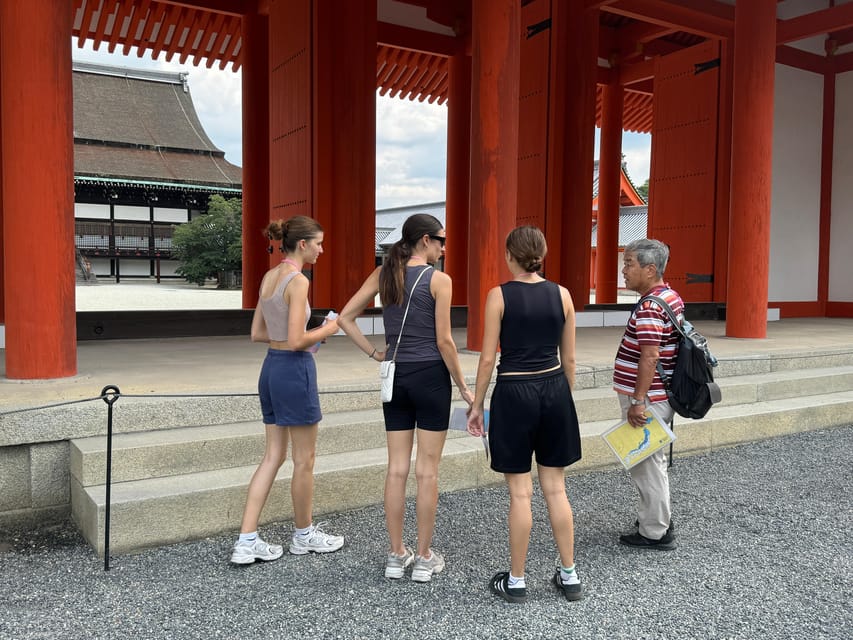
The tour begins in front of Hamaguri Gate, also called Hamagurigomon, at Kyoto Imperial Palace. Look for a guide holding a yellow sign marked DeepExperience.
This meeting point matters because Kyoto Gyoen National Garden is large. Arriving at the general garden area is not quite the same as finding the guide. Give yourself enough time to reach Hamaguri Gate and look for the yellow sign rather than waiting at a random palace entrance.
The meeting arrangement is simple, but it is worth paying attention to the exact gate name. If you are using a map app, search for Hamaguri Gate or Hamagurigomon rather than only Kyoto Imperial Palace. That small bit of preparation can prevent a rushed start.
The tour is offered in English. Private and small-group options are available, which can make a real difference here. The buildings are impressive, but the questions you ask are what turn a scenic walk into a useful history lesson.
Shishinden Hall and the public face of the court
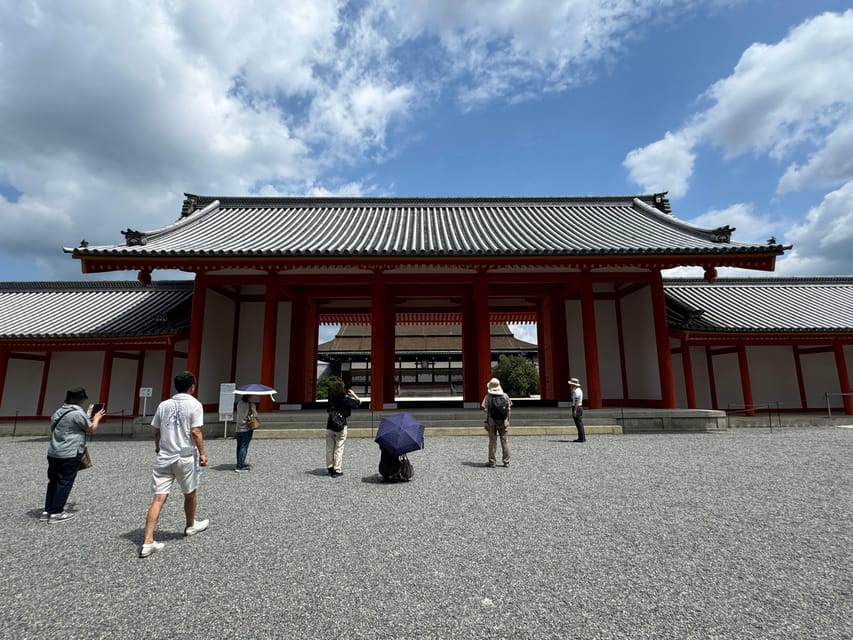
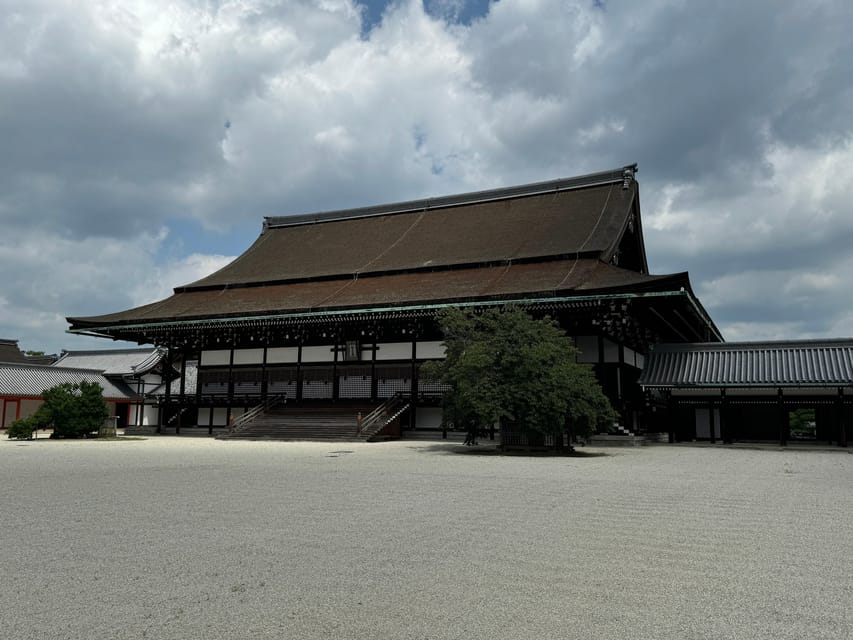
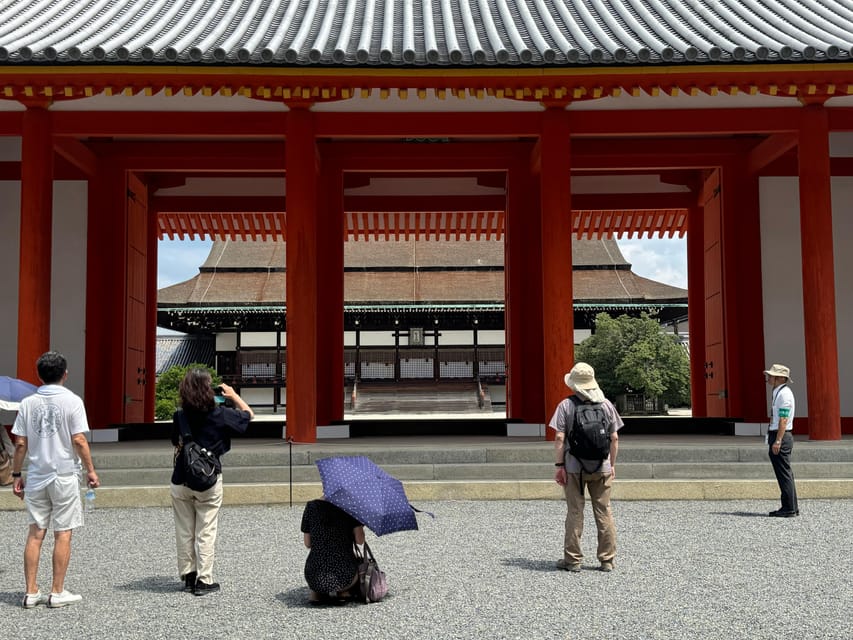
The main highlight is Shishinden Hall, the majestic building used for important imperial ceremonies. Its broad design and formal setting make it easy to see why this was the place for events of national importance.
Your guide should explain how the hall fits into the palace’s ceremonial layout. You will learn about the traditions connected with the imperial family and the careful distinction between public functions and more private areas. These details give meaning to the wide courtyards and restrained architecture.
The appeal here is not decoration in the European palace sense. Kyoto Imperial Palace uses traditional Japanese architectural forms, with strong lines, timber structures, measured proportions, and open space. The effect is dignified rather than showy.
Take time to look beyond the central building. The approach, surrounding courtyards, and relationship between buildings are part of the story. A hurried walk can reduce Shishinden Hall to a photo stop. A thoughtful explanation helps you understand why its setting is as important as its roof and walls.
Photography is likely to be one of the pleasures of this part of the visit, but your guide’s explanation should come first. The best images usually come after you understand what you are looking at.
Court buildings and the story of daily life
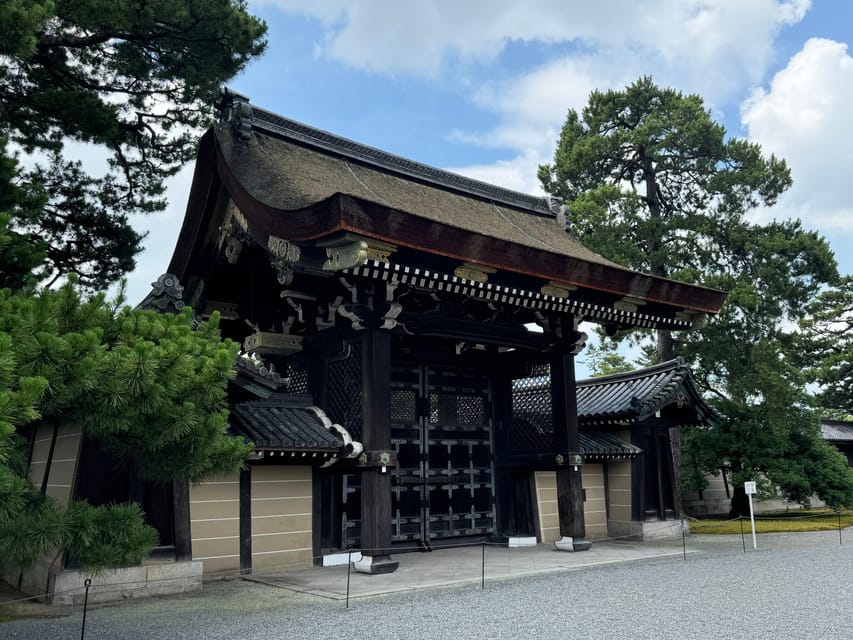
The palace complex includes buildings used for ceremonies, official duties, and life within the imperial court. This is where the tour can become more personal. Grand events are easy to picture, but daily routines reveal how the palace actually functioned.
You will hear about the Emperor’s personal residence and the less public side of court life. That contrast is useful. The imperial family did not spend all its time in ceremonial halls. There were also private spaces, household routines, and a strict structure governing who could enter different areas.
This part of the visit depends most on the guide. One guide may explain the customs clearly and answer questions about the imperial family. Another may offer only basic commentary. A poor tour can feel like someone walking beside you while you view buildings you could have seen on your own.
The strongest reports about this experience praise the guide for adding small details around the palace grounds. Yoshi, in particular, has been praised for explaining Japanese history and pointing out features that might otherwise be overlooked. That is exactly the kind of help you are paying for.
If you are interested in Japan’s imperial traditions, ask direct questions. The setting gives you a good chance to discuss ceremonies, court roles, the move to Tokyo, and the difference between formal and private spaces. In a small group, those questions should be easier to fit into the walk.
A few more Kyoto half-days to weigh up
- PERFECT KYOTO 1-Day Bus Tour
★ 5.0 · 13,518 reviews - Kyoto: Fushimi Inari, Kinkakuji, Bamboo Grove 1 Day Bus Tour
★ 4.8 · 4,316 reviews - Kyoto: Tea Ceremony in a Traditional Tea House in Kiyomizu
★ 4.9 · 3,519 reviews - Kyoto Geisha Walking Tour: Gion District & Hidden Gems
★ 4.7 · 3,273 reviews
The gardens provide the quietest moments
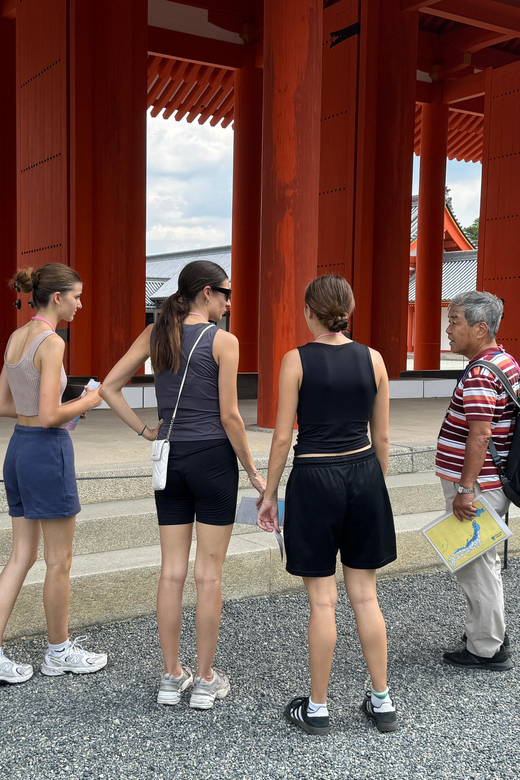
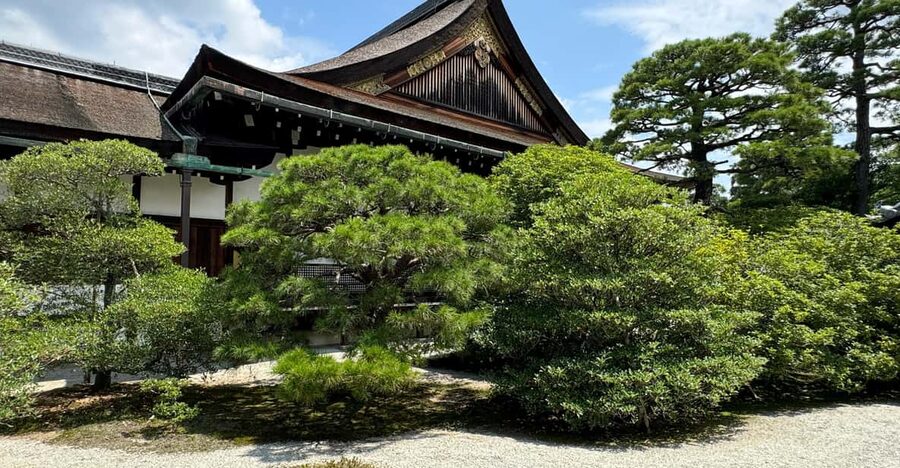
The palace gardens are not just a pleasant backdrop. They help you see how Japanese design uses space, movement, and restraint. Formal buildings open onto quieter areas, giving the visit a slower rhythm than the ceremonial courtyards.
The interior garden has been singled out as especially beautiful. You might find that this is the most memorable part of the experience, particularly after seeing the large and formal Shishinden Hall. The gardens offer a softer view of imperial life, with carefully arranged scenery rather than grand public architecture.
I like this change of pace. You can look at rooflines and courtyards for only so long before the details begin to blur. A garden walk gives your eyes a rest and gives the guide another way to explain the tastes and values of the court.
Keep your expectations sensible. This is not presented as a dedicated garden tour, and the total experience is short. You will stroll through serene landscaped areas, but you are not signing up for an extended study of Japanese gardening.
How the one-hour format works
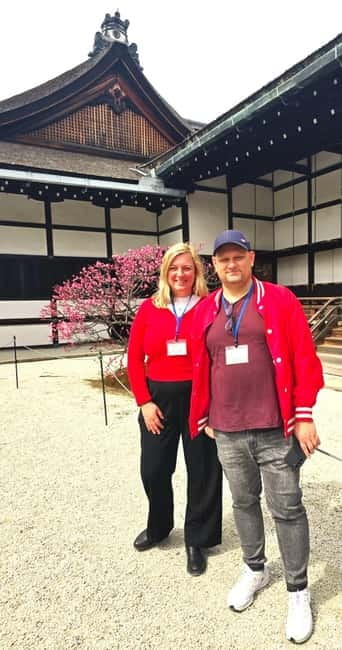
The advertised duration is one hour, while the palace visit is also described as 1.5 hours. That difference is worth checking when you choose a starting time. It may reflect different versions of the activity, but the supplied details do not explain the reason.
Either way, this is a compact experience. You will see the principal buildings, hear an overview of the imperial family’s connection to Kyoto, and walk through the gardens. You should not expect every building or historical detail to receive equal attention.
A short tour can work well in Kyoto, where you may have temples, markets, and museums competing for your time. The palace gives you a focused introduction without taking half a day. It is especially useful if you want context before visiting other sites connected with Japan’s traditional court culture.
The tradeoff is depth. If your main interest is imperial history, you may wish the guide had more time for questions. Check the exact duration at booking and arrive ready to make the most of the walk.
Is $38 good value?
Admission to Kyoto Imperial Palace is free, so the $38 price is entirely for the guide and the organized experience. That makes the value question straightforward: you are paying for interpretation, not access.
For a strong guide in a private or small group, the price can be reasonable. The palace has plenty to see, but the significance of many buildings is not obvious from the outside. An English explanation about ceremonies, court life, and the imperial family can make the visit far more useful.
For a weak guide, the price is harder to defend. One poor experience involved a guide who offered little information and mainly walked along while taking photographs. That is a serious concern because the palace grounds can be viewed without paying an entry fee.
The overall rating is 4.4 from 21 reviews, which suggests a generally positive experience but not a guaranteed one. The split in individual scores also tells you something important: guide quality is the central risk.
I would book this at $38 if you value historical explanation, prefer a small group, or want to ask questions in English. I would skip it if you are happy to walk through the palace grounds independently and read whatever information is available on site.
Who will enjoy this palace walk?
This experience suits first-time visitors who want a clear introduction to Japan’s imperial traditions. It also works for anyone curious about how a royal household used its buildings for public ceremony, official business, and private life.
History fans will get the most from it, especially if they ask questions. Architecture lovers should appreciate the traditional forms and the focus on how each hall functioned. Garden lovers will enjoy the calmer sections, though the tour is not long enough to serve as a full garden study.
Families may like the short format, particularly if young visitors are more interested in stories about emperors and court life than in a long museum visit. A private option may also help you keep the pace comfortable.
I would be more cautious if you want extensive access to interiors, a long guided walk, or a highly specialized history lecture. The palace is best understood as a brief, guided overview.
Practical details that affect your visit
The guide meets you at Hamaguri Gate with a yellow DeepExperience sign. English is the stated tour language, and private or small groups are available.
The activity includes the guide and entry to Kyoto Imperial Palace, though admission itself is free. You can cancel up to 24 hours before the start for a full refund, and you can reserve now while paying later. Those terms are useful if your Kyoto plans are still shifting.
The tour returns to Hamaguri Gate. Since the experience begins and ends at the same place, it is easy to continue exploring Kyoto Gyoen National Garden afterward. The supplied details do not provide transport arrangements, so plan to reach the gate independently.
Wear comfortable shoes for walking around the palace grounds. That is ordinary advice, but it matters more than dressing up for a royal residence. The visit is outdoors in part, and the garden paths are part of the experience.
My booking advice
I would book Kyoto Imperial Palace with a small group or private format if the history of Japan’s imperial family is high on your list. The best version of this tour gives you useful context at Shishinden Hall, explains court life, and points out details in the gardens that you might otherwise pass by.
I would also check the exact duration and, if possible, look for a guide option that identifies the guide. Yoshi has received particularly strong praise for historical explanations and for drawing attention to details around the grounds.
The free palace admission changes the value calculation. You are not paying to enter a locked monument. You are paying for a person to make sense of what you see. If that service is strong, $38 is fair. If you mainly want photographs and a quiet walk, visit on your own and save the money.
FAQ
Where does the Kyoto Imperial Palace tour begin?
The meeting point is in front of Hamaguri Gate, also called Hamagurigomon, at Kyoto Imperial Palace. The guide will hold a yellow sign marked DeepExperience.
What language is the tour conducted in?
The tour is conducted in English with a live guide.
How long does the experience last?
The activity is listed as one hour, while the guided palace visit is also described as lasting 1.5 hours. Check the available starting time and duration when booking.
Is admission to Kyoto Imperial Palace included?
Yes. Entry to Kyoto Imperial Palace is included, and the admission itself is free.
What does the $38 price pay for?
The price pays for the guided experience. The guide, rather than palace admission, is the main service included in the cost.
Is this a private tour?
Private or small-group options are available. The exact group format depends on the option you select.
Which buildings will I see?
The tour includes Kyoto Imperial Palace, including Shishinden Hall and other buildings used for ceremonies, official functions, and court life. The walk also includes the palace gardens.
Can I cancel for a full refund?
Yes. You can cancel up to 24 hours in advance for a full refund.
Can I reserve now and pay later?
Yes. The activity allows you to reserve your place and pay later, so you do not need to pay at the time of booking.
Just added around Kyoto
- Kyoto: Zen Meditation at a Private Temple with a Monk★ 5.0 · 25 reviews
- Kyoto: Gion Geisha District & Sake-in-Hand Walking Tour★ 5.0 · 37 reviews
- Private Pewter Sake Cup Experience with a Kyoto Artisan★ 5.0 · 31 reviews
- Your Private Vacation Photography Session In Kyoto★ 5.0 · 110 reviews
- Private Guided Traditional Buddhist Cooking in Japan★ 5.0 · 16 reviews
- Kyoto Wagashi(Japanese sweets) Cooking Class near Fushimiinari★ 5.0 · 60 reviews
- Traditional Japanese Music show & Experience Tour in Kyoto★ 5.0 · 57 reviews
- Kyoto:Family-Friendly Kimono & Yukata Experience at WARGO★ 5.0 · 147 reviews
Imperial Palace Tours, compared.
Imperial Palace and Shogun Historical Walking Tour
Read our review →

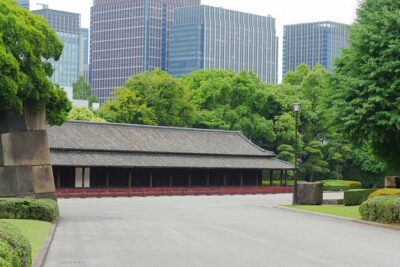
Imperial Palace East Garden and Edo Castle Walking Tour in Tokyo
Read our review →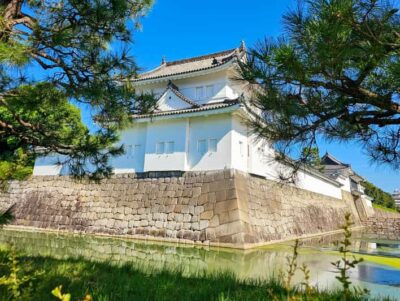
Imperial Palace & Nijo Castle Guided Walking Tour
Read our review →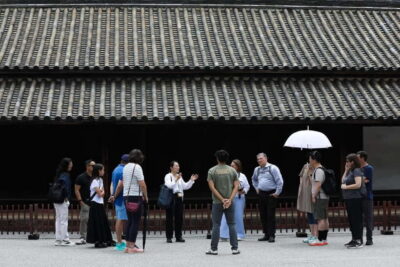
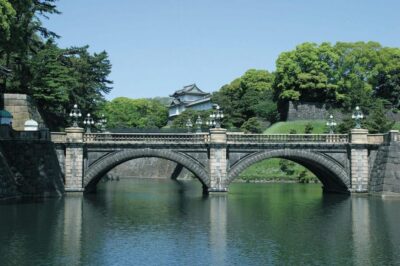
Imperial Palace, Sensō-ji Temple, & Tokyo Tower Tour
Read our review →
Tokyo Castle, Imperial Palace, Shogun & Garden Walking Tour
Read our review →Browse the lists this tour appears in