
Reviewed · FUSHIMI INARI TOURS
Kyoto Early Morning E Biking Tour Fushimi Inari Kiyomizu Temple
Kyoto’s famous sights are far easier to appreciate before the crowds arrive. This early morning e-bike tour links Fushimi Inari, Sanjusangendo, and Kiyomizu-dera in about five hours, with an English-speaking guide, bike, and temple admission arranged for you.
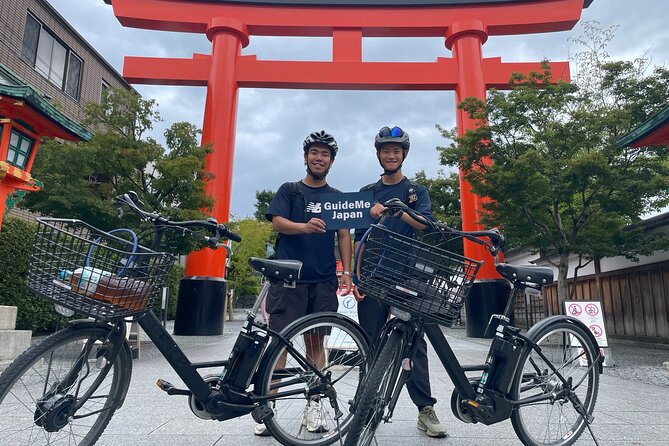
I like the small maximum group of eight people, which should make it easier to hear the guide and keep the ride moving. I also like the electric assist, since Kyoto’s eastern temple area includes some tiring uphill stretches. Guides Hiro and Rin have been singled out for warm, informative service, with Rin also taking excellent photos.
The main caution is the admission-fee wording. The tour says temple entry is included, but one booking resulted in a charge of ¥3,300 for three entries at two temples. Confirm exactly what is covered before you set off.
Key points to know before booking
- Early start, quieter shrines: Fushimi Inari is far more pleasant before the main daytime rush.
- Three major sights in one ride: You visit Fushimi Inari, Sanjusangendo, and Kiyomizu-dera.
- Electric help on Kyoto’s hills: The supplied e-bike cuts down the effort of riding through eastern Kyoto.
- Small group size: The tour accepts no more than eight people.
- Guide quality matters: Hiro is personable and informative, while Rin has also served as a skilled photographer.
- Check the temple fees: The advertised inclusion and one reported payment do not fully match.
Why an early e-bike start makes sense in Kyoto
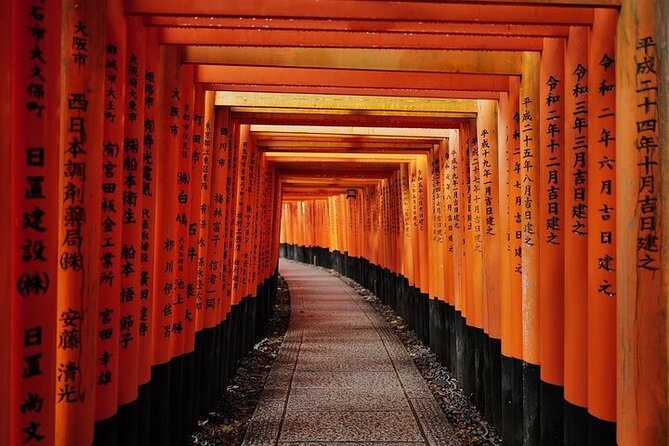
Kyoto rewards an early start, especially at Fushimi Inari-taisha Shrine. Its famous tunnel of red torii gates attracts people throughout the day, and the narrow paths become harder to enjoy when large groups fill the route.
This tour gives you a practical way to reach the shrine early without arranging a bike rental yourself. You meet at the JR-Central Ticket Office near the Shinkansen Hachijo entrance at Kyoto Station, receive the e-bike, and set out with a guide.
The bicycle is more than a novelty. Fushimi Inari, Sanjusangendo, and Kiyomizu-dera sit in the southern and eastern parts of Kyoto, and the route includes hills near the temple district. The electric motor should help you save energy for walking through the grounds and looking closely at the art.
You still need a moderate level of physical fitness. An e-bike does not remove the need to pedal, steer, walk, and manage temple paths. You should be comfortable spending much of the morning moving between outdoor and indoor sights.
The small group limit is another practical plus. With no more than eight people, the guide can usually keep explanations personal and answer questions without the feel of a large coach tour. The exact group size on your date may be smaller, but the published limit gives you a useful ceiling.
More ways to walk Fushimi Inari:
- Kyoto: Fushimi Inari, Kinkakuji, Bamboo Grove 1 Day Bus Tour
★ 4.8 · 4,316 reviews - Fushimi Inari Hidden Hiking Tour (Private Option Available)
★ 5.0 · 1,750 reviews - Kyoto/Osaka: Nara, Fushimi Inari Taisha, Arashiyama Bus Tour
★ 4.7 · 1,275 reviews
Fushimi Inari and its thousands of red gates
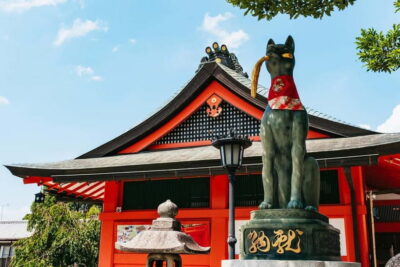
Fushimi Inari-taisha is the tour’s most instantly recognizable stop. The shrine is known for its long runs of bright red torii gates, which form a striking passage up the wooded slopes of Mount Inari.
You have about an hour here. That is enough time to walk through a section of the gates, take photographs, and hear the guide explain what makes the shrine important. It is not enough for a full exploration of every trail and upper shrine area, so you should view this as a focused visit rather than an all-morning hike.
The early timing is especially valuable here. Fushimi Inari is open-air, free to enter, and spread across a hillside, but its best-known paths can feel crowded later in the day. A morning visit gives you a better chance of seeing the gates with some breathing room.
Bring shoes suitable for walking. The tour is not just a cycling loop with quick photo stops. Each listed sight includes about an hour on foot, and Fushimi Inari’s slope means the walking portion can feel more demanding than the simple admission details suggest.
Your guide adds context that a solo photograph cannot provide. The red gates are not merely decorative scenery, and a good explanation helps you understand why this shrine has become one of Kyoto’s most photographed places. Rin, one of the guides associated with the experience, has also taken photographs for a participant, which could be useful if you want a few well-composed pictures of yourself rather than only phone snapshots.
Sanjusangendo’s remarkable interior
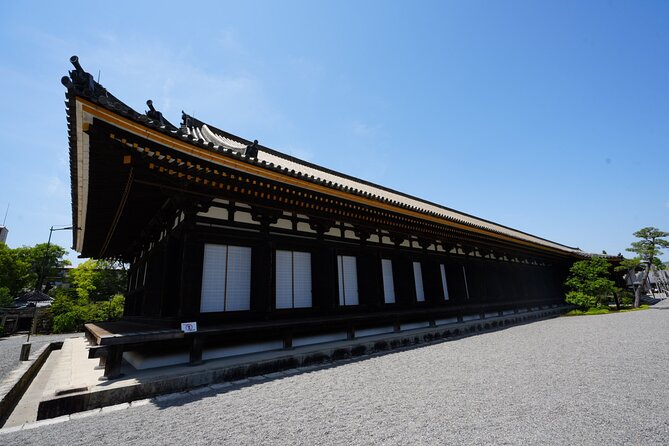
Sanjusangendo offers a sharp change of mood from Fushimi Inari. Instead of an open hillside path, you enter a temple famed for its interior formation of 1,000 statues of Kannon, the goddess of mercy.
The visit lasts about an hour. That gives you time to take in the scale and repeated arrangement of the figures, along with the individual details that make each statue distinctive. The experience depends more on careful looking than on a sweeping view, so it is a good middle stop between two outdoor attractions.
This is one reason the tour feels varied. You are not spending five hours at similar shrines or riding past sights without stopping. The morning shifts from red torii gates, to a grand sculptural interior, to a hillside temple with views across Kyoto.
Photography rules and interior conditions can affect how you experience this stop, but the supplied tour information does not specify them. Follow the temple’s instructions and allow the guide to set the pace. The value here is seeing the figures in person, where their scale and arrangement are easier to grasp than in a photograph.
The admission details need special attention at Sanjusangendo. Temple fees are described as included in the tour, yet one person paid for three entries covering two temples and questioned the charge. Since the information does not settle the discrepancy, ask GuideMe Japan before booking or at the meeting point which admissions are included and how any required payment is handled.
Kiyomizu-dera and Kyoto from the hillside
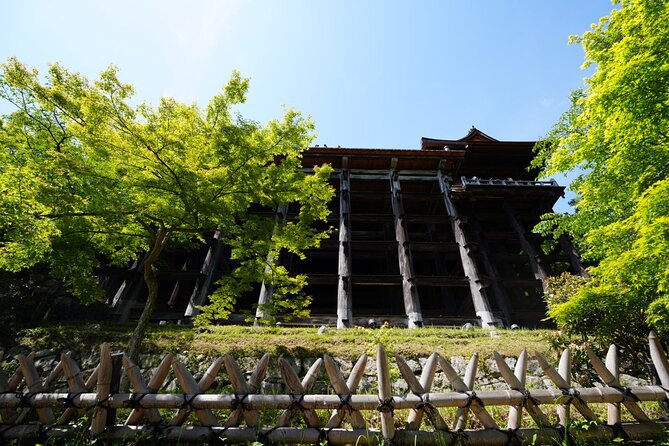
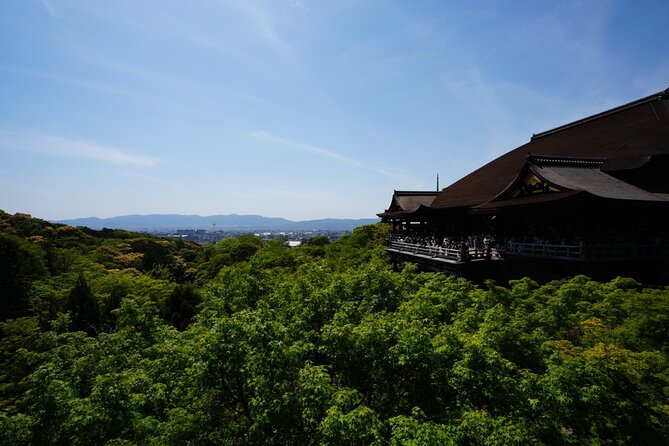
Kiyomizu-dera brings the tour to one of Kyoto’s best-known temple settings. Built on a hillside in eastern Kyoto, it combines impressive architecture with broad views over the city and surrounding hills.
You have about an hour here as well. That is enough for the main temple visit and a guided explanation, but it may feel short if you want to wander every nearby lane or spend a long time browsing around the wider temple district.
The approach is one reason the e-bike is useful. The eastern side of Kyoto is not perfectly flat, and arriving with electric assistance means you are less likely to begin the temple visit already worn out. You still need to walk once you arrive, but the bike handles part of the effort between sights.
Kiyomizu-dera can be one of the busiest places in Kyoto, so the early schedule again helps. The tour does not promise an empty temple, and no early visit can guarantee that. Still, reaching the site before the afternoon peak is a sensible way to improve the experience.
A guide can also make the architecture easier to read. Instead of seeing only a famous wooden temple and a city view, you get a basic explanation of the site’s history and place in Kyoto. The strongest guide feedback has focused on that personal element. Hiro is described as personable and informative, while Rin has been praised for both clear explanations and photography.
More bike days around Kyoto:
- Hidden Kyoto E-Biking tour
★ 5.0 · 1,843 reviews - Bike Tour Exploring North Kyoto plus Lunch
★ 5.0 · 1,087 reviews - Arashiyama Bamboo Forest & Hidden Gems Bike Tour (Early Bird)
★ 5.0 · 613 reviews - 5 Top Highlights of Kyoto Full Day Bike Tour (E-bike option)
★ 5.0 · 511 reviews
What the five-hour schedule gives you

The tour is built around three one-hour stops, leaving the remaining time for meeting, bike preparation, riding, and movement between sites. That structure is efficient, but it is also fairly full.
You get a useful introduction to several major Kyoto sights without spending time planning train connections, walking routes, or bike rental arrangements. For a first morning in the city, that can be a good trade. You see three different types of attraction and return to Kyoto Station by the end.
The compromise is depth. You will not have unlimited time at any one site, and the tour is not designed for a slow, unplanned morning. If you want to climb far up Fushimi Inari, linger over every statue at Sanjusangendo, or explore the shopping streets near Kiyomizu-dera, plan another visit.
The return to the original meeting point is convenient. You can leave luggage or make onward plans around Kyoto Station, although the tour information does not state that luggage storage is provided. The start and finish at the same place also make the experience easier to fit into a short Kyoto stay.
Since the tour depends on good weather, keep your wider schedule flexible. If poor weather causes cancellation, you are offered another date or a full refund. For a bicycle tour, that protection matters more than it would for an indoor temple visit.
Guide style and the value of a small group
The guide is central to this experience. The route itself is easy to understand, but the quality of the morning depends on how clearly the guide handles the sights, timing, and cycling group.
The tour includes an English-speaking guide. Hiro has been described as personable and informative, while Rin has been praised for detailed explanations at Kiyomizu-dera, Fushimi Inari, and Sanjusangendo. Rin’s photography is an extra advantage if you want useful pictures during the tour.
Guides vary by date, so you should not assume that Hiro or Rin will lead your particular departure. Their names are still useful because they show the kind of service the operator has provided: friendly conversation, historical explanation, and help with photographs rather than simple escorting.
The maximum of eight people is well suited to this sort of outing. A bicycle group becomes harder to manage as it grows, especially when moving between roads, temple areas, and meeting points. A small group also gives you a better chance to ask about the sights or request clarification.
The published rating is 4.9 from 14 reviews, with 100 percent recommending the experience. That is a strong early signal, though the sample is small. I would place more weight on the repeated praise for the guides than on the rating alone, since the guide’s communication is likely to shape your morning more than the bike itself.
Is $67.41 a fair price?
At $67.41 per person, the price covers the e-bike, English-speaking guide, and listed temple admission. It also saves you the work of finding a suitable rental and planning a route that links three major sights in a limited time.
The value is strongest if you have only a short stay in Kyoto. You receive transport between attractions, a guide’s explanations, and a morning schedule designed to avoid the busiest part of the day. Buying these pieces separately might be cheaper in some cases, but it would take more time and planning.
The value is less clear if you already have a bicycle, know Kyoto well, and prefer lingering at each temple. You would give up some freedom by following a fixed route and spending roughly an hour at each stop.
The admission issue is the one financial concern I would not ignore. One person paid ¥3,300 for three entries to two temples despite the stated inclusion. That may have been a booking error, a misunderstanding, or a problem with how the information was presented, but you should ask for clarification before paying.
Food and drinks are not included. The five-hour length makes it sensible to eat beforehand and carry what you need, though the tour information does not specify a food stop or refreshment break.
Who will enjoy this ride most?

I would recommend this tour most strongly to someone visiting Kyoto for the first time, especially with only a day or two available. You get three major sights, early access, a guide, and transport in one organized morning.
It also suits you if hills make ordinary cycling less appealing. The e-bike reduces the strain, but you still need moderate fitness and comfort with cycling and walking.
This is a good choice for solo visitors and couples who want company and local explanation without joining a large group. The small-group limit makes it easier to ask questions, and a guide such as Rin may add photo help as well as historical detail.
You may prefer a self-guided plan if your priority is flexibility. The one-hour structure at each stop gives you variety, but it does not leave much room for spontaneous detours. Serious photographers may also want more time at each site than this route allows.
The tour is not described as accessible for people with limited mobility, and the fitness requirement should be taken seriously. Cycling, hills, and temple walking are all part of the morning. If that sounds tiring, a slower transport option may suit you better.
Practical details before you set out
You meet at the JR-Central Ticket Office at the Kyoto Station Shinkansen Hachijo entrance, at the first-floor location listed for the tour. The activity ends back at the same meeting point.
Confirmation is provided when you book, and the experience is available with a mobile ticket. It is also near public transportation, which makes the station meeting point straightforward to reach.
The tour lasts approximately five hours. Since the start time is early, check the exact departure time carefully and allow enough time to find the correct station entrance. Kyoto Station is large, and a few extra minutes can prevent a rushed start.
Free cancellation is available if you cancel at least 24 hours before the local start time. Changes or cancellations inside that window are not accepted for a refund. Poor weather is handled separately, with a different date or full refund offered if the operator cancels the activity.
Should you book this Kyoto e-bike tour?
Book it if you want an efficient, early look at three famous Kyoto sights and appreciate having the bike, guide, and route handled for you. The electric assistance, small group, and strong guide feedback make it particularly appealing for first-time visitors who want more than a basic sightseeing transfer.
Before paying, ask GuideMe Japan to confirm the temple admission policy in writing. If that point is cleared up, $67.41 is a reasonable price for a five-hour guided morning with an e-bike and three major stops.
Skip it if you want to explore at your own pace, dislike fixed schedules, or cannot comfortably cycle and walk for much of the morning. For everyone else, this is a smart way to see Kyoto’s southern and eastern highlights before the day becomes crowded.
FAQ
Where does the Kyoto e-bike tour begin?
It begins at the JR-Central Ticket Office at the Kyoto Station Shinkansen Hachijo entrance, on the first floor.
Where does the activity end?
The tour ends back at the original meeting point at Kyoto Station.
How long does the tour last?
The experience lasts approximately five hours.
Which attractions are included?
The tour visits Fushimi Inari-taisha Shrine, Sanjusangendo Temple, and Kiyomizu-dera Temple.
Is an e-bike provided?
Yes. An e-bike is included, along with an English-speaking guide.
Are temple admission fees included?
The tour information says temple admission is included. However, one booking involved a ¥3,300 charge for three entries to two temples, so you should confirm the exact admission policy before booking.
What happens if bad weather cancels the tour?
If poor weather causes cancellation, you will be offered a different date or a full refund. You can also cancel for a full refund up to 24 hours before the local start time.
More Morning in Kyoto
- Kyoto Early Morning Tour with English-Speaking Guide
★ 5.0 · 1,427 reviews - Kyoto: Early Morning Tour with English-Speaking Guide
★ 4.9 · 1,128 reviews - From Kyoto: Nara Guided Morning Tour
★ 4.6 · 335 reviews - Kyoto Morning Tour from Kyoto or Osaka
★ 4.0 · 281 reviews
Just added around Kyoto
- Kyoto: Zen Meditation at a Private Temple with a Monk★ 5.0 · 25 reviews
- Kyoto: Gion Geisha District & Sake-in-Hand Walking Tour★ 5.0 · 37 reviews
- Private Pewter Sake Cup Experience with a Kyoto Artisan★ 5.0 · 31 reviews
- Your Private Vacation Photography Session In Kyoto★ 5.0 · 110 reviews
- Private Guided Traditional Buddhist Cooking in Japan★ 5.0 · 16 reviews
- Kyoto Wagashi(Japanese sweets) Cooking Class near Fushimiinari★ 5.0 · 60 reviews
- Traditional Japanese Music show & Experience Tour in Kyoto★ 5.0 · 57 reviews
- Kyoto:Family-Friendly Kimono & Yukata Experience at WARGO★ 5.0 · 147 reviews
Fushimi Inari Tours, compared.

Fushimi Inari, Kinkakuji, Bamboo Grove 1 Day Bus Tour
Read our review →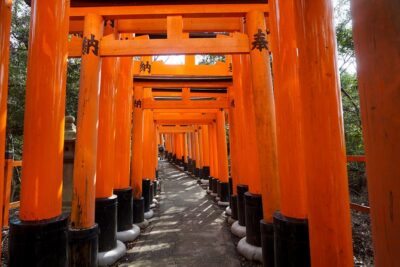
Fushimi Inari Hidden Hiking Tour (Private Option Available)
Read our review →
Kyoto/Osaka: Nara, Fushimi Inari Taisha, Arashiyama Bus Tour
Read our review →
Osaka/Kyoto: Arashiyama, Nara & Fushimi Inari Shrine w/Lunch
Read our review →
Nijo Castle, Kiyomizu & Fushimi Inari Guided Tour
Read our review →
Nijo, Kinkaku-ji, Arashiyama, Kiyomizu & Fushimi Inari
Read our review →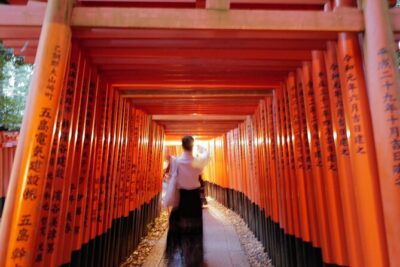
Browse the lists this tour appears in