
Reviewed · KYOTO TOURS
Kyoto: Kendo Samurai Experience Tour
A bamboo sword cracks through the quiet of a Kyoto dojo, and suddenly samurai training feels less like a museum display and more like a serious sport. In two hours, you learn kendo etiquette, movement, strikes, and match rules before putting on full armor for a controlled fight.
I like the hands-on training and the way professional instructors break hard skills into small steps. I also like the chance to meet Hayashi-sensei, a 7th Dan master, and take home a free kendo towel. The main drawback is location: JR Hanazono Station is about 15 minutes from Kyoto Station, so this is not a quick stop in central Kyoto.
Key points to know before booking
- Real kendo practice: You train with bamboo swords and take part in controlled fighting, even as a beginner.
- Full armor included: Rental equipment lets you experience the weight and discipline of kendo properly.
- Hayashi-sensei leads the class: The instructor has more than 40 years of kendo experience and holds a 7th Dan grade.
- Clear teaching for international visitors: Instruction is in English and Japanese, with demonstrations and translation support when needed.
- A proper Kyoto dojo setting: Etiquette, silence, movement, and respect matter as much as the strikes.
- Family and small groups work well: Several sessions have turned into private or family classes, ending with friendly matches.
What you really do during the two-hour class
This is not a costume photo session with a sword waved around for five minutes. Kendo is a modern Japanese martial art built around bamboo swords, protective armor, strict etiquette, and actual sparring.
Your session is designed for beginners, but the training is treated seriously. You learn how to move, hold the sword, follow basic rules, and strike safely. The class then builds toward a match in full armor, where you can test what you have just learned.
That balance is the heart of the activity. You get a taste of samurai tradition, but you also get a real physical workout. Kendo asks you to focus your eyes, feet, hands, posture, and timing at once. Even a basic exercise can feel demanding when you must stay alert and respond correctly.
The class lasts two hours, which is long enough to move beyond a theatrical demonstration. At the same time, it is short enough to fit into a busy Kyoto schedule. You will not leave with mastery, but you should leave with a clear sense of what kendo demands.
More Samurai and Ninja Experiences in Kyoto
- Kyoto Samurai Experience
★ 5.0 · 1,294 reviews - Kyoto: Kendo and Samurai Experience with Uniform and Gear
★ 4.9 · 815 reviews - Kyoto: Samurai Sword Class by Experts in Traditional Arts
★ 4.9 · 657 reviews
Meeting Hayashi-sensei at the Hanazono dojo
The meeting point is the north exit of JR Hanazono Station, written as JR 花園駅北口. From Kyoto Station, take the JR Sagano Line. The trip takes about 15 minutes, not counting the time needed to find the platform and walk from the station.
That train ride is worth planning carefully. Hanazono is outside the central sightseeing core, so you should allow extra time rather than aiming to arrive at the exact start time. One family found the distance greater than expected, even though they were happy with the class once they arrived.
The instructor is Hayashi-sensei, who has more than 40 years of kendo experience and holds a 7th Dan grade. That matters here because beginners need more than sword movements. They need someone who can control the pace, explain why the rules exist, and keep the practice safe.
The teaching style appears patient and practical. Hayashi-sensei uses demonstrations to make instructions clear, which is useful if your Japanese is limited. English and Japanese are offered, and some sessions have included Miho as a translator and guide. You should still expect the class to rely heavily on watching, copying, and repeating movements rather than on long English explanations.
Etiquette comes before the bamboo sword
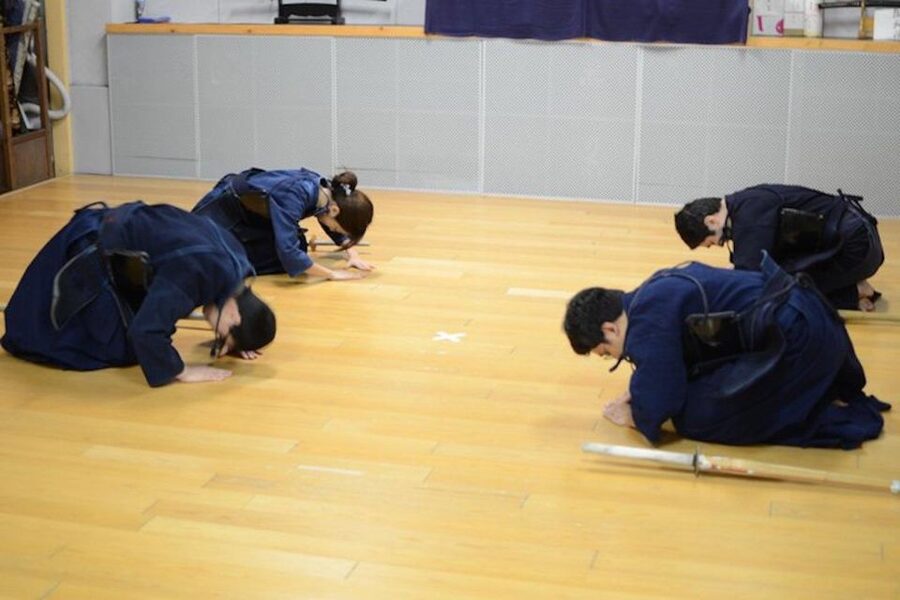
Kendo begins with conduct. Before you start striking, you learn how to behave in the dojo, how to move, and how to show respect to the instructor and other participants.
That can feel formal if you are used to casual sightseeing activities. It is also one of the best reasons to choose this class over a simple samurai dress-up session. You are not only borrowing equipment. You are learning that kendo treats discipline, control, and courtesy as part of the martial art.
The early part of the class focuses on basic exercises and movement. You learn how to stand, step, and handle the sword. These first drills may look simple, but they prepare you for everything that follows.
Pay attention to your feet. Beginners often want to concentrate only on the bamboo sword, yet kendo depends on coordinated movement. The instructor will guide you through the basic form, then help you bring your steps and strikes together.
The dojo itself is described as neat and clean, with a calm atmosphere. That setting helps the class feel like training rather than entertainment. The quiet room, formal manners, and sharp bamboo strikes create a strong contrast with the crowded lanes and busy sights elsewhere in Kyoto.
Learning to strike, move, and follow the rules
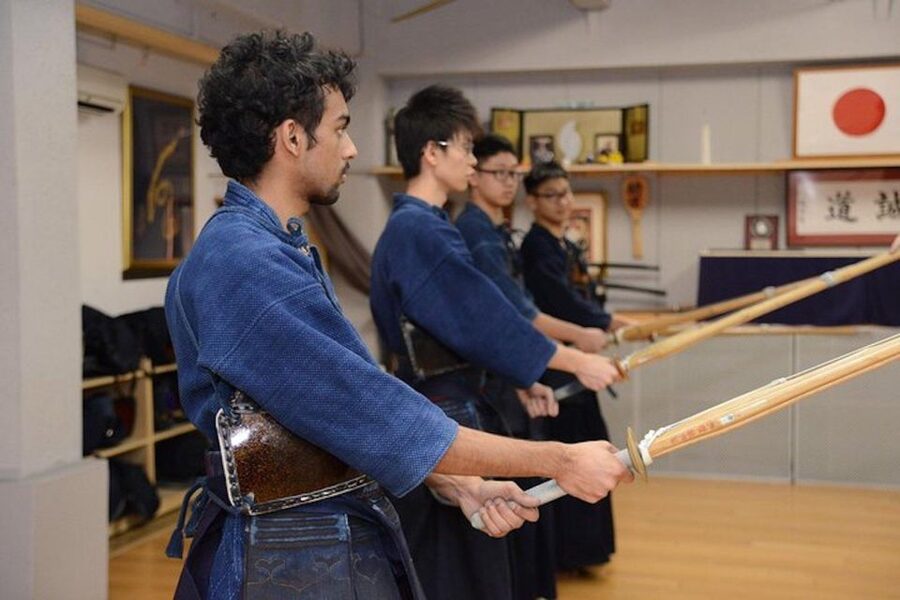
Kendo is one of the martial arts in which beginners can practice actual fighting. That does not mean you are thrown into an uncontrolled contest. The exercises are taught step by step, and the final match is controlled by the instructor.
You learn the basic techniques first. The instructor shows the movement, explains the action, and gives you time to copy it. If the language is not always easy, careful demonstrations help. Several participants have found that Hayashi-sensei communicates clearly through a mix of simple instruction, humor, patience, and physical example.
The training can be harder than it looks. One family described it as quite a workout, and that is a useful warning for anyone expecting a gentle cultural lesson. You will be standing, moving, repeating strikes, and concentrating for much of the session.
The effort is part of the value. At $116 per person, this is not the cheapest way to spend two hours in Kyoto. You are paying for a specialist instructor, rental armor and equipment, guided training, water, and a class that includes real practice rather than a staged show.
For someone who has always wanted to try kendo in Japan, the price can make sense. You receive direct instruction from a senior practitioner and a chance to use proper gear. If you only want a quick photo in samurai clothing, this class is more time and money than you need.
More samurai and ninja sessions in Kyoto:
- Skip the lines Basic Ticket at SAMURAI NINJA MUSEUM KYOTO
★ 4.5 · 632 reviews - Ninja 1-hour Hands-on Lesson by Japanese master in Kyoto -Entry
★ 5.0 · 489 reviews - Kyoto: Ninja Weapon Forging Experience
★ 4.8 · 478 reviews - Kyoto: Samurai Kenbu Traditional Sword Dancing Show
★ 4.5 · 426 reviews
Putting on full kendo armor
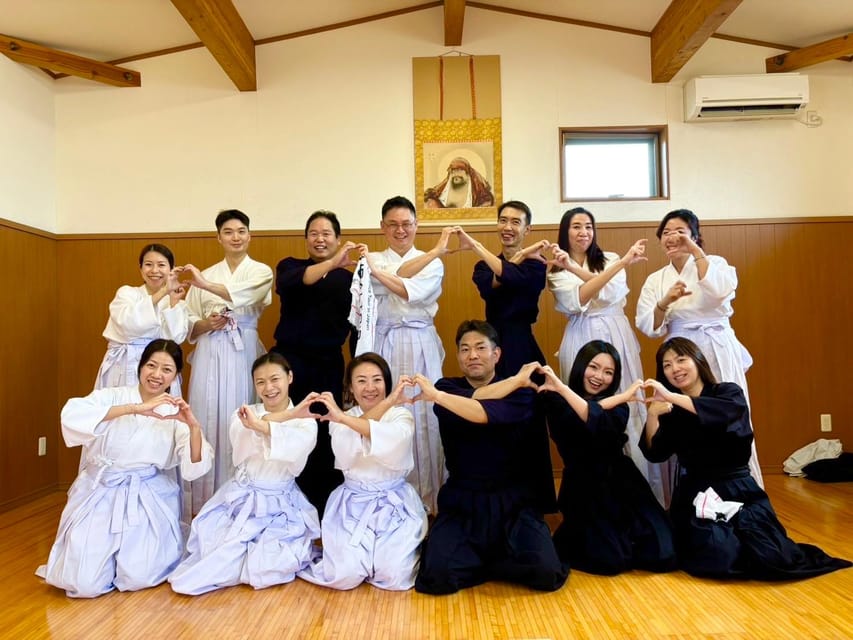
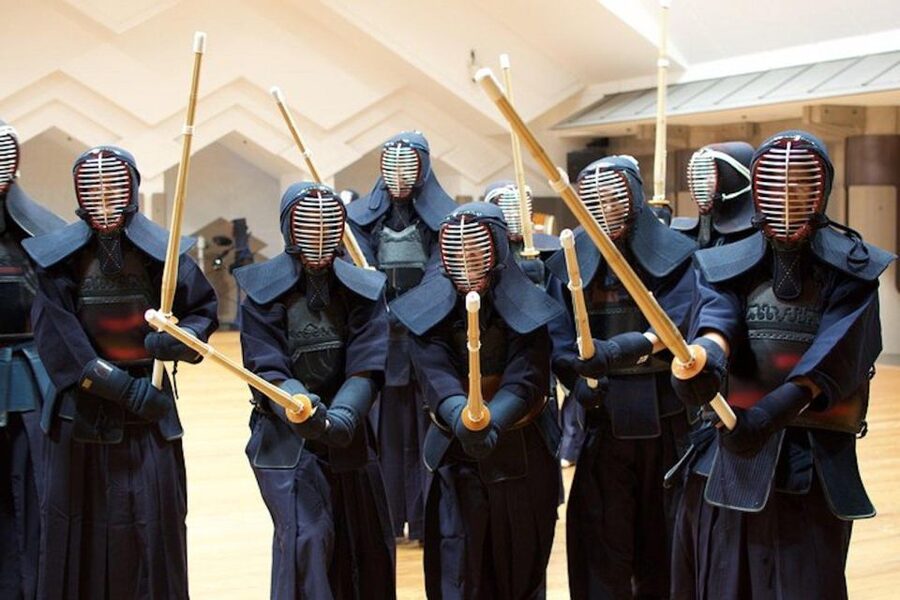
The equipment changes the feel of the class. A bamboo sword alone gives you a rough idea of kendo, but full armor shows how much structure and protection the sport requires.
Rental kendo armor and equipment are included. The provider asks for each participant’s gender and height in advance so the right sizes can be prepared. Give accurate details when booking, especially if you are arranging the class for children or a mixed group.
Putting on the armor is also the moment when the session becomes more physical and focused. The gear is not just decorative. It is used for the controlled fighting section, so you can practice with more confidence while following the instructor’s directions.
The equipment has been described as excellent, and the dojo as clean and well kept. That is important for a martial arts activity. Poorly fitting or tired equipment would distract from the lesson, while properly prepared gear helps you concentrate on movement and safety.
You should not assume the armor makes the class effortless. It adds weight and changes how you move. The final section can be tiring, particularly after the earlier drills. That is why the gradual build-up works well: you learn the basics before adding the equipment.
The final match is the payoff
The class ends with the part most people remember: a kendo match in full armor using bamboo swords.
This is not a free-for-all. The instructor keeps the activity safe and controlled, while giving you a chance to use the techniques from the lesson. For families, the format can be especially fun. Fathers and sons have faced each other, as have brothers, with the match turning the training into a friendly challenge.
The contest is not only about strength. You must remember the rules, keep your form, move properly, and strike at the right moment. That makes the match a useful test of whether the earlier instruction has begun to make sense.
Do not expect to fight like a trained kendoka after one session. The point is to feel the rhythm and discipline of the sport. You may land a strike, miss completely, forget your footwork, or laugh inside the helmet while trying to remember what comes next. That is normal.
The instructor’s presence matters most here. Beginners need someone who can set limits and keep the match enjoyable. Hayashi-sensei’s long teaching background and patient approach are valuable when the class shifts from slow practice to live action.
Why this works well for families and small groups
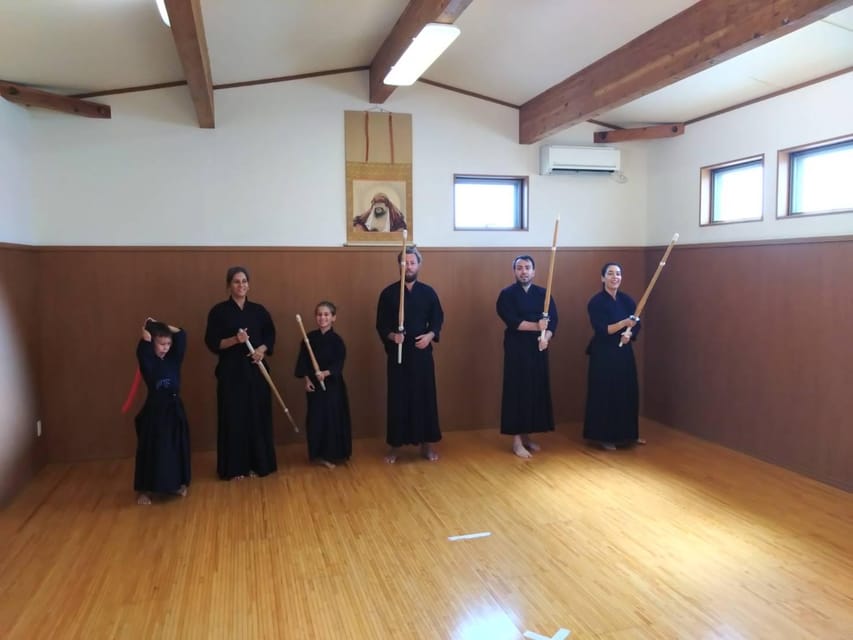
The class suits families particularly well because it gives everyone the same task, regardless of age or previous knowledge. Parents and children can train together, then face one another in a safe match.
Small groups also have a real advantage. If few people book a particular time, you might receive much more individual attention. One father and son found themselves as the only participants, with the instructor making three people in total. That effectively turned the class into private tuition.
You should not count on a private session, since group size can vary. Still, the format allows the instructor to adjust the pace for the people in front of him. That is helpful when one person is athletic and another is completely new to martial arts.
The activity also works for adults traveling together. Friends, couples, and families can encourage one another during the drills, then enjoy the friendly rivalry of the final match. Just remember that the class involves physical exertion, not only cultural explanation.
Pregnant women and people with pre-existing medical conditions should not book this activity. If you have concerns about your fitness or health, choose a gentler Kyoto activity instead.
English support and the importance of watching closely
Instruction is available in English and Japanese, but the amount of spoken English may differ by session. One participant noted that the instructor did not speak much English, yet found the demonstrations clear enough to follow. Another session included Miho as a translator and guide.
That means you do not need fluent Japanese to take part, but you should be ready to learn by observation. Watch the instructor’s feet, grip, posture, and timing. Copy the movement slowly, then ask for help if something is unclear.
This is a good setting for visual learners. Kendo technique is physical, so seeing the correct action often helps more than hearing a long explanation. The formal nature of the class also gives you repeated chances to watch and try again.
If you want a detailed lecture on Japanese swordsmanship in English, this may feel limited. If you want to stand in a dojo, follow a skilled instructor, learn the basic etiquette, and practice with a bamboo sword, the language mix should be manageable.
What the $116 price includes
The $116 price covers:
- A professional kendo instructor
- Rental armor and equipment
- Free mineral water
- A free kendo towel
Hotel pickup, hotel drop-off, and food are not included. You need to make your own way to JR Hanazono Station and plan your meal separately.
I consider the price fair for a specialist activity with proper equipment and a senior instructor, especially if you value direct participation. The cost is harder to justify if you are mainly seeking a short cultural photo opportunity.
The free towel is a small extra, not the reason to book. The real value comes from the instructor’s guidance, the armor, and the controlled match at the end. A 4.7 rating from 33 ratings also suggests a consistently strong experience, though the distance from central Kyoto remains an important practical detail.
Free cancellation is available up to 24 hours before the start time, and you can reserve now and pay later. Those terms help if your Kyoto schedule is still shifting, but they do not remove the need to plan the train ride carefully.
The practical details that matter on the day
Tell the provider everyone’s gender and height when you book. This allows the correct equipment sizes to be prepared.
Meet at the north exit of JR Hanazono Station. Do not go to the wrong side of the station and assume the dojo will be easy to find without checking your directions. The meeting point is outside central Kyoto, so allow a buffer after your train arrives.
The class lasts two hours. Starting times vary, so check availability before planning temple visits or restaurant reservations around it.
Bring enough energy for a physical class. Food is not included, and the activity provides mineral water, so plan any meal before or after the session. Wear something suitable for movement, though the supplied kendo equipment is the key gear for the training.
The session is offered in English and Japanese. Clear demonstrations are an important part of the teaching, especially for visitors who speak little Japanese.
Who should book this Kyoto kendo class?
I would recommend it to you if you want an active cultural experience, have a genuine interest in Japanese martial arts, or enjoy learning by doing. It is also a strong choice for families and small groups who want a shared activity with a memorable final challenge.
You do not need prior kendo experience. Beginners are guided through the basics, and the training is designed to let you take part in a controlled match during the same class.
I would hesitate if you have limited mobility, a medical condition, or no interest in physical exertion. I would also think twice if your Kyoto schedule is packed around central sights, since getting to Hanazono and back takes extra time.
Should you book the Hanazono kendo experience?
Book it if the idea of wearing full armor, learning dojo etiquette, and facing a friend or family member with a bamboo sword sounds more appealing than watching a staged samurai show. The class offers real instruction, a serious but friendly atmosphere, and enough practice to give you respect for the art.
Skip it if you want a relaxed photo stop, a central Kyoto location, or a long English-language lecture. For everyone else, the combination of Hayashi-sensei’s experience, clear demonstrations, proper equipment, and a controlled final match makes this a memorable two-hour addition to a Kyoto visit.
FAQ
Where does the kendo class meet?
The meeting point is the north exit of JR Hanazono Station, written as JR 花園駅北口. The station is about 15 minutes from Kyoto Station on the JR Sagano Line.
How long does the activity last?
The kendo class lasts two hours. Starting times vary, so you need to check availability for your preferred date.
Is kendo experience required?
No. Beginners are guided through basic exercises, movement, techniques, etiquette, and rules before taking part in controlled fighting practice.
Is kendo armor included?
Yes. Rental kendo armor and equipment are included in the price. You should provide each participant’s gender and height so suitable sizes can be prepared.
What languages are available?
Instruction is available in English and Japanese. Demonstrations are an important part of the teaching, and translation support may be provided during some sessions.
What is included in the price?
The price includes a professional instructor, rental kendo armor and equipment, mineral water, and a free kendo towel. Hotel transfers and food are not included.
Just added around Kyoto
- Kyoto: Zen Meditation at a Private Temple with a Monk★ 5.0 · 25 reviews
- Kyoto: Gion Geisha District & Sake-in-Hand Walking Tour★ 5.0 · 37 reviews
- Private Pewter Sake Cup Experience with a Kyoto Artisan★ 5.0 · 31 reviews
- Your Private Vacation Photography Session In Kyoto★ 5.0 · 110 reviews
- Private Guided Traditional Buddhist Cooking in Japan★ 5.0 · 16 reviews
- Kyoto Wagashi(Japanese sweets) Cooking Class near Fushimiinari★ 5.0 · 60 reviews
- Traditional Japanese Music show & Experience Tour in Kyoto★ 5.0 · 57 reviews
- Kyoto:Family-Friendly Kimono & Yukata Experience at WARGO★ 5.0 · 147 reviews
Kyoto Tours, compared.


Fushimi Inari, Kinkakuji, Bamboo Grove 1 Day Bus Tour
Read our review →
Tea Ceremony in a Traditional Tea House in Kiyomizu
Read our review →
Kyoto Geisha Walking Tour: Gion District & Hidden Gems
Read our review →

Gion Magical Night Walking Tour with Geisha Trivia
Read our review →

Gion Geisha District Walking Tour – Stories of Geisha
Read our review →Browse the lists this tour appears in