
Reviewed · KYOTO TOURS
Kyoto: Traditional Kimono Fabric Handicrafts Workshop
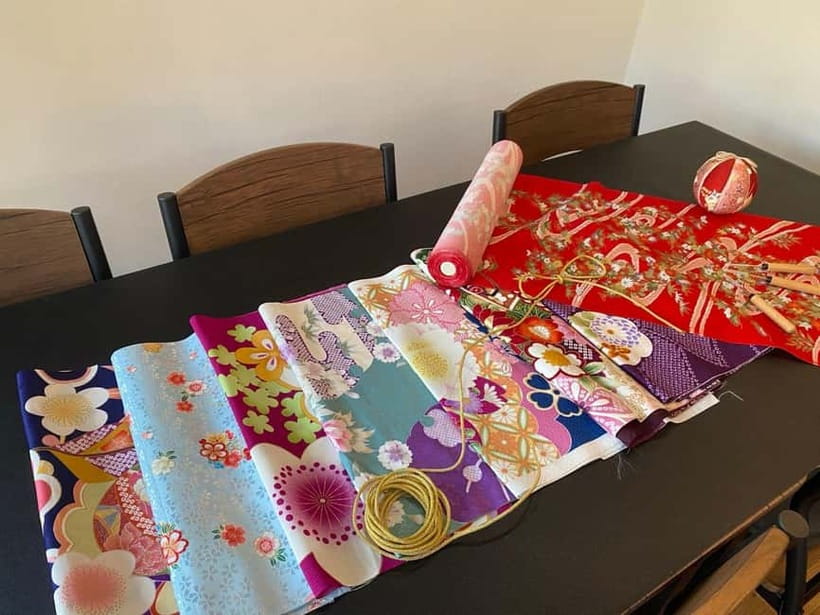
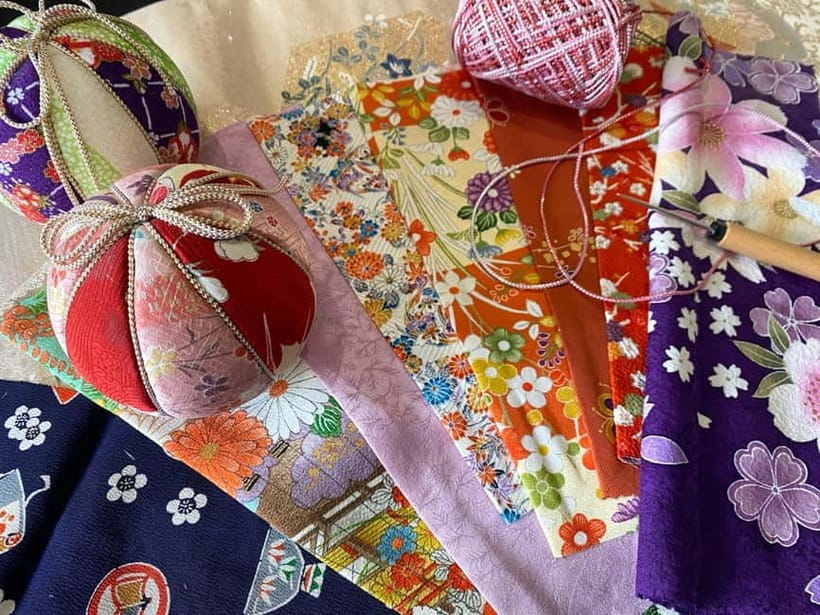
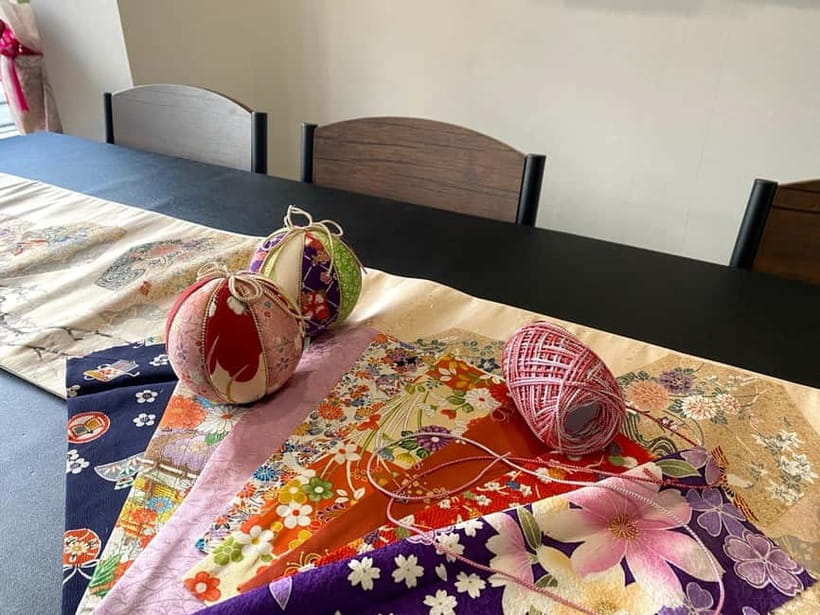
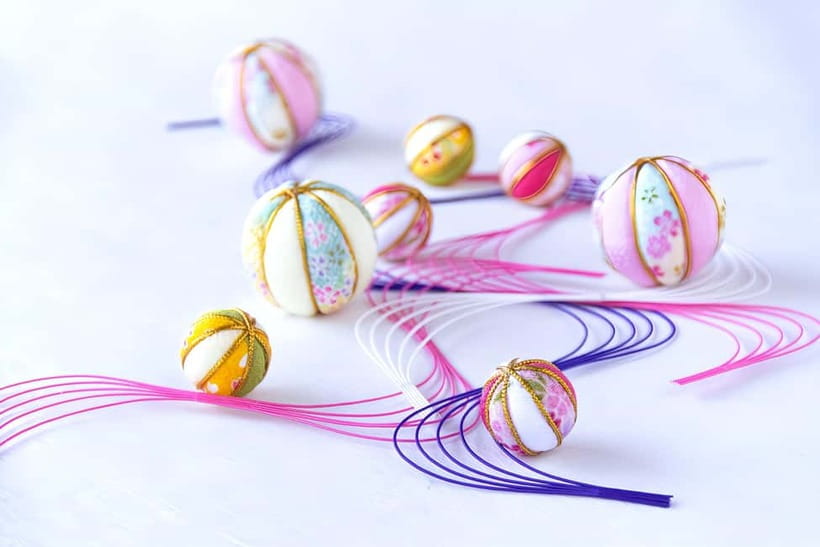
A small ball covered in handsome kimono cloth becomes your Kyoto souvenir here. In a renovated antique boutique, local artisan May guides you through making a traditional Temari, a decorative object used for celebrations and home interiors. You choose the fabric, follow clear steps, and leave with something made by your own hands.
I like the wide choice of recycled kimono fabrics, and I like the calm pace after a morning of temple visits. The included drink and Japanese confectionery add a pleasant local touch, while May’s patient English makes the craft easy for complete beginners.
The one drawback is that this is a simple two-hour craft class, not a full cultural tour. The surrounding temples and shrines are nearby, but you visit them on your own. If you want a detailed guided tour of Kyoto’s sights, this is not it.
Key points at a glance
- Make a Temari from kimono fabric: Choose several cloth pieces and create a traditional Japanese decoration to take home.
- May teaches in English or Japanese: Her calm, friendly instruction suits first-time crafters and families.
- Small groups of four: The limited size allows plenty of help, especially when children need a hand.
- Tea and a Japanese sweet included: Your refreshment is part of the class, not an extra purchase.
- A useful break from sightseeing: The relaxed workshop gives your feet and mind a rest between temples.
- Good value at $25: Materials, instruction, a drink, a confectionery, and your finished souvenir are included.
Choosing fabric in a Kyoto antique boutique
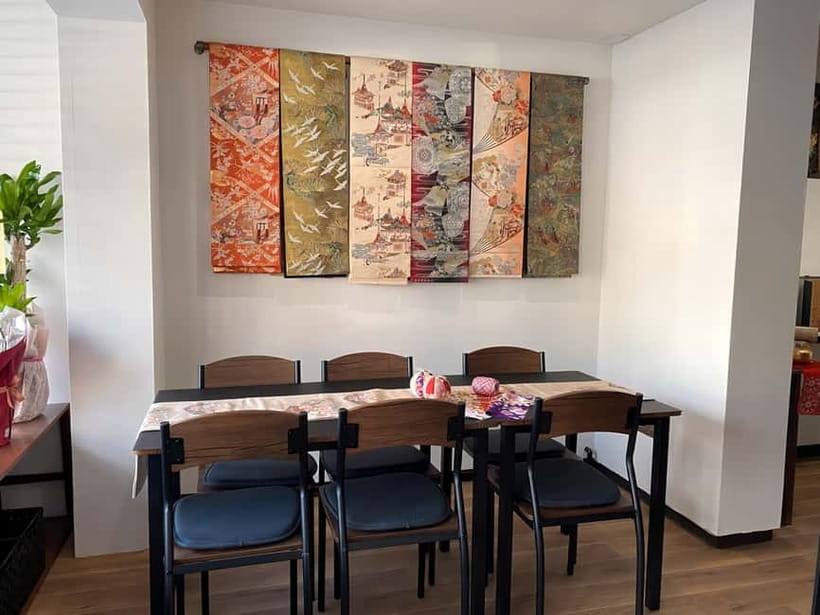
The experience begins inside a newly renovated traditional Japanese antique boutique. You enter the workshop on arrival, where your host is waiting to greet you. The setting matters: this is not a generic craft room filled with factory-made supplies. The shop also sells custom bags and other small crafts made from old kimonos, so you get a closer look at how worn textiles can be given a second life.
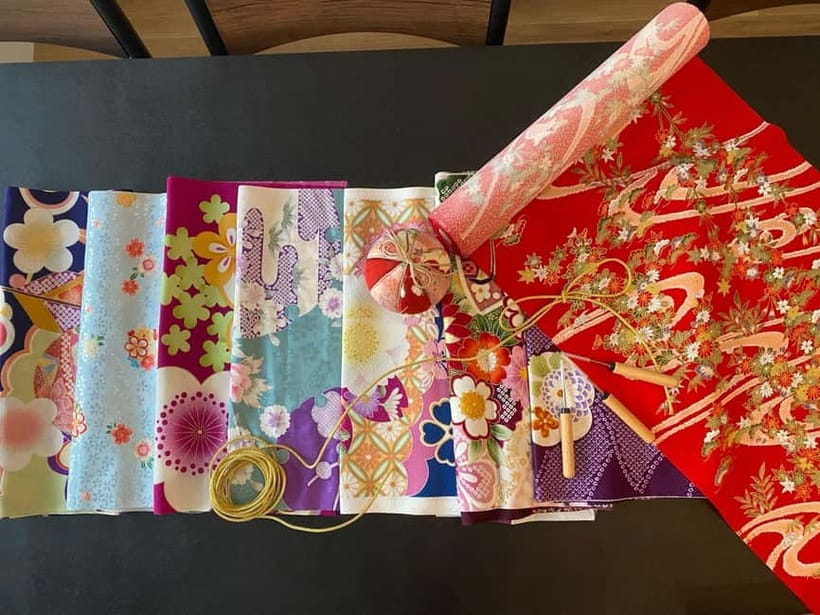
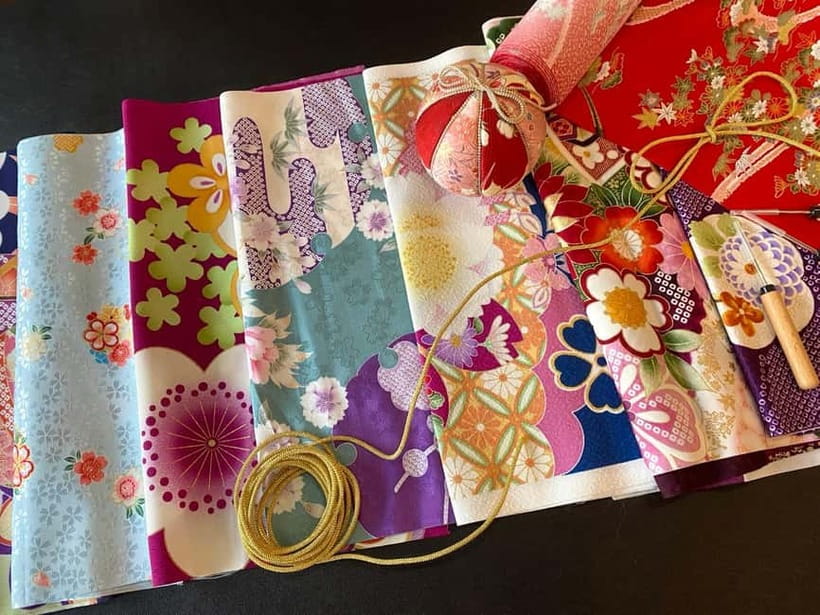
The fabric selection is likely to be the first big decision. You work with beautiful kimono pieces in different colors and patterns, and part of the fun is deciding how they will look together. The class uses five fabric selections for the Temari, so give yourself a little time before grabbing the first pieces you like.
I would choose one main color first, then look for smaller patterns that work with it. Traditional kimono cloth can be visually busy, and five attractive pieces do not always make the best combination. The freedom to select your own colors is one of the strongest parts of the class, since the finished object feels personal rather than predesigned.
This is also where the craft’s connection to Kyoto becomes clear. You are not simply decorating a souvenir with a printed Japanese motif. You are handling pieces of kimono fabric and turning them into a small object with a long place in Japanese celebrations and home decoration.
More Kimono Experiences in Kyoto
- Kimono Tea Ceremony at Kyoto Maikoya, NISHIKI
★ 5.0 · 911 reviews - Kyoto: Kimono Rental with Hairstyling and Accessories
★ 4.8 · 653 reviews - Kyoto: Kimono Tea Ceremony at Orizuruya Gion
★ 4.9 · 618 reviews
How the two-hour Temari class works
Temari are traditional Japanese handcrafted decorations. They are used as interior ornaments and for various celebrations throughout Japan. The class gives you a straightforward introduction to this art without requiring sewing experience or previous craft skills.
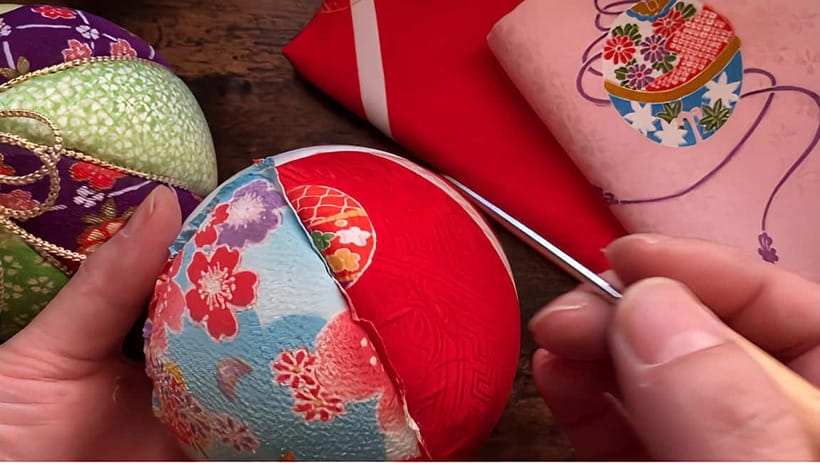
May explains the process step by step, then helps as you work. The activity is described as simple and beginner-friendly, with little sewing involved. That makes it suitable for children as well as adults, and it works well for couples, families, and solo visitors.
You should expect a hands-on session rather than a demonstration you only watch. You select your fabric, work through the construction, and gradually see the ball take shape. The finished Temari is small enough to pack as a keepsake, though the supplied information does not specify its exact size or packing method.
The class is not designed to test your artistic ability. Children can take part, and the activity has worked for families with children aged 10 and 12. If you are nervous about crafting, you will not need special skills to produce a pleasing result.
The pace also leaves room for conversation. May’s English is described as excellent and clear, and she explains each stage patiently. When a participant attended alone, she had time to teach an additional fabric flower technique. That extra attention may depend on the group size and schedule, but it shows the kind of personal instruction a small class can allow.
Tea, Japanese sweets, and a slower hour in Kyoto
Each participant receives a complimentary drink and a traditional Japanese confectionery of their choice. These are included in the $25 price, and they help make the workshop feel like a cultural activity rather than a paid craft table.
The refreshment is also a useful pause from Kyoto’s walking. Sightseeing in this city often means moving between temples, shrines, lanes, and stations on foot. A seated craft session gives you time to rest without giving up the sense that you are doing something connected to Japan.
The exact drink choices are not specified, though matcha latte, tea, and other refreshments are mentioned in the experience details. Additional drinks and food cost extra. If you want a full café meal, plan to eat elsewhere.
The traditional confectionery is a small detail, but it adds context to the class. You are handling kimono fabric, learning about Temari, and sampling a local sweet in the same sitting. That combination makes the two hours feel more rounded than a craft lesson alone.
A handmade souvenir with a personal story
Kyoto has no shortage of souvenirs, from mass-produced charms to carefully made crafts. The advantage here is that your souvenir carries your own decisions. You chose the colors, handled the fabric, and completed the work with guidance from a local craftsperson.
The result may not look exactly like the sample in the shop, and that is part of its appeal. A small uneven edge or a slightly different color balance shows that you made it yourself. The activity is a good choice if you want something more meaningful than an item picked up quickly at a station shop.
The workshop also offers a gentle introduction to textile reuse. Several pieces used in the class come from recycled or old kimonos, and the shop sells bags and crafts made from the same kind of material. You can browse those items after your class, though purchases are not included in the workshop price.
Pack your Temari with care for the journey home. The information provided does not state whether a special box or protective wrapping is supplied, so ask May about the best way to carry it if you are continuing around Japan.
More kimono rentals in Kyoto:
- KYOTO Tea Ceremony with kimono near by Imamiya Jinjya Shrine
★ 5.0 · 343 reviews - Kyoto: Kimono and Tea Ceremony Experience at Cultural Asset
★ 4.3 · 306 reviews - Kyoto: Traditional Kimono Rental
★ 4.7 · 265 reviews - Kyoto: Kimono Tea Ceremony with Matcha and Sweet
★ 4.9 · 249 reviews
Why the location works with a temple day
The workshop is in the heart of Kyoto’s sightseeing area, near historically significant temples and shrines. The exact address and temple names are not provided, so you should check the meeting point details carefully before setting out.
What is clear is that you can pair the class with other nearby sightseeing. One family went on to find cafés and the Philosopher’s Path in the area. That makes the workshop useful as part of a half-day plan rather than a separate trip across the city.
I would schedule it between major sights, not at the end of an exhausting day. Begin with a temple or shrine visit, take the class as a quiet middle stop, then continue to a café or walking route. The timing gives you a change of pace and keeps the day from becoming a string of similar photo stops.
Do not book this expecting May to lead you through the surrounding temples. The activity includes the craft master and the workshop, but temple admission, food beyond the included refreshment, and sightseeing guidance are not listed. You are responsible for planning those parts yourself.
Group size, language, and access
The class is limited to four participants. That is a meaningful advantage for a craft activity. May can watch how you are handling the materials, correct a step, and spend more time with children or anyone who feels unsure.
English and Japanese instruction are available. English explanations are a strong part of the experience, particularly because the work is hands-on and small steps matter. You can ask questions as you go instead of trying to copy a demonstration from across a large room.
The class is suitable for all ages, adults and children alike. Families should still consider the attention span of younger children, since the session lasts two hours. The supplied information does not give a minimum age, so ask before booking if you are bringing very young children.
The workshop is wheelchair accessible. No prior skill is required, and the materials needed for the Temari process are included. Since the activity involves working with fabric and craft materials, anyone with specific access needs should confirm details with the provider before arrival.
Is $25 a fair price?
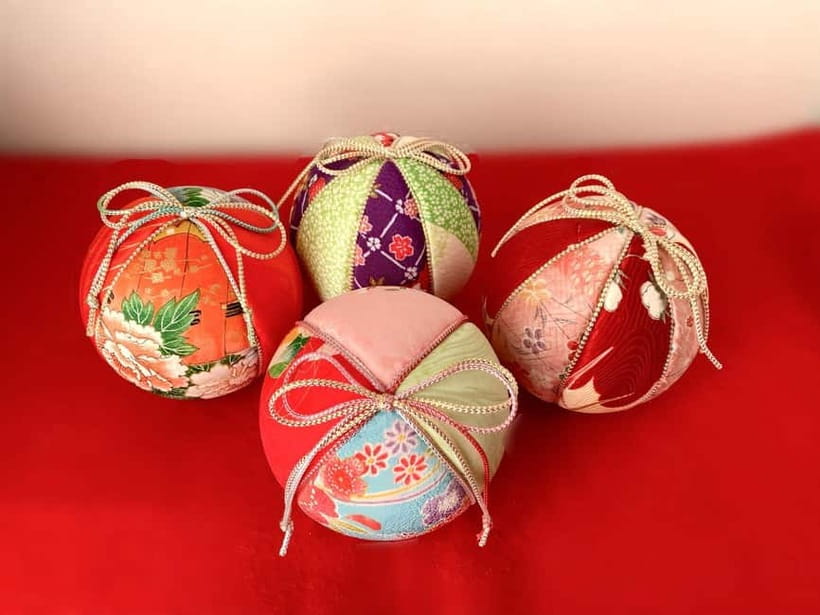
At $25 per person, this is a strong-value activity if you want a finished souvenir and a short cultural lesson. The price includes the two-hour workshop, all required materials, instruction from a local craft master, a drink, and a traditional Japanese confectionery.
The value is not in the cost of the fabric alone. You are paying for the time and guidance that turn a few cloth pieces into something you can display at home. A shop-bought Temari might be faster, but it would not carry the same personal connection.
The price is especially reasonable for families, since the class is open to children and the materials are supplied. It also works well for couples looking for a shared activity that does not require athletic ability or a high level of Japanese.
The value is less clear if you dislike crafts or prefer a packed sightseeing schedule. Two hours is a sizeable portion of a Kyoto day, and the class does not include transport, a meal, or a guided visit to the nearby temples. Book it for the making, not as a way to cover several attractions at once.
Who will enjoy this workshop most?
I would recommend it to you if you want a quiet, creative activity with a clear connection to Japanese culture. It suits first-time crafters, solo visitors, couples, and families with school-age children.
It is also a smart rainy-day option, though no specific weather policy is given. The indoor setting lets you keep part of your Kyoto plan even when outdoor sightseeing is less pleasant.
Textile lovers will get the most from the fabric selection and the nearby shop. If you enjoy noticing pattern, color, and the way old clothing can become a new object, the workshop gives you more to look at than the finished Temari alone.
You may want to skip it if your main goal is a formal lesson in Japanese textile history, advanced sewing, or a large-scale artisan demonstration. The class is intentionally easy and relaxed. Its strength is access: you can make something traditional without committing to a difficult or technical course.
Practical booking advice
The activity lasts two hours, and starting times vary, so check availability when choosing a slot. Arrive at the workshop and enter upon arrival, where the host will greet you.
With only four places, the class is intimate but may fill quickly during busy Kyoto periods. The reserve-now, pay-later option lets you hold a place without paying immediately, and free cancellation is available up to 24 hours in advance for a full refund.
I would leave enough time around the booking for nearby sightseeing and cafés. Avoid placing it directly between distant Kyoto attractions, since the provided details do not include transportation or transfer time.
If you are booking for children, tell the provider your group makeup and ask any questions about the seating or materials before the date. The class is family-friendly, but the two-hour duration still deserves a little planning.
Should you book the Kyoto Temari workshop?
Book it if you want a small, personal souvenir and a peaceful break from temple hopping. The best parts are the freedom to choose kimono fabrics, the patient guidance from May, the small group size, and the chance to make something that no factory could make exactly the same way.
At $25, the included materials, drink, sweet, and instruction make the experience a practical buy. Just keep your expectations in the right place. This is a relaxed beginner craft class in a Kyoto boutique, with nearby sights to explore separately. For an authentic, low-pressure activity that works for adults and children, it earns a place in your itinerary.
FAQ
How long does the Temari workshop last?
The workshop lasts two hours. Starting times vary, so check availability for the date you want.
How much does the activity cost?
The listed price is $25 per person. The fee includes the Temari workshop, all necessary materials, a complimentary drink, traditional Japanese confectionery, and instruction from a local craft master.
Do I need previous sewing or craft experience?
No. Prior experience or special skills are not required, and the activity is designed for complete beginners.
Can children join the workshop?
Yes. The class is suitable for all ages, including adults and children. The supplied information does not state a minimum age.
Is the workshop taught in English?
Yes. Instruction is available in English and Japanese. The host, May, provides the workshop guidance.
Is the workshop wheelchair accessible?
Yes. The activity is listed as wheelchair accessible.
More Workshops in Kyoto
- Kyoto: 45-Minute Tea Ceremony Lesson Experience
★ 4.3 · 2,378 reviews - Ramen Cooking Class at Ramen Factory in Kyoto
★ 5.0 · 1,937 reviews - Kyoto : Chopsticks Making Workshop in Gion with Engraving Option
★ 5.0 · 958 reviews - Kyoto: Samurai Sword Class by Experts in Traditional Arts
★ 4.9 · 657 reviews
Just added around Kyoto
- Kyoto: Zen Meditation at a Private Temple with a Monk★ 5.0 · 25 reviews
- Kyoto: Gion Geisha District & Sake-in-Hand Walking Tour★ 5.0 · 37 reviews
- Private Pewter Sake Cup Experience with a Kyoto Artisan★ 5.0 · 31 reviews
- Your Private Vacation Photography Session In Kyoto★ 5.0 · 110 reviews
- Private Guided Traditional Buddhist Cooking in Japan★ 5.0 · 16 reviews
- Kyoto Wagashi(Japanese sweets) Cooking Class near Fushimiinari★ 5.0 · 60 reviews
- Traditional Japanese Music show & Experience Tour in Kyoto★ 5.0 · 57 reviews
- Kyoto:Family-Friendly Kimono & Yukata Experience at WARGO★ 5.0 · 147 reviews
Kyoto Tours, compared.


Fushimi Inari, Kinkakuji, Bamboo Grove 1 Day Bus Tour
Read our review →
Tea Ceremony in a Traditional Tea House in Kiyomizu
Read our review →
Kyoto Geisha Walking Tour: Gion District & Hidden Gems
Read our review →

Gion Magical Night Walking Tour with Geisha Trivia
Read our review →

Gion Geisha District Walking Tour – Stories of Geisha
Read our review →Browse the lists this tour appears in