
Reviewed · HIROSHIMA TOURS
Kimono and Tea Ceremony in Miyajima
The best part of this Miyajima experience is the setting: you leave the busy streets near the ferry and spend an hour at Tokuju-ji Temple, dressed in a kimono and learning the calm, careful steps of a Japanese tea ceremony. You watch a demonstration, then prepare matcha yourself.
I like the wide choice of more than 100 kimonos, and I like that the staff take time to dress you properly rather than handing you a costume and sending you off. The quiet garden, helpful English support, and chance to receive photos add real value. The main consideration is time: one hour passes quickly, and the advertised small-group format can still include up to 10 people.
Key details before you book
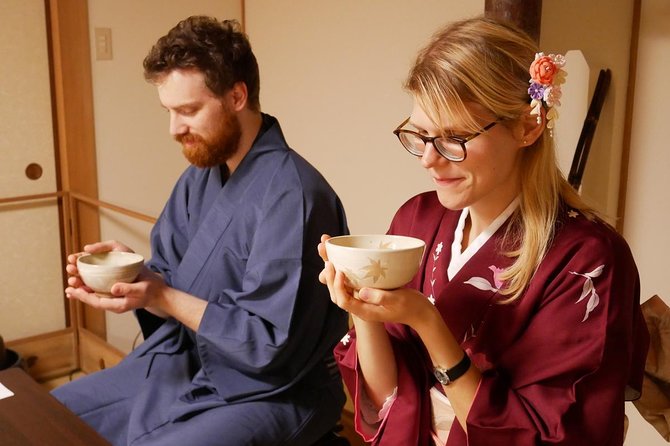
- Choose from more than 100 kimonos: Staff help you select and fit traditional clothing for the ceremony.
- Learn by watching and doing: A tea master demonstrates the ritual, then you make and taste your own matcha.
- Quiet temple location: Tokuju-ji is close to the ferry port but away from Miyajima’s busiest business streets.
- Japanese sweets are included: Matcha is served with a sweet, with local Miyajima chocolate also part of the welcome in some sessions.
- Photos are part of the experience: Staff take pictures during the lesson, and you can receive them after answering a questionnaire.
- Short and easy to fit into a day: The session lasts about one hour and returns you to the meeting point.
Dressing in a kimono at Tokuju-ji Temple
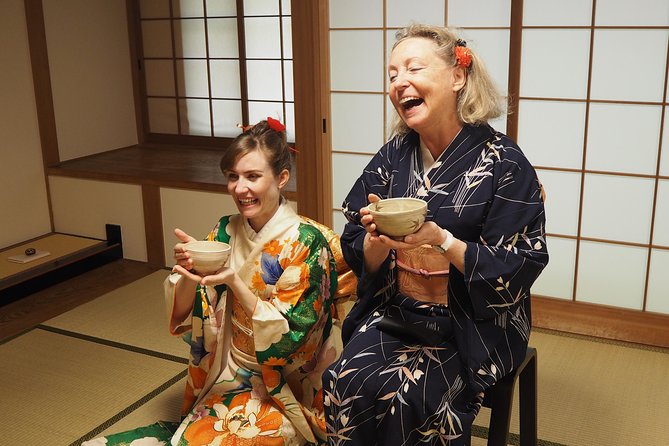
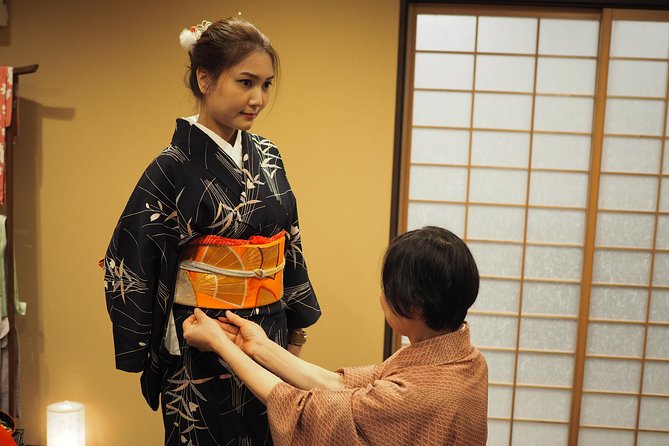
The activity begins with kimono dressing, not tea. That is important. You are not simply putting on a colorful outer layer for a quick photograph. Staff help you select an outfit and then dress you step by step, arranging the layers and fastening everything so it looks right.
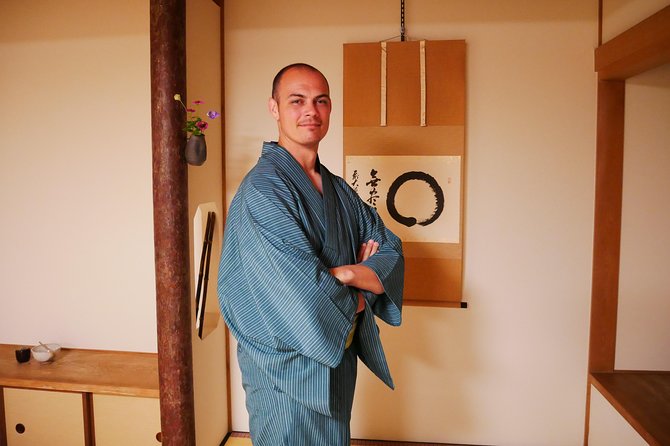
With more than 100 kimonos to choose from, you have a real chance to find a color and pattern that suits you. The selection includes clothing for women and men, and the staff have been able to dress people across a range of body sizes, including a taller visitor wearing a size 18. Still, the available fit can vary, so it is sensible to mention any concerns when you arrive.
The dressing itself becomes part of the cultural lesson. A kimono is not a loose robe you throw on in a moment. The careful fitting helps you understand why traditional Japanese clothing changes the way you stand, walk, and sit.
You should allow the staff to do the work rather than trying to rush. The women who run the session are repeatedly described as patient, polite, and gentle. That matters if you feel awkward about being dressed by someone else or if this is your first time wearing formal Japanese clothing.
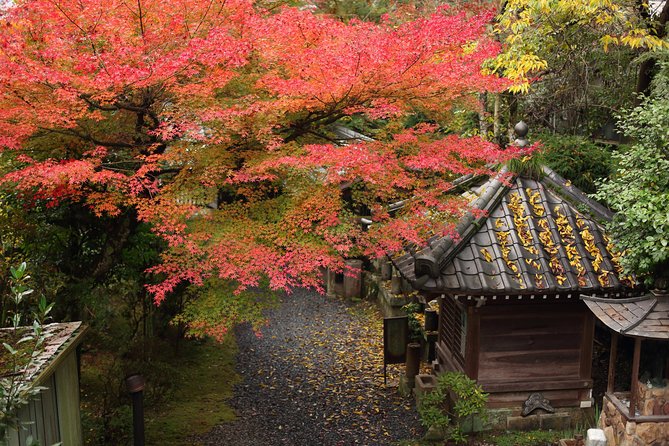
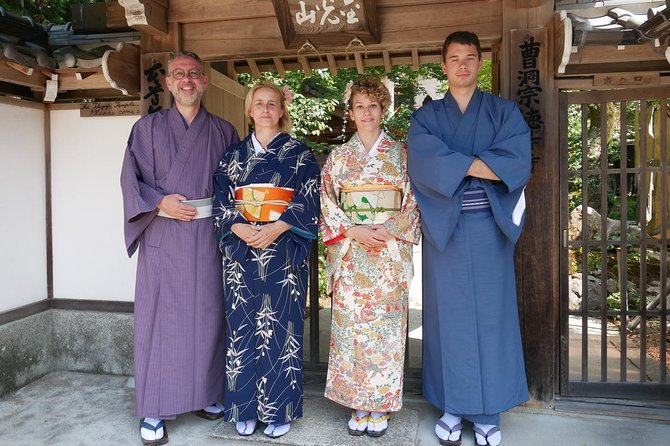
Once dressed, you have time for photographs in the temple grounds and garden. The setting gives you something more useful than a plain studio backdrop: quiet paths, greenery, and the temple itself help explain why tea ceremony is tied to simplicity and calm.
More tea ceremonies in Hiroshima:
- Hiroshima Local guided Hiking Tour&Open-air Tea Ceremony
★ 5.0 · 213 reviews - An Amazing set of Cultural experience: Kimono, Tea Ceremony and Calligraphy
★ 5.0 · 69 reviews - Hiroshima: Morning Hiking Tour with Open-air Tea Ceremony
★ 4.8 · 58 reviews
Watching the tea master before making matcha
After you are dressed, the tea portion begins with a demonstration. You watch the tea master prepare and serve matcha, then learn the proper way to receive and drink it.
The ceremony has formal manners, but you do not need prior knowledge. Staff explain the sequence in manageable steps and answer questions as they go. One session included an English-speaking translator, and English support is available during the explanations according to the experience details and past guest accounts.
You learn how to hold the tea bowl, how to drink the matcha, and how to approach the ceremony with care. The lesson also introduces the four principles connected with tea ceremony and Buddhism: harmony, respect, purity, and tranquility. Those ideas give the movements a reason. The ceremony is not only about whisking green tea. It is also about attention, hospitality, and creating a quiet moment.
The demonstration is worth watching closely. The group size lets you see the hand movements without the distance of a large class. The stated maximum is 10 people, while the experience is promoted as an intimate group of six. A group may also be combined with another small party, so you should think of this as personal but not necessarily private.
Making and tasting your own matcha
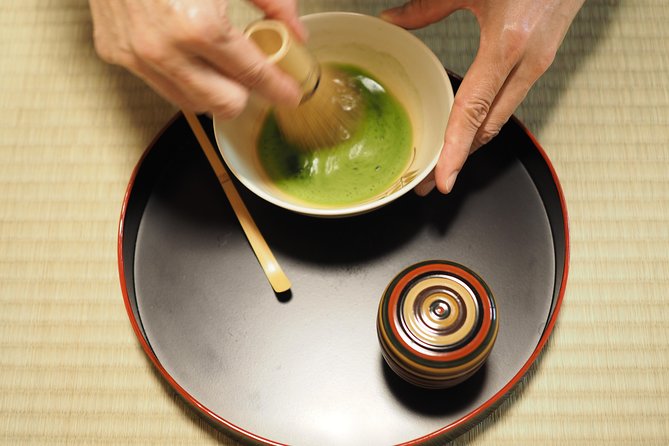
The most satisfying part comes after the demonstration, when you prepare your own tea. Staff guide you through the process, so you are not expected to remember every detail from the master’s performance.
You make the matcha, then taste what you have prepared. This small act changes the experience from a performance into a lesson. You learn the basic method well enough to recreate it for friends at home, which gives the activity value beyond the photograph.
Matcha has a strong, grassy taste that may surprise you. The tea is served with a sweet to balance it, and local Miyajima chocolate may be offered as part of the welcome. Several people particularly enjoyed the chocolate, so it is worth treating the sweet as part of the planned tasting rather than an afterthought.
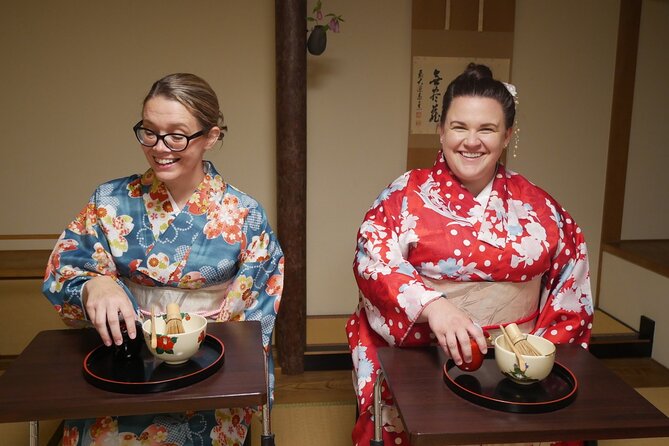
The ceremony uses a table-style arrangement rather than requiring you to sit on the floor. If you hoped for the classic floor-seated image, this may feel less traditional at first. The staff explain that table-style tea practice has been used in Japan for more than 100 years and is not only a tourist arrangement. For many people, the tables are also more comfortable and let them focus on the lesson instead of managing a difficult sitting position.
A quiet hour close to the ferry port
The meeting point is Tokuju-ji Temple, at 741-1 Miyajimachō in Hatsukaichi, Hiroshima. It is near the Miyajima ferry port and public transportation, making it practical to add before or after the island’s major sights.
The location is one of the strongest reasons to choose this experience. Miyajima’s main streets can be crowded, especially around the shopping and food areas. Tokuju-ji offers a pause from that noise without requiring a long journey across the island.
The temple grounds and garden also improve the photographs. You are able to move around the grounds in your kimono and take pictures after the ceremony. Staff take pictures during the lesson as well. You can receive those images by completing a questionnaire, which is useful if you are traveling alone or want photographs that show the tea-making process rather than only posed portraits.
Do not treat the experience as a full temple tour. The focus is dressing and tea ceremony, not a detailed examination of Tokuju-ji’s architecture or religious history. The temple is the setting that gives the activity its quiet mood.
More kimono rentals in Hiroshima:
- Cultural Activities :Kimono, tea ceremony, Calligraphy and Amulet
★ 5.0 · 44 reviews - Kimono and Calligraphy Experience in Miyajima
★ 5.0 · 16 reviews - Kimono Tea Ceremony at Kyoto Maikoya, NISHIKI
★ 5.0 · 911 reviews - Kyoto: Kimono Rental with Hairstyling and Accessories
★ 4.8 · 653 reviews
What the one-hour format really means
One hour is enough for a compact introduction, but it leaves little room for delay. The schedule includes choosing clothing, dressing, watching the demonstration, making tea, drinking it, and taking photographs. If you arrive late, the dressing portion can eat into the time available for questions and pictures.
For that reason, I would place this experience carefully within your Miyajima day. It works well as a fixed one-hour appointment near the ferry port. It is less suitable if you want to wander freely with no clock or if your ferry arrival time is uncertain.
The short format is also a benefit. You can fit it between sightseeing stops without giving up half a day. Families with children can enjoy the activity without asking them to sit through a long formal ceremony. The minimum age is six, and children have taken part successfully, including groups with five children.
You finish back at the same meeting point. That makes it easy to continue exploring Miyajima afterward, change out of the kimono, or return toward the ferry.
Staff care makes a real difference
The clothing and tea are the main attractions, but the staff determine how comfortable the experience feels. Here, the strongest pattern is careful personal help.
Staff assist with every stage of kimono dressing and are willing to adjust the clothing so you feel secure. They also take pictures, help with questions, and explain the ceremony in a friendly way. One group even received help recovering a bag left behind, which shows practical attentiveness beyond the formal activity.
That warmth is especially useful for anyone nervous about Japanese etiquette. You will make small mistakes. That is expected. The lesson is designed to guide you through the steps, not test you.
English explanations are available, and an English-speaking translator has been praised for making the process easy to follow. The exact language support may depend on the session, so do not expect every explanation to feel like a long English lecture. The hands-on format does much of the work.
Is $85.89 a fair price?
At $85.89 per person, this is not the cheapest way to put on a kimono in Japan. You are paying for more than a quick rental photograph, though. The price includes the kimono, professional dressing, the tea demonstration, your own matcha preparation, a sweet, and access to a temple garden for photographs.
The one-hour duration keeps the total commitment small, but it also limits the amount of instruction. If you want an in-depth study of tea ceremony schools, utensils, or Buddhist history, you will need a longer class elsewhere.
I see the value in this experience for someone who wants several pieces in one booking: traditional clothing, a formal cultural practice, a calm temple setting, and photos. It can also compare well with a large-city kimono activity because the Miyajima session takes place in a smaller setting away from the main commercial streets.
The value is weaker if you mainly want to walk around Miyajima in a kimono for several hours. This activity does not promise an all-day rental. Its purpose is a guided ceremony and a brief cultural lesson.
Who should book this Miyajima experience?
I would recommend it to first-time visitors who want a clear introduction to Japanese tea ceremony without committing to a long class. You receive enough explanation to understand the basic manners, and you get to perform the tea-making yourself.
It suits couples, families, and small groups of friends. The photos make it a natural choice for a special holiday, and the staff are used to helping groups feel comfortable. Children aged six and older can join, though parents should decide if their child will enjoy a quiet, careful activity.
It is also a good choice if you are staying in Hiroshima and visiting Miyajima for only part of a day. The meeting point near the ferry port saves travel time, and the activity ends where it begins.
You may want to skip it if you dislike formal rituals, wearing layered clothing, or having staff help dress you. The tea ceremony has a set sequence, so it is not a casual matcha tasting where you simply sit down and drink.
Practical points for a smoother visit
Your confirmation arrives at booking, and the experience uses a mobile ticket. Bring your booking details and arrive with enough time to find Tokuju-ji near the ferry area.
Wear clothing that will not make kimono dressing difficult. The supplied information does not set a dress code, but comfortable underlayers and easy shoes make sense because you will be changing and moving around the temple grounds.
Ask about photographs before the session ends. Staff take pictures during the lesson, and the images can be provided after you answer a questionnaire. If you are with friends or family, decide in advance who will take turns photographing the group.
The activity requires good weather. If poor weather causes cancellation, you can choose another date or receive a full refund. You can cancel for a full refund up to 24 hours before the start time, but cancellations or changes made later are not accepted.
Should you book it?
Book this if you want a short, personal cultural activity that combines kimono dressing with real participation in tea ceremony. The temple location, patient staff, broad kimono selection, garden photographs, and chance to make your own matcha make the $85.89 price reasonable for the right visitor.
I would especially choose it over a quick kimono photo stop if you want to understand what you are wearing and why the tea ceremony matters. Just keep your expectations clear: it is a one-hour introduction, not a full study of Japanese tea or a daylong kimono rental.
If that balance suits you, this is an easy addition to a Miyajima day and a thoughtful way to experience the island beyond its busiest sights.
FAQ
Where does the kimono and tea ceremony take place?
The activity takes place at Tokuju-ji Temple, also listed as 徳寿寺, at 741-1 Miyajimachō, Hatsukaichi, Hiroshima 739-0513, Japan.
How long does the experience last?
The activity lasts approximately one hour and ends back at the meeting point.
How many people can join?
The maximum group size is 10 people. The experience is also described as an intimate small-group activity of six, but the exact group arrangement can vary.
Is a kimono provided?
Yes. You can choose from more than 100 kimonos, and staff provide the clothing and help you dress.
Is matcha included?
Yes. You watch a tea ceremony, learn how to drink matcha properly, make your own matcha, and taste it. Tea is served with a sweet.
What happens if the weather is poor?
The experience requires good weather. If it is canceled because of poor weather, you will be offered another date or a full refund.
Just added around Hiroshima
- The Peace Memorial to Miyajima : Icons of Peace and Beauty★ 4.5 · 31 reviews
- Shore Excursion from Hiroshima Port : Private Tour in Hiroshima★ 5.0 · 17 reviews
- Hiroshima Saijo Sake Tasting Tour with visit to 7 Breweries★ 5.0 · 104 reviews
- Hiroshima & Miyajima All-Inclusive Tour w/Licensed guide Pancho★ 5.0 · 54 reviews
- Okunoshima Rabbit Island Cycling Tour with Local Guide★ 4.5 · 17 reviews
- Private Full Day Hiroshima Tour★ 4.5 · 29 reviews
- Hiroshima Country Cycling: Explore Rural Life 1 HR from City★ 5.0 · 22 reviews
- Hiroshima Private Tour with a Local – Highlights & Hidden Gems★ 4.5 · 24 reviews
Hiroshima Tours, compared.

Peaceful Hiroshima & Miyajima UNESCO 1 Day Bus Tour
Read our review →
Hiroshima and Miyajima UNESCO Sites 1-Day Tour
Read our review →
Hiroshima Historical Walking Tour – Why A-Bomb was Dropped
Read our review →
Hiroshima Peace (Heiwa) Walking Tour at World Heritage Sites
Read our review →
Hiroshima in a Nutshell: Morning Bike Adventure
Read our review →
Hiroshima City 4hr Private Walking Tour with Licensed Guide
Read our review →

Japanesel Archery Experience HIROSHIMA CASTLE SHARAKU
Read our review →Browse the lists this tour appears in