
Reviewed · KYOTO TOURS
Ninja Experience (Family Friendly) at Samurai Ninja Museum KYOTO
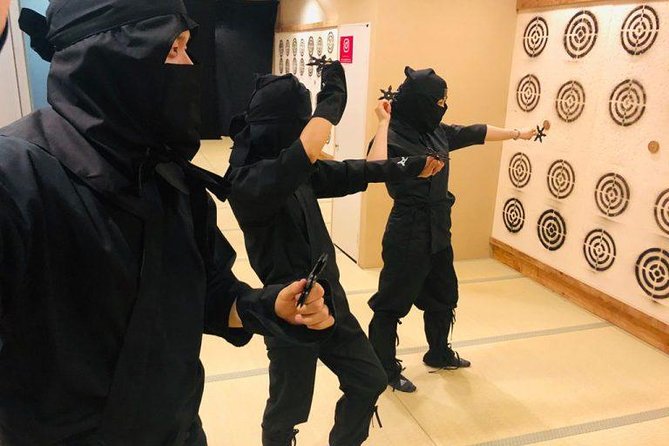
The sharpest part of this Kyoto activity is the hands-on training: you put on a ninja outfit, throw shuriken, and fire a blowgun at a target. It is playful, simple, and easy for children to grasp. You also get samurai dress-up, sword instruction, and a museum visit tied to Japan’s feudal past.
I like the family-friendly format and the fact that costumes are included, so you do not need to plan an outfit. I also like the mix of action and history, especially the sword demonstration and explanations of covert missions. The main caution is value: at about $56.16 per person, the active training can feel short if you expect a full two-hour martial arts class.
Key points at a glance
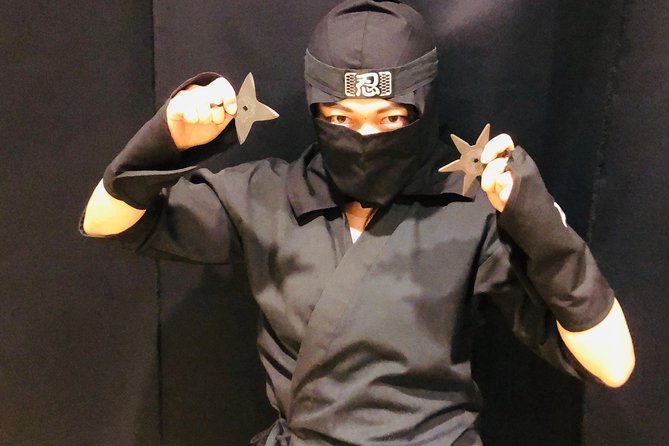
- Shuriken and blowgun practice: You get direct practice with ninja stars and a ninja blowgun, the most popular part of the session.
- Costume changes are included: You dress as a ninja and later as a samurai, with time for photos.
- Museum visit included: The Samurai and Ninja Museum is part of the ticket, but it is in another building, so follow directions carefully.
- Small group size: The activity lists a maximum of four participants, which can make the instruction feel more personal.
- Short active portion: Some sessions have lasted around 40 minutes, while the full program is described as roughly two hours with history, costumes, demonstrations, and the museum.
- Best for families: Children under three cannot join the ninja activity, though they may enter the venue, and all children must have an adult with them.
Putting on the ninja outfit in central Kyoto
You meet at 292 Higashidaimonjicho in Nakagyo Ward, Kyoto, at a spot near public transportation. The activity ends back at the same meeting point. Transportation to and from the attraction is not included, so you handle your own route through Kyoto.
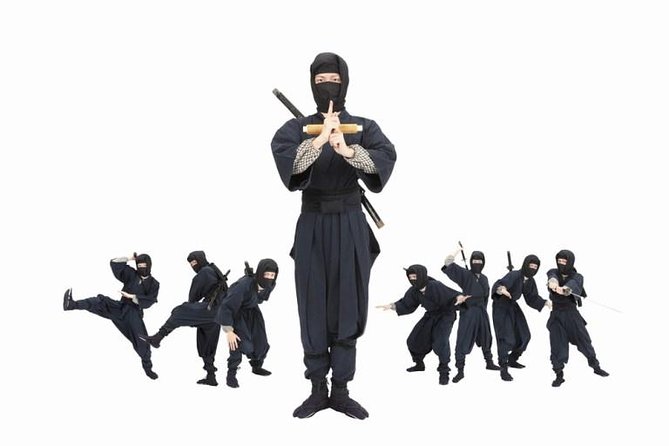
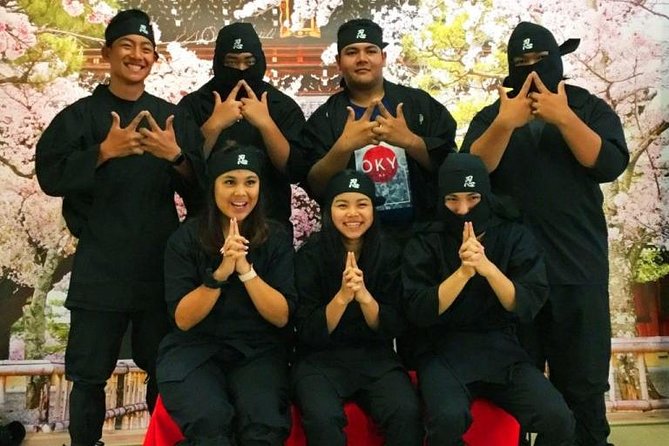
The first change of pace comes when you put on the ninja clothing. This is not just a photo prop. For families, it helps turn a museum visit into a shared game, and children quickly understand the idea of taking on a role. A later samurai costume change is also included, giving you two different ways to picture life in old Japan.
The dress-up portion matters most if you travel with children or want photos that feel more memorable than a standard museum snapshot. It matters less if you are looking for serious martial arts instruction. The costumes create atmosphere, but they do not make the training historically exact.
The group size is capped at four people. That is a useful detail for families because you are not being folded into a large crowd. It also means the session may feel more direct than a standard stage show. Still, the small capacity does not guarantee a long private lesson. The timing and flow can vary.
More Samurai and Ninja Experiences in Kyoto
- Kyoto Samurai Experience
★ 5.0 · 1,294 reviews - Kyoto: Kendo and Samurai Experience with Uniform and Gear
★ 4.9 · 815 reviews - Kyoto: Samurai Sword Class by Experts in Traditional Arts
★ 4.9 · 657 reviews
The ninja training: shuriken, blowgun, and stealth
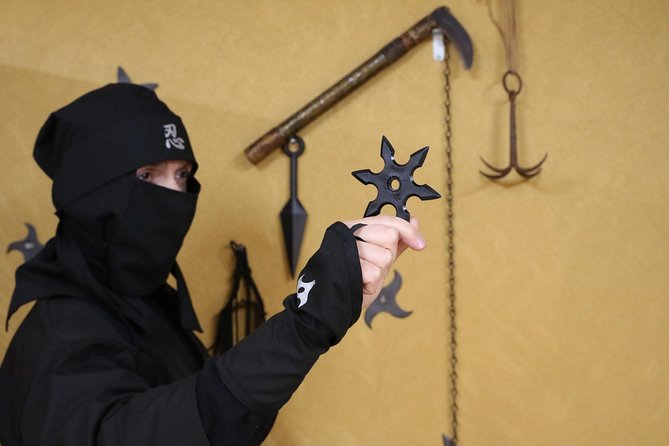
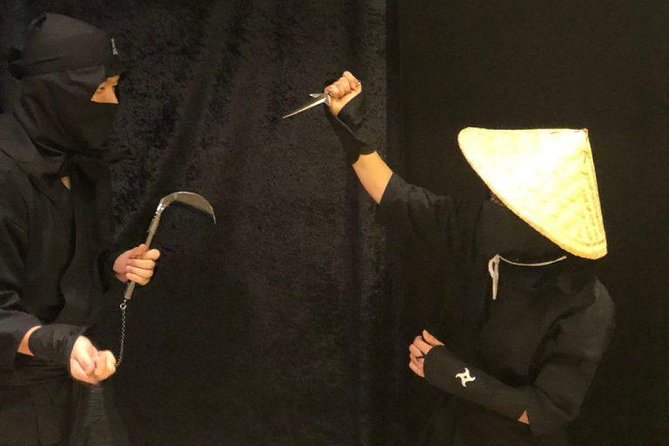
The active section focuses on a few recognizable ninja skills. You learn to throw shuriken, or ninja stars, and use a blowgun. You also receive an introduction to simple sword techniques and basic stealth ideas connected with ninja missions.
The shuriken and blowgun activities are the clear center of the experience. The setup is designed for beginners, and the appeal is immediate: you hold the equipment, listen to the instructions, and try it yourself. For a child, that direct action is more memorable than a long talk about military history.
Keep your expectations in check. This is a staged cultural activity, not professional combat training. One account described roughly 20 minutes of star throwing and blowgun use, while another described about 40 minutes for the whole experience. The program also includes history, dressing, photos, and other elements, but the active training itself may feel brief.
That difference is important at this price. If you mainly want to throw stars and shoot blow darts, you may feel satisfied if the family treats it as a fun activity. If you expect repeated drills, advanced stealth work, or a serious sword class, $56.16 can feel high.
The phrase authentic special ninja training should be understood in a practical way. You are getting a themed introduction based on ninja weapons and techniques, not a long traditional apprenticeship. The useful part is the chance to connect objects in the museum with a physical activity. You see a weapon, hear how it was used, then try a simplified version under supervision.
Learning how ninjas worked
The historical element gives the activity more purpose. You learn about covert ninja missions, the tools connected with them, and simple ideas about stealth. The explanations help separate popular movie images from the practical role of spies and scouts in feudal Japan, though the amount of detail depends on how the session is run.
One part of the experience has been described as a history tour lasting about 30 minutes. That can make a big difference to the overall value. Without the history, the activity is mostly costume play and target practice. With it, the shuriken and blowgun have a clearer place in the story of Japan’s past.
The program also brings in samurai history. That is useful if your family is curious about both sides of the period, but it can cause confusion if you expect a tightly focused ninja lesson from start to finish. The activity moves between ninja and samurai subjects, costumes, demonstrations, and museum displays.
I would treat this as an introduction rather than a specialist talk. You should come away with a better sense of ninja tools and the culture around samurai, but the supplied details do not promise an academic lecture or a full historical study.
The sword demonstration and samurai change
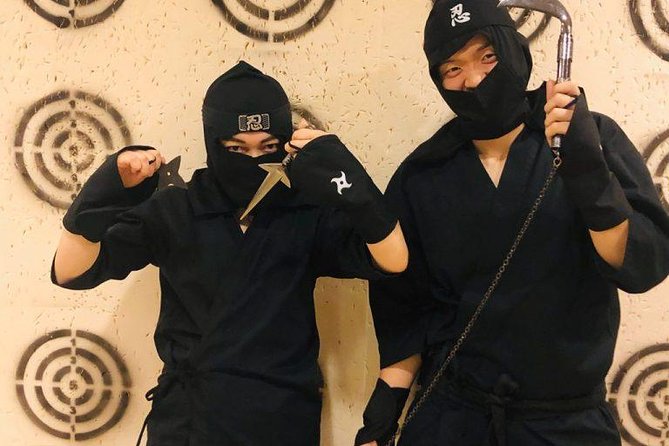
A sword demonstration by a sword master is included with the ticket. This gives the visit a visual centerpiece beyond the family activities. You watch a trained performer handle the sword, then get a chance to try simple sword techniques yourself.
The demonstration is important because it shows a skill rather than only displaying an object behind glass. It also helps younger children stay engaged during the historical sections. The experience is not only about ninjas, even though the ninja training gets the most attention in the name and activity format.
The samurai dress-up is included as well. You can change from ninja clothing into samurai clothing and take photos. This two-costume format is a strong feature for families who want a playful cultural stop during a Kyoto sightseeing day.
There is a limit to what this can tell you. Costume changes offer a quick visual connection to the period, but they do not explain every detail of samurai life, armor, rank, or warfare. Think of the activity as a compact introduction with a performance element, not a full museum study session.
More samurai and ninja sessions in Kyoto:
- Skip the lines Basic Ticket at SAMURAI NINJA MUSEUM KYOTO
★ 4.5 · 632 reviews - Ninja 1-hour Hands-on Lesson by Japanese master in Kyoto -Entry
★ 5.0 · 489 reviews - Kyoto: Ninja Weapon Forging Experience
★ 4.8 · 478 reviews - Kyoto: Samurai Kenbu Traditional Sword Dancing Show
★ 4.5 · 426 reviews
Finding the museum in another building
The museum visit is included, but it is located in a different building from the hands-on experience. This is the most important practical detail to understand before you arrive.
After the training, ask clearly where to go for the Samurai and Ninja Museum. Do not assume the museum visit happens in the same room or that someone will automatically lead you there. Confusion about the separate location has caused people to miss the museum portion.
The museum adds value because it lets you see historical objects and displays after trying simplified ninja activities. That order works well: first you play with the idea of ninja tools, then you look at the culture and weapons in a museum setting. It gives the visit more substance than a costume photo alone.
The museum is also why you should not judge the entire experience by the active lesson’s length. The advertised duration is about two hours, but the time is divided among training, history, dressing, photos, demonstrations, and the museum. If your session moves quickly, the museum becomes especially important to completing the experience.
At the same time, you need clear instructions from staff. One less-satisfied participant missed the museum because the separate location was not explained well. Since the ticket includes it, make sure you know when and where to use that part of your visit.
How long does the experience really take?
The official duration is approximately two hours, but the actual schedule deserves a careful reading. The hands-on portion may be much shorter than the full visit. Some descriptions place the active ninja work at around 20 minutes, while other accounts describe an overall experience of about 40 minutes before or around the museum portion.
The program can also include roughly 30 minutes of history and 15 minutes of dressing and photos. Add the sword demonstration and museum visit, and the total can approach the stated length. But you should not expect two uninterrupted hours of throwing stars, using a blowgun, or practicing sword skills.
This structure suits families with mixed attention spans. Children get action, adults get some historical context, and nobody has to spend two straight hours in a lecture. It can be a good fit between major Kyoto sights.
The drawback is that the schedule may not always feel clearly explained. Some participants have been unsure if the activity was over because the movement between sections was not well organized. I would ask at the start what comes next, especially if you want to make sure you receive the museum visit.
The staff can also be flexible in some situations. One family arrived about 20 minutes late and was still allowed to join. Do not plan to be late, since this is not a guaranteed policy, but it suggests the staff may try to help when they can.
Is $56.16 per person a fair price?
At $56.16 per person, this is not a cheap add-on. The price makes sense if you value the combination of costumes, hands-on activities, historical explanations, sword demonstration, and museum access. It is harder to justify if your main goal is only a few throws and blowgun attempts.
For a family, the price buys a shared activity that adults and children can do together. Kids get something physical and theatrical, while adults get a short introduction to samurai and ninja culture. That mix can be worth more than a basic museum ticket if your group enjoys participation.
The small maximum of four people also supports the price. A very small group can make the experience feel less anonymous. But the cap does not remove the need to check what is included in your specific session, since timing and organization appear to affect how much you receive.
I would compare it with your plans for the day. If you are already visiting several history museums, the ninja activity supplies a different kind of experience. If you are on a tight budget or want serious instruction, the price may not match what you receive.
The free cancellation policy gives you some planning protection. You can cancel for a full refund at least 24 hours before the start time. Cancellations or changes made less than 24 hours ahead are not refunded or accepted.
Who will enjoy this Kyoto activity most?
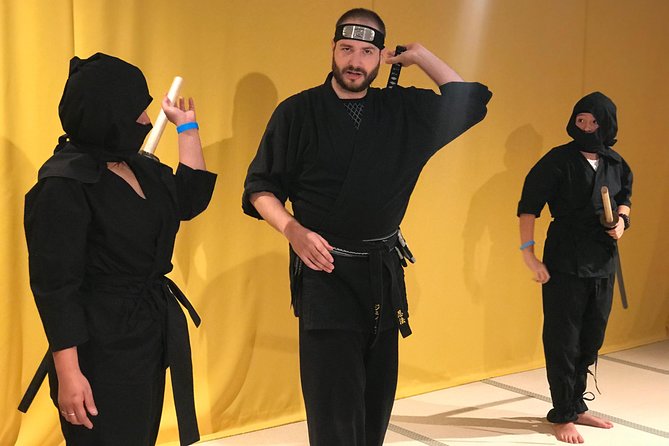
This is best for families with children aged three and over who like costumes, simple physical challenges, and clear themes. It also suits adults who enjoy Japanese history but do not need a formal or highly technical class.
You will probably enjoy it if you want to:
- Throw shuriken and use a blowgun in a supervised setting
- Take family photos in ninja and samurai clothing
- Add a short interactive stop to a Kyoto sightseeing day
- Learn basic facts about ninja missions and weapons
- Watch a sword demonstration
- Visit a small museum after the activity
You may want to skip it if you are seeking long-form martial arts practice, a quiet museum visit, or detailed historical research. The training is simplified, and the active portion may feel short.
Children under three cannot join the ninja experience, though they can enter the venue. Children must be accompanied by an adult, so plan for the whole family to stay together during the activity.
Practical tips for a smoother visit
Arrive at the stated meeting point and confirm the full sequence before the activity begins. Ask specifically about the museum’s other building. This one question can prevent you from missing an included part of the ticket.
Allow time for the whole program rather than assuming you will be finished after the star throwing. The exact flow may include history, ninja and samurai costumes, photos, sword skills, a demonstration, and the museum.
If your children are young, explain that the stars and blowgun work are controlled practice activities, not free play. The fun comes from following instructions and aiming at the target.
The experience is near public transportation, but transport is not provided. Plan your own route to 292 Higashidaimonjicho and return to the meeting point at the end.
One building detail matters for future bookings: the elevator is listed as out of service from January 24, 2026, through February 19, 2026. If anyone in your group depends on an elevator, check how this affects your visit before booking.
The activity has a 4.5 rating from 132 reviews, but the range of scores tells you more than the average alone. The strongest praise centers on children having fun, friendly instructors, the chance to throw stars and use blowguns, and the mix of ninja and samurai history. The main complaints concern short active time, unclear directions, and the separate museum location.
Should you book the Ninja Experience?
Book it if you want a light, family-friendly Kyoto activity built around costumes, simple ninja skills, and a little samurai history. The best parts are easy to understand: you dress up, throw shuriken, use a blowgun, see a sword demonstration, and visit a museum.
Before paying, make sure your expectations match the format. This is not a two-hour martial arts course. It is a themed visit made up of several shorter sections, and the active training may last only 20 to 40 minutes.
For families, the shared fun may justify the cost. For adults seeking serious historical detail or advanced technique, it is probably not the best use of $56.16. If you do book, confirm the museum location at the beginning and leave enough time for every included part.
FAQ
Where does the Ninja Experience start?
The meeting point is 292 Higashidaimonjicho, Nakagyo Ward, Kyoto, 604-8043, Japan.
Where does the activity end?
The activity ends back at the meeting point.
How long does the experience last?
The listed duration is approximately two hours, including the training, history, costumes, demonstrations, and museum visit. The active ninja practice may be much shorter.
What ninja skills do you practice?
You practice throwing ninja stars, using a ninja blowgun, and simple sword techniques. The session also introduces stealth methods and covert ninja missions.
Is the Samurai and Ninja Museum included?
Yes. The museum visit is included in the ticket, but it is in another building from the hands-on experience.
Are costumes included?
Yes. Ninja outfit rental is included, and samurai dress-up is also included.
Can children join the activity?
Children can participate if they are at least three years old and accompanied by an adult. Children under three cannot join the ninja experience, though they can enter the venue.
Is transportation included?
No. You are responsible for transportation to and from the attraction.
What is the cancellation policy?
You can cancel at least 24 hours before the local start time for a full refund. Cancellations or changes made less than 24 hours before the start time are not accepted or refunded.
More Museums in Kyoto
- Kyoto: Tea Museum Tickets and Matcha Grinding Experience
★ 4.9 · 739 reviews - Kyoto : Geiko Maiko Dance of Kyoto & Visits of Gion Museum
★ 4.6 · 415 reviews - Kyoto Sword Experience – includes Museum Ticket/Ninja Experience
★ 4.5 · 149 reviews - Kyoto: Samurai Ninja Museum guided tour
★ 4.8 · 145 reviews
Just added around Kyoto
- Kyoto: Zen Meditation at a Private Temple with a Monk★ 5.0 · 25 reviews
- Kyoto: Gion Geisha District & Sake-in-Hand Walking Tour★ 5.0 · 37 reviews
- Private Pewter Sake Cup Experience with a Kyoto Artisan★ 5.0 · 31 reviews
- Your Private Vacation Photography Session In Kyoto★ 5.0 · 110 reviews
- Private Guided Traditional Buddhist Cooking in Japan★ 5.0 · 16 reviews
- Kyoto Wagashi(Japanese sweets) Cooking Class near Fushimiinari★ 5.0 · 60 reviews
- Traditional Japanese Music show & Experience Tour in Kyoto★ 5.0 · 57 reviews
- Kyoto:Family-Friendly Kimono & Yukata Experience at WARGO★ 5.0 · 147 reviews
Kyoto Tours, compared.


Fushimi Inari, Kinkakuji, Bamboo Grove 1 Day Bus Tour
Read our review →
Tea Ceremony in a Traditional Tea House in Kiyomizu
Read our review →
Kyoto Geisha Walking Tour: Gion District & Hidden Gems
Read our review →

Gion Magical Night Walking Tour with Geisha Trivia
Read our review →

Gion Geisha District Walking Tour – Stories of Geisha
Read our review →Browse the lists this tour appears in