
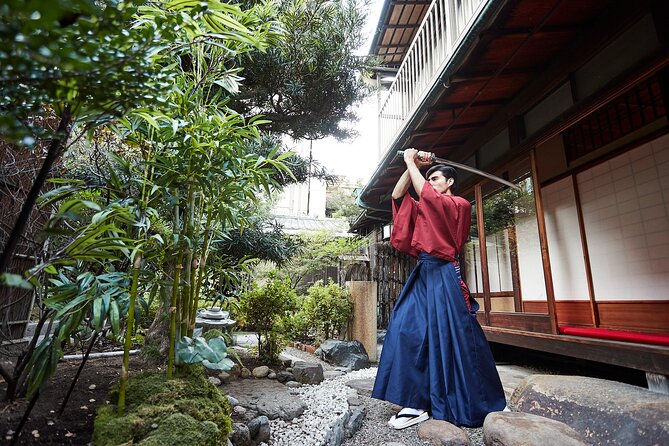
Reviewed · KYOTO TOURS
Kyoto Sword Experience – includes Museum Ticket/Ninja Experience
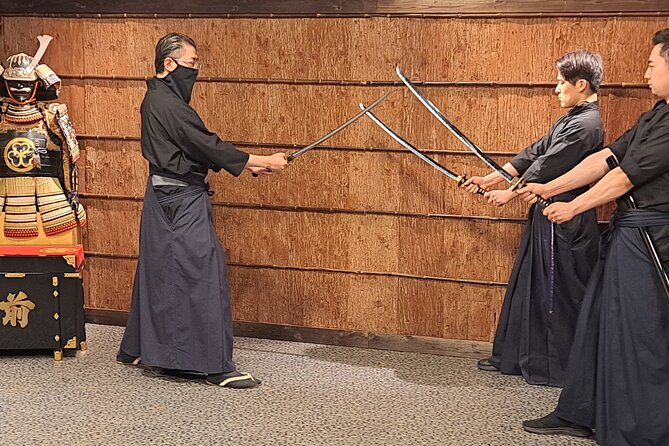
The most appealing part of this Kyoto experience is the chance to dress in samurai hakama and handle a safe replica sword inside a traditional dojo. You get a short lesson in basic iaido movements, a controlled sword exercise, ninja star throwing, photographs in costume, and admission to the Samurai and Ninja Museum.
I like the mix of hands-on fun and cultural context. The museum tour gives the sword lesson more meaning, while the flexible daily start times make this easy to fit between Kyoto temples and meals. The main caution is value: at $83.91, you are paying for a lively introduction and photo opportunity, not a long martial arts course or authentic sword training.
Key points to know before booking
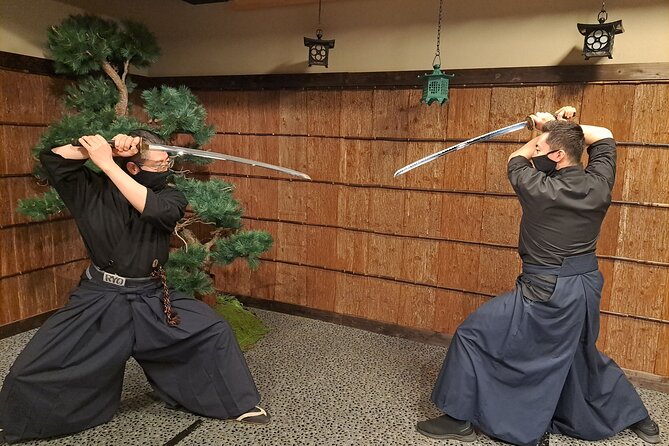
- The sword is a blunt replica: Japanese law now prevents this activity from using a real sword or sharp blade.
- Hakama and armor are part of the fun: You dress up, pose for photographs, and take part in a short dojo lesson.
- The museum ticket is included: A guided Samurai and Ninja Museum visit forms an important part of the experience.
- Ninja stars add variety: You also get a supervised throwing activity, although the order of activities can vary.
- Group-size information is inconsistent: Details refer to limits of 4, 10, and 22 people, so confirm the expected group size before paying.
- Children under 7 cannot enter the dojo: Children must also be accompanied by an adult.
What the Kyoto sword experience really offers
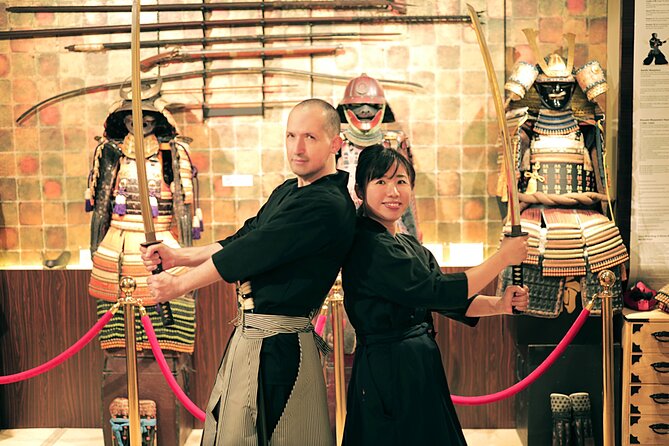
This is a two-hour cultural activity with a playful edge. You are not signing up for a serious martial arts course, and you should not expect repeated practice with a katana. The appeal is the combination of costume, simple instruction, museum exhibits, and safe participation.
The experience takes place at the Samurai Ninja Museum in central Kyoto, at 109 Horinouechō in Nakagyo Ward. The meeting point is near public transportation, and the activity finishes back at the same location, though parts of the program may use nearby rooms or an annex.
The setting aims for a traditional dojo feel rather than a modern classroom. That atmosphere helps, especially when you put on hakama and follow the instructor’s stance and hand movements. I would treat the session as a cultural introduction with theatrical touches, not as proof that you have trained like a historical samurai.
More Samurai and Ninja Experiences in Kyoto
- Kyoto Samurai Experience
★ 5.0 · 1,294 reviews - Kyoto: Kendo and Samurai Experience with Uniform and Gear
★ 4.9 · 815 reviews - Kyoto: Samurai Sword Class by Experts in Traditional Arts
★ 4.9 · 657 reviews
First step: putting on samurai hakama
The activity begins with dressing in traditional samurai hakama. This takes more than simply slipping on a costume, since the clothing gives the lesson a sense of occasion and makes the photographs much better.
You should expect the dressing process to be shared with other participants. During crowded periods, it may take longer than planned, and the room can feel hurried. Older accounts describe shortages of costumes and long waits during an unusually busy cherry blossom season, so the condition of the clothing and the smoothness of this step may depend on the day.
Once dressed, you can pose with helmets, armor, and other samurai-style props. This is one of the strongest parts for families and groups of friends, especially if you want memorable photographs without committing to a full-day historical attraction.
The costume is also useful for setting expectations. This is part museum visit, part staged activity, and part photo session. If you enjoy learning through participation, you will likely have a good time. If you want quiet study and careful handling of antiques, the museum portion will matter more than the dress-up.
Basic iaido practice with a blunt replica sword
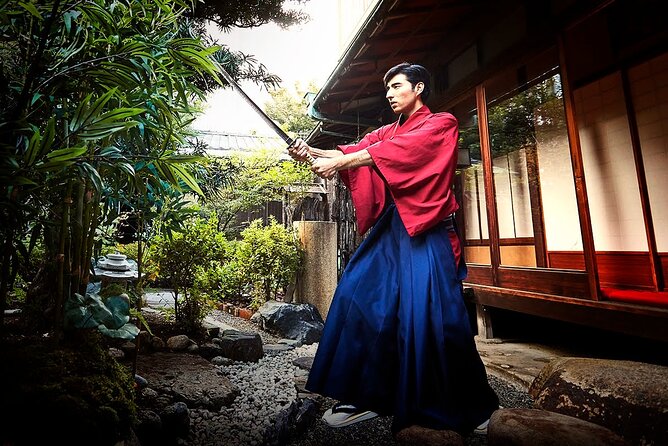
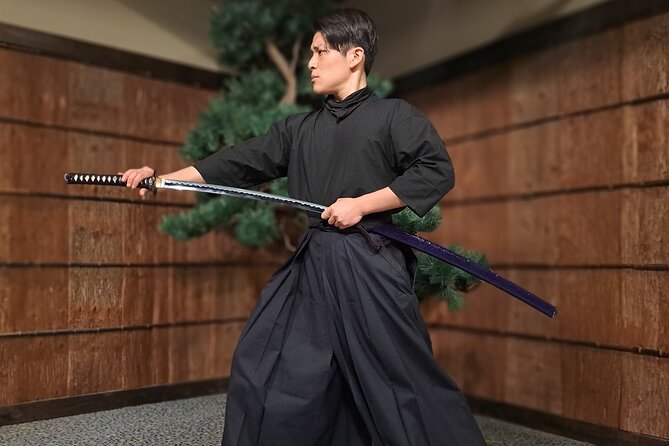
The instructor then introduces basic iaido techniques using a blunt, safe replica sword. You learn how to stand, hold the sword, and make simple controlled movements. The focus is on posture, discipline, and safe handling.
Several instructors have been singled out for making this section enjoyable. Ken has been praised for combining samurai history with practical instruction, while Riku has been described as giving an especially engaging training session. Names such as Riu, Nobu, and Takto also appear in the experience history, but staffing can change, so you should not book on the promise of one particular instructor.
The lesson is basic. You will not receive extensive instruction in footwork, forms, or sword maintenance. You may get only a few turns, particularly if the class is large. That makes the quality of the instructor and the group size important.
I like this section because it gives you something real to do rather than asking you to stand beside a display case. At the same time, keep your expectations modest. You are learning a few beginner movements in a safe setting, not earning a martial arts qualification.
The sword-fight portion and an important legal change
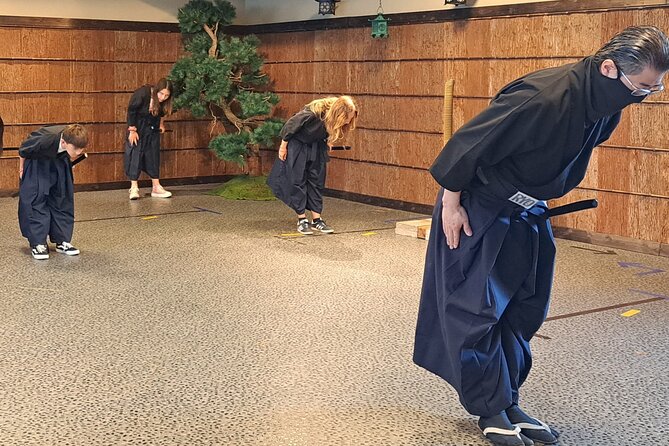
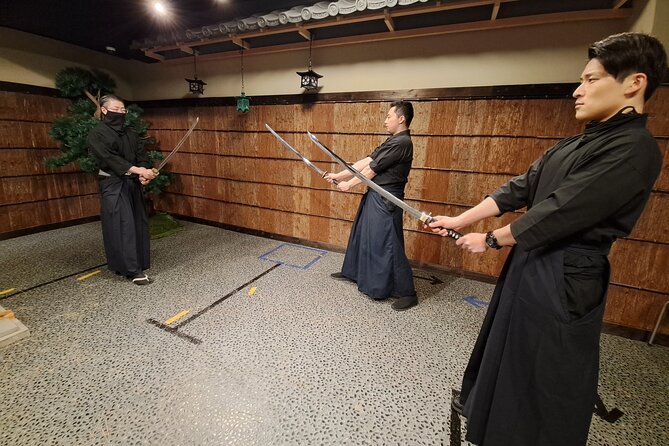
The program includes a simple sword fight or controlled practice using a safe replica. The activity is supervised, and the sword is blunt. This is the current format you should expect.
Some older promotional material and past experiences referred to handling a real katana and cutting bamboo or tatami mats. That is no longer a safe assumption. A recent Japanese law bans facilitating or selling activities involving a real sword, and this current experience does not use a real sword or sharp blade.
That change matters when comparing this activity with older photographs or descriptions. If the idea of cutting a tatami mat is the main reason you are interested, this is not the right booking to make. You should look for an experience whose current description clearly confirms what equipment and activities are legal and available on your date.
The controlled sword exercise still provides a good photograph and a brief thrill. It is best understood as a staged introduction to samurai movements, with safety taking priority over realism.
More samurai and ninja sessions in Kyoto:
- Skip the lines Basic Ticket at SAMURAI NINJA MUSEUM KYOTO
★ 4.5 · 632 reviews - Ninja 1-hour Hands-on Lesson by Japanese master in Kyoto -Entry
★ 5.0 · 489 reviews - Kyoto: Ninja Weapon Forging Experience
★ 4.8 · 478 reviews - Kyoto: Samurai Kenbu Traditional Sword Dancing Show
★ 4.5 · 426 reviews
The Samurai and Ninja Museum tour
The included museum admission gives the experience its educational backbone. You receive a free museum ticket and a guided tour covering samurai and ninja culture, objects, and historical context.
The museum is not presented as a large national institution. You might find a compact collection with artifacts, displays, models, and explanatory material. That can be a strength if you want a short, accessible introduction, but it will feel limited if you are expecting hours of galleries.
The guide’s delivery matters here. One past session was praised for making the artifacts easy to connect with, while another was criticized because the guide spoke too quickly. If English is not your first language, stay close to the guide and ask for clarification when needed.
The museum portion is worth taking seriously. Without it, the costume and sword movements could feel like a photo stop. The historical tour explains why samurai training emphasized control, posture, and discipline, and it gives the ninja activity some context.
The order may not be fixed. Some sessions begin with the dojo, then move to the museum, followed by ninja stars and photographs. The museum or costume areas may be in another nearby building, so allow time to follow staff instructions rather than assuming every activity occurs in one room.
Ninja stars and photographs in armor
The ninja star throwing activity is a lighthearted addition. You receive a chance to throw ninja stars in a supervised setting, which breaks up the sword lesson and gives younger participants and spectators something different to watch.
This part should not be confused with a serious weapons class. It is a short activity designed for fun and photographs. The exact timing can depend on the group and the day, and one older account reported that it was missed during an overcrowded session.
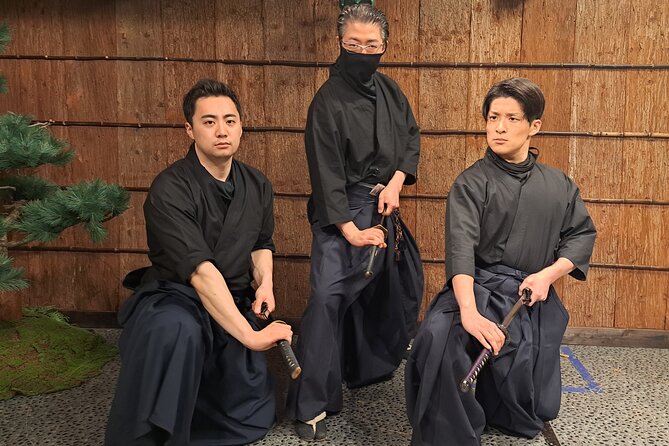
The armor and costume photographs are another popular feature. You can change into samurai-style gear, pose with helmets and props, and keep the experience visually memorable. I would bring patience, since staff may be helping several people at once.
For families, this combination can work well. A child too young for the dojo may still be able to watch from the side and take part in photographs, although the stated rule is clear: children under 7 cannot enter the samurai dojo venue.
Group size, pacing, and the risk of a crowded session
The biggest practical question is group size. The information supplied for this experience gives several different limits, including a maximum of 4, 10, and 22 people. That inconsistency deserves attention before you book.
Recent operating information says some sessions may be kept to around 5 or 6 people, while another part of the booking details lists a maximum of 22. Older complaints describe groups of 26 to 28 during an especially busy cherry blossom period, with too few costumes, repeated instructions, and substantial waiting.
The operator attributed those large groups to an information-technology problem and scheduling conflicts, and says those issues were corrected. That explanation is useful, but it does not remove the need for caution. If a small-group lesson is central to your decision, contact the provider and ask for the expected number on your chosen date.
A small group should give you more time with the instructor and less standing around. A large group can turn a two-hour booking into a sequence of watching other people dress, practice, pose, and take their turn.
The advertised duration is approximately two hours. A normal flow described by the provider includes about 10 minutes to dress, 20 to 30 minutes of training, roughly 15 minutes for the sword activity, 30 minutes for the historical tour, 15 minutes for ninja stars, and about 15 minutes for photographs. The total may run longer than 75 to 90 minutes, especially when moving between areas.
Arriving early is sensible, but do not assume that early arrival means you will receive a private session. One rushed visit began before the regular group was ready, leaving the participant with a much shorter experience and confusion about the schedule. Follow the assigned start time and ask staff where your full group should gather.
Is $83.91 a fair price?
At $83.91 per person, this is not a cheap museum admission. You are paying for instruction, costume use, supervised activities, a guide, and the convenience of combining several small experiences in one booking.
I think the price can work for someone who values photographs and wants a simple cultural activity between sightseeing stops. The included museum ticket helps, and you avoid arranging separate admission and lessons. Multiple daily start times also make it easier to fit around Kyoto’s temples, markets, and evening plans.
The price looks less attractive if you want substantial sword practice. Your active time may be short in a large class, and the lesson stays at beginner level. You may spend much of the two hours changing clothes, waiting, watching others, or moving between areas.
A good test is to ask yourself what you would be disappointed to lose. If the answer is the tatami-cutting photograph or real-katana handling, do not book this version. If the answer is dressing as a samurai, trying safe movements, seeing a compact museum, and throwing ninja stars, the package offers a reasonable half-day-style outing without taking a full day.
Who will enjoy this most
I would recommend the experience to first-time visitors who want an easy, entertaining introduction to samurai and ninja culture. It suits couples, families with children aged 7 and older, and friends who enjoy taking photographs and trying hands-on activities.
It is also a useful rainy-day option. The program is indoors, lasts about two hours, and does not require transportation beyond reaching the central Kyoto meeting point.
You will probably appreciate it if you want an activity that does not demand prior martial arts knowledge. Most people can participate, children must have an adult with them, and the instructor provides the basic guidance.
I would be more cautious if you are a serious student of iaido, a history specialist, or someone who dislikes staged attractions. The training is short, the museum is compact, and the sword is a blunt replica. The activity offers atmosphere and access, not a rigorous study of samurai combat.
Practical details that matter
The meeting point is SAMURAI NINJA MUSEUM Kyoto at 109 Horinouechō, Nakagyo Ward, Kyoto, postal code 604-8117. The end point is the same meeting point.
The experience uses a mobile ticket, and booking confirmation is provided at the time of reservation. It is near public transportation, but transportation to and from the attraction is not included.
Children under 7 are not allowed to enter the dojo. Children who do participate must be accompanied by an adult.
The elevator is scheduled to be out of service from January 24, 2026, through February 19, 2026. If stairs are a concern, check the arrangements before booking during that period.
The cancellation rule is straightforward: cancel at least 24 hours before the local start time for a full refund. Cancellations or changes made less than 24 hours ahead are not accepted for a refund.
Should you book the Kyoto Sword Experience?
I would book this if you want a short, cheerful Kyoto activity with costumes, beginner sword movements, ninja stars, photographs, and a museum tour. The strongest elements are the friendly instruction, the chance to participate instead of only watch, and the historical explanation that ties the activities together.
I would not book it for real-blade handling, serious iaido training, or tatami cutting. Those details belong to older versions or outdated descriptions, while the current activity uses a blunt replica in line with Japanese law.
Before paying, ask about the expected group size and confirm that the full museum, ninja star, and costume schedule is operating on your date. With a small, well-run session, $83.91 can buy a memorable two hours. With a packed room and long waits, it becomes an expensive photo opportunity.
FAQ
How long does the Kyoto Sword Experience last?
The activity lasts approximately two hours. The timing can include dressing, basic sword training, a controlled sword activity, a museum tour, ninja star throwing, and photographs.
Does the experience use a real samurai sword?
No. The current activity uses a blunt, safe replica sword. It does not involve a real sword or a sharp blade because of recent Japanese legal restrictions.
Is tatami mat cutting included?
You should not expect tatami mat or bamboo cutting in the current experience. Older descriptions and photographs may refer to that activity, but the current format uses a safe replica sword.
Is the Samurai and Ninja Museum ticket included?
Yes. Admission to the Samurai and Ninja Museum and a guided history tour are included.
Are ninja stars included?
Yes. The experience includes a supervised ninja star throwing activity, although the order and timing of activities can vary.
Can children join the experience?
Children under 7 are not allowed to enter the samurai dojo venue. Children who participate must be accompanied by an adult.
Where does the experience start and finish?
It starts at SAMURAI NINJA MUSEUM Kyoto, 109 Horinouechō, Nakagyo Ward, Kyoto, 604-8117, Japan. The activity ends back at the meeting point.
What happens if I need to cancel?
You can receive a full refund if you cancel at least 24 hours before the local start time. Changes or cancellations made less than 24 hours before the start are not accepted for a refund.
More Museums in Kyoto
- Kyoto: Tea Museum Tickets and Matcha Grinding Experience
★ 4.9 · 739 reviews - Kyoto : Geiko Maiko Dance of Kyoto & Visits of Gion Museum
★ 4.6 · 415 reviews - Kyoto: Samurai Ninja Museum guided tour
★ 4.8 · 145 reviews - Ninja Experience (Family Friendly) at Samurai Ninja Museum KYOTO
★ 4.5 · 132 reviews
Just added around Kyoto
- Kyoto: Zen Meditation at a Private Temple with a Monk★ 5.0 · 25 reviews
- Kyoto: Gion Geisha District & Sake-in-Hand Walking Tour★ 5.0 · 37 reviews
- Private Pewter Sake Cup Experience with a Kyoto Artisan★ 5.0 · 31 reviews
- Your Private Vacation Photography Session In Kyoto★ 5.0 · 110 reviews
- Private Guided Traditional Buddhist Cooking in Japan★ 5.0 · 16 reviews
- Kyoto Wagashi(Japanese sweets) Cooking Class near Fushimiinari★ 5.0 · 60 reviews
- Traditional Japanese Music show & Experience Tour in Kyoto★ 5.0 · 57 reviews
- Kyoto:Family-Friendly Kimono & Yukata Experience at WARGO★ 5.0 · 147 reviews
Kyoto Tours, compared.


Fushimi Inari, Kinkakuji, Bamboo Grove 1 Day Bus Tour
Read our review →
Tea Ceremony in a Traditional Tea House in Kiyomizu
Read our review →
Kyoto Geisha Walking Tour: Gion District & Hidden Gems
Read our review →

Gion Magical Night Walking Tour with Geisha Trivia
Read our review →

Gion Geisha District Walking Tour – Stories of Geisha
Read our review →Browse the lists this tour appears in