
Reviewed · KYOTO TOURS
Kyoto: Morning Japanese Bento Cooking Class
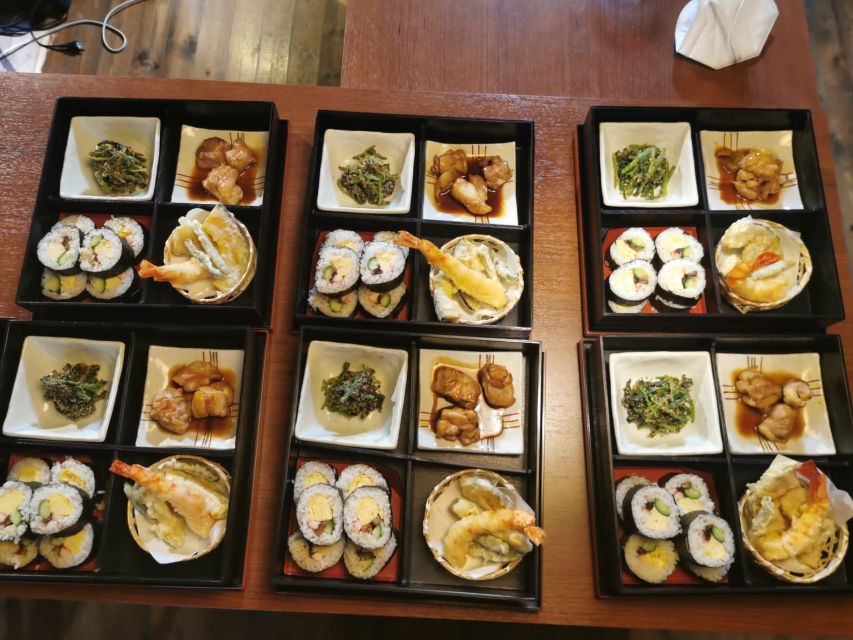
A bento box is more than a packed lunch. At Cooking Sun in Kyoto, you prepare one from several classic dishes, including sushi, tempura, teriyaki chicken, and miso soup, then sit down to eat what you made. The class also explains how bento developed from an old Japanese takeaway tradition into an everyday part of Japanese food culture.
I like the hands-on pace and the practical recipes. You cook enough dishes to make the meal feel substantial, but the English-speaking instructors keep the steps manageable. I also like that you receive written recipes and tips for finding ingredients at home. The main consideration is that most ingredients are already prepared, so this is more about techniques and assembly than knife skills.
Key points at a glance
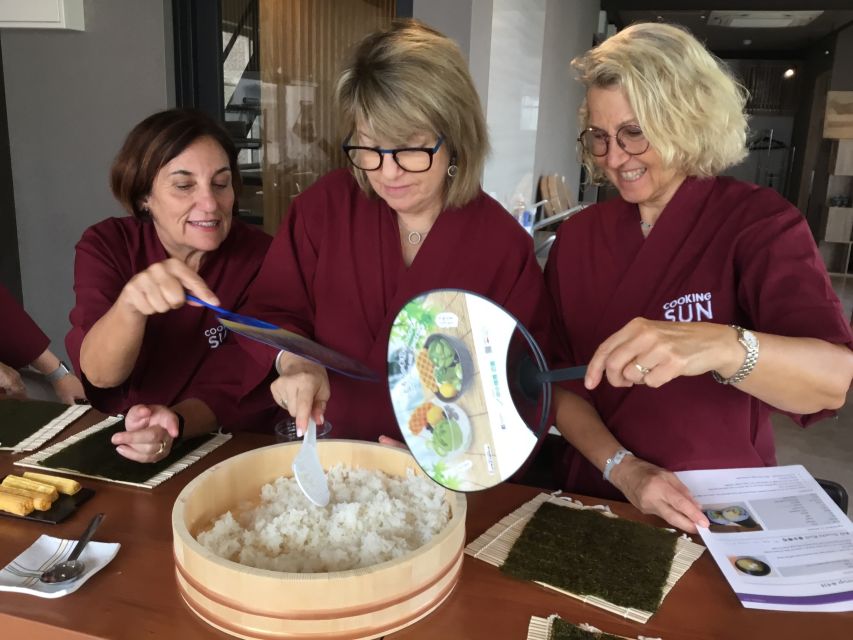
- Several dishes in one morning: Prepare sushi, tempura, teriyaki chicken, miso soup, and other bento items during a 2.5 to 3-hour class.
- Small-group teaching: Past classes have ranged from only four people to around eight or ten, allowing for personal help.
- Useful English instruction: Teachers including Mei, Mae, Tomoko, and Yukari have guided classes in clear English.
- Lunch is the finished product: Your cooking becomes a complete bento meal, included in the $67 price.
- Good for families: Children as young as 10 have taken part, with instructors offering extra help when needed.
- Dietary needs can be discussed: Vegetarian and no-shellfish adaptations have been provided, but you should state requirements when booking.
A Kyoto morning built around the bento box
This experience begins at Cooking Sun on Funayacho in Kyoto’s Shimogyo Ward. You meet at the cooking school rather than being collected from your hotel, so allow time to reach the address and get your bearings before the class begins.
The morning lasts about three hours. That is long enough to cover several dishes without turning the lesson into a rushed demonstration. You collect your ingredients, apron, and utensils, then follow the instructors through the preparation of the meal.
The bento format gives the class a useful shape. Instead of learning one isolated dish, you see how a Japanese lunch comes together with different colors, textures, and cooking methods. Sushi brings rice and rolling technique. Tempura adds a light fried element. Teriyaki chicken supplies a savory main dish, while miso soup gives the meal a warm, simple broth.
The class also places the bento in its cultural setting. Its history reaches back to the late Kamakura Period, from 1185 to 1333, although the box you prepare is meant as a practical meal for today. That small history lesson helps explain why bento is not just a decorative lunchbox. It is a way of arranging a varied meal in a compact form.
More cooking classes in Kyoto:
- Ramen Cooking Class at Ramen Factory in Kyoto
★ 5.0 · 1,937 reviews - Kyoto: Ramen Cooking Class at a Ramen Factory with Souvenir
★ 4.9 · 532 reviews - Kyoto: Ramen, Gyoza, and Onigiri Cooking Class
★ 5.0 · 445 reviews
Watching first, then cooking each dish
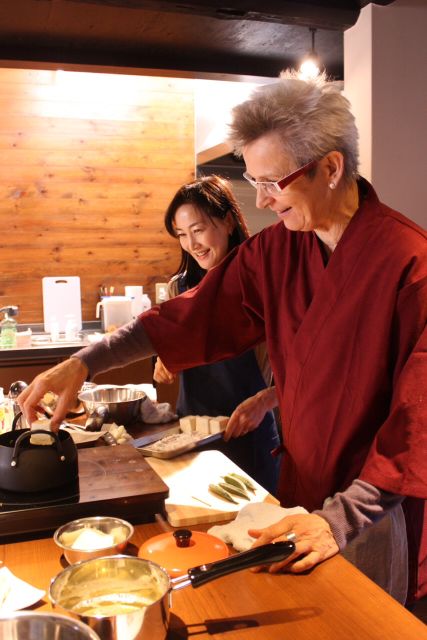
The instructors demonstrate the steps before you try them. That matters in Japanese cooking, where small details can affect texture and appearance. You are not left to guess how to shape sushi, season teriyaki chicken, or handle tempura.
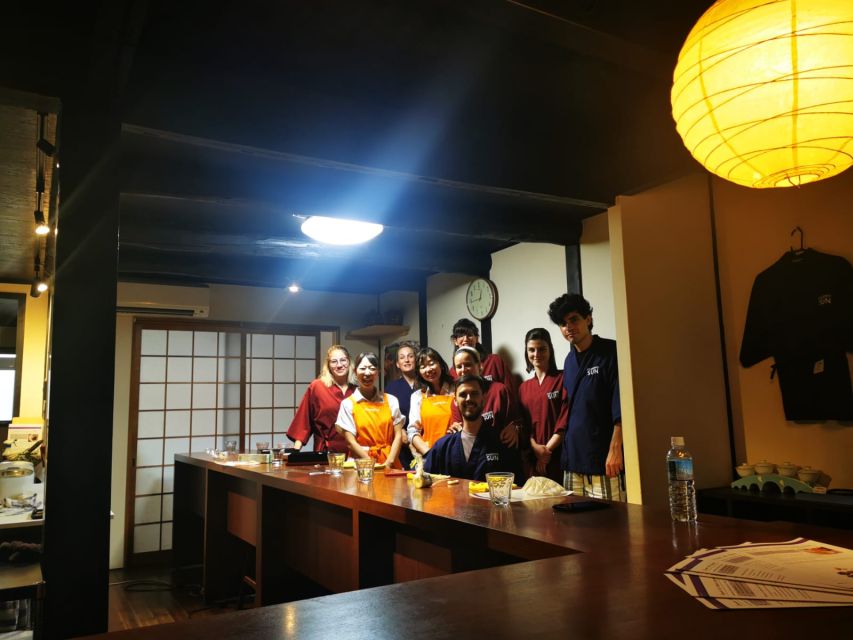
Past classes have been led by instructors such as Mei, Mae, Tomoko, and Yukari. The names and teaching team can vary, but the consistent feature is English instruction. The directions are designed for international visitors, including people who have little experience with Japanese cooking.
You should expect plenty of guidance, but not a formal culinary-school lesson. The point is to learn approachable home-style dishes that you can attempt again. One useful detail from an earlier class is that the ingredients were already prepped. If you want to practice chopping, slicing, and advanced knife work, this will not be the right class. If you prefer to spend your time learning sauces, shaping, frying, and assembling, the preparation suits you well.
That setup also helps keep the morning on schedule. Making a full bento from scratch, including all ingredient preparation, would take much longer than three hours. Here, you spend more time on the parts the instructor can explain and you can repeat at home.
What you actually cook
The advertised menu includes sushi, tempura, teriyaki chicken, and miso soup. The exact number of side dishes may vary, but earlier classes prepared as many as six or seven traditional dishes in one session.
Sushi is a highlight because it feels immediately connected to the bento idea. You learn how to prepare and assemble it rather than simply eating it at a restaurant. The result is also one of the easier dishes to recreate after your trip, especially when the school provides the recipe and ingredient guidance.
Tempura gives you a chance to work with a cooking method that can seem difficult at home. The instructor explains the process and the small tricks that help produce a good result. One past participant specifically planned to try tempura and mirin at home, which points to the class’s practical focus.
Teriyaki chicken is another useful choice. It is familiar enough to make the lesson accessible, but the class shows you how the Japanese version comes together. Several people have singled out the chance to repeat this dish at home, and it is a sensible recipe to learn if you want one reliable Japanese meal after returning home.
Miso soup rounds out the menu. It is simple, but it teaches you about ingredients and balance rather than relying on a packet or restaurant kitchen. The finished meal gives you a chance to see how these dishes work together in one bento.
Eating the bento you prepared
Once the cooking is finished, you arrange the dishes and sit down for lunch. This is not a tasting of small samples. Lunch is the main reward of the morning, and the meal includes the dishes you prepared.
I like this finish because it lets you judge your own work while the instructions are still fresh. You can see how the food looks when arranged in a box, then taste the balance between fried, grilled, rolled, and soup-based dishes.
The food also gives the class a social rhythm. You meet local instructors and share the morning with people from other countries. For families, this can be easier than a long sightseeing stop. Children have been able to take part in the cooking, and instructors have provided extra guidance for younger participants and teenagers.
The meal is included in the $67 price, along with ingredients, an apron, utensils, and the cooking instruction. That makes the cost easier to assess. You are paying for a substantial morning activity, not just a short demonstration followed by a snack.
More hands-on workshops in Kyoto:
- Kyoto: 45-Minute Tea Ceremony Lesson Experience
★ 4.3 · 2,378 reviews - Kyoto : Chopsticks Making Workshop in Gion with Engraving Option
★ 5.0 · 958 reviews - Kyoto: Samurai Sword Class by Experts in Traditional Arts
★ 4.9 · 657 reviews - Ninja 1-hour Hands-on Lesson by Japanese master in Kyoto -Entry
★ 5.0 · 489 reviews
Small groups and personal help
Group size is important in a cooking class. Past sessions have been as small as four people, while another class had eight and another had three instructors for ten participants. The size can change, but the available feedback points to a setting where instructors can circulate and help.
That personal attention is especially useful when you are rolling sushi, handling tempura, or trying to copy a particular shape. A teenager who needed extra direction received patient help, and another participant with considerable experience in Japanese cooking still picked up new tips.
There is one fair limitation. At least one person felt that some cooking equipment had to be shared and would have preferred more individual interaction. If every participant has their own workstation, you can move faster. In a shared setup, you may sometimes wait for a tool or work alongside another person.
For most people, that is part of the social nature of the class rather than a serious problem. Still, you should book it for instruction and friendly participation, not for a private lesson with uninterrupted access to every utensil.
Recipes and skills you can take home
A good cooking class should survive beyond the holiday. This one helps by providing written recipes and practical advice about ingredients. Teachers have also suggested where to find items once you return home, which is valuable if Japanese products are not common in your local shops.
The recipes are aimed at home cooks. You do not need advanced skills to follow the class, and the dishes are complex enough to feel rewarding without being out of reach. The combination of sushi, tempura, teriyaki chicken, and miso soup gives you several techniques to practice rather than one recipe repeated in different forms.
I would bring a way to make notes if you like recording small details. The instructors explain cultural points and cooking tips during the demonstrations, and there is a lot to cover in three hours. The written recipes help, but you may still want to mark the tricks that suit your kitchen at home.
A few people have even bought Japanese cooking equipment after the class. You do not need to do that, but it shows that the instruction can lead to a real interest in continuing the food tradition at home.
Dietary needs and family suitability
Tell Cooking Sun about dietary requirements when booking. Vegetarian adaptations have been provided, and one no-shellfish meal was arranged successfully. The information available does not promise every possible substitution, so it is best to ask ahead rather than expect changes on the morning.
The class is wheelchair accessible. No hotel pickup or drop-off is included, so you arrange your own transport to Funayacho.
Families can make good use of this activity. Twin 10-year-olds were able to participate and enjoyed the food, while a teenager received extra support from the teachers. Younger children may find the three-hour length demanding, but the hands-on format gives them more to do than a passive food talk.
It also suits couples, solo visitors, and friends. The international group adds conversation without taking away from the cooking. If you are already interested in Japanese food, the class still has something to offer. One experienced home cook came away with new information, particularly about small technique details.
Is $67 a fair price?
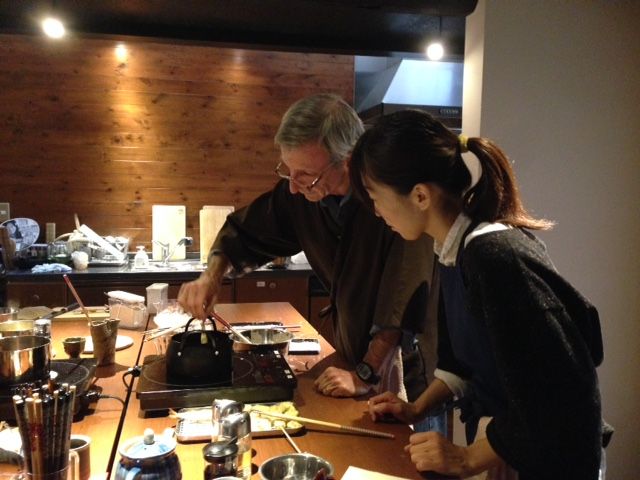
At $67 per person, the price is reasonable if you want more than a meal. You receive about three hours of instruction, all ingredients, equipment, an apron, recipes, and the lunch itself. You also avoid buying a long list of ingredients for a one-time cooking attempt.
The value is strongest for people who will use the recipes again. If you cook teriyaki chicken, sushi, or tempura at home after Kyoto, the class becomes a practical souvenir rather than a single morning’s entertainment.
It is less attractive if you only want to eat Japanese food. Kyoto has plenty of restaurants and prepared bento shops where you can spend less and finish faster. This activity earns its price through participation, cultural context, and the chance to learn several dishes in one sitting.
The full score from 149 ratings suggests a very strong record, and the praise is notably consistent around the same points: clear English instructions, friendly teachers, good food, small groups, and useful recipes. The one recurring caution available here is the shared equipment and the fact that the ingredients are prepared in advance.
Who should book this Kyoto cooking class?
I would choose this class if you want a hands-on cultural activity that fits neatly into a morning. It works particularly well on a day when you plan to visit Kyoto sights later, since lunch is built into the session and the class does not take the entire day.
It is a strong pick for first-time Japanese cooks, families with school-age children, and visitors who want recipes they can repeat. It also suits experienced cooks who enjoy learning local methods rather than starting from zero.
I would look elsewhere if your main goal is knife training, advanced sushi work, or a private chef lesson. The class focuses on accessible bento dishes, pre-prepared ingredients, and a friendly group setting.
FAQ
Where does the cooking class take place?
The class meets at Cooking Sun, Funayacho, Shimogyo Ward, Kyoto, Kyoto 600-8466.
How long does the experience last?
The cooking class lasts about three hours, with the stated duration ranging from 2.5 to 3 hours. Starting times depend on availability.
What dishes will I learn to make?
The class covers sushi, tempura, teriyaki chicken, and miso soup. Depending on the session, you may also prepare additional traditional bento dishes.
Is lunch included?
Yes. You eat the bento meal you prepare during the class, and lunch is included in the price.
Is the class taught in English?
Yes. English instruction is provided.
Can dietary requirements be accommodated?
You should advise Cooking Sun of any dietary requirements when booking. Vegetarian and no-shellfish adaptations have been provided.
Is the activity wheelchair accessible?
Yes, the activity is listed as wheelchair accessible. Hotel pickup and drop-off are not included.
Should you book it?
Book this Kyoto bento class if you want to spend a morning making several Japanese dishes, meeting local instructors, and eating a real meal at the end. The clear English teaching, family-friendly approach, recipes, and small-group attention make it a useful choice for many visitors.
Skip it only if you want advanced knife work, a private kitchen, or a quick food tasting. For everyone else, $67 buys a good block of hands-on time and skills that can follow you home.
More Morning in Kyoto
- Kyoto Early Morning Tour with English-Speaking Guide
★ 5.0 · 1,427 reviews - Kyoto: Early Morning Tour with English-Speaking Guide
★ 4.9 · 1,128 reviews - From Kyoto: Nara Guided Morning Tour
★ 4.6 · 335 reviews - Kyoto Morning Tour from Kyoto or Osaka
★ 4.0 · 281 reviews
Just added around Kyoto
- Kyoto: Zen Meditation at a Private Temple with a Monk★ 5.0 · 25 reviews
- Kyoto: Gion Geisha District & Sake-in-Hand Walking Tour★ 5.0 · 37 reviews
- Private Pewter Sake Cup Experience with a Kyoto Artisan★ 5.0 · 31 reviews
- Your Private Vacation Photography Session In Kyoto★ 5.0 · 110 reviews
- Kyoto Wagashi(Japanese sweets) Cooking Class near Fushimiinari★ 5.0 · 60 reviews
- Private Guided Traditional Buddhist Cooking in Japan★ 5.0 · 16 reviews
- Traditional Japanese Music show & Experience Tour in Kyoto★ 5.0 · 57 reviews
- Kyoto:Family-Friendly Kimono & Yukata Experience at WARGO★ 5.0 · 147 reviews
Kyoto Tours, compared.


Fushimi Inari, Kinkakuji, Bamboo Grove 1 Day Bus Tour
Read our review →
Tea Ceremony in a Traditional Tea House in Kiyomizu
Read our review →
Kyoto Geisha Walking Tour: Gion District & Hidden Gems
Read our review →

Gion Magical Night Walking Tour with Geisha Trivia
Read our review →

Gion Geisha District Walking Tour – Stories of Geisha
Read our review →Browse the lists this tour appears in