
Reviewed · KYOTO TOURS
Kyoto: Samurai Ninja Museum guided tour
Kyoto’s Samurai Ninja Museum turns a history lesson into a hands-on hour. You see armor and weapons, hear how samurai and ninja fit into Japan’s past, then put on a samurai costume, lift a replica sword, and try shuriken, the classic ninja throwing star. It is history with a target at the end.
I like two things here: the English-speaking guides make the displays easy to follow, and the activities keep children and teenagers involved instead of asking them to stare quietly at glass cases. Guides named Miu, Akiko, Sayo, Ko, Aya, and Jukia are often praised for clear explanations and friendly teaching.
The main caution is scope. At one hour, this is a lively introduction rather than a full study of samurai warfare or ninja practice. One booking also described the price as an unnecessary upcharge, so I would compare the $28 cost with your interest level before booking.
Key points to know before you book
- You handle history, not just look at it: Try a samurai costume, real helmet, replica sword, and ninja star throwing.
- The guide shapes the experience: English-speaking guides including Miu, Akiko, Sayo, Ko, and Jukia use questions and demonstrations to keep the hour moving.
- The tour covers samurai and ninja together: Expect displays and explanations about warriors, weapons, craftsmanship, and their place in Japanese history.
- The full visit lasts one hour: That makes it easy to fit between Kyoto sights, but it limits the amount of detail.
- Families get plenty to do: Children and teenagers can take part in the dress-up and shuriken activity.
- Check group size when booking: The details describe a small group limited to 10, while another notice gives a maximum of 30, so confirm the size for your chosen departure.
What this Kyoto museum experience is really like
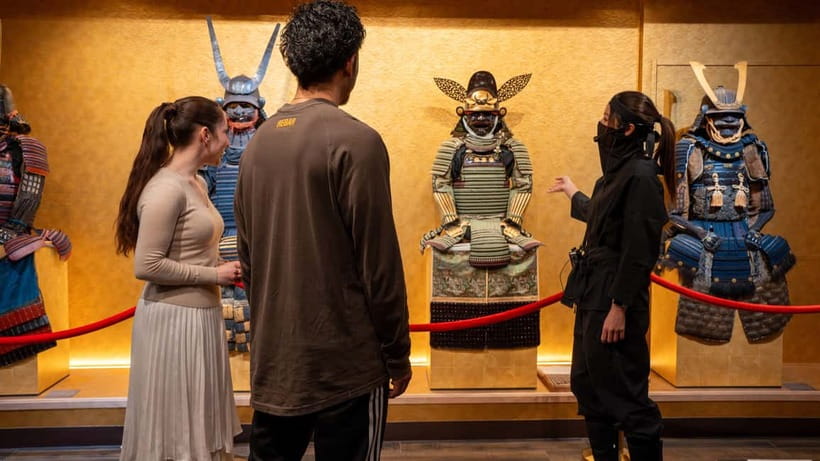
The Samurai Ninja Museum is designed as a guided activity, not a quiet museum visit where you wander alone with a map. Your English-speaking guide leads you through displays of armor, weapons, and other objects linked to samurai and ninja life.
That format matters. Samurai and ninja are familiar figures around the world, but popular films often blur their roles. A good guide can help you separate historical tradition from stage-ready legend, and that is where this experience earns its keep. The strongest comments about guides such as Miu, Akiko, Sayo, Ko, and Jukia focus on clear English, useful facts, and an ability to involve the whole group.
I would expect the guide to ask questions, point out details in the displays, and explain the craftsmanship behind the equipment. One guide was praised for showing how the armor and weapons were made, while another used questions to engage the audience. That approach is better than a long speech, especially when you have children in tow.
The museum’s subject also fits Kyoto well. The city is closely linked with Japan’s imperial court, warrior government, and the long period that ended with the Tokugawa shogunate. The tour uses that broad setting to introduce the samurai and ninja rather than presenting them as characters from a fantasy show.
More Samurai and Ninja Experiences in Kyoto
- Kyoto Samurai Experience
★ 5.0 · 1,294 reviews - Kyoto: Kendo and Samurai Experience with Uniform and Gear
★ 4.9 · 815 reviews - Kyoto: Samurai Sword Class by Experts in Traditional Arts
★ 4.9 · 657 reviews
The museum displays: armor, weapons, and warrior history
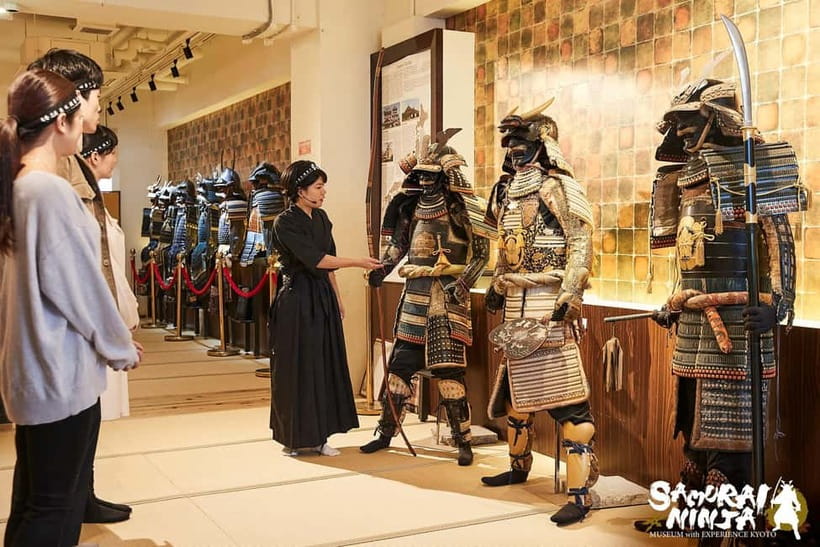
The first part centers on the objects. You can expect displays of samurai equipment, weapons, armor, and props connected with ninja life. The presentation is aimed at a general audience, so you do not need prior study to keep up.
I especially like this sort of museum stop early in a Japan trip. It gives you useful words and images for later visits to castles, temples, and historic districts. Once you have seen a helmet, sword, or suit of armor up close, similar objects in larger museums become easier to understand.
The displays also give the guide something solid to discuss. Rather than hearing only a list of dates, you can connect the story to objects you can see. The focus on craftsmanship is useful because armor and weapons were not just symbols of power. They were made for practical use, worn by real people, and shaped by the needs of their time.
Still, keep your expectations in check. The supplied details do not promise an extensive collection or a long, self-guided museum visit. This is a compact introduction built around a live explanation and several activities. If you want hours of detailed military history, a larger specialist museum would be a better match.
Samurai dress-up, helmet, and replica sword
The costume section is the photo-friendly part of the hour. You can dress like a samurai, wear a real samurai helmet, and hold a replica sword. These are simple activities, but they make the visit more memorable because you shift from watching the story to taking part in it.
The real helmet is an especially useful touch. It gives you a better sense of the weight and presence of samurai equipment than a picture ever could. Holding a replica sword also helps younger participants connect with the subject, while adults usually appreciate the chance to take a few unusual Kyoto photos.
I would treat the costume as an introduction to samurai appearance, not a precise historical reconstruction. The supplied information does not specify the period, style, or materials of the costume. That is not a serious problem for a short family activity, but history-minded visitors should avoid reading too much into the dress-up portion.
You should also remember that the experience moves quickly. If several people want photos, time can pass fast. The guide’s job is to keep the group together while allowing everyone a turn, so expect brief participation rather than a long private photo session.
Shuriken throwing and the hands-on finale
The ninja star throwing is the most consistent crowd-pleaser in the experience. The guide introduces the shuriken, gives instructions, and lets you try hitting a target. The activity is often used as the final part of the tour, which gives the hour a clear finish.
I like this ending because it changes the pace. After hearing about history and examining equipment, you get a simple task that demands focus. It also gives children and teenagers a reason to stay engaged through the museum portion. Several parents specifically appreciated that the interactive sections held their children’s attention.
The activity is presented as a supervised experience, not combat training. The information also mentions a ninja fukiya and a katana lesson as part of the hands-on offerings, but the included section specifically confirms the museum tour, samurai costume, and ninja star throwing. If the katana lesson or fukiya activity is important to you, check exactly what your selected tour includes.
Do not expect the throwing game to make you a ninja. It is a short, playful activity, and your enjoyment will depend partly on the group and how much time is available. Still, at $28, it adds something a standard museum ticket cannot provide.
More samurai and ninja sessions in Kyoto:
- Skip the lines Basic Ticket at SAMURAI NINJA MUSEUM KYOTO
★ 4.5 · 632 reviews - Ninja 1-hour Hands-on Lesson by Japanese master in Kyoto -Entry
★ 5.0 · 489 reviews - Kyoto: Ninja Weapon Forging Experience
★ 4.8 · 478 reviews - Kyoto: Samurai Kenbu Traditional Sword Dancing Show
★ 4.5 · 426 reviews
Why the English-speaking guide matters
The guide is the most important variable here. The museum’s subject can easily become a string of costume facts and movie references. A good guide gives the displays order and explains why the objects matter.
The strongest guide feedback points to clear English, enthusiasm, questions, and a friendly manner. Miu is repeatedly praised for explaining Japanese history and craftsmanship. Akiko receives credit for detailed explanations and good photo help. Sayo is described as both fun and clear, while Ko is praised for easy-to-understand English and engaging delivery.
Jukia is a strong choice for visitors who want more historical detail. The comments about this guide highlight the samurai period, the displays, and the wider story of Japan. Aya, Aoi, Taka, Mami, Taku, and Saku also receive warm praise for making the visit enjoyable and informative.
You cannot normally choose your guide, so I would focus on the structure of the activity rather than expecting a particular person. The useful point is that the experience relies on live teaching. If you ask questions, you have a chance to get more from the hour than someone who simply watches the demonstrations.
Is $28 a fair price for one hour?
At $28 per person, this is not the cheapest short stop in Kyoto. The price makes the most sense if you want three things together: a guided museum visit, costume access, and a supervised ninja star activity.
A basic museum entry might cost less, which explains why one person felt the tour price was an unnecessary upcharge. That criticism is fair if you only want to see the exhibits and do not care about dressing up or throwing shuriken.
For families, first-time visitors, and anyone who values an English explanation, the calculation is different. You are paying for a compact activity with a guide, equipment, and a planned sequence. The cost may compare well with other short tourist activities, especially when the children are actively involved rather than waiting for an adult-oriented lecture to end.
I would book it for the experience, not for the size of the collection. If you already know a great deal about samurai history, you may find the content basic. If you are curious, short on time, or want a lighter Kyoto activity between major sights, the price is easier to justify.
The one-hour schedule and group size
One hour is both the strength and limitation of this tour. You can fit it into a busy Kyoto day without sacrificing half a morning or afternoon. It works well before or after another central activity, though transportation to and from the attraction is not included.
The schedule needs to cover the museum explanation, costume activity, helmet and sword handling, and shuriken throwing. That means each section is likely to be brisk. I would arrive ready to listen and take part rather than expecting a slow museum visit.
The booking information describes a small group limited to 10 participants. Another notice says the activity may have a maximum of 30 travelers, so there is a clear inconsistency in the supplied details. I would confirm the number for your selected time before booking if a small group is important to you. A group of 10 allows more turns and questions; a larger group could make the hands-on portions feel shorter.
The activity is listed as wheelchair accessible. Since no further access details are provided, I would contact the operator directly if you need information about the precise route, equipment, or costume process.
Who will enjoy this most
I would put this tour high on the list for families. The blend of short explanations, costume photos, replica equipment, and target throwing gives children several ways to participate. Teenagers who might resist a formal museum can usually find something to enjoy in the practical sections.
It also works for adults who want an easy introduction to samurai and ninja culture. You do not need to read a book before arriving, though one person suggested learning a little about ninjas in advance. Even a quick overview would help you place the displays and ask sharper questions.
First-time visitors to Japan may get the most value because the tour gives you basic context without demanding much time. It is also useful for people who want an activity in English. The guides are there to explain the subject in plain terms and answer questions.
I would be more selective if your main goal is serious historical study. The tour is short and interactive, and the costume and throwing activities take up part of the hour. Those are selling points for many people, but they reduce the time available for detailed discussion.
Practical booking advice
The tour costs $28 per person and includes the museum entry, professional English-speaking guide, samurai costume, and ninja star throwing. Transportation is not included, so plan your route to the museum separately.
You can cancel up to 24 hours before the activity for a full refund. The reserve-now, pay-later option lets you hold a place without paying immediately, which is useful when your Kyoto schedule is still shifting.
Starting times vary, so check availability for your date. The activity is listed as wheelchair accessible, and English is the stated language. Because the group-size information differs between the small-group description and the maximum-capacity notice, confirm that detail if you prefer a quieter visit.
I would also wear something comfortable and easy to move in. That is practical advice for any activity involving costume changes and throwing, though the supplied information does not give a specific dress code.
Should you book the Samurai Ninja Museum tour?
Book it if you want a short, social, hands-on introduction to samurai and ninja culture. The guide-led format, clear English explanations, costume session, and shuriken throwing make it especially good for families, teenagers, and first-time visitors to Japan.
Skip it if you want a large collection, a long scholarly lecture, or a deeply detailed account of Japanese military history. At $28, the value depends on using the activities. If you only want to look at displays, the price may feel high.
My practical call: choose this tour when you want history with participation and photos, and confirm the group size before paying. The best part is not simply seeing samurai armor. It is the combination of a well-run explanation and the chance to handle safe replicas, dress up, and take your turn at the target.
FAQ
Where does this experience take place?
It takes place at the Samurai Ninja Museum in Kyoto, on Honshu, Japan.
How long does the tour last?
The guided experience lasts one hour.
What language is the tour offered in?
The tour is offered in English with a live English-speaking guide.
Is museum admission included?
Yes. The museum entry ticket is included in the activity.
Is a guide included?
Yes. The package includes a professional museum guide.
Can I dress as a samurai?
Yes. A samurai costume is included, and you can wear a real samurai helmet and hold a replica sword.
Is ninja star throwing included?
Yes. Ninja star throwing, also called shuriken throwing, is included.
Is transportation included?
No. Transportation to and from the attraction is not included.
Is the activity wheelchair accessible?
The activity is listed as wheelchair accessible.
What is the cancellation policy?
You can cancel up to 24 hours in advance for a full refund. The reserve-now, pay-later option is also available.
More Museums in Kyoto
- Kyoto: Tea Museum Tickets and Matcha Grinding Experience
★ 4.9 · 739 reviews - Kyoto : Geiko Maiko Dance of Kyoto & Visits of Gion Museum
★ 4.6 · 415 reviews - Kyoto Sword Experience – includes Museum Ticket/Ninja Experience
★ 4.5 · 149 reviews - Ninja Experience (Family Friendly) at Samurai Ninja Museum KYOTO
★ 4.5 · 132 reviews
Just added around Kyoto
- Kyoto: Zen Meditation at a Private Temple with a Monk★ 5.0 · 25 reviews
- Kyoto: Gion Geisha District & Sake-in-Hand Walking Tour★ 5.0 · 37 reviews
- Private Pewter Sake Cup Experience with a Kyoto Artisan★ 5.0 · 31 reviews
- Your Private Vacation Photography Session In Kyoto★ 5.0 · 110 reviews
- Private Guided Traditional Buddhist Cooking in Japan★ 5.0 · 16 reviews
- Kyoto Wagashi(Japanese sweets) Cooking Class near Fushimiinari★ 5.0 · 60 reviews
- Traditional Japanese Music show & Experience Tour in Kyoto★ 5.0 · 57 reviews
- Kyoto:Family-Friendly Kimono & Yukata Experience at WARGO★ 5.0 · 147 reviews
Kyoto Tours, compared.


Fushimi Inari, Kinkakuji, Bamboo Grove 1 Day Bus Tour
Read our review →
Tea Ceremony in a Traditional Tea House in Kiyomizu
Read our review →
Kyoto Geisha Walking Tour: Gion District & Hidden Gems
Read our review →

Gion Magical Night Walking Tour with Geisha Trivia
Read our review →

Gion Geisha District Walking Tour – Stories of Geisha
Read our review →Browse the lists this tour appears in