
Reviewed · KYOTO TOURS
Nishiki Market Food Tour with Cooking Class
Nishiki Market is easy to walk through and easy to misunderstand. On your own, you could pass the famous stalls in 15 minutes. With an English-speaking local guide, the market becomes a lesson in Kyoto food, shop traditions, pickles, sauces, seafood, and the polite rules that keep this narrow arcade moving. Then you use fresh ingredients to cook your own donburi rice bowl.
I like two things especially. First, this is a private tour, so you can ask direct questions and set the pace instead of trying to hear a guide over a large group. Second, the cooking class turns sightseeing into a useful skill: you leave with a recipe and techniques you can repeat at home. The free pickle samples, market tastings, and optional three-sake tasting add flavor without making the whole experience feel like a simple eating tour.
The main consideration is time. The market tour and cooking class each take about an hour, so you will not have unlimited time for private shopping or long tastings. At $109 per person, the price is fair for a private guide, ingredients, samples, cooking instruction, recipe, and taxi transfer, but it makes the most sense if you want active participation rather than just a quick market walk.
Key points at a glance
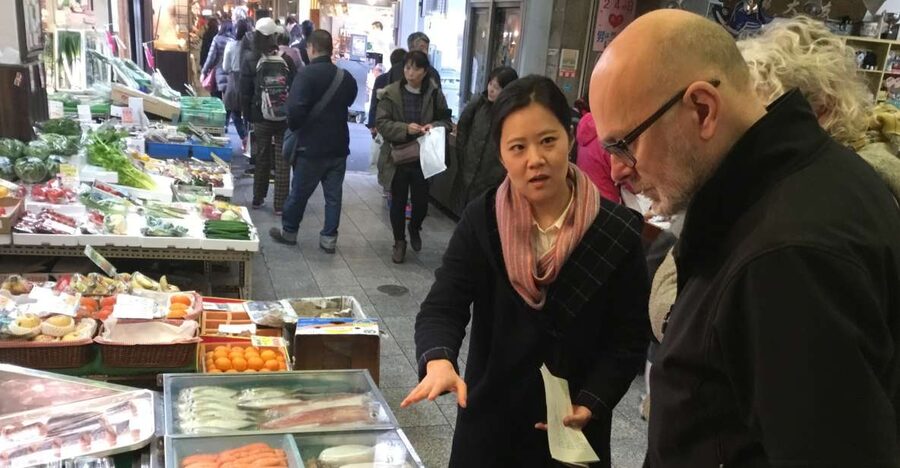
- A private Nishiki Market walk: Ask as many questions as you like and get help translating with shop staff.
- Three donburi choices: Prepare kaisen-don with seafood, ten-don with tempura, or oyako-don with chicken and egg.
- Market ingredients are included: You cook with ingredients selected during the tour, not a prepackaged meal.
- Useful Kyoto food lessons: Learn about famous stalls, sauces, brands, pickles, spices, and market etiquette.
- Optional sake tasting: Try three different types of sake if you choose to add that part.
- A practical family activity: The hands-on format has worked well for children, cooks, and mixed-age groups.
Starting at Nishiki Market’s western entrance
Your meeting point is the western side entrance of Nishiki Market. That detail matters because Nishiki is a long, narrow food arcade with many entrances, and arriving at the wrong end can cost you valuable time. The tour begins with a short briefing before you start walking.
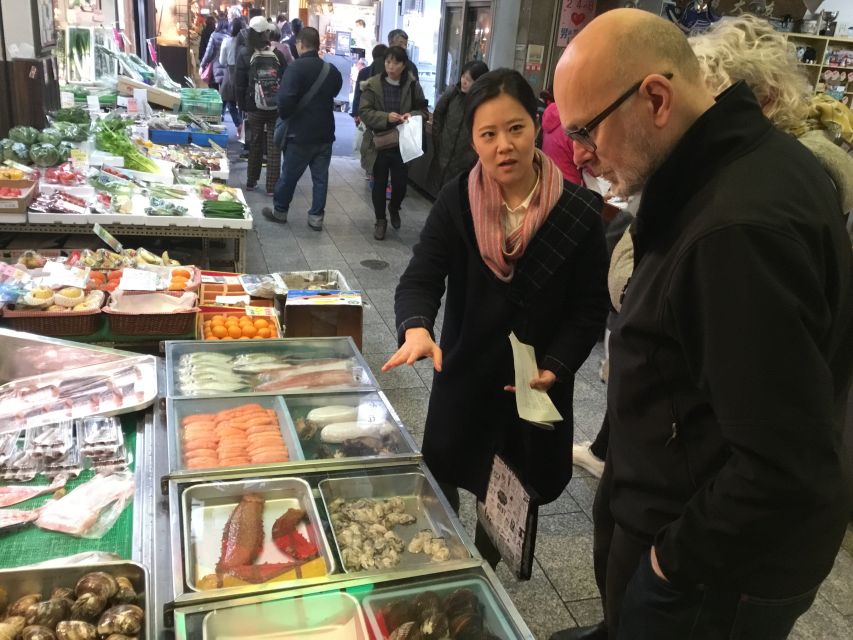
Nishiki Market has a reputation as Kyoto’s kitchen, but a first-time visitor can see it as one long row of snacks and souvenir foods. Your guide gives the stalls a story and a purpose. You can ask about foods you do not recognize, find out which shops are old and well regarded, and learn what makes one stall known for pickles while another is known for spices, meat, seafood, or prepared side dishes.
The market has also changed. Some stalls now cater heavily to visitors, while others retain older local traditions. One useful part of the walk is learning to tell the difference between a shop that is famous for its long connection to the market and a stall designed mainly for quick tourist purchases.
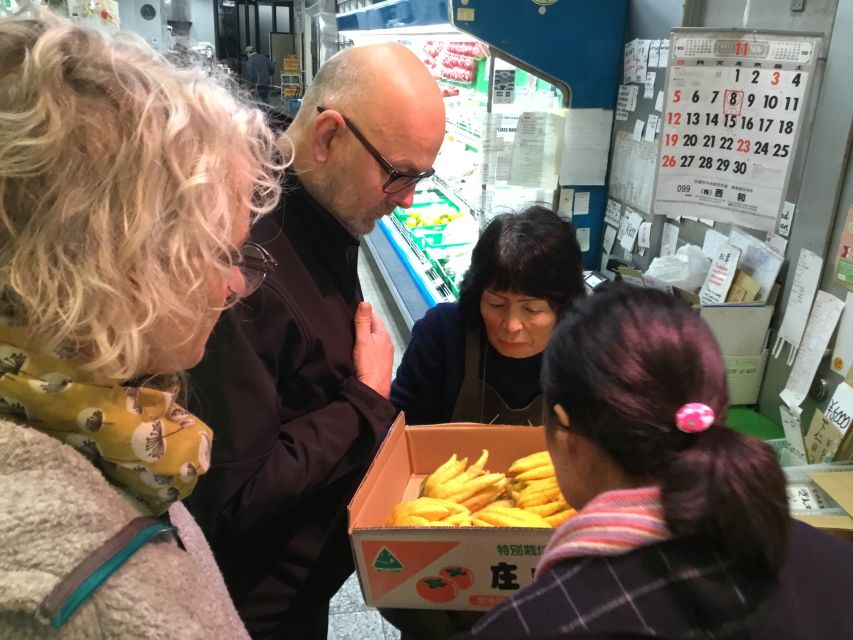
The pace is a strength here. Since the group is private, you can stop to ask about an unfamiliar ingredient instead of nodding along and moving on. Your guide can also help translate questions for shop staff, which is valuable when labels or descriptions are not clear in English.
More Food Tours in Kyoto
- Kyoto Night Foodie Tour in Gion (9+ dishes + 6 Sake tastings)
★ 5.0 · 1,762 reviews - Kyoto: Gion Food Tour 13 Dishes at 4 Eateries
★ 5.0 · 408 reviews - Kyoto: Gion & Pontocho Food Tour with 13 Dishes
★ 4.9 · 235 reviews
What you learn in the one-hour market walk
Plan on roughly one hour inside Nishiki Market. That is long enough for a proper introduction, though not long enough to inspect every stall or shop for yourself.
You can expect small food samples during the walk. Japanese pickles are specifically part of the experience, with free tastings available at the market. These are not just palate fillers. Pickling is an important part of Japanese home cooking, and tasting several varieties helps you notice how vegetables, salt, vinegar, and seasonings change the final flavor.
The tour also includes sample food tastings, and your guide may select Japanese side dishes to accompany the meal later. The exact food choices can vary, but the point is to connect what you see in the market with what you will eat in the cooking studio.
A practical lesson is market etiquette. Nishiki’s passage is narrow, and you are not expected to eat while walking. Your guide explains where and how to enjoy food properly, a small detail that is easy to miss and useful for the rest of your Japan trip.
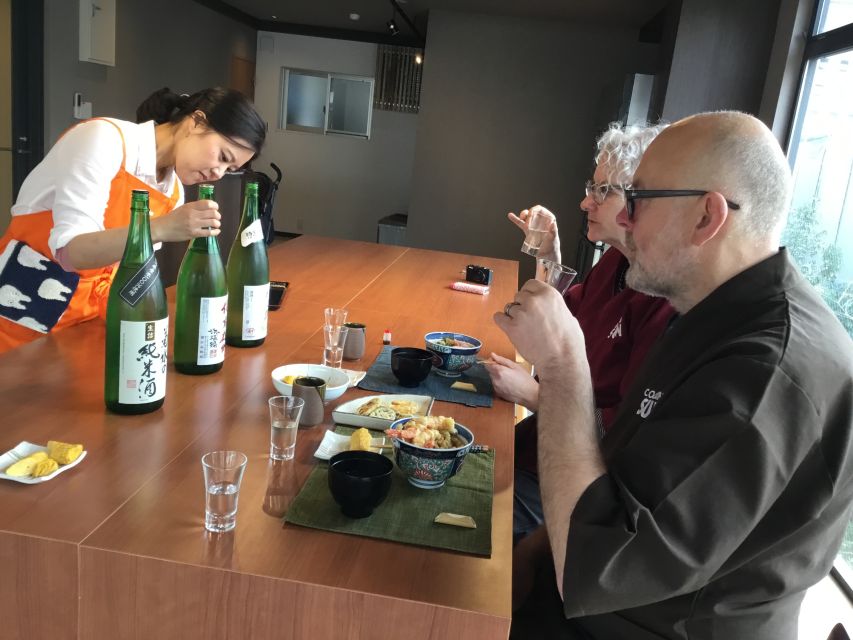
You may also choose an optional tasting of three different types of sake. Since sake is not the core of the tour, this works best for adults who want a little extra context about Japanese drinks. If your main interest is food preparation, you can treat it as an add-on rather than a required part of the visit.
Choosing between kaisen-don, ten-don, and oyako-don
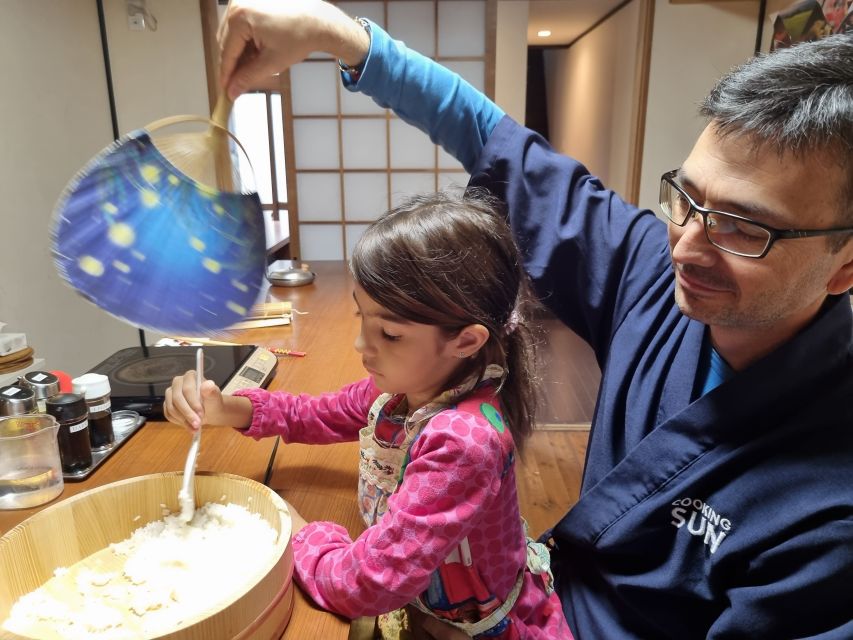
After the market, an included taxi takes you to the cooking studio. The transfer is a welcome practical touch. You do not have to navigate unfamiliar streets while carrying market purchases, and it keeps the 150-minute schedule moving.
The cooking portion takes about one hour, including preparation and eating. You choose from three donburi dishes:
- Kaisen-don: a seafood rice bowl
- Ten-don: a tempura rice bowl
- Oyako-don: chicken and egg over rice
The group does not necessarily need to choose one single dish for everyone. Different people can select different options, which makes the class more useful for families and mixed groups. One group prepared all three dishes, allowing everyone to compare methods and flavors.
The ingredients for the donburi are included in the tour price. This is important because the cooking class is not simply a demonstration followed by a meal prepared in advance. You work with ingredients connected to the market visit and take part in the process.
The guide may also accommodate a substitution request. A tofu substitution for chicken was arranged for one participant, and other groups received small extras based on their tastes. That does not mean every request can be guaranteed, but it is worth raising dietary preferences when you book or at the start of the tour.
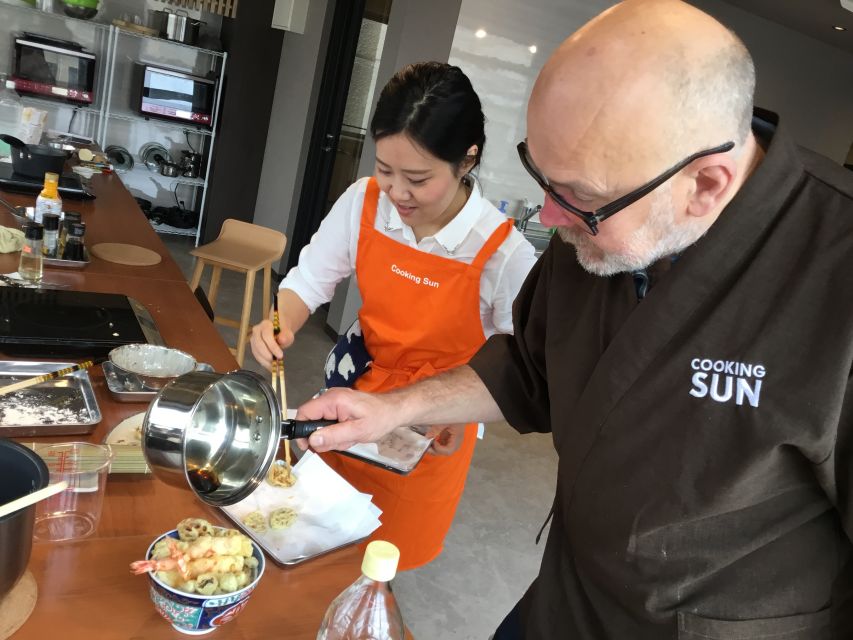
Kaisen-don may appeal to seafood lovers, while ten-don offers the most clearly hands-on cooking technique if you want to learn about frying. Oyako-don is likely the most approachable choice for many families and home cooks. It is also a practical dish to recreate later because it uses a simple combination of chicken, egg, rice, and Japanese seasonings.
A cooking class built for participation
The cooking studio is described as a clean, well-stocked kitchen intended for cooking classes. The atmosphere is more personal than a large demonstration kitchen because the group is private and the instructor can pay attention to individual questions.
Expect instruction on more than just the basic recipe. The class can cover dashi, sauces, sauce brands, preparation methods, and how to make the finished dish look attractive as well as taste good. That last point is worth noting. Japanese food presentation often depends on arrangement, color, and careful portioning, and the class treats appearance as part of the meal.
The English instruction is central to the experience. Cooking Sun instructors have included Chie, Momo, and Mio, all praised for clear explanations, friendly teaching, and strong English. Your exact instructor depends on the date, but the format is designed for English-speaking participants.
The class has also suited children. The dishes require different steps, which keeps younger participants involved rather than watching one long demonstration. If you are traveling with children, this gives them something concrete to do and a meal they helped prepare.
Experienced home cooks should not dismiss the class as too basic. The useful details may be the small ones: which sauces to use, how to build flavor with dashi, how to handle ingredients, and how to make a bowl look balanced. A beginner can follow the recipe, while a confident cook can ask more technical questions.
Same base, a completely different sort of day:
- PERFECT KYOTO 1-Day Bus Tour
★ 5.0 · 13,518 reviews - Kyoto: Fushimi Inari, Kinkakuji, Bamboo Grove 1 Day Bus Tour
★ 4.8 · 4,316 reviews - Kyoto: Tea Ceremony in a Traditional Tea House in Kiyomizu
★ 4.9 · 3,519 reviews - Kyoto Geisha Walking Tour: Gion District & Hidden Gems
★ 4.7 · 3,273 reviews
Eating what you prepared
The final meal is the payoff, but it is also part of the lesson. You sit down with the donburi you prepared, market samples, and Japanese side dishes selected during the walk.
This arrangement gives the meal more meaning than eating a bowl at a restaurant. You have seen some of the ingredients, discussed how Japanese households use them, and then handled the cooking yourself. You also receive the recipe, so the experience can continue after Kyoto.
The meal should not be mistaken for an unlimited food crawl. Foods you decide to buy or eat privately at the market are not included. The tour fee covers the planned samples and the ingredients for the cooking class. If you want to shop for snacks, condiments, or gifts, you may need to return to Nishiki after the tour.
That point deserves planning. One earlier participant was unsure if private shopping was meant to happen during the tour or afterward. The safest approach is to treat the scheduled walk as a guided introduction, not shopping time. Ask your guide which stalls are worth revisiting, then return later if you want to browse at your own speed.
How much value do you get for $109?
At $109 per person, this is not the cheapest way to see Nishiki Market. You are paying for a private English-language guide, a market tour, food samples, donburi ingredients, a recipe, the cooking lesson, the meal, and the taxi from the market to the studio.
The value improves if you are a small private group. A private format lets you ask more questions, request a substitution, and have the guide adjust the pace. Those benefits are harder to get on a large group food walk.
The price also covers an experience that combines three things: cultural explanation, tasting, and practical cooking. If you would otherwise pay separately for a market tour and a cooking class, the combined format is sensible.
There are limits. Ingredient quality can vary, and one participant found the fatty tuna disappointing. The market walk may also feel lighter on explanations and tasting time if you hoped to stop at many stalls. If your goal is to eat as much as possible or spend half a day shopping, this tour may feel too structured.
For someone with only a few days in Kyoto, I think the price is easier to justify. You get a guided introduction to one of the city’s best-known food areas, then spend time making a proper meal rather than simply passing through.
Who will enjoy this most?
I would recommend this experience to first-time Kyoto visitors who want help making sense of Nishiki Market. It is especially useful if you are curious about ingredients but do not know the names, customs, or etiquette.
It also fits:
- Families looking for a hands-on activity
- Couples who prefer a private class
- Home cooks interested in Japanese sauces and dashi
- Visitors who want a meal connected to the local market
- People who appreciate the convenience of an included taxi transfer
- Adults who want to add a small sake tasting
You may want something else if you prefer independent shopping, a long restaurant meal, or a very large number of tastings. The 150-minute schedule is focused. It gives you a clear introduction and a cooking experience, not an entire afternoon to wander.
Timing, cancellation, and small practical details
The total duration is 150 minutes, with about one hour at Nishiki Market and about one hour cooking and eating. The remaining time covers the briefing and taxi transfer to the studio.
The tour is conducted in English and offered for a private group. Ingredients, recipe, tastings, and taxi cost from the market to the studio are included. Personal food purchases at the market are not.
You can reserve now and pay later, which helps if your Kyoto schedule is still changing. Cancellation is free up to 24 hours in advance for a full refund. Check the available start times when booking, since the schedule can vary.
Wear something comfortable for walking and cooking, and arrive at the western entrance with enough time to find the correct meeting point. If you want to shop privately, ask your guide for a short list of stalls to revisit after the class.
FAQ
Where does the Nishiki Market tour begin?
Meet at the western side entrance of Nishiki Market.
How long does the experience last?
The total duration is 150 minutes. You typically spend about one hour touring Nishiki Market and about one hour cooking and eating.
Which donburi dishes can I prepare?
You can choose kaisen-don with seafood, ten-don with tempura, or oyako-don with chicken and egg.
Are the cooking ingredients included?
Yes. The tour price includes the ingredients used for the donburi cooking class.
Is the taxi to the cooking studio included?
Yes. The taxi cost from Nishiki Market to the cooking studio is included.
Is the tour private and conducted in English?
Yes. It is a private group activity with English instruction.
Is sake tasting included?
A tasting of three different types of sake is available as an optional part of the experience.
Should you book this Nishiki Market food tour?
Book it if you want more than a quick walk through Kyoto’s famous food market. The strongest part is the connection between the stalls and the kitchen: you learn what you are seeing, taste selected foods, then use market ingredients to prepare a donburi meal.
I especially like this for families, curious eaters, and home cooks. The private format gives you room to ask questions, and the recipe gives the experience a life beyond your Japan trip.
Skip it if your priority is unrestricted shopping or a long series of tastings. For everyone else, $109 buys a well-focused half-day activity with real participation, useful food lessons, and a satisfying meal at the end.
More Markets in Kyoto
- Nishiki Market Brunch Walking Tour (7 Tastings + Brunch)
★ 5.0 · 1,355 reviews - Kyoto Nishiki Market Food and Culture Walking Tour
★ 5.0 · 412 reviews - Kyoto: Nishiki Market Tea Ceremony with Koto Performance
★ 4.8 · 294 reviews - Kyoto: Nishiki Market Brunch Walking Tour-7 Tastings+Brunch
★ 4.8 · 197 reviews
More Cooking Classes in Kyoto
- Ramen Cooking Class at Ramen Factory in Kyoto
★ 5.0 · 1,937 reviews - Kyoto: Ramen Cooking Class at a Ramen Factory with Souvenir
★ 4.9 · 532 reviews - Kyoto: Ramen, Gyoza, and Onigiri Cooking Class
★ 5.0 · 445 reviews - Kyoto: Japanese Washoku Bento Small Group Cooking Class
★ 5.0 · 380 reviews
Just added around Kyoto
- Kyoto: Zen Meditation at a Private Temple with a Monk★ 5.0 · 25 reviews
- Your Private Vacation Photography Session In Kyoto★ 5.0 · 110 reviews
- Kyoto: Gion Geisha District & Sake-in-Hand Walking Tour★ 5.0 · 37 reviews
- Private Pewter Sake Cup Experience with a Kyoto Artisan★ 5.0 · 31 reviews
- Private Guided Traditional Buddhist Cooking in Japan★ 5.0 · 16 reviews
- Kyoto Wagashi(Japanese sweets) Cooking Class near Fushimiinari★ 5.0 · 60 reviews
- Traditional Japanese Music show & Experience Tour in Kyoto★ 5.0 · 57 reviews
- Kyoto:Family-Friendly Kimono & Yukata Experience at WARGO★ 5.0 · 147 reviews
Kyoto Tours, compared.


Fushimi Inari, Kinkakuji, Bamboo Grove 1 Day Bus Tour
Read our review →
Tea Ceremony in a Traditional Tea House in Kiyomizu
Read our review →
Kyoto Geisha Walking Tour: Gion District & Hidden Gems
Read our review →

Gion Magical Night Walking Tour with Geisha Trivia
Read our review →

Gion Geisha District Walking Tour – Stories of Geisha
Read our review →Browse the lists this tour appears in