
Reviewed · IMPERIAL PALACE TOURS
Kyoto Imperial Palace & Nijo Castle Guided Walking Tour – 3 Hours
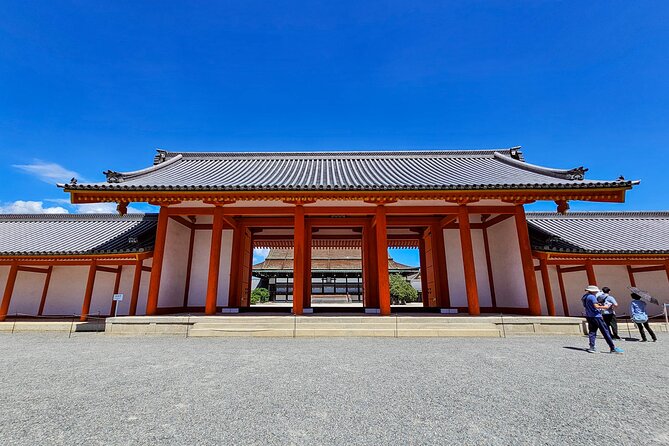
Kyoto’s past comes into sharper focus when you see both sides of its old power structure in one morning or afternoon. Nijo Castle brings you into the world of the shoguns, while the Kyoto Imperial Palace shows where Japan’s imperial family lived for more than a thousand years.
I like the small maximum of nine, which makes it easier to ask questions and stay connected with your guide. I also like that admission is included and that guides such as Jasmine, Taku, Atsushi, and Raphael have been praised for clear English, useful historical detail, and help with family photos. The main catch is transportation between the two sites. They are not next door, and the transfer can take about 30 minutes of the three-hour outing unless it is handled efficiently.
Key Points Before You Book
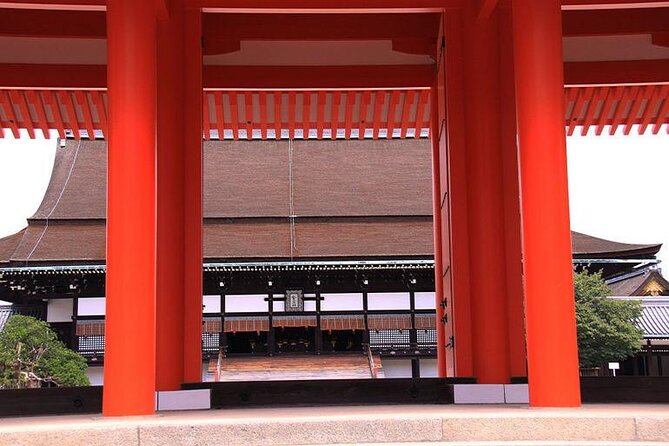
- Two major Kyoto sights in three hours: See Nijo Castle and the Kyoto Imperial Palace in one focused outing.
- Small group of no more than nine: A compact group gives you more room to ask questions and hear the guide.
- Nijo Castle admission included: Walk through the former shogun residence, its gardens, and detailed interiors.
- English-speaking guides with different strengths: Jasmine is often praised for warmth and clear explanations, while Taku and Atsushi are noted for strong local and historical knowledge.
- The transfer needs planning: The tour begins at Nijojo-mae Station and ends at Imadegawa Station, but the sites are separated by roughly 30 minutes of walking or public transport.
- Good value at $55: Included entry and a three-hour guided visit make the price reasonable, especially if you want context rather than a quick look.
Why These Two Sites Belong Together
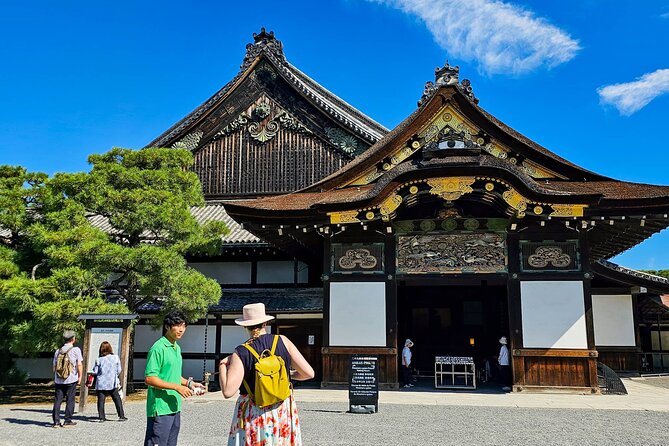
Kyoto was Japan’s capital for more than a thousand years, and these two places tell different parts of that story. Nijo Castle is tied to military rule and the shoguns. The Imperial Palace is tied to the emperor and court life.
That contrast gives the tour a useful shape. You are not simply visiting two old compounds and trying to remember which building belongs to whom. You can compare power, ceremony, architecture, and daily life as the guide moves between the sites.
At $55 per person, this is not the cheapest way to enter either place. It can still be good value if you want the background explained as you go. The tour includes both entrance fees, an English-speaking guide, and three hours of walking. You are paying less for transportation or luxury and more for interpretation.
The current rating is 4.7 from 106 ratings, with 92 percent recommending the experience. That points to a reliable general experience, though the lower scores show that the guide and the transfer between sites can make a real difference.
More Imperial Palace visits:
- Kyoto: Imperial Palace & Nijo Castle Guided Walking Tour
★ 4.7 · 453 reviews - Kyoto: Nijo Castle and Kyoto Imperial Palace Guided Tour
★ 4.6 · 98 reviews - Nijo Castle and Imperial Palace Visit with Guide
★ 5.0 · 53 reviews
Starting at Nijo Castle Near Nijojo-mae Station
The meeting point is at Nijojo-mae Station, beside Nijo Castle in Nakagyo Ward. Starting here is practical because the castle is the first major stop and the station is close to the entrance area.
Nijo Castle was built as a powerful residence for the shogun. The site lets you see how military leaders presented authority through grand rooms, formal design, gardens, and carefully controlled movement. A guide can connect the buildings to the shogunate period instead of leaving you with a collection of attractive rooms.
The visit is scheduled for about 90 minutes, with admission included. That is enough time for a meaningful walk, but it is not a leisurely half-day exploration of every corner. You should expect the guide to keep the group moving.
The interiors are a major reason to choose this tour. The architecture and decorative work reveal how the shoguns wanted visitors to feel inside the castle. Guides have discussed the cultural symbolism, customs, and political meaning behind what you see, which is where the experience can become more than a standard sightseeing stop.
Jasmine has received especially strong praise for explaining the shogun era, architecture, and art in an easy conversational style. She has also been noted for taking family photographs and making sure people could hear her, including a visitor with a hard-of-hearing parent. Alex has been praised for giving the right amount of information while keeping a steady pace.
That balance matters at Nijo Castle. Too little explanation, and the rooms can blur together. Too much detail, and you spend the whole visit standing still while the rest of the group waits. The best guides appear to handle both needs well.
What to Look For Inside the Castle
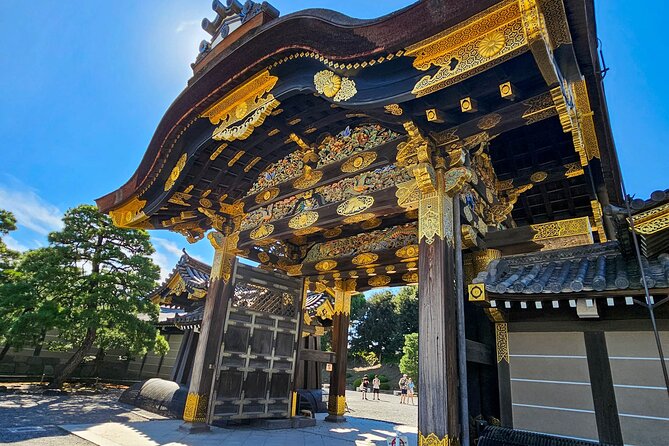
Your guide will point out the structure, interior details, and gardens that make Nijo Castle important. You may also hear how the site reflects the relationship between military authority and court tradition.
Pay attention to the changes between formal rooms and outdoor spaces. The gardens are not simply decoration. They help create a controlled setting around the castle buildings, with views designed to be seen from particular positions.
Photography is part of the appeal. Several guide accounts describe time for good photographs and stops at attractive viewpoints. Still, this is a guided walk, not a photography tour, so you should follow the group’s pace rather than expect long pauses at every location.
The castle portion also gives you a chance to ask questions. The compact group helps here, particularly if you want to understand a detail that is not obvious from a sign. Guides have been praised for answering questions about history and culture without relying only on a fixed script.
The Transfer to the Imperial Palace Is the Main Practical Issue
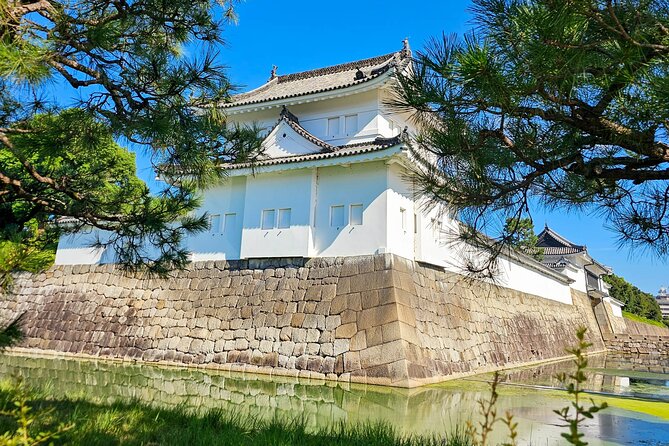
The Kyoto Imperial Palace and Nijo Castle are not adjacent. This is the one part of the plan you should understand clearly before booking.
The tour begins at Nijojo-mae Station and ends at Imadegawa Station near the Imperial Palace. The supplied details do not promise a private vehicle or organized transfer between the attractions. One direct account describes walking or using public transport between them as taking about 30 minutes of the three-hour tour.
That can be a meaningful slice of your sightseeing time. On a smooth day, the transfer may be straightforward. In peak periods, public transport and roads can be harder to manage. One account also describes a group being split into two taxis, with one taxi going to the wrong gate and several people waiting without a phone number for the guide.
That appears to be an isolated operational problem rather than a normal feature, but it highlights a sensible precaution: confirm the transfer plan with your guide at Nijo Castle before leaving. Keep the meeting and end points saved on your phone, and do not assume the two sites are close enough for a quick stroll.
The walking itself may be fine for you, but heat can change the calculation. Kyoto summers can be demanding, and the tour includes outdoor walking at both sites. A guide has been praised for adding water and air-conditioning breaks during hot weather, but you should still bring water, wear comfortable shoes, and prepare for sun.
More walking tours in Kyoto:
- Kyoto Geisha Walking Tour: Gion District & Hidden Gems
★ 4.7 · 3,273 reviews - Kyoto: Gion Magical Night Walking Tour with Geisha Trivia
★ 4.9 · 2,393 reviews - Kyoto: Gion Geisha District Walking Tour – Stories of Geisha
★ 4.7 · 2,187 reviews - Night Walk in Gion: Kyoto’s Geisha District
★ 4.5 · 2,003 reviews
Ninety Minutes at the Kyoto Imperial Palace
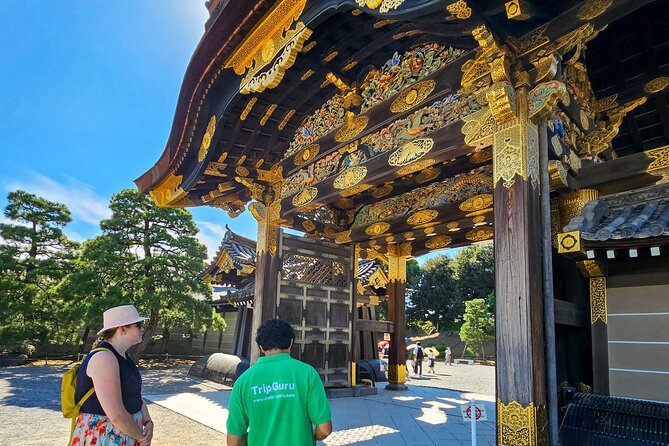
The second half is devoted to the Kyoto Imperial Palace, where Japan’s imperial family lived during the capital’s long Kyoto period. The setting is formal and spacious, with impressive buildings, gardens, and open grounds.
This stop works best when the guide explains how palace life differed from shogun rule. You can look at the buildings and gardens on your own, but the meaning of court customs, ceremonies, and architectural choices is harder to grasp without context.
The planned visit lasts about 90 minutes. Like the castle portion, it gives you a solid introduction rather than every possible detail. You will have time to admire the grounds and take photographs, but the guide will need to keep the group together and on schedule.
The palace can feel more spread out than Nijo Castle. That makes the walking pace and meeting arrangements important. The tour ends at Imadegawa Station, so you are positioned near public transportation after the visit rather than being returned to your hotel.
That ending is useful if you plan to continue sightseeing in northern or central Kyoto. It is less convenient if you expect a return trip to Nijo Castle or direct hotel drop-off. Hotel pickup and drop-off are not included.
The Guides Shape the Experience
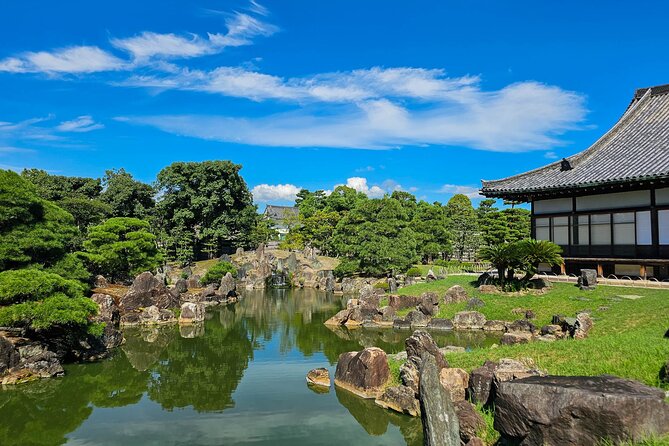
The biggest variable is the person leading your group. The strongest feedback centers on guides who explain clearly, answer questions, adjust the pace, and connect the sites to present-day Japanese culture.
Jasmine is the most frequently praised name in the supplied feedback. She has been described as friendly, flexible, easy to understand, and strong at explaining history, architecture, art, and cultural symbolism. She has also helped with photographs, transportation questions, and family needs.
Taku is described as a local certified guide from Kyoto with extensive experience at both Nijo Castle and the Imperial Palace. Atsushi has been praised for special historical stories and strong command of the subject. Vincent, Kata, Cecilia, Raphael, Alex, and Katsuhiko have also received positive comments for patience, friendliness, clear explanations, and good pacing.
You cannot assume you will receive a particular guide unless the booking process allows you to request one. The useful lesson is to value the guide’s role but not treat a named guide as guaranteed.
A good guide can make the difference between simply seeing a castle and understanding how power worked there. A less engaged guide may still take you to the correct places but offer less of the cultural context that justifies paying for a guided tour.
Group Size, Pace, and Physical Demands
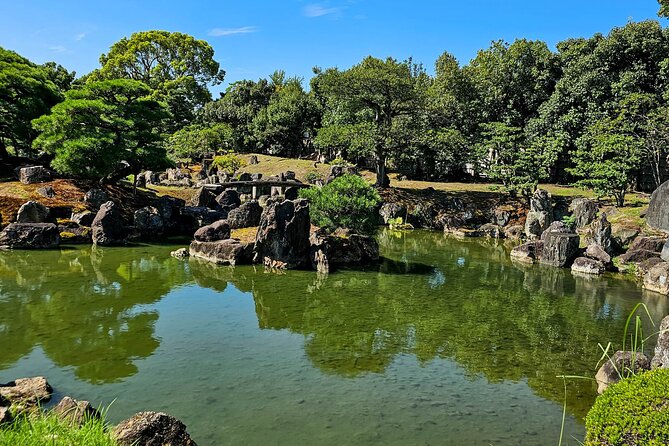
The maximum group size is nine. That is small enough to feel more personal than a large coach or flag-following group, while still keeping the price below a private tour.
You will walk for about three hours, with time outdoors and movement across large historic grounds. Most people can participate, according to the activity details, but you should be ready for a steady sightseeing pace.
The best feedback describes a tour that allows enough time for photographs without becoming slow. One especially favorable account praised the guide for arriving on time, sharing plenty of information, and keeping the group moving so the visit did not drag.
That is the right expectation. This is a structured introduction, not a relaxed day in which you can linger wherever you like. If you enjoy stopping for long periods at gardens or taking many photographs, the schedule may feel tight.
Families can do well here, especially with a guide who welcomes questions. Jasmine was praised for answering children’s questions and helping the adults as well. For older family members, ask for regular pauses if the weather is hot. The tour has no stated hotel transport, meal service, or special accessibility program.
Is $55 a Fair Price?
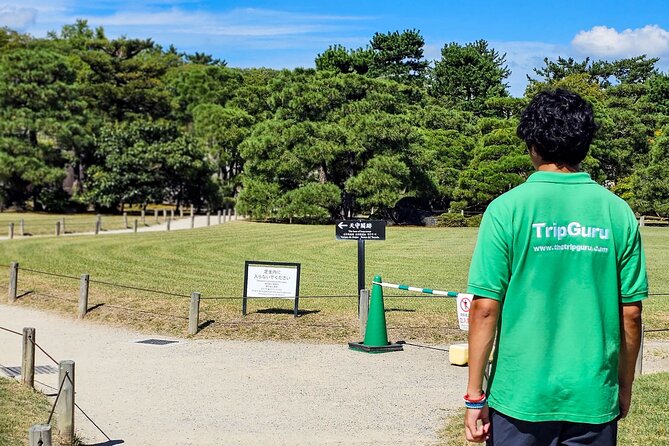
The $55 price includes entrance fees to both sites and a three-hour English-speaking walking tour. That makes the cost fair for anyone who wants historical explanation and help understanding what is in front of them.
The value is strongest if you are visiting Kyoto for the first time, have limited time, or do not want to study both sites in advance. You get a planned route, tickets handled as part of the experience, and a chance to ask questions.
The value is weaker if you prefer to move slowly, read at your own pace, or already know a lot about Kyoto’s political history. You could visit independently, though you would need to arrange both entries and transport yourself.
The transfer is also part of the value calculation. Since the tour does not include hotel pickup or drop-off, and the movement between sites can take a substantial portion of the schedule, the experience is best seen as two guided visits connected by your own local transportation.
Free cancellation is available if you cancel at least 24 hours before the start time. Changes or cancellations inside that window are not accepted for a refund.
Who Should Choose This Kyoto Walking Tour?
I would point this tour toward first-time Kyoto visitors who want a clear introduction to the city’s political and imperial past. It also suits families who benefit from a guide willing to answer questions and help with photographs.
It is a good fit for you if:
- You want to see both sites in one three-hour block.
- You prefer a small group over a large organized outing.
- You value explanations of architecture, customs, and historical figures.
- You are comfortable walking and arranging the transfer between locations.
- You want admission included rather than handling every detail yourself.
I would hesitate if you need door-to-door transportation, have limited walking ability, or want a slow visit with plenty of time in each garden. I would also think twice during very hot weather unless you are prepared with water and sun protection.
Should You Book It?
Yes, with one clear condition: understand the transfer between Nijo Castle and the Kyoto Imperial Palace before you pay.
At $55, the tour offers a sensible introduction to two of Kyoto’s most important historic sites. The small group, included admission, and generally strong guide feedback give it a solid value. Jasmine, Taku, Atsushi, and the other praised guides show what this experience can be when the leader adds context and keeps the pace comfortable.
Book it if you want the shogun and imperial stories explained together, with enough structure to fit both sites into half a day. Skip it if you want private transport, a fully unhurried schedule, or complete freedom to explore on your own.
FAQ
How long does the tour last?
The tour lasts approximately three hours. The planned schedule gives about 90 minutes to Nijo Castle and 90 minutes to the Kyoto Imperial Palace, with time needed to move between them.
Where does the tour begin?
The meeting point is Nijojo-mae Station near Nijo Castle, at Nijojocho in Nakagyo Ward, Kyoto.
Where does the tour end?
The tour ends at Imadegawa Station in Kamigyo Ward, near the Kyoto Imperial Palace.
Are entrance fees included?
Yes. Admission to Nijo Castle and the Kyoto Imperial Palace is included in the tour price.
Is transportation between the two sites included?
The tour information includes a walking tour but does not list hotel pickup, hotel drop-off, or a private transfer between the sites. The attractions are separated, and the transfer may take about 30 minutes by walking or public transportation.
How large is the group?
The tour has a maximum of nine participants.
Is the tour conducted in English?
Yes. An English-speaking guide is included.
Can I cancel for a full refund?
You can cancel at least 24 hours before the start time for a full refund. Cancellations or changes made less than 24 hours before the experience are not accepted for a refund.
More 3-Hour Experiences in Kyoto
- 3-Hour Kyoto Insider Sake Brewery Tour with Tastings & Pairings
★ 5.0 · 917 reviews - Kyoto: 3-Hour Fushimi Inari Shrine Hidden Hiking Tour
★ 4.9 · 270 reviews - 3 Hours Kyoto Insider Sake Experience | Tasting Konteki
★ 5.0 · 24 reviews - Kyoto: Personalize, private tour (3h, 5h, 8h) [W/Car Option]
★ 4.9 · 24 reviews
Just added around Kyoto
- Kyoto: Zen Meditation at a Private Temple with a Monk★ 5.0 · 25 reviews
- Kyoto: Gion Geisha District & Sake-in-Hand Walking Tour★ 5.0 · 37 reviews
- Private Pewter Sake Cup Experience with a Kyoto Artisan★ 5.0 · 31 reviews
- Your Private Vacation Photography Session In Kyoto★ 5.0 · 110 reviews
- Private Guided Traditional Buddhist Cooking in Japan★ 5.0 · 16 reviews
- Kyoto Wagashi(Japanese sweets) Cooking Class near Fushimiinari★ 5.0 · 60 reviews
- Traditional Japanese Music show & Experience Tour in Kyoto★ 5.0 · 57 reviews
- Kyoto:Family-Friendly Kimono & Yukata Experience at WARGO★ 5.0 · 147 reviews
Imperial Palace Tours, compared.
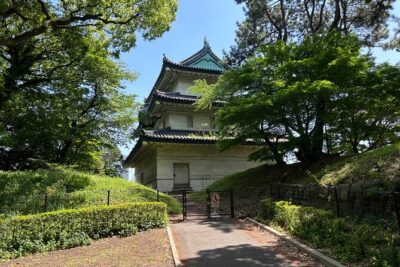
Imperial Palace and Shogun Historical Walking Tour
Read our review →

Imperial Palace East Garden and Edo Castle Walking Tour in Tokyo
Read our review →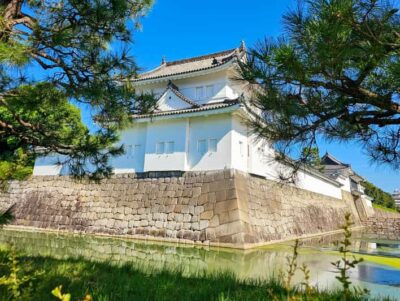
Imperial Palace & Nijo Castle Guided Walking Tour
Read our review →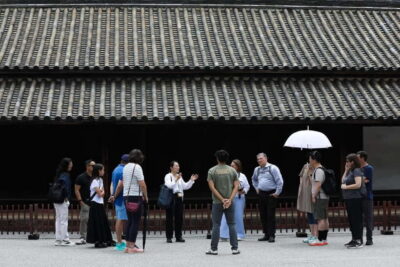
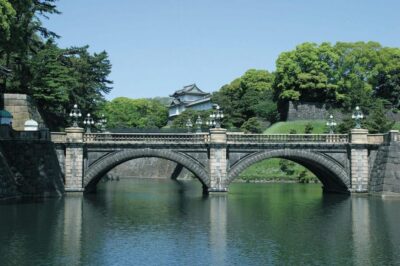
Imperial Palace, Sensō-ji Temple, & Tokyo Tower Tour
Read our review →
Tokyo Castle, Imperial Palace, Shogun & Garden Walking Tour
Read our review →Browse the lists this tour appears in