
Reviewed · KYOTO TOURS
Izakaya Style Cooking Class
Izakaya cooking is Japanese food without the sushi-bar spotlight. At Cooking Sun Kyoto, you learn the sauces, stock, knife work, and small dishes served in casual drinking spots and home kitchens. The roughly three-hour session includes dinner, ingredients, an apron, and recipes to take home.
I like the hands-on format, which gives you real practice instead of a chef simply cooking in front of you. I also like the range of dishes: one class may include six preparations, from sesame spinach and teriyaki yellowtail to tempura, soup, rice, or mochi. The main consideration is that the menu changes with the season, and an offered glass of sake may cost extra unless you confirm first.
Key points at a glance
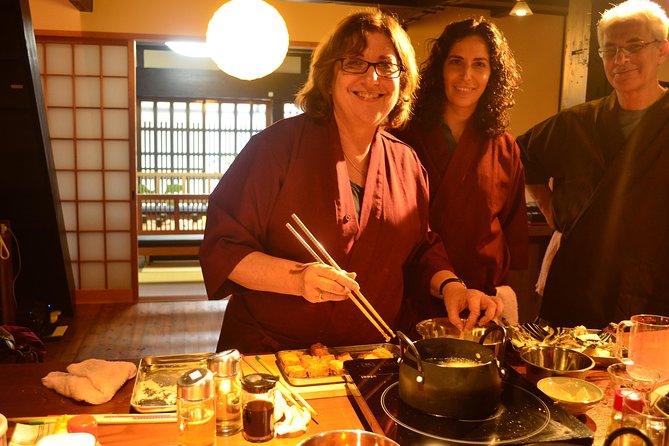
- Learn dashi from scratch: Japanese soup stock forms the base of many home dishes, and this class explains how to prepare it.
- Cook more than one dish: You may make several small plates, a soup, rice, and dessert rather than focusing on a single recipe.
- Small class setting: The maximum is eight people, allowing the instructors to help with knives, sauces, and cooking steps.
- Dinner is part of the lesson: Sit down with the group and eat what you have prepared during the afternoon.
- Recipes go home with you: The class is designed so you can repeat the dishes for family and friends.
- Useful for mixed skill levels: The clear demonstrations and prepared ingredients suit beginners, children, and experienced home cooks.
Why izakaya food makes a good Kyoto cooking class
An izakaya is often described as the Japanese answer to tapas, though the setting is usually more casual and drink-focused. People order several small dishes for the table, share them, and pair them with beer, sake, or other drinks. The food can include grilled fish, vegetables, rice, fried items, salads, and simmered dishes.
That makes izakaya cooking a smart choice if you want to understand everyday Japanese food. Sushi and teriyaki are familiar outside Japan, but they tell only a small part of the story. This class deals more with seasoning balance, stock, vegetables, fish, and the practical dishes people eat at home or in relaxed neighborhood restaurants.
The session also gives you a bit of cultural context. The class explains how izakaya culture developed from sake shops that began serving food, with roots reaching back to the Edo period. You will not spend the whole afternoon in a lecture, but this short introduction helps explain why the food comes in small portions and why sharing matters.
I especially value the focus on seasoning. Japanese cooking can look simple because the ingredient list is often short. The skill lies in using soy sauce, mirin, sesame, dashi, and other seasonings in the right amounts. Learning that balance is more useful than memorizing one restaurant dish.
More izakaya nights in Kyoto:
- Kyoto: Izakaya Bars Guided Walking Tour
★ 4.9 · 815 reviews - Kyoto Bar Hopping Night Tour
★ 5.0 · 613 reviews - Kyoto: Afternoon Japanese Izakaya Cooking Class
★ 4.9 · 241 reviews
Arriving at Cooking Sun Kyoto at 2pm
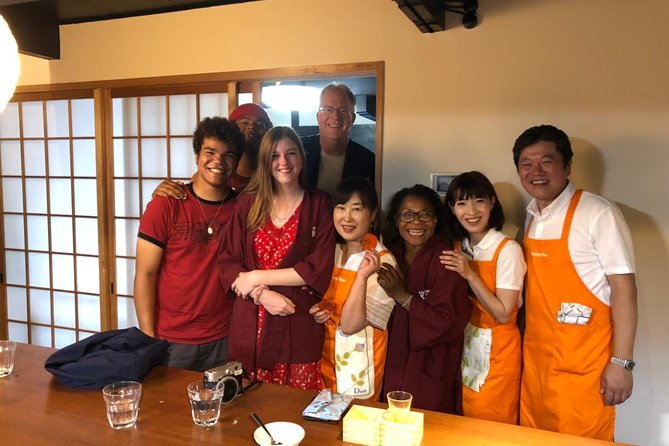
The class begins at 2pm at Cooking Sun, 679 Funayacho, in Kyoto’s Shimogyo Ward. The activity takes place in a traditional wooden house, which gives the afternoon a more personal setting than a large commercial kitchen. The exact studio information is supplied when you book, so check the final meeting details before setting out.
The location is near public transportation, but hotel pickup and drop-off are not included. Plan to reach the meeting point on your own and allow time to find the house. Mobile tickets make the booking easy to carry, but you still need to pay attention to the starting time. A late arrival could cut into the demonstration and preparation period.
You receive an apron, and all cooking ingredients are included. The studio supplies the cooking setup, while the instructors prepare the lesson so the group can move from one dish to the next without long pauses.
That preparation is important. Several dishes can mean a lot of chopping, measuring, and washing up. The Cooking Sun team handles much of the advance ingredient preparation and keeps the work areas moving, so you can spend more of the three hours cooking and eating.
The opening lesson: dashi, ingredients, and izakaya basics
The class starts with an explanation of izakaya food and the ingredients that shape it. Your English-speaking instructor demonstrates the methods before you try them yourself. This is helpful if you have never handled Japanese condiments or cooking tools, since the lesson explains not just what to add but how the ingredients differ.
Dashi is one of the most useful parts of the class. This Japanese stock gives many soups and sauces a savory base. Once you understand how it is made, you can use the idea at home in noodles, soups, vegetable dishes, and other Japanese meals.
The instructors also explain sauces and condiments as you cook. That detail matters because several Japanese seasonings can look alike or seem interchangeable at first. Clear guidance on their flavor and purpose makes it easier to repeat the recipes later.
You do not need advanced cooking skills. The class is built around demonstrations followed by guided practice, so beginners can keep up. At the same time, experienced cooks have room to learn new flavor combinations and techniques. One experienced home cook particularly enjoyed experimenting with the Japanese utensils and seasonings introduced during the session.
Preparing several small dishes instead of one main course
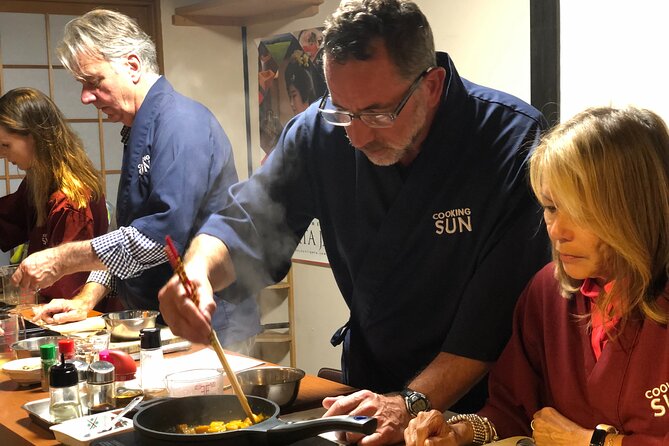
The menu changes according to seasonal ingredients, so no fixed list can be promised. Possible dishes include spinach with sesame sauce, teriyaki yellowtail, vegetable chowder, mushroom tempura, and rice with vegetables. Other sessions have included cucumber salad, pumpkin soup, pasta, and mochi dessert.
That variation is both a strength and a small uncertainty. You get food that fits the time of year, but you should not book expecting one specific dish. The broader point is that you will work across several Japanese cooking styles: raw or lightly dressed vegetables, soup, grilled or glazed fish, fried food, rice, and sweets.
Many sessions include around six dishes. That sounds ambitious for an afternoon, but the work is divided into manageable steps and the ingredients are prepared in advance. You may chop, mix, season, fry, simmer, or assemble, depending on the day’s menu.
The approach keeps the class lively. You are not waiting for one complicated dish to finish. Instead, each recipe adds another piece to your understanding of Japanese home food. The instructors clean and reset areas as the class progresses, allowing the group to move on to the next preparation.
More cooking classes in Kyoto:
- Ramen Cooking Class at Ramen Factory in Kyoto
★ 5.0 · 1,937 reviews - Kyoto: Ramen Cooking Class at a Ramen Factory with Souvenir
★ 4.9 · 532 reviews - Kyoto: Ramen, Gyoza, and Onigiri Cooking Class
★ 5.0 · 445 reviews - Kyoto: Japanese Washoku Bento Small Group Cooking Class
★ 5.0 · 380 reviews
How much personal help you can expect
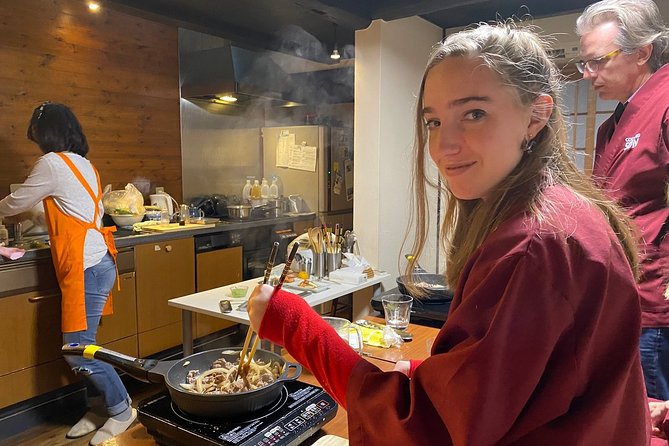
The class has a maximum of eight participants, which is small enough for hands-on guidance but not necessarily private. Some sessions may feel more like a shared group lesson than an individual cooking appointment. That is useful if you enjoy meeting people during a trip, but less ideal if you want a quiet, one-to-one lesson.
The teaching team has received praise for working together. One instructor may demonstrate while another distributes ingredients or helps with a knife technique. That teamwork keeps beginners from getting stuck and helps the class maintain its pace.
The instructors are described as patient, friendly, and easy to follow in English. They also answer questions about Japanese food and cooking methods. If you want advice for continuing your food exploration in Kyoto, ask before leaving. The class specifically encourages you to request restaurant or food suggestions for the rest of your stay.
Children can take part as well. A family with children aged 10 and 12 found the explanations clear enough for younger cooks to understand the basic methods and tools. Still, cooking involves knives, heat, and hot oil, so children need close attention from the adults accompanying them.
Dietary needs should be reported when booking. The team has accommodated vegetarian diners and food allergies, including gluten-related needs, but you should not wait until the lesson begins to explain a restriction. The menu changes, so early notice gives the kitchen time to plan properly.
Sitting down to eat your own izakaya dinner
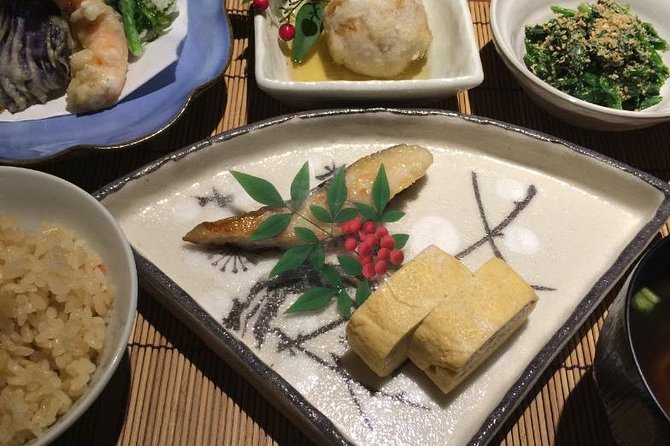
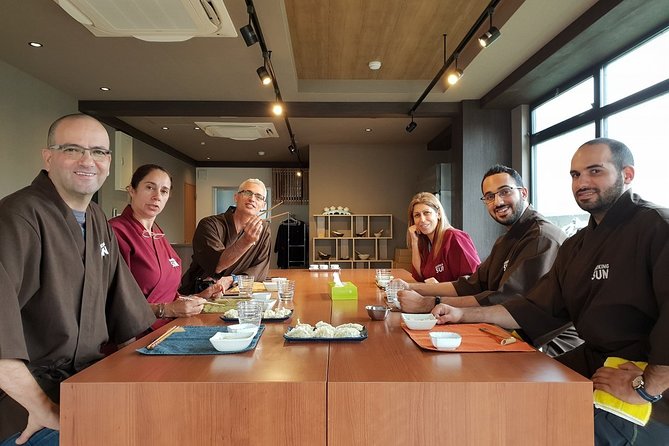
The best part of the schedule comes after the cooking: you sit with the other participants and eat the dishes prepared during the class. Dinner is included, along with the ingredients and instruction, so the meal is not an afterthought or a separate purchase.
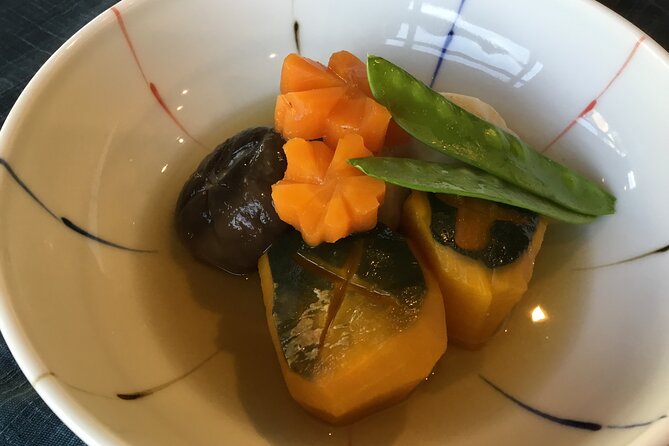
Because you make several items, the meal can be generous. Arrive hungry rather than treating this as a light snack. You will likely taste a range of textures and flavors, from crisp tempura to soft soup vegetables, seasoned rice, glazed fish, and sweet finishing dishes when included.
Eating together also shows how izakaya food works. These dishes are meant to be shared and sampled over time, not served as one large plate. The meal gives you a chance to compare the different seasonings and see how the dishes fit together.
Drinks deserve a quick note. Food and dinner are included, but the general inclusions do not cover extra food or drinks unless specified. One participant was offered sake and later learned that it cost 600 yen per glass. I would ask about the price before accepting any drink that is offered.
The recipes are the real souvenir
Kyoto gives you no shortage of edible souvenirs, but recipes take up less space in your luggage. At the end of the session, you receive the instructions for the dishes you made. The recipes are intended for home cooking, not just for reading as a keepsake.
That practical focus is a major reason to choose this class. You learn methods that can fit into an ordinary kitchen, rather than watching a professional prepare food with equipment you cannot find at home. The dishes are described as approachable, and the instructors explain the ingredients and techniques at a level suitable for different skill levels.
You may need to find Japanese seasonings after returning home, depending on the recipe. Still, the lesson gives you a better sense of what each seasoning does, which is more useful than simply receiving a list of ingredients. You can also adapt the dishes for family meals or serve several at once for a casual dinner with friends.
Is $71.63 a fair price?
At $71.63 per person, this is not the cheapest meal in Kyoto. It is a fair price if you value instruction, dinner, ingredients, an apron, and a set of recipes rather than paying only for food.
The value improves when you consider the amount of cooking. You are not preparing one dish and then leaving. A typical session covers several dishes, includes cultural background, and gives you time to eat the results. The class also saves you from buying multiple ingredients and seasonings for a one-off attempt in a rental kitchen.
Group discounts may be available, which can help families or friends booking together. The maximum of eight people keeps the class from becoming a large workshop, though the exact feeling will depend on the number booked for your date.
I would choose this over a standard restaurant dinner if you want a meal that also teaches you something. If your main goal is simply to eat Kyoto specialties with no scheduled activity, you may find the price harder to justify.
Who should book this class?
This class suits first-time visitors who want a practical introduction to Japanese food. It is also a good fit for home cooks who already know their way around a kitchen but want to learn about dashi, Japanese sauces, and less familiar flavor combinations.
Families can enjoy it because the work is shared and the meal comes at the end. Couples and solo visitors can also use it as an easy way to meet people without committing to a full-day group tour. The English instruction makes it accessible to people who do not speak Japanese.
I would be more cautious if you have severe dietary restrictions and cannot accept a menu that changes. Contact the provider before booking and explain exactly what you cannot eat. Also remember that the class ends where it starts, so you will need to arrange your own transport afterward.
The cancellation terms are reasonable: cancel at least 24 hours before the 2pm start for a full refund. Changes or cancellations inside that 24-hour window are not refunded.
Should you book Cooking Sun’s izakaya class?
Book it if you want to leave Kyoto with cooking skills, not just another restaurant meal. The strongest reasons are the small maximum group size, patient English instruction, several dishes in one session, and recipes you can use at home.
I would make this a particularly strong choice for families, curious beginners, and cooks who want to understand Japanese seasoning. Just confirm the studio details, share dietary needs in advance, and ask about drink prices before ordering sake.
If you prefer a fixed menu or a private lesson, this may not be the right match. For most people seeking a friendly, useful, food-centered afternoon, the combination of instruction and dinner gives the $71.63 price solid value.
FAQ
Where does the izakaya cooking class take place?
The class takes place at Cooking Sun, 679 Funayacho, Shimogyo Ward, Kyoto, 600-8466, Japan. The cooking studio is in a traditional wooden house.
What time does the class start?
The class starts at 2pm and lasts about three hours.
How large is the class?
The activity has a maximum of eight participants. A single booking can also include no more than eight people.
Is dinner included?
Yes. Dinner made during the class is included, along with the ingredients used for cooking.
Are drinks included?
Food and drinks are not included unless specifically stated. A glass of sake may cost extra, so ask about the price before accepting one.
Is the class taught in English?
Yes. An English-speaking cooking instructor leads the class.
What will I learn to cook?
You will learn Japanese seasoning techniques, how to prepare dashi, and how to make several izakaya-style home dishes. Examples include sesame spinach, teriyaki yellowtail, vegetable chowder, mushroom tempura, and rice with vegetables. The menu changes with seasonal ingredients.
Do I receive the recipes?
Yes. You can take the recipes home and use them to prepare the dishes for family and friends.
Can I report dietary requirements?
Yes. You should advise the provider of specific dietary requirements when booking. Vegetarian and allergy accommodations have been provided in past sessions.
Is hotel transportation included?
No. Hotel pickup and drop-off are not included. The activity begins and ends at the cooking studio meeting point.
Can I cancel for a refund?
Yes. You can cancel at least 24 hours before the start time for a full refund. Cancellations or changes made less than 24 hours before the start are not refunded.
More Workshops in Kyoto
- Kyoto: 45-Minute Tea Ceremony Lesson Experience
★ 4.3 · 2,378 reviews - Kyoto : Chopsticks Making Workshop in Gion with Engraving Option
★ 5.0 · 958 reviews - Kyoto: Samurai Sword Class by Experts in Traditional Arts
★ 4.9 · 657 reviews - Ninja 1-hour Hands-on Lesson by Japanese master in Kyoto -Entry
★ 5.0 · 489 reviews
More Drinks-Led Nights in Kyoto
- Kyoto Night Foodie Tour in Gion (9+ dishes + 6 Sake tastings)
★ 5.0 · 1,762 reviews - 3-Hour Kyoto Insider Sake Brewery Tour with Tastings & Pairings
★ 5.0 · 917 reviews - Arashiyama Bamboo, Temple, Monkeys, or Secret Sake Brewery
★ 4.8 · 886 reviews - Kyoto: Insider Sake Brewery Tour with Sake and Food Pairing
★ 5.0 · 704 reviews
Just added around Kyoto
- Kyoto: Zen Meditation at a Private Temple with a Monk★ 5.0 · 25 reviews
- Kyoto: Gion Geisha District & Sake-in-Hand Walking Tour★ 5.0 · 37 reviews
- Private Pewter Sake Cup Experience with a Kyoto Artisan★ 5.0 · 31 reviews
- Your Private Vacation Photography Session In Kyoto★ 5.0 · 110 reviews
- Private Guided Traditional Buddhist Cooking in Japan★ 5.0 · 16 reviews
- Kyoto Wagashi(Japanese sweets) Cooking Class near Fushimiinari★ 5.0 · 60 reviews
- Traditional Japanese Music show & Experience Tour in Kyoto★ 5.0 · 57 reviews
- Kyoto:Family-Friendly Kimono & Yukata Experience at WARGO★ 5.0 · 147 reviews
Kyoto Tours, compared.
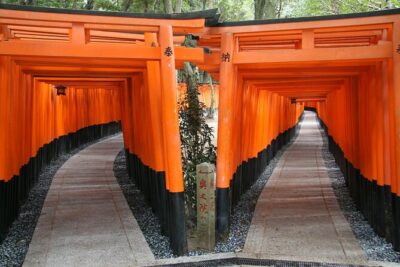
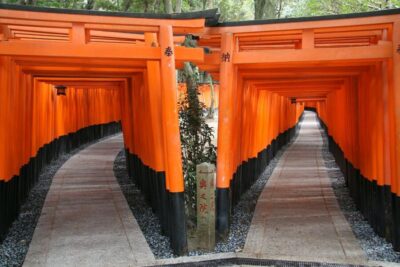
Fushimi Inari, Kinkakuji, Bamboo Grove 1 Day Bus Tour
Read our review →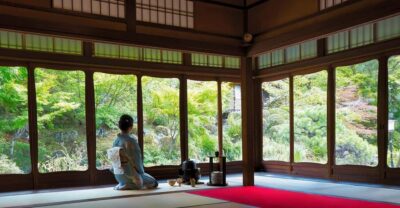
Tea Ceremony in a Traditional Tea House in Kiyomizu
Read our review →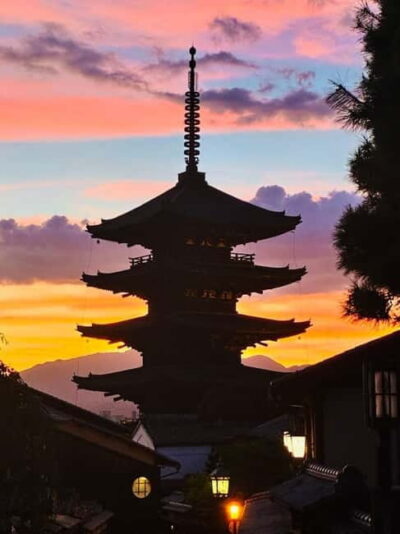
Kyoto Geisha Walking Tour: Gion District & Hidden Gems
Read our review →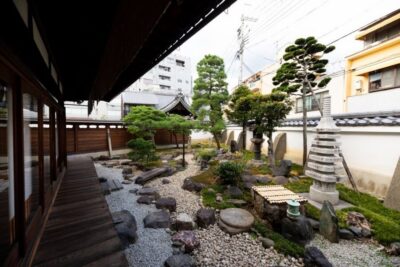

Gion Magical Night Walking Tour with Geisha Trivia
Read our review →

Gion Geisha District Walking Tour – Stories of Geisha
Read our review →Browse the lists this tour appears in