
Reviewed · KYOTO TOURS
Kyoto : Family-Friendly Sword Lesson at Samurai Ninja Museum
Kyoto’s Samurai Ninja Museum offers more than a quick costume photo. You’ll put on hakama, armor, and a helmet, learn how to handle a katana, and practice short movement sequences after an instructor shows you the proper swing. It is a lively way to meet Japan’s warrior culture without needing prior experience.
I like the hands-on sword lesson and the mix of history with play. I also like that the experience includes ninja weapon trials and photo settings, so younger children and adults have several ways to take part. The main thing to consider is that the venue does not admit children under three, and the lesson is better suited to people who enjoy active participation than to anyone seeking a quiet museum visit.
Key points at a glance
- Two hours of guided activity: The session combines dressing, sword instruction, museum content, ninja weapon trials, and photographs.
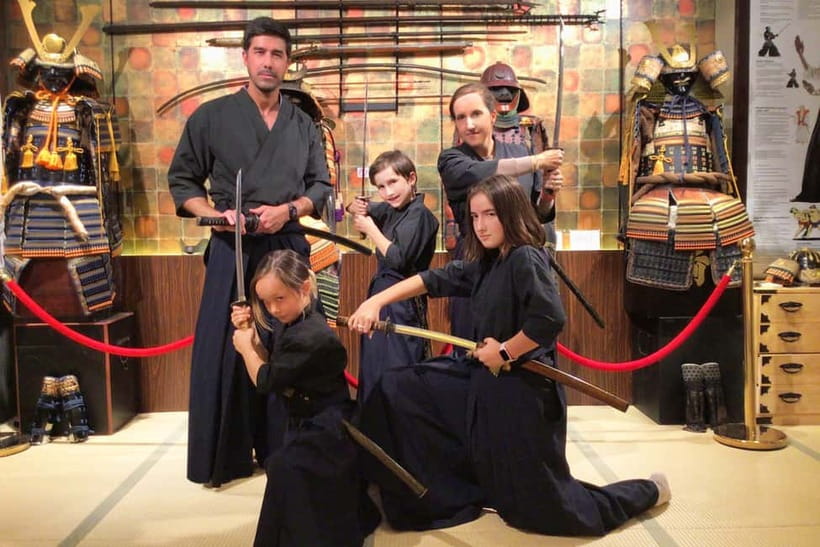
- Real clothing and equipment: You can wear hakama, samurai armor, and a helmet rather than simply posing beside a display.
- English instruction: Guides including Ken, Raito, Nobu, and Jukia have led sessions, depending on the booking.
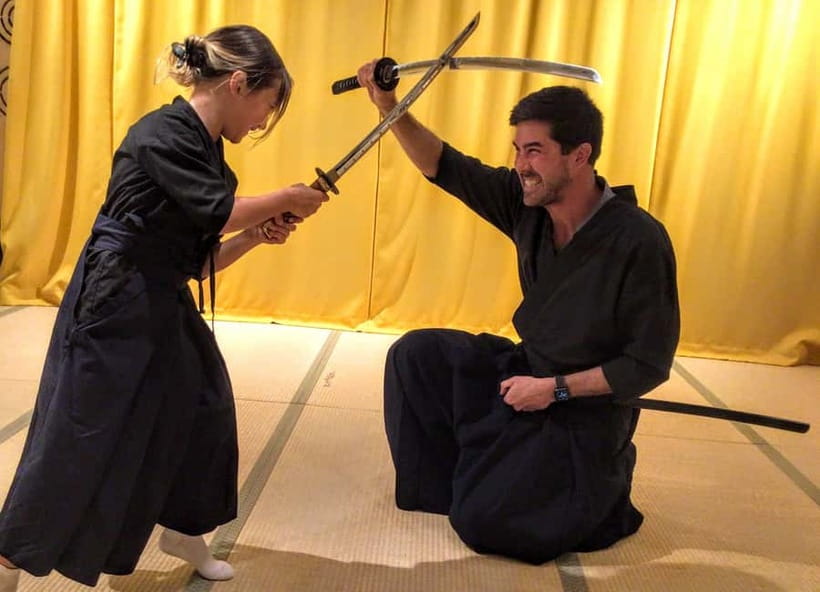
- Two kata with a katana: The sword work can include short sequences of linked movements, giving the lesson more shape than a single swing.
- Family-friendly, with one age limit: Most people can join, but children under three cannot enter the venue.
- Good for small groups: The activity is advertised as limited to 10 participants, although the booking information also gives a maximum capacity of 22.
Putting on hakama, armor, and a helmet
The experience begins with the part many families have been waiting for: getting dressed as a samurai. Hakama, armor, and a helmet are provided, so you do not need to arrange a costume before arriving. The clothing changes the mood at once. You are no longer just looking at swords in a display case. You are preparing to take part.
This is especially useful for families with children. A museum visit can lose a young child after ten minutes, but dressing up gives the visit a clear purpose from the start. Adults can join in too, which matters. The activity works best when everyone in the group treats it as a shared performance rather than sending only the children forward.
Do not expect historically exact battle gear or a full martial arts course. The clothing is part of an organized cultural activity, and the aim is to give you a feel for samurai traditions in a safe, accessible setting. For many people, that is the right balance. You get the visual impact of the costume without committing to a long or demanding training session.
The helmet and armor can make movement feel less natural, so listen closely when the instructor explains how to handle the sword. Children may be eager to begin swinging at once. The lesson works better when you slow them down and let the guide set the pace.
More Samurai and Ninja Experiences in Kyoto
- Kyoto Samurai Experience
★ 5.0 · 1,294 reviews - Kyoto: Kendo and Samurai Experience with Uniform and Gear
★ 4.9 · 815 reviews - Kyoto: Samurai Sword Class by Experts in Traditional Arts
★ 4.9 · 657 reviews
Learning the katana from an English-speaking instructor
After dressing, you watch a demonstration of how to swing the sword correctly. This simple step is important. It gives you a clear model before you pick up the katana and helps keep the activity organized, especially when children and adults are sharing the space.
The lesson is not presented as a serious combat class. It is an introduction to samurai movement, posture, and performance. One detailed account of the session describes learning two kata, or sequences of movements, with the katana. That gives the activity a useful sense of progress: you are not only making one pose, but linking several actions together.
The exact instructor may vary. Ken, Raito, Nobu, and Jukia have all been named as guides for different sessions. Ken led one class that included dressing, two kata, and the museum visit, while Raito was praised for his teaching in a small class. The practical lesson is to note your instructor’s name when you arrive, since the guide plays a large part in how much you get from the session.
English is the listed language, so you can follow the basic instructions without needing Japanese. You should still expect the activity to rely partly on demonstration. That is normal for a physical lesson, and it can help children understand the movements even if they are not used to taking classes in English.
The sword practice is the heart of the booking. It gives the costume a purpose and creates a shared activity for the group. It also means you should be ready to listen, wait your turn, and follow safety directions. This is not a free-play room with swords.
The Samurai Ninja Museum adds context
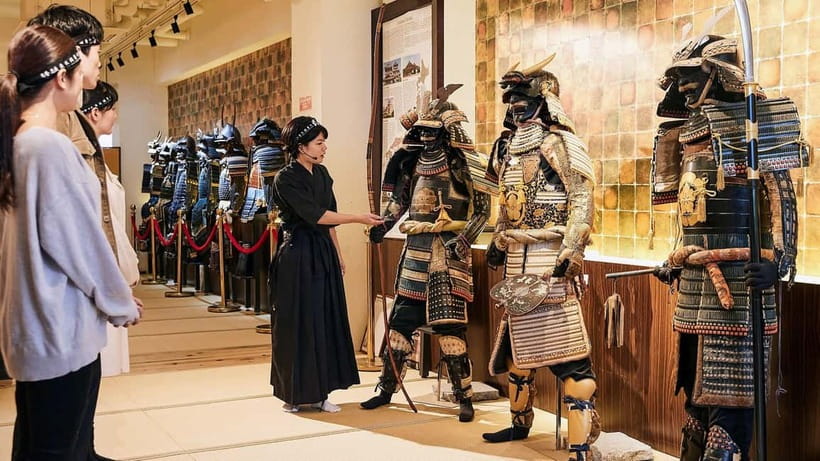
The museum portion gives the sword lesson a wider setting. Instead of treating the katana as a prop, the experience introduces the history of samurai and ninja culture. The museum visit is guided, and the history section can help explain why these weapons and costumes matter.
The museum stop is not as active as the lesson, so families should expect the pace to change. After the excitement of dressing and practicing movements, you may spend more time looking and listening. That contrast is useful. It gives you a chance to connect the performance side of the visit with the historical subject.
The information provided does not give a detailed list of the museum’s displays, so I would not book this as a full-day history museum. Think of it as a compact cultural introduction tied to the hands-on class. If your main aim is to learn about samurai history in depth, you will need other museums or historic sites in Kyoto as well.
For a first encounter, though, the museum section has value. Children can see that the sword lesson is not just a modern game, while adults get a little more context for the clothing and weapons they have just used.
Trying ninja weapons and taking the best photos
The ninja portion adds a second burst of activity. You can try ninja weapons, including shuriken target throwing, according to the session details. This is a good change of pace after practicing with the katana. The sword lesson asks for controlled movement, while the target activity offers a simple goal that many children understand right away.
You also get themed photo opportunities in front of studio or samurai-style backgrounds. These pictures are one of the clearest reasons to bring the whole family. Everyone can appear in costume, and the setting is arranged for portraits rather than relying on a hurried photograph taken by a stranger.
The photo element is fun, but it is worth keeping expectations sensible. You are paying for a guided cultural activity that includes photographs as part of the experience, not for a professional studio session with a long portrait package. The best pictures will come from joining in, trying different poses, and letting the guide direct you.
The combination of sword practice, ninja weapons, and photographs also helps groups with different interests. One person may care most about the history, another about the katana, and a child may remember the shuriken target. That variety is one of the booking’s strongest features.
More samurai and ninja sessions in Kyoto:
- Skip the lines Basic Ticket at SAMURAI NINJA MUSEUM KYOTO
★ 4.5 · 632 reviews - Ninja 1-hour Hands-on Lesson by Japanese master in Kyoto -Entry
★ 5.0 · 489 reviews - Kyoto: Ninja Weapon Forging Experience
★ 4.8 · 478 reviews - Kyoto: Samurai Kenbu Traditional Sword Dancing Show
★ 4.5 · 426 reviews
Why the $66 price can make sense
At $66 per person, this is not the cheapest costume photo in Kyoto. The price is easier to justify because it covers a two-hour program rather than a brief outfit rental. You receive the sword lesson, use of hakama, armor and helmet, themed photo opportunities, the museum component, and the ninja weapons trial.
The value depends on how many parts you use. If you only want one photograph in costume, the price will feel high. If your group takes part in the lesson, listens to the museum guide, tries the ninja activity, and takes home several good memories, the cost becomes more reasonable.
I would compare it with the price of other short family activities in Kyoto, not only with free sightseeing. The session can fill a useful two-hour block and gives your group something everyone can do together. That matters on a trip where adults may want cultural context and children may need a clear activity.
The small-group setup also affects value. The experience is described as limited to 10 participants, which should allow the instructor to give more attention than a large show. At the same time, the booking information also lists a maximum of 22 participants. Because those figures differ, check the group size shown for your selected time if personal instruction is important to you.
Timing, location, and access in Kyoto
The activity lasts two hours, with starting times based on availability. That length is long enough for several parts of the program, but short enough to fit beside other Kyoto plans. I would avoid placing it next to a major timed attraction unless you leave a generous buffer. Dressing, instruction, photographs, and the museum visit all need room in your schedule.
The venue is in Kyoto on Honshu and is near public transportation. Transportation to and from the activity is not included, so you will need to make your own way there. The booking information does not provide a specific meeting point or station in the details supplied here, so check the confirmation carefully before setting out.
The experience is listed as wheelchair accessible and stroller accessible. That is helpful for families and visitors who need those facilities, though the activity involves dressing and sword movements. If you have specific mobility needs, it is sensible to confirm how the equipment and practice area will work for your party before arrival.
Most people can participate. The clear restriction is age: children under three cannot enter the samurai venue. Families with toddlers should plan around that rule rather than assume a child can wait inside while older siblings take part.
How to get the most from the lesson
Arrive ready to listen. The demonstration comes before your own practice, and the instructor’s directions are part of both the safety and the fun. Children usually get more from the activity when adults join them instead of standing back with the camera.
Wear clothing that allows you to change comfortably. The supplied costume is the main outfit for the session, but you will still want practical clothes underneath. The available information does not specify changing-room details, so avoid bringing more bags or layers than you need.
Think of the sword as a training prop within a guided lesson. Do not treat the practice area as a place for unsupervised swinging. The point is to learn the sequence and pose with control, not to show how hard you can strike.
If you have a choice of times, consider your group’s energy. A morning session may suit young children who tire later in the day, while an afternoon booking can give you a light activity between sightseeing stops. No particular starting time is guaranteed, so check availability before building the rest of your day.
Ask the guide’s name when the class begins. Ken, Raito, Nobu, and Jukia have each led sessions, and the instructor is central to the experience. Remembering the name also makes it easier to thank the right person afterward.
Who will enjoy this Kyoto experience most
I would recommend this for families with children aged three and up, couples who like playful cultural activities, and first-time visitors who want a guided introduction to samurai and ninja traditions. You do not need sword experience, and the English instruction keeps the basic lesson accessible.
It also suits groups with mixed ages. Adults can enjoy the clothing, history, and staged photos, while children have a physical lesson and a target activity to keep them involved. The two-hour format avoids the fatigue that can come with a full-day class.
This may not suit you if you dislike dressing up, posing for photographs, or following an instructor’s movements. It is also not the best choice if your priority is advanced martial arts training or a long, detailed study of Japanese military history.
The rating is listed at 4.4 out of 5 from 14 ratings, with the strongest praise focused on the instructors, the small-class feel, and the way the session keeps both adults and children involved. Those are the parts I would weigh most heavily when deciding.
Booking flexibility and practical conditions
Free cancellation is available up to 24 hours before the activity for a full refund. You can also reserve now and pay later, which helps if your Kyoto schedule is still changing.
Confirmation is received when you book. The activity is offered in English, and the booking is described as a small-group experience. Since the information also lists a maximum of 22 people, verify the capacity for your chosen departure if a smaller class is a deciding factor.
Transportation is not included. Plan your route to the venue in advance, and remember that your two-hour booking does not include the journey there or back.
Should you book the samurai lesson?
Book it if you want an active, family-friendly Kyoto experience that combines costumes, basic katana movements, museum context, ninja target practice, and photographs. The strongest reason to choose it is the variety. You are not paying only to put on armor, and you are not spending two hours only listening to a guide.
At $66, I would book this for a family or group that will take part in every section. I would skip it if you only want a quick costume picture, need advanced sword instruction, or are traveling with a child under three.
For most suitable groups, this is a cheerful two-hour break from temple visits and city walking. You leave with a better sense of how samurai are presented in Japanese culture, plus photographs that show your group doing more than simply looking at Kyoto’s past.
FAQ
How long does the samurai experience last?
The activity lasts two hours.
How much does it cost?
The listed price is $66 per person.
Is the instruction available in English?
Yes. English is the listed language for the instructor and activity.
What is included in the booking?
The booking includes a samurai sword lesson, use of hakama, a samurai helmet, samurai armor, themed photo opportunities, and a ninja weapons trial.
Is transportation to the venue included?
No. Transportation to and from the activity is not included.
Can children under three participate?
No. Children under three cannot enter the samurai venue.
Can I cancel for a refund?
Yes. You can cancel up to 24 hours in advance for a full refund. Reserve now and pay later is also available.
More Museums in Kyoto
- Kyoto: Tea Museum Tickets and Matcha Grinding Experience
★ 4.9 · 739 reviews - Kyoto : Geiko Maiko Dance of Kyoto & Visits of Gion Museum
★ 4.6 · 415 reviews - Kyoto Sword Experience – includes Museum Ticket/Ninja Experience
★ 4.5 · 149 reviews - Kyoto: Samurai Ninja Museum guided tour
★ 4.8 · 145 reviews
More Workshops in Kyoto
- Kyoto: 45-Minute Tea Ceremony Lesson Experience
★ 4.3 · 2,378 reviews - Ramen Cooking Class at Ramen Factory in Kyoto
★ 5.0 · 1,937 reviews - Kyoto : Chopsticks Making Workshop in Gion with Engraving Option
★ 5.0 · 958 reviews - Kyoto: Ramen Cooking Class at a Ramen Factory with Souvenir
★ 4.9 · 532 reviews
Just added around Kyoto
- Kyoto: Zen Meditation at a Private Temple with a Monk★ 5.0 · 25 reviews
- Kyoto: Gion Geisha District & Sake-in-Hand Walking Tour★ 5.0 · 37 reviews
- Private Pewter Sake Cup Experience with a Kyoto Artisan★ 5.0 · 31 reviews
- Your Private Vacation Photography Session In Kyoto★ 5.0 · 110 reviews
- Private Guided Traditional Buddhist Cooking in Japan★ 5.0 · 16 reviews
- Kyoto Wagashi(Japanese sweets) Cooking Class near Fushimiinari★ 5.0 · 60 reviews
- Traditional Japanese Music show & Experience Tour in Kyoto★ 5.0 · 57 reviews
- Kyoto:Family-Friendly Kimono & Yukata Experience at WARGO★ 5.0 · 147 reviews
Kyoto Tours, compared.


Fushimi Inari, Kinkakuji, Bamboo Grove 1 Day Bus Tour
Read our review →
Tea Ceremony in a Traditional Tea House in Kiyomizu
Read our review →
Kyoto Geisha Walking Tour: Gion District & Hidden Gems
Read our review →

Gion Magical Night Walking Tour with Geisha Trivia
Read our review →

Gion Geisha District Walking Tour – Stories of Geisha
Read our review →Browse the lists this tour appears in